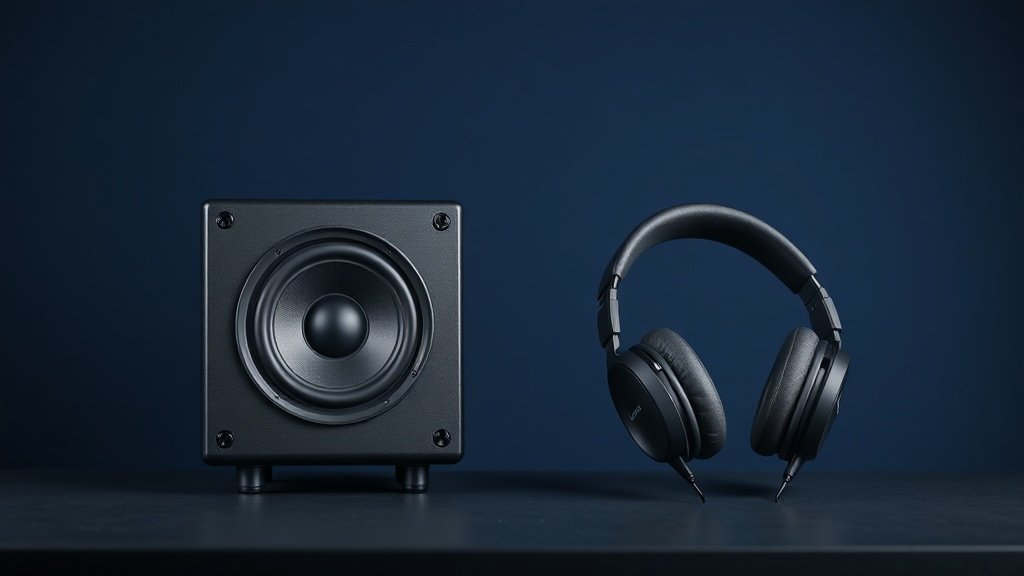
Every mix decision you make depends on what your monitoring system tells you about frequency balance, stereo imaging, and dynamic range—and headphones versus monitors tell fundamentally different stories.
After years of obsessively buying, using and comparing audio gear, I have learned that the choice between headphones and studio monitors shapes every aspect of how you hear and respond to your mix. The acoustic differences between these two monitoring approaches create distinct advantages and limitations that directly impact your creative decisions and technical accuracy.
This guide examines the practical differences between mixing on headphones versus studio monitors, covering frequency response characteristics, stereo imaging behaviour, fatigue considerations, and reference techniques that help you make better mix decisions regardless of which system you use most often.
Frequency Response and Acoustic Behaviour
Studio monitors reproduce sound through speakers that energise the air in your room, creating a three-dimensional acoustic field that includes direct sound from the drivers plus reflections from walls, ceiling, and surfaces. This room interaction becomes part of what you hear, which explains why monitor placement and acoustic treatment matter so much. Quality nearfield monitors like the Yamaha HS8 or Adam Audio A7V provide relatively flat frequency response in the direct field, but your room acoustics will emphasise or attenuate certain frequencies based on dimensions, materials, and speaker positioning.
Headphones eliminate room acoustics entirely by placing drivers directly next to your ears. This creates an intimate monitoring environment where you hear exactly what the drivers produce without reflections or room modes. Open-back headphones like the Sennheiser HD 650 or Beyerdynamic DT 880 Pro allow some natural acoustic interaction, while closed-back models like the Audio-Technica ATH-M50x create complete isolation. However, headphone frequency response curves rarely match the neutral target that good monitors achieve, and different models exhibit distinct colourations that become part of your mixing references.
The bass response differences prove particularly significant. Monitors reproduce low frequencies by moving substantial amounts of air, creating visceral impact that you feel as much as hear. Headphones generate bass through small drivers positioned close to your ears, producing detailed low-frequency information but lacking the physical sensation of bass energy that helps you judge low-end balance in real-world playback situations.
The stereo image you hear on headphones represents an artificial construct that differs fundamentally from how speakers create spatial positioning.
Stereo Imaging and Spatial Perception
Monitors create stereo imaging through acoustic crossfeed—sound from the left speaker reaches your right ear slightly delayed and attenuated, while the right speaker similarly feeds your left ear. This natural crosstalk creates the phantom centre image and allows for realistic spatial positioning of mix elements. The stereo width you perceive through monitors more closely matches how listeners experience your mix through speakers in cars, home systems, or live playback.
Headphones produce complete channel separation with no acoustic crossfeed between left and right. This creates an unnaturally wide stereo image where hard-panned elements appear to come from inside your head rather than from distinct positions in space. Mix elements positioned in the centre can sound artificially focused, while stereo effects often appear exaggerated compared to speaker playback. Some mixing engineers use crossfeed circuits or plugins to simulate speaker-like imaging on headphones, though this introduces its own colourations.
The spatial differences affect how you judge reverb, delay, and stereo enhancement effects. What sounds appropriately spacious on headphones may translate as too wide or disconnected on speakers, while conservative stereo positioning that works well on monitors might sound narrow and constrained through headphones.
Listening Fatigue and Session Length
Monitor listening allows for longer mixing sessions because the acoustic energy disperses through room air rather than concentrating directly at your ears. Quality monitors positioned at appropriate levels—typically 85 dB SPL for mixing—provide comfortable listening for hours when your room acoustics support them properly. The natural acoustic behaviour of speakers in air creates a more relaxed listening experience that closely matches how people normally experience music.
Headphones concentrate all acoustic energy directly at your ears, creating more intense stimulus that leads to faster fatigue. The sealed or semi-sealed acoustic environment can create pressure sensations that become uncomfortable during extended sessions. Additionally, the artificial stereo imaging requires more mental processing to interpret spatial relationships, adding cognitive load that contributes to fatigue beyond just acoustic factors.
However, headphones eliminate external noise and distractions that often compromise monitor listening in untreated spaces. In environments where neighbours, traffic, or HVAC systems create noise floors above your monitoring level, quality headphones provide cleaner access to mix details than monitors struggling against background interference.
Translation and Reference Considerations
Professional mixing typically requires checking your work on multiple systems to ensure broad compatibility. Monitors serve as the primary mixing reference because they more closely represent real-world listening conditions—most music consumption happens through speakers rather than headphones, whether in cars, homes, clubs, or streaming through phone speakers.
Headphones excel as secondary references for checking specific mix elements that benefit from the detailed, isolated listening they provide. Lead vocal positioning, subtle effect automation, or instrumental separation often becomes clearer through headphones than monitors in less-than-perfect acoustic environments. Many mixing engineers use headphones specifically for these detail checks rather than primary mixing decisions.
The translation challenge works both ways. Mixes created primarily on monitors may sound thin or lack impact on headphones, while headphone-based mixes often translate poorly to speakers with weak bass response, compressed dynamics, or artificial stereo positioning. Regular reference checking between both monitoring types helps identify these translation issues before they reach your audience.
Mixing entirely on headphones without speaker references creates translation problems. Headphone-only mixes frequently exhibit weak bass response on speakers, artificial stereo positioning, and compressed dynamics that sound unnatural in typical listening environments.
Ignoring room acoustics when using monitors leads to frequency response errors. Untreated rooms with strong reflections or modal problems will cause you to make EQ and balance decisions that compensate for room issues rather than improving your actual mix.
Using headphones at excessive levels to achieve impact causes both hearing damage and mix errors. High SPL headphone listening creates false impressions of dynamics and frequency balance while risking permanent hearing loss that ends mixing careers.
Conclusion
Both headphones and studio monitors offer distinct advantages that serve different aspects of the mixing process. Quality monitors in treated spaces provide the most accurate reference for how your mix will translate to real-world listening, while headphones offer detailed perspective and practical solutions when acoustic environments limit monitor effectiveness. The most reliable approach combines both monitoring types as complementary tools rather than competing alternatives.

FREE DOWNLOAD
Stop Guessing. Start Buying Smart.
The specs that actually matter, demystified.
Headphones, microphones, the spec sheet jargon you can ignore — all in one quick-reference PDF. Free, instant, no fluff.
Send Me the CheatsheetYou'll also receive occasional new guide notifications. Unsubscribe anytime. No spam, ever.