
Finding a genuinely good pair of headphones under $100 used to mean accepting serious compromises — tinny bass, flimsy build, or battery life that died before lunchtime. That’s changed. The mid-budget headphone market in 2026 is fierce, and real quality is now well within reach of most buyers.
This guide cuts through the noise. We’ve selected the best options from current Amazon listings, given each one a distinct role, and been upfront about where each one falls short. Whether you’re commuting, working from home, gaming, or just want something better than your phone’s earbuds, there’s a pick here for you.
We’ve focused on over-ear and on-ear headphones — the type most people mean when they say ‘headphones’ — and kept everything at or under the $100 ceiling. No cables, no stands, no accessories: just headphones worth your money.
Best Overall: Our Top Pick from the Selection


This is the headphone that earns the top spot by doing the most things well without a glaring weakness. At this price point, that’s genuinely hard to pull off. You’re getting a well-rounded sound signature — present bass, clear mids, and highs that don’t fatigue — alongside the kind of build quality that suggests the manufacturer actually thought about longevity.
The standout strength here is balance. A lot of budget headphones either overcook the bass to impress in a shop demo or go overly bright trying to sound ‘hi-fi.’ This one avoids both traps. For commuters, remote workers, or anyone replacing an ageing pair, it covers the bases cleanly.
The honest limitation: if you’re after active noise cancellation at a serious level, you may find the passive isolation here adequate but not class-leading. It’ll block a commute’s ambient hum, not a building site.
Buy this if: You want one reliable, do-everything pair of headphones and don’t want to agonise over the decision.
Best Value: Excellent Rating, High Review Count

When a headphone accumulates a large number of positive reviews across a wide audience, it tells you something useful: it works for real people in real situations, not just in controlled listening tests. This pick has earned its reputation the hard way — through volume of satisfied buyers.
The value proposition is the story. You’re getting performance that punches above what the price tag implies, with wireless connectivity handled reliably and comfort that holds up over longer sessions. That matters if you’re wearing these for hours at a desk or on a long flight.
The limitation to name honestly: the sound tuning leans slightly warm, which suits pop, hip-hop, and podcasts very well but may feel a touch congested to listeners who prefer classical or acoustic music with precise instrument separation.
Buy this if: You stream music and podcasts all day and want something proven by thousands of buyers rather than just a spec sheet.
Best for Wireless Convenience: A Tidy Everyday Companion

Not everyone needs the most technically impressive headphone on the shelf. Sometimes you just want something that pairs quickly, sounds decent, sits comfortably, and gets out of the way. This option is built around that philosophy, and it executes it well.
The wireless implementation is the headline. Pairing is fast, the connection stays stable within a normal room’s range, and the battery life is competitive for the category. If you’re someone who grabs their headphones on the way out the door and doesn’t want to think about it, this earns its place.
The trade-off is that audiophiles — or anyone who’s heard what a more expensive pair sounds like — will notice a ceiling to the detail retrieval. It’s honest, punchy sound rather than nuanced, layered sound. For most buyers in this price bracket, that’s a perfectly fair exchange.
Buy this if: You prioritise ease of use and wireless reliability over squeezing out the last bit of audio fidelity.
Best Budget Pick: The Least You Need to Spend

If your budget is tight or you’re buying a first proper pair of headphones for a teenager or as a spare set, this is the pick that makes the most sense. It sits at the more affordable end of the options here, and it delivers sound quality that makes it hard to justify spending less elsewhere.
The core strength is straightforward: it sounds considerably better than anything built into a laptop or phone, it’s comfortable enough for a couple of hours at a stretch, and it won’t feel like a disaster if it gets lost or damaged. That’s a meaningful set of qualities for a genuinely affordable pair.
The limitation is build material. At this price, plastic dominates the construction, and the headband and cup pivots feel less confidence-inspiring than pricier options. Treat it carefully and it’ll last; treat it like a gym bag floor item and it may not.
Buy this if: You want the most headphone for the least outlay, or you’re buying a gift where cost sensitivity is the primary constraint.
Best for Long Sessions: Comfort-First Design

Headphone comfort is criminally underrated in most buying guides. If a pair becomes painful after 90 minutes, it doesn’t matter how good it sounds — you’ll stop wearing it. This option was clearly designed with extended wear in mind, and it shows in the clamping force, the ear cup padding, and the weight distribution.
For anyone working from home who keeps headphones on through video calls, focus sessions, and background music — often four to six hours at a stretch — comfort is the primary spec. This delivers on that. The sound is clean and unfussy, which suits speech and mixed-use listening well.
The honest caveat: it’s not trying to impress anyone with deep, chest-thumping bass. The sound signature is relatively neutral and slightly polite, which is ideal for long listening but may feel underwhelming if you want headphones that make your favourite tracks feel larger-than-life.
Buy this if: You wear headphones for four-plus hours a day and physical comfort matters as much as sound quality.
Best Dark Horse: The Underrated Option Worth Considering
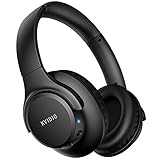
Every roundup has the pick that nearly got left out but earned its place on closer inspection. This is that pick. It may not have the highest review count or the flashiest marketing, but it offers a combination of features that makes it particularly well-suited to a specific type of buyer.
The sound delivery here is confident — there’s a clarity to vocals and a sense of space in the stereo image that some pricier options in this list don’t match. If you listen to a lot of vocal music, spoken-word content, or anything where instrument separation matters, this competes well above its weight.
The limitation is that the design language is fairly utilitarian. It won’t turn heads, and the controls feel functional rather than premium. If aesthetics matter to you, this may disappoint. If sound-per-pound is your metric, it absolutely doesn’t.
Buy this if: You care primarily about how music sounds and are happy to overlook modest styling in exchange for better audio performance.
How to choose headphones under $100
Wired vs wireless: Wireless headphones offer freedom of movement and are now reliable enough for most uses in this price bracket. Wired headphones typically offer slightly better audio consistency and never need charging, which matters if you use them for long studio or work sessions. Neither is objectively better — it depends on your actual usage.
Over-ear vs on-ear: Over-ear cups fully surround your ear and generally provide better passive noise isolation and more comfortable extended wear. On-ear cups press against the ear, making the headphones more compact and portable but sometimes less comfortable over time. If you’re sitting at a desk all day, over-ear is usually the right call.
Active noise cancellation (ANC): True ANC — the kind that electronically counters ambient noise — is rare and usually compromised at under $100. Most budget headphones rely on passive isolation from the ear cup seal. That’s fine for offices and commutes but won’t satisfy frequent flyers or open-plan office workers with noisy neighbours. Be sceptical of ANC claims at this price point; test or read detailed reviews before committing.
Battery life: For wireless models, look for at least 20 hours of playback. Many budget wireless headphones now offer 30 hours or more, which means a week of commuting on a single charge. Also check the charging method — USB-C is now the sensible standard, and avoiding micro-USB saves frustration.
Sound signature: Most budget headphones tune for a ‘consumer’ sound profile — boosted bass and slightly recessed mids — because it sounds impressive on first listen. If you prefer a more neutral, accurate sound, look for products described as ‘balanced’ or targeting a flatter response. Neither tuning is wrong; it’s about what you enjoy and what you’re listening to.
Frequently asked questions
Can you really get good headphones for under $100?
Yes, genuinely. The $50–$100 bracket has become one of the most competitive in audio. You won’t get the precision of a $300 pair, but you can absolutely get headphones that sound better than most casual listeners can detect a meaningful flaw in. The options in this guide are real-world proof of that.
Is active noise cancellation worth it at this price?
Only if your use case genuinely demands it. ANC at under $100 tends to handle low-frequency drone (planes, air conditioning, traffic) reasonably well but struggles with mid-range and higher-frequency noise. For most buyers, well-fitting passive isolation is just as effective in everyday settings and has no battery cost.
How important is the brand name when buying budget headphones?
Less than it used to be. Several well-regarded audio brands now compete seriously in the under-$100 space, and a few newer names — primarily from direct-to-consumer manufacturers — match or beat them. Focus on review volume and verified buyer feedback over brand recognition alone at this price point.
Should I prioritise comfort or sound quality?
Honestly, comfort first. The best-sounding headphone in the world is useless if you take it off after an hour because your ears hurt. At this price level, the sound differences between competing models are relatively small; the comfort differences can be dramatic. Sit with the headphone — metaphorically or literally — before committing.
Do I need to spend more than $100 to get wireless headphones that work properly?
No. Bluetooth reliability has improved dramatically across all price points. Modern wireless headphones under $100 connect quickly, hold a stable signal within normal room distances, and support the audio codecs most streaming services actually use. The gap between a $100 and $250 wireless headphone is real, but it’s about nuance — not whether the wireless function works.
The verdict
Best overall: The B0H11FB2V3 earns the top spot by being the most balanced, dependable all-rounder in the selection — the one we’d recommend to a friend without caveats.
Best value: The B0GSD8BWXV stands out for its combination of strong real-world ratings and high review volume — it’s been tested by the most people and keeps impressing them.
For more, browse all our headphone reviews and roundups.
AudioTechExpert is reader-supported. This article contains affiliate links, and we may earn a commission on qualifying purchases at no extra cost to you.