
Choosing an XLR microphone can feel overwhelming. There are dynamic mics, condenser mics, broadcast-style designs, and studio condensers — all promising professional sound, but built for very different situations. Plug the wrong one into your setup and you will spend more time fighting your recording than actually making it.
This guide cuts through the noise. We have taken a closed list of the most relevant XLR microphones available on Amazon right now and ranked them by what they actually do well. Whether you are setting up a home studio, launching a podcast, performing live, or recording vocals, there is a pick here that fits your workflow and your budget.
XLR connections are the professional standard for a reason: they carry a balanced signal over long cable runs, reject interference, and work with the widest range of audio interfaces and mixers. If you are ready to move beyond a basic USB mic and get serious about your sound, you are in the right place.
Best overall: Shure SM7B
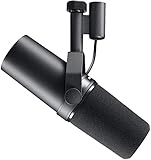

The Shure SM7B is one of the most recognised broadcast and studio microphones ever made, and for good reason. It is a dynamic studio microphone built with podcasting, streaming, vocal recording, and broadcasting firmly in mind — exactly the kind of all-rounder that earns the top spot in any serious XLR mic roundup. The wide frequency range and smooth, warm audio character the title describes means voices come through full-bodied and natural, without that harsh, over-hyped quality that cheaper mics can add.
The detachable windscreen is a genuinely useful inclusion, not just a marketing afterthought. It helps tame plosives — those hard ‘p’ and ‘b’ sounds that can ruin a take — without needing an extra pop filter cluttering your desk. The all-metal, broadcast-style build feels substantial and professional, and the SM7B handles loud sound sources as confidently as it handles quiet spoken-word recording.
The honest limitation is gain. The SM7B is a dynamic microphone, and dynamics typically need more gain than condensers. Pair it with a modest audio interface and you may find yourself cranking the preamp uncomfortably high, which can introduce hiss. A dedicated inline preamp or a cleaner interface makes a real difference here.
Buy this if: you want the gold-standard broadcast voice mic that podcasters, streamers, and studio vocalists have trusted for decades.
Best studio condenser: Audio-Technica AT2020
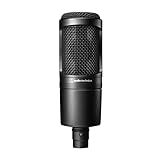
The Audio-Technica AT2020 is the classic entry point into proper condenser microphone territory. Specifically designed for project and home studio applications, it captures the kind of detailed, open sound that condenser microphones are celebrated for — ideal for vocals, acoustic instruments, or anything where you want nuance and air in the recording.
Condenser mics are more sensitive than dynamics, meaning the AT2020 will pick up the subtleties of a performance that a dynamic might miss. For home studio use, that sensitivity is a strength: you get professional-sounding recordings without needing extreme levels of gain. It is a straightforward cardioid pattern design, so it focuses on what is directly in front of it and rejects noise from the sides and rear.
That sensitivity is also the key limitation to be honest about. In a noisy or acoustically untreated room, a condenser like the AT2020 will pick up every fan hum, street noise, and room reflection. Treat your space, or at minimum record away from obvious noise sources, and you will be rewarded with genuinely impressive results from a mic at this price point.
Buy this if: you are building a home studio and want a true large-diaphragm condenser sound without spending a fortune.
Best premium condenser: RØDE NT1 5th Gen

The RØDE NT1 5th Generation is a serious step up in the condenser microphone world. It is a large-diaphragm studio condenser that offers both XLR and USB outputs, which means it can grow with your setup — useful whether you are plugging into a professional interface or connecting directly to a laptop. The fact that a shock mount and pop filter are included in the box is worth noting, because these are accessories that matter for condenser recording and often cost extra elsewhere.
RØDE built this mic for music production, vocal recording, and podcasting at a professional level. The 5th Generation designation signals this is a refined and evolved design, not a first attempt. Large-diaphragm condensers at this tier are favoured by recording engineers for capturing lead vocals, acoustic guitars, and any source where detail and low noise floor genuinely matter.
The limitation here is that the RØDE NT1 5th Gen is clearly positioned as a premium product, and at its price it demands a decent interface to realise its potential. It is also, like all condensers, best suited to treated acoustic spaces. Take it into a reflective, noisy room and you will hear every unwanted sound in your recording.
Buy this if: you are a vocalist, musician, or serious podcaster who wants a professional studio condenser with the flexibility of both XLR and USB connectivity.
Best for broadcast and podcasting: RØDE PodMic

The RØDE PodMic is a cardioid dynamic broadcast microphone built from the ground up for spoken-word applications. Unlike condensers that reward treated rooms and delicate sources, the PodMic is a dynamic mic — robust, forgiving of background noise, and designed to capture voice clearly even in imperfect environments. It requires an audio interface such as the RØDECaster or AI-1, and uses an XLR output, keeping it firmly in the professional signal chain.
The broadcast styling is not just aesthetic. The PodMic is built for the desk-mounted, close-mic setup that has become the standard for podcast production. Get close to it, and it rewards you with a full, punchy voice character that suits dialogue and commentary particularly well. The cardioid polar pattern keeps off-axis noise — room reflections, co-host spillage, keyboard clatter — firmly out of the picture.
The limitation is that the PodMic is XLR-only, so you will need an audio interface or mixer to use it. If you want plug-and-play simplicity, RØDE offers a USB version separately, but the XLR PodMic is the one to choose if you are already committed to a proper recording chain.
Buy this if: you are a podcaster or broadcaster who wants a dedicated dynamic broadcast mic that pairs naturally with an audio interface or podcast production console.
Best budget dynamic: Shure SM58

The Shure SM58 is perhaps the most universally recognised handheld dynamic microphone in the world. It is a professional cardioid XLR mic that covers singing, live performance, studio recording, podcasting, and broadcast — and it has done so reliably for decades. If you have ever been to a live music event, there is a strong chance the vocalist on stage was using an SM58.
Its reputation is built on toughness and dependability. The SM58 is a microphone that gets dropped, toured, packed into cases, and asked to perform night after night. It does not flinch. The cardioid polar pattern focuses on the source directly in front of it, making it practical for live use where feedback rejection matters as much as pure audio quality.
In a studio context, the SM58 is more limited than a condenser — it lacks the detailed top-end sensitivity of a large-diaphragm mic, and it was designed primarily for live vocal use rather than refined recording sessions. But for live performance, rehearsals, and as a first workhorse XLR mic, nothing at this price point has its track record.
Buy this if: you need a tough, proven handheld dynamic mic for live singing and performance that also covers basic studio and podcast duties.
Best USB/XLR hybrid value pick: Shure MV7X

The Shure MV7X is a dynamic microphone designed specifically for podcasting, streaming, and vocal recording, wearing a broadcast-style design and all-metal construction that signals it means business. It uses a voice-isolating cardioid pattern, which in practical terms means it focuses tightly on your voice and pushes background noise further away — useful if your recording environment is less than perfectly quiet.
The all-metal build sets it apart from plastic-bodied alternatives at a similar level. Shure’s broadcast heritage is visible in the design language: this is a mic that looks and feels like it belongs on a professional desk setup. The XLR output means it fits neatly into any interface-based recording chain, and the voice-isolating design makes it more forgiving of room noise than a condenser would be.
The limitation worth naming is that the MV7X, as a dynamic mic, will not have the airy, detailed top-end sensitivity of a condenser. For spoken word and podcasting that is often a feature, not a problem — but for music production or acoustic instrument recording, a condenser is likely a better tool.
Buy this if: you want a premium-feeling broadcast dynamic mic from a trusted name, built for podcasting and streaming with XLR connectivity and a voice-isolating design.
How to choose your XLR microphone
Dynamic vs condenser: Dynamic microphones like the Shure SM7B, SM58, MV7X, and RØDE PodMic are robust and less sensitive — they reject background noise well and suit live performance, podcasting, and broadcast work in less-than-perfect rooms. Condenser microphones like the Audio-Technica AT2020, RØDE NT1 5th Gen, and MAONO PM500 are more sensitive and detailed — they reward treated spaces and suit music recording, ASMR, and situations where capturing nuance matters.
Your room matters as much as your mic: A premium condenser in an untreated, echo-y room will often sound worse than a modest dynamic mic in the same space. If you cannot treat your room, lean towards a dynamic. If you have a quiet, treated space, a condenser will reward you.
Gain requirements: Dynamic mics — especially broadcast-style ones — typically need more gain from your audio interface than condensers. Make sure your interface or mixer has enough clean gain to drive your chosen mic without introducing unwanted noise.
Intended use case: A mic that excels at live vocal performance (like the SM58) may not be the best choice for a home recording studio. A studio condenser (like the RØDE NT1 5th Gen) is not the natural choice for gigging. Match the mic to what you will actually be doing with it.
Hybrid connectivity: Some mics on this list offer both XLR and USB outputs, which gives you flexibility as your setup evolves. If you are just starting out and do not yet have an audio interface, a hybrid mic can bridge the gap without locking you in.
Frequently asked questions
Do I need an audio interface for an XLR microphone?
Yes, in almost all cases. XLR microphones output an analogue signal that needs to be converted to digital before your computer can use it. An audio interface (or a compatible mixer) handles that conversion. Some hybrid mics on this list also offer USB output, which bypasses the need for an interface — but the XLR connection will always require one.
Are condenser or dynamic microphones better for podcasting?
Both work well, but for different situations. Dynamic mics like the Shure SM7B and RØDE PodMic are the most popular choice for podcasting because they reject background noise and suit imperfect rooms. Condenser mics like the RØDE NT1 5th Gen offer more detail and sensitivity, but they perform best in quiet, acoustically treated spaces.
What does ‘cardioid’ mean on a microphone?
Cardioid refers to the pickup pattern of the microphone — the shape of the area where it picks up sound. A cardioid mic focuses on what is directly in front of it and rejects noise from the sides and rear. It is the most common pattern for recording and podcasting because it isolates the source you want and minimises unwanted room sound.
Do I need phantom power for these microphones?
Condenser microphones require phantom power (usually labelled as 48V on your interface) to operate. Dynamic microphones do not. If you are choosing a condenser from this list — such as the Audio-Technica AT2020 or RØDE NT1 5th Gen — make sure your audio interface provides phantom power, which most modern interfaces do.
Is a more expensive XLR mic always better?
Not necessarily. The ‘best’ mic depends entirely on your use case, room, and the rest of your signal chain. A well-chosen budget dynamic in a quiet room will often outperform an expensive condenser in a noisy, reflective space. Match the mic to your actual situation rather than chasing a higher price tag.
The verdict
For most people, the Shure SM7B is the best overall pick — it is a proven broadcast dynamic mic that handles podcasting, streaming, and vocal recording with a warmth and professionalism that is hard to argue with. If you want a studio condenser that punches well above its price point and suits home recording, the Audio-Technica AT2020 is the best-value choice on this list: a genuine workhorse that has earned its long-running reputation.
For more, browse all our reviews and roundups.
AudioTechExpert is reader-supported. This article contains affiliate links, and we may earn a commission on qualifying purchases at no extra cost to you.