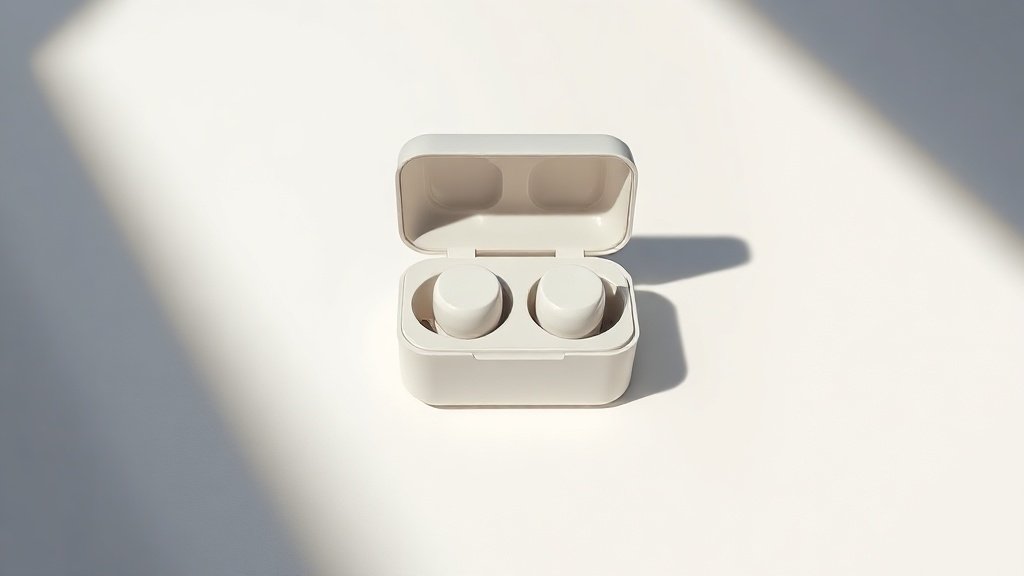
Choosing between Apple’s earbuds and headphones is trickier than it looks. The lineup spans everything from affordable wired buds to flagship over-ear cans, and the differences between generations are not always obvious from the box. If you’ve ever stood in a shop wondering whether the newer USB-C version is actually worth more than the Lightning one sitting next to it, you’re not alone.
This guide cuts through the noise. We’ve taken every current Apple audio product available on Amazon right now and ranked them by who they’re actually for — not just by spec sheet. Whether you want the best all-round performer, the most premium listening experience, or just a no-fuss wired option that works straight away, there’s a clear answer here for you.
This article is for iPhone and Apple ecosystem users who want honest, plain-English advice on which AirPods or headphones to buy in 2026. We’ve kept the list tight so you’re not drowning in options.
Best overall: Apple AirPods Pro 2 (USB-C, Hearing Aid Feature)
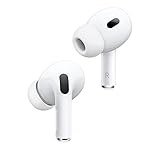
The Apple AirPods Pro 2 — specifically the latest variant with USB-C charging and the new Hearing Aid feature — represents the most complete version of Apple’s flagship earbuds to date. This is the one to buy if you want everything Apple has put into a pair of in-ear wireless headphones right now. The H2 chip drives the active noise cancellation and Personalized Spatial Audio, and the Hearing Aid feature is a genuinely meaningful addition that makes these earbuds useful to a broader range of people than ever before.
The active noise cancellation here is among the most effective you’ll find in earbuds at any price. Transparency mode lets you hear the world around you in a natural way, and the Personalized Spatial Audio adapts the sound stage to your ears specifically — a feature that takes a few minutes to set up and makes a real difference for music and film. High-fidelity sound is referenced directly in the product title, and in practice these deliver a balanced, detailed listen that suits everything from podcasts to orchestral recordings.
The honest limitation is fit: the silicone ear tips work brilliantly for most people but not everyone. If you’ve struggled with in-ear buds staying put during exercise, it’s worth trying the fit test before committing. That said, the included tip sizes give you a good chance of finding a secure seal.
Buy this if: you want the most fully featured Apple earbuds available and you’re on a USB-C iPhone or MacBook.
Best premium: Apple AirPods Max 2


The Apple AirPods Max 2 are Apple’s statement over-ear headphones, and the second generation brings USB-C charging alongside features that push them firmly into pro-level territory. The supplied title calls out Active Noise Cancellation, Adaptive Audio, Personalized Spatial Audio, and Live Translation — a feature set that goes beyond what the earbuds offer and reflects the extra real estate an over-ear design provides for acoustic engineering.
Live Translation is the headline new addition: it uses the headphones to translate conversations in real time, which is genuinely useful for frequent travellers or anyone working across languages. Adaptive Audio blends noise cancellation and transparency dynamically depending on your environment, so you’re not constantly reaching for a control to switch modes. The over-ear design delivers a fuller, more immersive sound than any in-ear can match, and the Starlight colour shown here looks understated and premium in equal measure.
The limitation is straightforward: these are the most expensive option in this roundup, and they are large. They don’t fold flat, which makes them less practical for commuting than earbuds. If portability matters as much as sound quality, the AirPods Pro 2 is a more sensible daily carry.
Buy this if: you want the absolute best Apple headphone experience and you’ll mostly use them at a desk, on a plane, or at home.
Best value: Apple AirPods Pro (2nd Generation, USB-C)

The Apple AirPods Pro (2nd Generation) with USB-C charging is the sweet spot for most people in this lineup. It delivers up to twice the active noise cancelling compared to the previous generation, Transparency mode, Adaptive mode, and Personalized Spatial Audio — all in the same compact form factor that made the AirPods Pro such a popular choice in the first place. The USB-C case means one cable handles your iPhone, iPad, Mac, and earbuds.
What separates this from the slightly older Lightning version below is the charging compatibility. If your daily carry is already USB-C, the convenience of a single cable ecosystem is real and daily. The noise cancelling is strong enough to make a meaningful difference on public transport or in open-plan offices, and the Transparency mode is natural enough that you can leave the earbuds in during face-to-face conversations without seeming rude.
The trade-off versus the latest AirPods Pro 2 variant above is that this model does not include the Hearing Aid feature or the H2 chip’s most recent software improvements. For the majority of listeners that won’t matter at all, but if you or a family member would benefit from the hearing health tools, it’s worth spending a little more for the newest model.
Buy this if: you want excellent AirPods Pro performance at a slightly more accessible price and you already use USB-C devices.
Best for Lightning users: Apple AirPods Pro (2nd Gen, MagSafe Lightning)
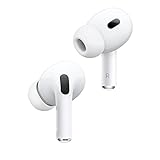
The Apple AirPods Pro (2nd Gen) with MagSafe charging case and Lightning connector is the right choice if you’re still on an older iPhone that hasn’t moved to USB-C. The core experience — up to twice the active noise cancelling, Adaptive Transparency, and Personalized Spatial Audio — is identical to the USB-C versions. You’re not giving up audio quality by choosing the Lightning variant; you’re simply matching the charging port to your current device.
Adaptive Transparency is worth highlighting here: it actively manages loud sounds in your environment in real time, reducing sudden sharp noises like car horns or power tools to a more comfortable level while still letting you hear speech and ambient sound naturally. That’s a meaningful safety and comfort feature for city dwellers.
The limitation is longevity: Apple has clearly moved the ecosystem to USB-C, so the Lightning case will feel increasingly out of step over the next year or two as more accessories standardise on the new port. If you’re planning to upgrade your iPhone soon, the USB-C version above is the smarter long-term buy.
Buy this if: you own a Lightning iPhone and want genuine AirPods Pro performance without buying a new charging cable.
Best premium wired option: Apple AirPods Max (USB-C, Midnight)

The Apple AirPods Max with USB-C charging in Midnight is the first-generation AirPods Max refreshed with a modern charging port. If the AirPods Max 2 above is outside your budget or unavailable, this is the over-ear Apple headphone to consider. It brings Pro-level active noise cancellation, Transparency mode, and Personalized Spatial Audio in a premium aluminium and mesh build that feels genuinely luxurious to wear.
The Midnight colourway is one of the more understated finishes Apple offers on this model — it reads as near-black in most lighting and suits professional or travel contexts where the brighter colours might feel conspicuous. The over-ear cushions and headband distribute weight well for extended listening sessions, and the noise cancellation creates a calm, isolated listening environment that in-ear options simply cannot replicate.
The trade-off versus the AirPods Max 2 is the absence of features like Live Translation and Adaptive Audio. For pure listening — music, films, calls — the gap is small. For travellers who want the newest feature set, the Max 2 is worth the step up.
Buy this if: you want Apple’s over-ear sound and build quality at a more accessible price than the latest generation.
Best budget wired pick: Apple EarPods (USB-C)

The Apple EarPods with USB-C plug are the no-fuss, plug-in-and-go option in this lineup. There’s no pairing, no charging, no firmware updates — just wired audio that works the moment you connect them to a USB-C iPhone or iPad. The built-in remote handles music playback, volume, and phone calls without you needing to touch your phone, which is genuinely useful when your phone is in your bag or pocket.
They’re the most affordable pick here by a considerable margin, and for calls, voice notes, podcasts, or casual listening they do the job reliably. If you regularly hand earphones to someone else — a child, a colleague on a plane — the wired EarPods involve none of the pairing or ownership complications that Bluetooth earbuds bring.
The honest limitation is that the EarPod design sits in the ear rather than sealing it, so it offers no noise isolation and won’t stay put during vigorous exercise. Sound quality is decent for the price but doesn’t approach what the AirPods Pro delivers. These are a practical backup or secondary pair, not a primary listening choice for most people.
Buy this if: you want a reliable, affordable wired option for calls and casual listening on a USB-C iPhone.
How to choose your Apple headphones
In-ear or over-ear? AirPods Pro and EarPods sit in or seal in your ear canal and are compact enough to carry anywhere. AirPods Max sit over your ears and deliver a more immersive sound and stronger noise isolation, but they’re heavier and don’t fold down. If portability is your priority, go in-ear. If listening quality at home or on long flights is what you care about most, over-ear is worth the bulk.
Do you need active noise cancellation? ANC makes a real difference in noisy environments — open offices, trains, planes, busy streets. The AirPods Pro 2 and AirPods Max both offer strong ANC. The wired EarPods have none. If you work in a loud environment or travel frequently, ANC is worth prioritising even if it costs more upfront.
USB-C or Lightning? Apple’s current iPhones, iPads, and MacBooks all use USB-C. If your devices are already USB-C, choosing a USB-C AirPods model means one fewer cable in your bag. If you’re still on an older Lightning iPhone, the Lightning AirPods Pro variant will save you buying a new cable — but consider how soon you’ll upgrade your phone before committing.
Do the extra features matter to you? The newest AirPods Pro 2 variant adds a Hearing Aid feature, which uses the earbuds to provide clinically validated hearing assistance. AirPods Max 2 adds Live Translation. If either of those features is relevant to your life, they’re worth the premium. If you just want great sound and solid ANC, older variants in this list deliver that at a lower price.
Wired versus wireless? Wireless earbuds need charging and occasional pairing troubleshooting. Wired EarPods never run out of battery and work instantly. For most people wireless is more convenient day-to-day, but a wired pair as a backup is genuinely useful, especially for long-haul travel when you don’t want to manage battery life.
Frequently asked questions
What is the difference between AirPods Pro 2 and the regular AirPods Pro?
The AirPods Pro 2 is the latest generation and includes improvements to active noise cancellation, the H2 chip, and — in the newest variant — a Hearing Aid feature. Earlier AirPods Pro (2nd Gen) models share the same core design but may lack the most recent software and hardware refinements. For most buyers, any AirPods Pro (2nd Gen) is a strong choice; the newest variant adds health features that matter to some users.
Are AirPods Max worth the extra cost over AirPods Pro?
It depends on how you listen. AirPods Max deliver a more immersive, spacious sound thanks to their over-ear design, and their noise cancellation creates a more complete acoustic seal. If you listen to music seriously or use headphones for long sessions at a desk or on planes, the Max is a meaningful step up. If you need something portable for commuting and exercise, AirPods Pro is the smarter choice.
Do AirPods work with Android phones?
AirPods will play audio via Bluetooth on Android devices, but most of the smart features — Personalized Spatial Audio, automatic ear detection, Siri integration, and easy pairing — only work fully within the Apple ecosystem. If your primary phone is Android, AirPods are a compromise rather than an ideal choice.
What does Personalized Spatial Audio do?
Personalized Spatial Audio uses your iPhone camera to map the shape of your ears and head, then adjusts the sound stage to match your specific anatomy. The result is audio that feels like it exists around you in three-dimensional space rather than just inside your head. It makes a noticeable difference for films and immersive music, and it’s available across the AirPods Pro and AirPods Max models in this roundup.
Is the Hearing Aid feature on AirPods Pro 2 a real hearing aid?
The Hearing Aid feature on the latest AirPods Pro 2 has received regulatory clearance in some markets as a legitimate hearing assistance tool for people with mild to moderate hearing loss. It uses the built-in microphones and processing to amplify and clarify sounds in the way a basic hearing aid would. It is not a replacement for medical-grade hearing aids for severe hearing loss, but it is a clinically meaningful feature for a large number of people.
The verdict
The Apple AirPods Pro 2 (ASIN B0D1XD1ZV3) is our top overall pick: it combines the most complete feature set Apple offers in an earbud — including the Hearing Aid feature and H2 chip — with the practicality of USB-C charging. For anyone who wants exceptional wireless earbuds that slot seamlessly into the Apple ecosystem, this is the one to buy.
For best value, the Apple AirPods Pro (2nd Generation, USB-C) (ASIN B0CHWRXH8B) delivers nearly everything most listeners need at a more accessible price — strong ANC, great spatial audio, and USB-C compatibility — without the premium of the very latest variant.
For more, browse all our reviews and roundups.
AudioTechExpert is reader-supported. This article contains affiliate links, and we may earn a commission on qualifying purchases at no extra cost to you.