Picking a condenser microphone is genuinely confusing right now. The market is flooded with options claiming professional results, and it is easy to waste money on something that does not actually suit the way you work. Whether you are recording vocals in a home studio, streaming live to an audience, or just trying to sound credible on video calls, the right condenser mic makes an immediate, audible difference.
This guide cuts through the noise. Every pick below has been selected from a live pool of available products, ranked by how well they serve a real use case — not by brand loyalty or sponsorship. We have included both USB and XLR options, so whether you are plugging straight into a laptop or running a proper audio interface, there is something here for you.
We kept the list to six strong contenders, covering everything from the most approachable plug-and-play option to a serious studio-grade large-diaphragm mic. Read the full picks, or jump to the comparison table to get a quick overview at a glance.
Best overall: Blue Yeti USB Microphone (Blackout)

The Blue Yeti has earned its place as the default USB-mic recommendation for a reason: it covers an enormous range of use cases without asking you to learn anything new. Inside are three 14 mm condenser capsules, which is what lets it switch between four pickup patterns — cardioid, bidirectional, omnidirectional and stereo — from a dial on the body. It records at 48 kHz / 16-bit across a 20 Hz–20 kHz range and is genuinely plug-and-play on Mac or PC: no drivers, no interface, no phantom power.
What sets it apart from most USB mics is the four selectable pickup patterns. You can switch between cardioid for solo recording, bidirectional for two-person interviews, omnidirectional for capturing a room, and stereo for music or ambient content. That versatility is baked right into the mic body itself, with a physical dial on the front. The Blue VO!CE effects processing — also named in the title — adds software-side polish for streamers who want broadcast-style sound without buying extra gear.
The honest trade-off is size and weight. The Yeti is a substantial desk presence, and it picks up vibrations and desk noise more readily than mics designed with lighter builds. If you are in a noisy environment or on a cramped desk, you will want a decent arm mount to get the most from it.
Buy this if: You want a single versatile USB mic for podcasting, streaming, and gaming without touching any audio interface.
Best premium: RØDE NT1 Signature Series
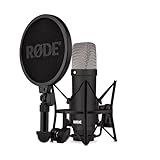

The RØDE NT1 Signature Series is the closest thing to a professional studio standard in this roundup. It is a large-diaphragm condenser — that detail is right in the title — which means it captures a full, detailed sound that smaller capsule mics simply cannot match. It ships with its own shock mount, pop filter, and XLR cable, so the bundle is genuinely ready to use from day one if you already own an audio interface.
RØDE positions this for music production and vocal recording, and that heritage shows. The large diaphragm design suits singers, voiceover artists, and anyone recording acoustic instruments where capturing nuance matters. For streaming and podcasting, it is arguably more mic than most situations demand — but if you are serious about audio quality and plan to keep this mic for years, the NT1 Signature Series is a clear step above anything else on this list.
The limitation is the XLR requirement. You cannot plug this into a computer directly; you need a separate audio interface, which adds cost. It is also an investment upfront, so it is best suited to people who already know they will use it consistently rather than casual creators testing the waters.
Buy this if: You are a musician, vocalist, or serious content creator who wants a long-term large-diaphragm studio mic and already owns or plans to buy an audio interface.
Best for streamers: Elgato Wave:3 MK.2

The Elgato Wave:3 MK.2 is built specifically for the streaming and podcasting workflow, and that focus shows in every feature choice. It connects over USB and works on both PC and Mac, so setup is painless. The headline addition over a standard USB mic is the Wave FX Processor and onboard DSP — digital signal processing that handles noise reduction and audio shaping without needing a separate piece of software running in the background.
Clipguard 2.0 is worth calling out: it is a protection system that prevents your audio from distorting when you laugh loudly, shout, or get suddenly animated mid-stream — a very real problem for live content where you cannot go back and edit a clip. The VST Insert support means power users can load professional audio plugins directly into the signal chain, which is unusual at this level and opens the door to broadcast-quality processing on a desk setup.
The trade-off is that the Elgato ecosystem works best if you are already using Elgato hardware and software. Standalone, it is excellent; as part of a mixed setup with other brands, some of the deeper features require a bit more configuration to get running smoothly.
Buy this if: You stream live content regularly and want a USB mic with built-in DSP, clip protection, and pro-level processing without a complex signal chain.
Best XLR step-up: Audio-Technica AT2035

The Audio-Technica AT2035 is where serious home studio work starts. It is a cardioid condenser with XLR output — meaning it needs an audio interface — and it ships with a custom shock mount that keeps handling noise and desk rumble out of your recordings. That bundled shock mount is a meaningful inclusion; buying one separately for a mic like this adds cost and hassle, so having it from the outset is a practical advantage.
Audio-Technica describes it as ‘perfect for studio, podcasting and streaming’, which reflects how broadly capable it is. It suits vocalists who want clean, detailed recordings, but also works well for instrument miking in a treated room. The cardioid pattern keeps focus on the source in front of it while rejecting sound from the sides and rear, which helps even in less-than-perfect acoustic environments.
The limitation is the same as all XLR mics: you need supporting gear. Budget for a decent audio interface and a mic arm alongside this purchase. Without those, the AT2035 cannot be used at all, which makes the upfront investment higher than a USB option.
Buy this if: You want a serious XLR cardioid condenser for home studio recording or podcasting and are ready to pair it with an audio interface.
Best budget USB: Audio-Technica AT2020USB+

The Audio-Technica AT2020USB+ takes the trusted AT2020 capsule design and puts it into a USB-connected body with a built-in headphone jack and volume control. That headphone monitoring — letting you hear your own voice in real time as you record — is a feature many budget USB mics skip entirely, and its presence here makes the AT2020USB+ a noticeably better recording experience than alternatives that leave you guessing what you actually sound like.
It is a cardioid condenser, which means it focuses on what is directly in front of it and rejects background noise from the sides and rear. For content creators who work alone — solo podcasters, voiceover artists, home studio vocalists — that is exactly what you need. The plug-and-play USB connection means no drivers and no interface required, keeping total costs down.
The honest limitation is that it is a single-pattern mic. You cannot switch to omnidirectional or stereo modes as you can with the Blue Yeti, so if you ever want to record two people at once or capture a room, you will need a different tool. For solo use, though, it does everything asked of it cleanly.
Buy this if: You want a reliable, no-fuss USB condenser with real-time headphone monitoring for solo podcasting or voiceover work on a tighter budget.
Best large-diaphragm XLR value: AKG C104
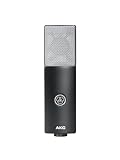
The AKG C104 is a professional large-diaphragm cardioid condenser that targets podcasters, streamers, broadcasters, and music recordists — and the title specifically mentions low noise and high SPL handling, which tells you it is designed to perform cleanly across a wide range of recording situations. AKG has a long heritage in studio microphones, and the C104 brings that pedigree into a sustainably designed body, which is a thoughtful detail for buyers who care about how their gear is made.
Large-diaphragm condensers generally capture a richer, more detailed sound than their small-diaphragm counterparts, and the C104 is no exception in type. It connects via XLR, so an audio interface is required — but for anyone already invested in an XLR setup, this is a compelling option that sits between entry-level XLR mics and full premium studio gear.
The limitation is that it is a newer product in AKG’s range, so the long-term track record is shorter than the more established options on this list. For buyers who prefer proven classics with years of community feedback, the AT2035 or RØDE NT1 may feel safer choices.
Buy this if: You want a professional large-diaphragm XLR condenser from a respected brand for podcasting, broadcasting, or music recording at a price below the premium tier.
How to choose your condenser microphone
USB versus XLR: This is the first and most important decision. USB mics plug straight into your computer — no extra gear needed, lower total cost, simpler setup. XLR mics require an audio interface to connect to your computer, which adds expense and complexity but generally gives you more control over your sound and better long-term upgrade paths. If you are just starting out, USB is the smart entry point. If you already own an interface or plan to build a proper studio, go XLR from the start.
Pickup pattern: Most mics on this list are cardioid, meaning they pick up sound from the front and reject noise from behind. That is ideal for solo recording. A few options, like the Blue Yeti, offer multiple patterns including omnidirectional and stereo. If you ever need to record multiple people or capture a room, a multi-pattern mic gives you that flexibility. For solo work, cardioid is all you need.
Diaphragm size: Large-diaphragm condensers — like the RØDE NT1 and AKG C104 — tend to produce a fuller, more detailed sound and are the standard choice for vocals and music. Small-diaphragm mics are more precise and suit acoustic instruments and live sound. For voice-led content, lean towards large-diaphragm options.
Your environment: Condenser microphones are sensitive — that is their strength, but it also means they pick up room reflections, air conditioning, and background noise more readily than dynamic mics. If your recording space is untreated, look for mics with onboard DSP or plan to use acoustic treatment. A mic like the Elgato Wave:3 MK.2 with its built-in noise processing is more forgiving in a live, noisy setup than a bare XLR condenser.
Bundled accessories: Some picks here come with shock mounts, pop filters, and cables included. These are not luxury extras — a pop filter prevents plosive sounds (‘p’ and ‘b’ sounds that blast the capsule), and a shock mount isolates the mic from desk vibrations. If a mic ships without these and you are buying on a budget, factor in the added cost of sourcing them separately.
Frequently asked questions
Do I need an audio interface to use a condenser microphone?
Only if you choose an XLR condenser. USB condensers like the Blue Yeti, AT2020USB+, and Elgato Wave:3 MK.2 connect directly to your computer with no additional hardware. XLR models — including the RØDE NT1, AT2035, and AKG C104 — require a separate audio interface to work.
Are condenser mics better than dynamic mics for podcasting?
Condensers tend to capture more detail and clarity, which makes voices sound natural and present. However, they also pick up more background noise. In a quiet, treated room they are an excellent choice for podcasting. In a noisy environment, a dynamic mic may actually produce a cleaner result despite being less sensitive overall.
What does ‘cardioid’ mean on a microphone?
Cardioid refers to the pickup pattern — the area around the mic where it captures sound. A cardioid mic is most sensitive directly in front of it and naturally rejects noise from behind and the sides. It is named after the heart-shaped pattern the sensitivity zone makes on a diagram. Most solo recording and podcasting mics use this pattern.
Can I use a condenser mic for live performance?
Some condensers — like the AKG P120 — are specifically described as suitable for live use, but most large-diaphragm condensers on this list are optimised for studio and home recording. They can be sensitive to feedback in a live stage environment. Check the supplied product description carefully before using any condenser mic on a live stage.
Is the Blue Yeti still worth buying in 2026?
Yes. The Blue Yeti remains one of the most versatile USB condensers available at its price point. The four pickup patterns, Blue VO!CE processing, and plug-and-play setup give it genuine value for streamers, podcasters, and home studio users who want one mic that handles multiple scenarios without additional gear investment.
The verdict
For most buyers, the Blue Yeti USB Microphone is the best overall pick: versatile, easy to set up, and genuinely capable across streaming, podcasting, and recording use cases without requiring any additional hardware. For anyone ready to invest in a proper studio setup, the RØDE NT1 Signature Series is the best-value premium choice — a large-diaphragm XLR condenser that comes fully equipped and is built to last.
For more, browse all our reviews and roundups.
AudioTechExpert is reader-supported. This article contains affiliate links, and we may earn a commission on qualifying purchases at no extra cost to you.