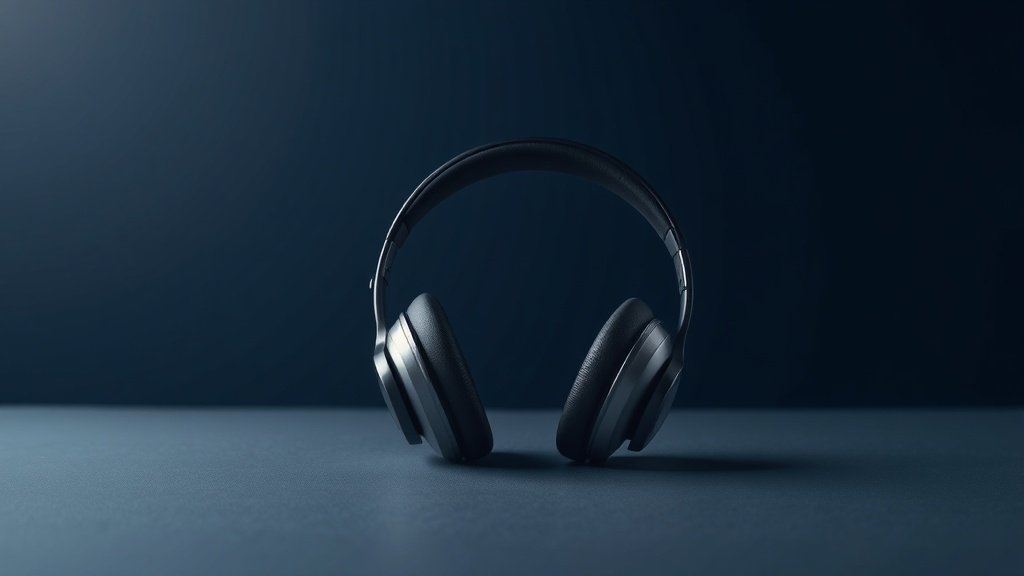
Travelling with bad headphones is a special kind of misery. Cabin roar, crying children, station announcements — all of it bleeding through into whatever you are trying to listen to. The right pair of headphones does not just play music; it carves out a bubble of calm that makes a six-hour flight feel manageable.
This guide covers the best headphones for travel in 2026 across every realistic budget, from genuine premium noise-cancelling flagships down to reliable wired backups that will not break your heart if they get lost at security. Every product here has been selected from current Amazon listings, and we have ranked them from the pick we would grab first to the most niche-but-useful option.
Whether you want class-leading ANC for long-haul flights, featherlight on-ears for city breaks, or a true-wireless earbud option that fits in a shirt pocket, there is something here for you.
Best overall: Bose QuietComfort Ultra


The Bose QuietComfort Ultra sits at the top of this list for a reason. Bose has long been the name that frequent flyers trust, and this model brings together over-ear noise cancelling, spatial audio, and a microphone into a package that is clearly built with the aircraft cabin in mind. The Deep Plum limited-edition colour is a nice bonus if you are tired of seeing identical black headphones on every overhead locker.
The standout strength here is the combination of active noise cancelling and spatial audio. For films and music on long journeys, spatial audio adds a sense of width and depth that flat stereo simply cannot match — it makes a tablet screen feel a little closer to a cinema. The noise cancelling is the stuff Bose built its reputation on, and the QuietComfort Ultra represents the current peak of that lineage.
The honest limitation is battery life. The supplied title states up to 24 hours of playtime, which is adequate for most trips but shorter than several rivals on this list. If you are doing back-to-back long-haul legs without easy charging access, keep that in mind.
Buy this if: you want the most refined, travel-focused over-ear headphone on this list and are willing to pay a premium for it.
Best truly wireless earbuds: Sony WF-1000XM6

Not everyone wants a large over-ear headphone strapped to their head for eight hours. The Sony WF-1000XM6 is the 2026 model of Sony’s flagship truly wireless earbud line, and Sony’s own title calls them ‘the best truly wireless noise cancelling earbuds’ — a bold claim, but one backed by a long track record with the XM series. These go in the ear rather than over it, making them far easier to sleep in on overnight flights.
The supplied title highlights studio-quality sound and Bluetooth in-ear design, and the XM series has consistently delivered LDAC hi-res wireless audio in previous iterations. For a traveller, the real win is pocketability — these earbuds and their case take up almost no space in a jacket pocket or small bag, compared to the bulky carrying cases that come with over-ear headphones.
The trade-off is that in-ear noise cancellation, however good, cannot quite match the physical isolation of large over-ear cups. In very loud environments like busy airport terminals, you may find yourself wanting a little more passive seal. The total battery life across earbuds and case, at up to 24 hours per the title, is workable but not class-leading.
Buy this if: you want the smallest, most packable noise-cancelling option and prefer earbuds over over-ear headphones for travel.
Best new release: Nothing Headphone (1)

The Nothing Headphone (1) arrives as one of the most talked-about new wireless over-ear headphones of the year. Nothing has made a name for itself with distinctive design and competitive specs, and the Headphone (1) packs in hybrid active noise cancelling, six microphones, hi-res audio, KEF-tuned sound, and spatial sound into a white over-ear design that looks unlike anything else in the category.
The KEF tuning is the headline feature here. KEF is a respected British speaker brand, and having them tune the audio profile gives the Headphone (1) a credibility that pure consumer electronics brands sometimes lack. For music lovers who travel frequently, this matters — the headphone is engineered to sound genuinely good, not just to cancel noise adequately.
Fast charging is a practical travel feature, and the supplied title states 80 hours of playtime, which is among the highest on this list and means you are very unlikely to run out of battery even on the longest multi-leg journeys. The limitation to note is that Nothing is still a relatively young brand compared to Bose or Sony, so long-term durability data is less established.
Buy this if: you want outstanding battery life, KEF-tuned audio quality, and a headphone that stands out visually from the crowd.
Best premium alternative: Beats Studio Pro

The Beats Studio Pro is one of the few headphones on this list whose supplied title explicitly calls out travel and commuting as primary use cases — so it earns its place here on that basis alone. This is an over-ear wireless headphone with active noise cancelling, USB-C lossless audio, and compatibility with both Apple and Android devices, which makes it unusually versatile for travellers who switch between ecosystems.
The USB-C lossless audio option is worth highlighting. When battery runs low on a long trip, you can plug in via USB-C and continue listening in lossless quality — something most wireless headphones cannot offer. The up to 40-hour battery life per the title is also meaningfully better than the Bose QuietComfort Ultra above, giving you more confidence on multi-day trips.
The limitation is that Beats’ ANC, while very competent, has historically sat just behind the very best from Bose and Sony in independent comparisons. If outright noise cancellation performance is your single deciding factor, the options above may serve you better. But for Apple ecosystem users in particular, the deep integration makes this a very compelling package.
Buy this if: you are an Apple user who wants seamless device switching, excellent battery life, and the option to go wired lossless when needed.
Best value ANC: Soundcore by Anker Q20i

The Soundcore Q20i by Anker is the most affordable active noise-cancelling option on this list. It is a wireless over-ear Bluetooth headphone with hybrid ANC, hi-res audio, a transparency mode, and app customisation — features that would have cost significantly more even a couple of years ago. For travellers who want ANC without spending flagship money, this is the obvious starting point.
Hybrid ANC combines feedforward and feedback microphones for more effective noise cancellation than single-mic systems, and the transparency mode lets you hear announcements without removing the headphones — genuinely useful in airports. The Q20i’s 40-hour ANC playtime per the title is also very competitive, easily covering a long-haul return journey.
The honest trade-off is that the audio tuning skews towards ‘big bass’ per the supplied title, which some listeners will love and others will find overpowering for extended listening. If you prefer a flatter, more neutral sound, the app EQ can help, but the default tuning is clearly consumer-facing rather than studio-neutral.
Buy this if: you want active noise cancelling and hi-res wireless audio on a tight budget and do not mind a bass-forward sound signature.
Best lightweight option: Sony WH-CH520

The Sony WH-CH520 is Sony’s lightweight on-ear Bluetooth headset, and it earns a place in this travel roundup by being supremely easy to live with. The supplied title highlights up to 50 hours of battery life and quick charging — two features that matter enormously when you are moving between time zones and cannot always predict when you will next find a power socket.
At this end of the market, you are trading noise cancellation for simplicity and longevity. The WH-CH520 does not have ANC, but its on-ear design is compact enough to fold flat and slip into a bag without a dedicated carry case, which is a real-world convenience that bulkier headphones cannot match. The built-in microphone means it doubles as a hands-free headset for calls at the gate.
The limitation is clear: no noise cancellation means you will hear more of your environment than with any of the ANC options above. On a noisy aircraft or busy train, you will need to turn the volume up rather than letting the headphone do the work for you. That said, for shorter journeys or budget-conscious travellers, the WH-CH520 is a sensible, reliable choice from a trusted brand.
Buy this if: you want a no-fuss, lightweight Sony Bluetooth headphone with outstanding battery life and quick charging at a wallet-friendly price.
How to choose your travel headphones
Noise cancellation type matters. Active noise cancelling (ANC) uses microphones and processing to cancel out low-frequency drone — perfect for aircraft engines and train rumble. Hybrid ANC, which uses both inward- and outward-facing mics, is generally more effective than single-mic systems. If you travel regularly by air, ANC is not a luxury; it is the single most useful feature in this category.
Over-ear vs on-ear vs in-ear. Over-ear headphones physically surround the ear and provide the best passive isolation on top of ANC. On-ear headphones sit on the ear and are lighter and more packable but let in more ambient sound. In-ear (earbud) designs like the Sony WF-1000XM6 are the most packable of all, but the seal quality depends heavily on fit. Choose based on how long you will be wearing them and whether you plan to sleep in them.
Battery life and charging speed. For long-haul travel, aim for at least 30 hours of ANC playtime. Fast charging is a practical bonus — being able to get several hours of playback from a 15-minute charge can be a lifesaver in a busy airport. Several products on this list state playtime in their supplied titles, so use those figures to compare directly.
Portability and folding design. If your headphones do not fold flat or come with a case, they will take up significant bag space. Check whether the model you are considering collapses to a compact form. Earbuds win this category outright, but several over-ear models fold neatly into supplied cases.
Call quality and microphones. If you need to take calls on the move — at airports, on trains, between meetings — check the microphone count in the product title. More microphones generally means better voice isolation and cleaner call audio. The Nothing Headphone (1) with six mics, for example, is clearly engineered with call quality in mind.
Frequently asked questions
Are noise-cancelling headphones worth it for travel?
Yes, for most travellers. Aircraft cabin noise sits in the low-frequency range that ANC is specifically designed to reduce. Even a mid-range ANC headphone will make a long flight noticeably less fatiguing compared to no cancellation at all. If you travel by air more than a couple of times a year, the benefit is real and meaningful.
Is over-ear or in-ear better for long flights?
It depends on personal preference. Over-ear headphones provide better passive isolation and are generally more comfortable for people who dislike the feeling of in-ear tips. However, in-ear earbuds like the Sony WF-1000XM6 are far easier to sleep in and take up almost no space. Try both styles if you can before committing.
How much battery life do I need for travel?
For a typical long-haul flight of 10 to 14 hours, 24 hours of ANC playtime is just enough. For multi-day trips without guaranteed charging access, aim for 40 hours or more. Several products in this guide — including the Nothing Headphone (1) — offer playtime figures that comfortably cover extended journeys as stated in their product titles.
Can I use Bluetooth headphones on a plane?
Yes, in most cases. The vast majority of airlines now permit Bluetooth audio devices during flight. You may need to switch your phone to flight mode first and then re-enable Bluetooth. A small number of airlines on certain routes still restrict this, so check your airline’s policy if you are unsure.
What is transparency mode and do I need it?
Transparency mode uses the headphone’s microphones to pipe in external sound so you can hear announcements, staff, and other people without removing the headphones. It is genuinely useful in airports and on public transport. Not every headphone on this list has it — the Soundcore Q20i explicitly includes it, and it is worth prioritising if you travel through busy transit hubs regularly.
The verdict
The Bose QuietComfort Ultra is our top overall pick for travel in 2026 — it combines class-leading ANC, spatial audio, and a trusted brand reputation into one polished package. For the best value, the Soundcore by Anker Q20i delivers hybrid ANC, hi-res audio, and impressive battery life at a price that leaves room in the budget for everything else a trip demands.
For more, browse all our reviews and roundups.
AudioTechExpert is reader-supported. This article contains affiliate links, and we may earn a commission on qualifying purchases at no extra cost to you.