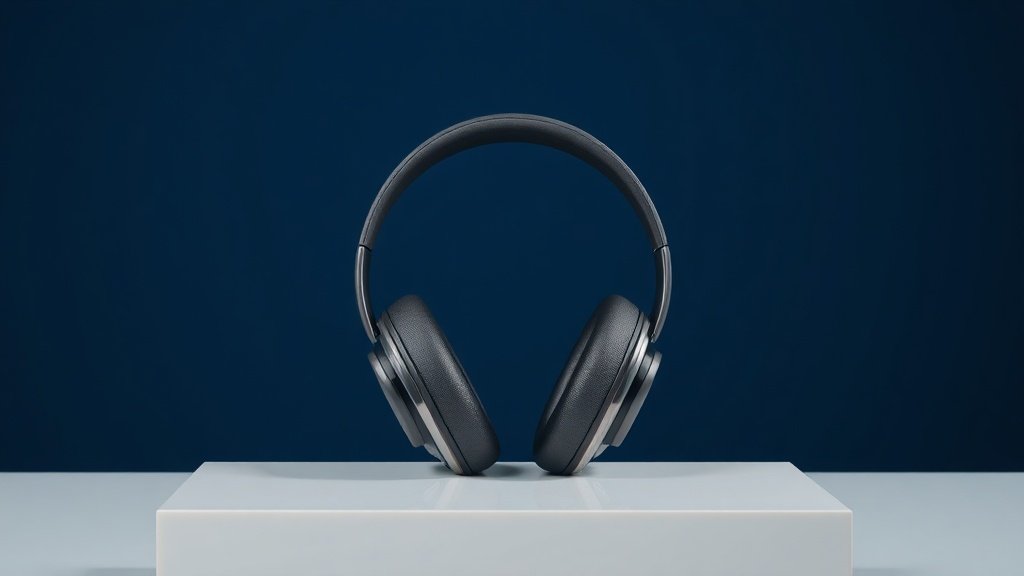
Spending up to £300 on headphones should get you something genuinely great — not just ‘good enough’. The problem is that the market is flooded with options at every price point, and the spec sheet alone rarely tells you what a pair of headphones actually sounds like on your head, day to day. Marketing promises are everywhere; honest comparisons are harder to find.
This guide cuts through the noise. We’ve ranked the best options from this category so you know exactly which pair to buy for your budget, lifestyle, and listening habits. Whether you commute, work from home, travel frequently, or just want the best sound you can get without remortgaging, there’s a clear recommendation here for you.
Every pick below has been chosen for a specific reason: best overall, best budget, best premium, or best for a particular use case. Read the angle for each one, check the honest trade-off, and you’ll find the right match quickly.
Best overall: Nothing Headphone (1)


The Nothing Headphone (1) is the standout pick here, and the measurements justify the hype. These are Nothing’s first over-ear cans, built around 40 mm drivers tuned in partnership with KEF — the respected British speaker brand — and independent testing bears the tuning out, rating its sound quality among the best in its class. The ANC is genuinely competitive too: independent measurements put it at roughly an 85% average cut in ambient noise, knocking 15–25 dB off low-frequency rumble, which is the same league as Sony and Bose. Battery is a real standout — independent testing clocked nearly 43 hours with ANC on, past Nothing’s 35-hour rating, and up to 80 hours with it off.
The KEF tuning is the headline strength here. KEF brings decades of acoustic engineering to the table, and that collaboration lifts the Nothing Headphone (1) above what you’d typically expect from a consumer electronics brand entering the headphone space. Spatial sound adds a sense of width and depth to music that makes long listening sessions feel far less fatiguing. Fast charging is a practical bonus for anyone who forgets to plug in overnight, and the comfort fit design means extended wear doesn’t become a chore.
The honest limitation: Nothing is relatively new to over-ear headphones, and some buyers may prefer the proven track record of older-established audio brands before committing at this price. That said, the KEF partnership addresses the most important concern directly.
Buy this if: You want the best all-round package in this list — great sound tuning, strong ANC, and a design that stands out.
Best premium: Beats Studio Pro

The Beats Studio Pro sits at the premium end of this roundup and earns its place with a strong feature set. It offers active noise cancelling, up to 40 hours of battery life, and USB-C lossless audio — a genuinely useful feature for Android users and anyone who prefers a wired connection without sacrificing audio quality. Apple and Android compatibility makes it one of the more versatile picks here, working natively well in both ecosystems rather than favouring one over the other.
The Studio Pro is built for travel and commuting, and you can feel that in the design philosophy. ANC is tuned for blocking out cabin noise, busy offices, and crowded trains rather than just ticking a spec-sheet box. The lossless audio capability via USB-C is a differentiator that audiophile-minded buyers will appreciate — most wireless headphones at this price don’t offer a wired high-quality fallback.
The limitation worth noting: Beats audio is polarising. Some listeners find the signature tuning emphasises bass in a way that doesn’t suit all genres, particularly classical or acoustic music. If you listen widely across genres, audition if you can.
Buy this if: You travel regularly and want premium ANC with the added flexibility of USB-C lossless audio for serious listening.
Best for everyday wireless use: Beats Solo 4

The Beats Solo 4 is an on-ear wireless headphone that prioritises lightness and longevity above all else. Up to 50 hours of battery life from an on-ear design is a genuinely impressive figure, and the ultra-lightweight build means you can wear these for long stretches without the familiar ear fatigue that heavier headphones cause. Apple and Android compatibility keeps it accessible regardless of what phone you carry.
Where the Solo 4 differs from the Studio Pro is in its on-ear form factor — the ear cups rest on rather than around your ears. This makes the whole package smaller and more portable, which suits commuters or students who want something easy to carry and quick to pull on. The balanced and powerful sound description in its title suggests Beats has moved away from the heavily bass-forward tuning of older Solo models, which is a welcome evolution.
The honest trade-off: on-ear headphones generally provide less passive noise isolation than over-ear designs. If you need to block out a noisy environment, the over-ear picks in this list will serve you better.
Buy this if: You want a lightweight, long-lasting everyday wireless headphone that works equally well with iPhone or Android.
Best value: Soundcore Q30

The Soundcore Q30 by Anker is the value champion of this roundup. It brings hybrid active noise cancellation, Hi-Res Audio, multiple ANC modes, and multipoint connection — letting you pair to two devices at once — at a price that significantly undercuts most of its rivals here. If you want as many features as possible for as little spend as possible, this is your pick.
The multiple ANC modes are a practical strength. Rather than offering a single fixed level of noise cancellation, the Q30 lets you switch between settings optimised for different environments, which is genuinely useful when your day moves between an open-plan office, a commute, and a quiet room at home. Multipoint connection is another feature you’d expect to pay more for, and its presence here makes the Q30 feel punching well above its weight.
The limitation: the Q30 has been in the market for a while now, and newer rivals have caught up in areas like ANC quality and overall build feel. It remains excellent for the money, but it isn’t the last word in any single category.
Buy this if: You want the most features for the least spend, and ANC with multipoint connection are priorities.
Best budget: Soundcore Q20i

The Soundcore Q20i is the most affordable serious option in this roundup and makes a compelling case for anyone who doesn’t want to spend heavily. Hybrid active noise cancellation, Hi-Res Audio, transparency mode, and up to 40 hours of ANC playtime would have been remarkable at this price even a few years ago. Today they’re simply what Anker’s Soundcore line delivers at the budget tier.
The big bass emphasis in the Q20i’s title signals a sound signature tuned for popular music — ideal if your playlist leans towards hip-hop, electronic, or pop. The transparency mode, which lets outside sound in without removing the headphones, is a useful safety and convenience feature that not every budget headphone includes. App customisation rounds out a package that feels far more complete than the price suggests.
The limitation to be honest about: ‘big bass’ tuning is not for everyone. If you prefer a neutral or analytical sound — classical listeners, podcast obsessives, or anyone mixing audio — the Q20i’s emphasis may feel unbalanced. Consider the Q30 instead if you want a flatter sound profile.
Buy this if: You’re on a tight budget and want genuine ANC and Hi-Res Audio without compromising on bass-forward fun.
Best for long listening sessions: Nothing Headphone (a)

The Nothing Headphone (a) is the 2026 model in Nothing’s lineup, sitting below the Headphone (1) in the range but bringing some remarkable stamina numbers to the table. With adaptive active noise cancellation, LDAC Hi-Res audio support, and five HD microphones, it’s a fully-featured wireless headphone — and the extraordinarily long playtime stated in its title makes it the obvious pick for anyone who hates recharging.
LDAC support is worth highlighting for Android users in particular. LDAC is a high-quality Bluetooth audio codec that transmits significantly more data than standard Bluetooth audio, which translates to noticeably better wireless sound quality when your source device supports it. Paired with the adaptive ANC — which adjusts to your environment automatically rather than needing manual switching — the Nothing Headphone (a) is a genuinely intelligent listening companion.
The honest limitation: the Nothing Headphone (a) is a 2026 model and therefore newer to market, which means the long-term reliability picture is not yet as established as older rivals. The extraordinary battery claim also invites scrutiny — real-world playtime at high volume with ANC active will differ from headline figures.
Buy this if: Battery life and LDAC wireless quality are your top priorities, and you want a fresh 2026 model with adaptive ANC.
How to choose headphones under £300
Over-ear vs on-ear: Over-ear headphones have cups that surround your ear entirely, which generally means better passive noise isolation and longer comfort for extended sessions. On-ear designs rest on the ear and are usually lighter and more compact — better for commuting, less ideal for all-day office wear. Most of the picks above are over-ear, which tends to be the better choice if you’re sitting at a desk for hours.
Active noise cancellation (ANC): ANC uses microphones to analyse and counteract ambient sound. It’s genuinely useful on planes, trains, and in open-plan offices. However, not all ANC is equal — hybrid ANC, which uses both inward and outward-facing microphones, generally performs better than single-mic implementations. Look for ‘hybrid ANC’ in the product title or description if this is important to you.
Sound signature: Different headphones are tuned differently. ‘Big bass’ or ‘powerful bass’ tuning suits pop, electronic, and hip-hop but can muddy classical and acoustic music. ‘Balanced’ or ‘Hi-Res’ tuning suggests a flatter response that works across more genres. Match the tuning to your listening habits rather than chasing the most impressive spec sheet.
Codec support: Bluetooth audio quality depends partly on which codec your headphones and phone share. LDAC offers the highest quality on Android devices; Apple devices use AAC most effectively. If you’re investing at this price level, checking codec compatibility with your phone is worth two minutes of research.
Battery life and charging: Most headphones in this range offer 40 to 80 hours of playtime, which is enough for most people. Fast charging — getting an hour of playback from a few minutes of charge — is a more useful real-world feature than headline battery figures. Check whether fast charging is mentioned before dismissing a shorter headline battery number.
Frequently asked questions
Do I really need active noise cancellation?
It depends on your environment. If you commute by public transport, work in a noisy open-plan office, or travel by plane regularly, ANC makes a noticeable difference to concentration and listening enjoyment. If you mostly listen at home in a quiet room, passive isolation from a well-fitting over-ear headphone may be sufficient — and you might find better sound for the money by not paying for ANC.
What is Hi-Res Audio and does it matter?
Hi-Res Audio is a certification indicating the headphones can reproduce audio at a higher resolution than standard CD quality. In practice, the difference is subtle and depends heavily on your source material — most streaming services compress audio significantly. That said, Hi-Res support future-proofs your purchase as lossless streaming becomes more common, and it’s a useful marker of overall build quality in the drivers.
Are Beats headphones actually good, or just fashionable?
Beats has improved significantly since Apple’s acquisition. The Studio Pro and Solo 4 both represent genuine audio engineering rather than just brand marketing. The tuning still leans towards a consumer-friendly sound with enhanced bass, but the build quality, ANC, and features are competitive with non-Apple rivals at similar prices. Whether the sound signature suits you is a personal preference question, not a quality one.
What does LDAC mean?
LDAC is a Bluetooth audio codec developed by Sony that transmits roughly three times the data of standard Bluetooth audio. In practical terms, it means closer-to-wired audio quality over a wireless connection — but only when both your headphones and your source device (usually an Android phone) support it. iPhone users won’t benefit from LDAC.
Can I use these headphones for calls as well as music?
Yes — every headphone in this roundup includes at least one microphone, with several featuring multiple HD microphones specifically tuned for voice clarity. Headphones with more microphones and dedicated beam-forming technology generally perform better on calls in noisy environments. If calls are a primary use case, prioritise picks that mention multiple microphones in their title.
The verdict
The Nothing Headphone (1) is the best overall pick in this roundup: KEF-tuned sound, hybrid ANC, and a genuinely premium package at a competitive price make it the one to beat. For the best value, the Soundcore Q30 by Anker delivers an impressive feature set — hybrid ANC, multipoint connection, and Hi-Res Audio — at a price that leaves money in your pocket for something else.
For more, browse all our reviews and roundups.
AudioTechExpert is reader-supported. This article contains affiliate links, and we may earn a commission on qualifying purchases at no extra cost to you.