You do not need to spend four figures to hear what a recording engineer actually intended — but you do need to know which specifications and design decisions separate genuinely transparent headphones from those that merely sound impressive on a shop floor.
After years of obsessively buying, using and comparing audio gear, I have come to one firm conclusion: the budget audiophile headphone market is better right now than it has ever been, and it is also more confusing than ever. Manufacturers have learned that specification sheets and glossy marketing language move units, which means a great-sounding headphone and an aggressively marketed mediocre one can sit on the same shelf at the same price.
This guide walks through the decisions that actually matter: driver type, impedance and sensitivity, open-back versus closed-back design, the role of your source gear, and how to think about burn-in and cable upgrades honestly. No product roundup, no rankings — just the framework that helps you spend your money on what you will actually hear.
Understanding Driver Types and What They Mean for Your Money
The driver is the engine of any headphone, and at the budget audiophile level you will encounter two main technologies: dynamic drivers and planar magnetic drivers. Dynamic drivers use a voice coil and diaphragm, and they are the older, more mature technology. Done well — as in the Sennheiser HD 560S or the AKG K612 Pro — they offer natural transient response, realistic bass body, and a sound character that works across genres without fatigue. The manufacturing cost is lower, which means more of your budget goes toward tuning and build quality rather than exotic components.
Planar magnetic drivers use a thin membrane suspended between magnets, energised across its entire surface rather than at a single point. The result is typically very low distortion and exceptional control at low frequencies. Headphones like the HiFiMAN Sundara and the HiFiMAN HE400se have brought planar technology into genuinely accessible price brackets. The trade-off is that planars are often less sensitive than dynamics, meaning they need more amplifier power to reach comfortable listening levels. If you are planning to listen directly from a phone or laptop, a well-tuned dynamic driver will usually serve you better than an underdriven planar.
There is a third option worth mentioning: electrostatic drivers. These offer extraordinary resolution and speed, but the cheapest entry point — the Koss ESP95X — still requires a dedicated energiser, pushing the total cost well above what most listeners consider budget territory. Electrostatics are worth understanding as an aspiration, but they are not the right starting point for this conversation.
Impedance, Sensitivity, and the Source Gear You Already Own
Impedance and sensitivity are two of the most misunderstood numbers on a headphone specification sheet, and getting them wrong means spending money on a headphone that your existing equipment cannot drive properly. Impedance, measured in ohms, describes the electrical load the headphone presents to its source. Sensitivity, measured in decibels per milliwatt, describes how loud the headphone gets from a given amount of power. These two figures together determine how easy or difficult a headphone is to drive.
A headphone rated at 300 ohms and 97 dB per milliwatt — like the Sennheiser HD 650 — sits in an interesting middle ground. The high impedance means it pairs poorly with low-output impedance sources like smartphones, which introduces tonal colouration through output impedance mismatch. But with even a modest dedicated headphone amplifier, the HD 650 opens up considerably. By contrast, the Beyerdynamic DT 770 Pro comes in 32-ohm and 80-ohm versions specifically designed for portable and lower-powered sources, which makes them immediately useful without additional investment.
My practical advice is this: before you choose a headphone, decide whether you are willing to add a dedicated amplifier to your chain. If the answer is no, stay below 150 ohms and look for sensitivity ratings above 100 dB per milliwatt. If you are open to spending an extra 60 to 100 pounds on a simple desktop DAC and amplifier — something like the FiiO E10K or the Topping DX1 — then the full range of 250-ohm and 300-ohm designs becomes available to you, and that is where some of the most rewarding budget audiophile listening happens.
The headphone that sounds extraordinary on a dedicated amplifier and disappointing on a phone is not a budget headphone — it is an amplifier purchase disguised as a headphone purchase.
Open-Back Versus Closed-Back: It Is Not Just About Noise
The decision between open-back and closed-back headphones is often framed purely around isolation — open-backs leak sound and let noise in, closed-backs do not. That is accurate, but it misses the more important sonic distinction. Open-back headphones allow air to move freely through the rear of the ear cup, which reduces internal reflections and creates what listeners describe as a more spacious, natural presentation. The soundstage — the sense of instruments occupying distinct positions in space — is almost always wider and more convincing on well-designed open-back headphones at equivalent price points.
The Sennheiser HD 560S is a useful reference here. It presents an unusually wide and accurate soundstage for its price, with a frequency response that leans toward neutrality without becoming clinical. Classical music, jazz, and acoustic recordings benefit enormously from this presentation. The Philips Fidelio X2HR is another open-back option that trades some of that neutrality for a more engaging, slightly warm character that suits rock and electronic music well. Neither headphone is appropriate for commuting or shared office spaces, but at a desk in a quiet room, they demonstrate exactly why open-back designs dominate audiophile listening.
Closed-back designs are not the lesser option — they are simply a different tool. The Audio-Technica ATH-M50x has been a studio reference staple for years because it offers a controlled, accurate response in a design that works in noise-contaminated environments. The Beyerdynamic DT 770 Pro in its 80-ohm version is another genuinely analytical closed-back that holds up to extended critical listening. If your listening environment is noisy or you share a space with others, a closed-back is not a compromise — it is the correct choice for your situation.
The Role of Your DAC and Amplifier in the Budget Chain
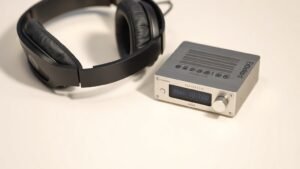
One of the most common errors in budget audiophile listening is spending all available money on the headphone and leaving the source gear as an afterthought. The digital-to-analogue converter — the DAC — is what translates the binary data in your music files into an analogue signal, and the amplifier is what brings that signal to a usable level. If either component introduces noise, distortion, or tonal colouration, those problems are transmitted directly into your headphones with perfect fidelity.
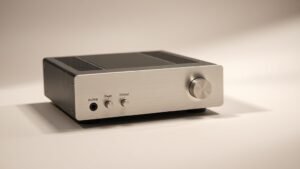
The good news is that clean, transparent DAC and amplifier performance is inexpensive at the budget level. The Topping DX3 Pro and the FiiO K5 Pro are two examples of desktop DAC and amplifier combinations that measure extremely well — genuinely below the threshold of audible distortion — at prices that leave meaningful budget for the headphones themselves. The difference between the headphone output of a mid-range laptop and one of these dedicated units is not subtle. On a revealing open-back headphone, the improvement in background noise floor and stereo separation is immediately audible.
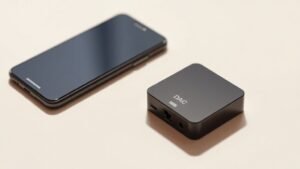
If portability matters, the iFi GO Blu or the FiiO BTR5 offer Bluetooth DAC and amplifier functionality that far exceeds what is built into most phones and tablets. These devices also support high-resolution Bluetooth codecs like LDAC, which — while not lossless — represent a meaningful improvement over standard SBC streaming when combined with a high-quality streaming subscription. The point is not that you must spend more overall, but that distributing your budget across source and transducer rather than concentrating it entirely on the headphone produces better results at every price point.
Frequency Response, Measurements, and Learning to Read Them
Frequency response graphs have become widely accessible through measurement databases like the one maintained by the audio community at the Squig.link platform, and learning to read them is one of the highest-value skills a budget audiophile can develop. A flat frequency response across the audible range — roughly 20 Hz to 20 kHz — does not guarantee a headphone sounds natural, because the correct target curve for headphones differs from flat due to the way ears interact with cup geometry. But a frequency response graph quickly reveals gross problems: a 10 dB bass hump, a harsh 6 kHz peak, or a rolled-off treble that will make recordings sound dull.
The Harman target curve, developed through research by Sean Olive and colleagues at Harman International, provides a scientifically derived reference for what frequency response most listeners prefer. Headphones that track close to this target — such as the Sennheiser HD 560S or the HiFiMAN Edition XS — tend to present music in a way that feels balanced and natural without exaggerating any frequency region. This does not mean headphones that deviate from the Harman curve are worse: many listeners prefer the darker, more relaxed presentation of the Sennheiser HD 650, which rolls off in the upper treble. The curve is a tool, not a verdict.
Buying headphones before deciding on a source is a budget mistake that costs more to fix than it saves. A high-impedance or low-sensitivity headphone driven from a phone will sound congested and thin, leading many listeners to conclude the headphone is poor when the real problem is the amplifier section of the source device.
Treating burn-in as a guaranteed sonic improvement will lead you to rationalise problems rather than return a faulty product. Some small changes in driver behaviour over extended use are plausible, but the dramatic transformations described in online forums are not supported by controlled measurement. Listen critically from the first hour and return a headphone that sounds wrong to you.
Spending budget on aftermarket cables before addressing source quality is a misallocation of resources. At the budget audiophile level, the DAC and amplifier chain has a far greater measurable and audible impact than cable material or geometry. Upgrade the source chain first, and consider cable changes only if you have a specific ergonomic or connection requirement rather than a sonic one.
Conclusion
Choosing audiophile headphones on a budget is fundamentally an exercise in understanding trade-offs rather than finding a single perfect answer. Knowing your source gear, understanding the implications of impedance and sensitivity, choosing the right enclosure type for your environment, and allocating budget across the full signal chain rather than the headphone alone — these decisions determine whether you end up with a genuinely transparent listening experience or an expensive disappointment. The tools to make an informed choice have never been more accessible.
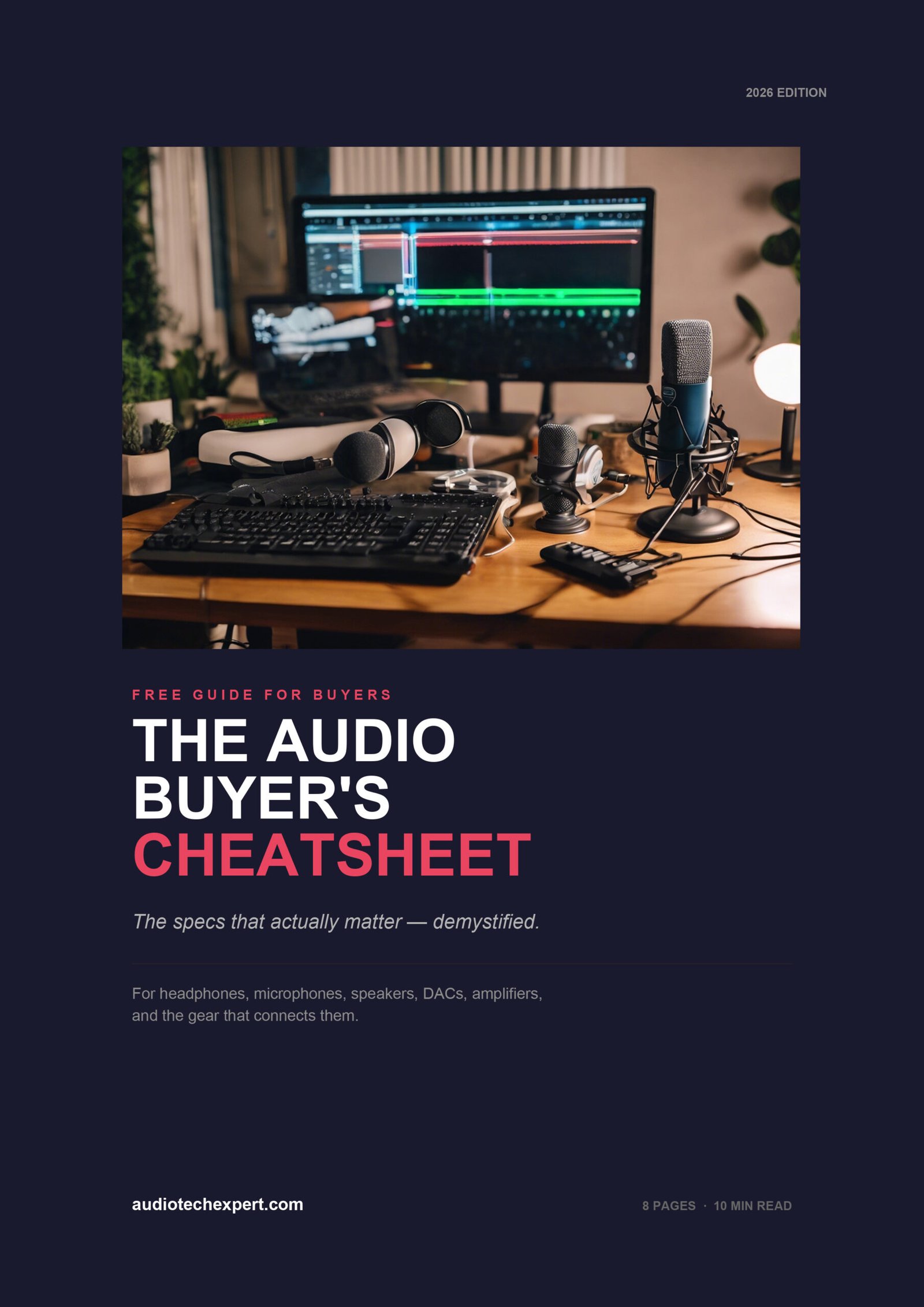
FREE DOWNLOAD
Stop Guessing. Start Buying Smart.
The specs that actually matter, demystified.
Headphones, microphones, the spec sheet jargon you can ignore — all in one quick-reference PDF. Free, instant, no fluff.
Send Me the CheatsheetYou'll also receive occasional new guide notifications. Unsubscribe anytime. No spam, ever.