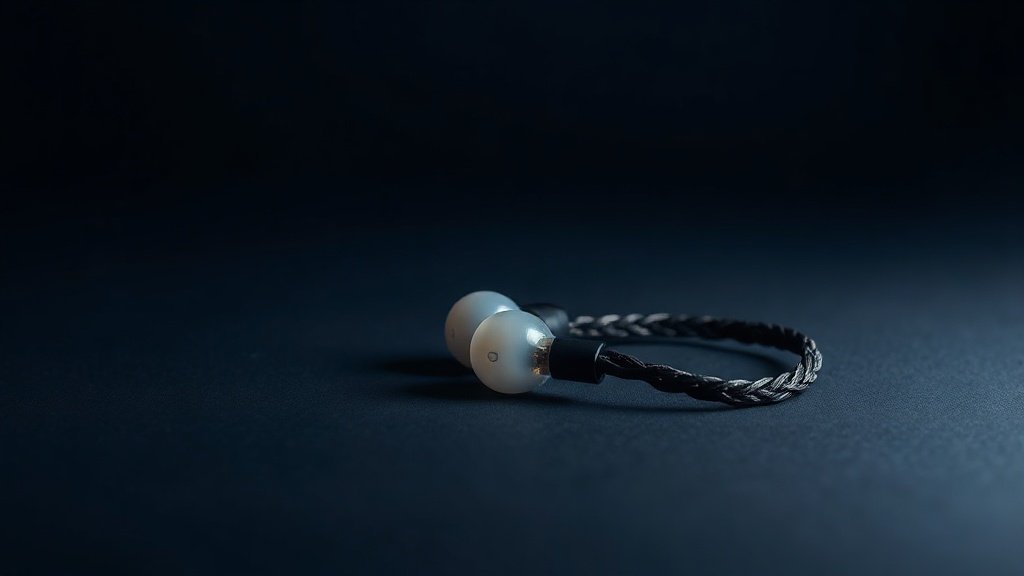
Finding a genuinely good in-ear monitor without spending a fortune used to mean compromising on driver quality, build, or tuning. That is no longer true. The IEM market under £200 (or its dollar equivalent) has exploded, and the gap between entry-level and flagship has shrunk to the point where a careful pick can sound genuinely impressive on a modest budget.
This guide cuts through the noise. We have taken a closed list of real, currently available products and ranked them by overall quality, driver technology, build, and which type of listener each one actually suits. Whether you are a musician wanting studio-accurate monitoring, a gamer who wants spatial detail, or simply an audiophile chasing your first properly resolving IEM, there is something here for you.
Every pick below is a wired, detachable-cable in-ear monitor with genuine HiFi credentials. We have kept the list tight — six picks only — so every entry earns its place. Read the angles, check the limitations, and pick the one that matches how you actually listen.
Best overall: SIMGOT EM6L

The Linsoul SIMGOT EM6L is a five-driver hybrid — one dynamic driver paired with four balanced-armature drivers — housed in a 3D-printed resin shell. That combination of driver types is a genuine engineering choice rather than a spec-sheet numbers game: the dynamic driver handles low-end body and texture, while the balanced armatures take care of the midrange and treble detail work. The result is a hybrid sound that tends to feel coherent and layered rather than jumbled, which is the real challenge with multi-driver designs.
The 3D-printed resin housing means the shells are lightweight and can be shaped for a consistent, ergonomic fit — something that matters enormously for long listening sessions or extended studio use. The detachable OFC silver-plated cable is a meaningful inclusion at this price: silver-plated copper tends to offer a touch more clarity in the high frequencies compared with standard copper, and the detachable system means you can swap cables without replacing the IEMs themselves.
The one honest limitation is that five-driver hybrids require careful source matching. Plug them into a poor DAC or amp and the balanced armatures in particular can sound slightly thin or fatiguing. A decent dongle DAC will unlock them properly.
Buy this if: You want a versatile, multi-driver hybrid that covers music production, critical listening, and everyday audiophile use without demanding a five-figure source chain.
Best quad-driver hybrid: SIMGOT SuperMix 4

The Linsoul SIMGOT SuperMix 4 takes the hybrid concept to an unusual extreme: it uses four entirely different driver types in a single IEM — one dynamic driver, one balanced armature, one planar magnetic, and one piezoelectric (PZT) driver. That is a genuinely rare configuration at any price, and it signals an intention to cover the full frequency spectrum with the driver type best suited to each range rather than relying on one technology to do everything.
The inclusion of a planar magnetic driver alongside a PZT tweeter gives the SuperMix 4 a particular character: planar drivers are known for low distortion and fast transient response, while PZT elements can extend air and shimmer into the very top of the audible range. Paired with the OFC silver-plated cable, this is a genuinely ambitious piece of engineering for its segment.
The honest limitation here is complexity. Four driver types mean four different tuning variables, and if any one of them is not perfectly integrated, the sound can feel uneven across the frequency range. It also demands a decent source to shine — do not expect a smartphone headphone jack to do it justice.
Buy this if: You are a tech-curious audiophile who wants to experience a four-driver-type hybrid and prioritises engineering ambition alongside sound quality.
Best for studio and gaming: Kiwi Ears KE4

The Linsoul Kiwi Ears KE4 is a 2DD plus 2BA hybrid — two dynamic drivers and two balanced armatures — which is a configuration that tends to deliver strong low-end weight from the dynamics alongside crisp midrange and treble definition from the armatures. It comes in a clean silver finish and ships with a detachable IEM cable, keeping upgrade paths open.
The dual dynamic driver arrangement is notable because it can improve bass layering and impact compared with a single-DD design, while the two balanced armatures add resolution in the frequency ranges where guitars, vocals, and hi-hats live. For gaming, that translates to good positional cues; for studio work, it means instruments occupy distinct spaces in a mix.
The limitation is that dual-DD designs can sometimes produce a slightly warmer, heavier low end than strict studio monitoring prefers. If you want an entirely flat, analytical sound, the KE4 may have slightly more personality than you are looking for.
Buy this if: You split your time between competitive gaming and critical music listening and want one IEM that handles both without major compromises.
Best planar IEM: Letshuoer Astralis

The Letshuoer Astralis uses a fifth-generation planar diaphragm driver measuring 15.5mm — and that is exactly the kind of detail that matters here. Planar magnetic drivers vibrate across their entire surface area rather than just from a central point, which typically produces lower distortion and a notably fast, precise transient response. The large 15.5mm diaphragm is on the generous side for a planar IEM, which should help with low-frequency extension and overall dynamic authority.
The Astralis ships with a detachable silver-plated copper cable, which is a solid pairing for a planar driver: silver-plated copper tends to preserve the speed and clarity that planar magnetic technology is celebrated for. For audiophiles who have heard planar headphones and want that character in an IEM form factor, the Astralis is the direct route to it.
Planar IEMs are often harder to drive than their dynamic or balanced-armature counterparts. The Astralis will reward a proper source — a USB dongle DAC at minimum — and may sound underpowered from a laptop or basic phone output.
Buy this if: You are a dedicated audiophile who specifically wants planar magnetic performance in an IEM and already owns or plans to buy a proper portable source.
Best open-back IEM: Fosi Audio IM4

The Fosi Audio IM4 is an open-back IEM — a genuinely unusual form factor that sits between a traditional closed IEM and a full-size open-back headphone. Open-back earphones sacrifice isolation in exchange for a more natural, airy soundstage presentation, and that trade-off is one that serious audiophiles and studio mixing engineers often actively prefer. The IM4 uses a single 10mm dynamic driver with N52 dual magnets, and that magnet specification suggests strong magnetic flux density, which typically supports tighter, more controlled bass response and better dynamic range from a single driver.
The 3.5mm 2-pin 0.78mm detachable cable system is a well-established standard in the IEM world, meaning aftermarket cable options are plentiful and cheap. The open-back design means the IM4 is best suited to home listening, recording booths, or quiet studio environments — wearing them on a commute will not work well, and others will hear your music.
That open-back design is also the main limitation for everyday use: no passive noise isolation whatsoever. These are a home-listening or studio tool, not an on-the-go IEM.
Buy this if: You want the closest thing to an open-back headphone experience in an IEM shell, and you do most of your listening in a quiet, private space.
Best single-dynamic value: Kiwi Ears Cadenza II

The Linsoul Kiwi Ears Cadenza II is built around a single 10mm titanium driver, which immediately sets it apart from the multi-driver hybrids elsewhere on this list. Titanium-diaphragm dynamic drivers are prized for their stiffness-to-weight ratio: the material resists unwanted flex across the diaphragm surface, which can translate to lower distortion and a cleaner, more precise sound compared with standard polymer cones. The Cadenza II also features KARS 2.0 technology as noted in the title, which relates to the acoustic resonance system Kiwi Ears uses to manage internal reflections, and a CNC aluminium faceplate that gives it a premium, machined feel.
Single-dynamic-driver IEMs have a devoted following among audiophiles because they tend to sound cohesive and natural in a way that multi-driver hybrids sometimes do not. There are no crossover points to misalign, no phase issues between different driver types — just one transducer doing everything. The Cadenza II in grey is a clean, understated design that signals confidence in the driver itself rather than relying on spec-sheet complexity.
The limitation is that a single dynamic driver, however well-implemented, will not match the treble micro-detail of a balanced armature or the resolution ceiling of a planar. If you want maximum technical resolution, look up the list. If you want musicality and coherence, the Cadenza II is compelling.
Buy this if: You prefer a natural, cohesive single-driver sound and want a beautifully built IEM that does not try to win on driver count alone.
How to choose your audiophile IEM under 200
Driver type shapes the character. Dynamic drivers tend to sound warm and natural with good bass impact. Balanced armatures add detail and precision but can sound thin if poorly tuned. Planar magnetic drivers offer low distortion and fast transients. Hybrids try to combine the best of multiple types — and when they succeed, they are exceptional value. Know which character appeals to you before you buy.
Build and fit matter as much as sound. An IEM that does not seal properly in your ear will sound hollow and bass-light regardless of how much you spent. Check whether a shell is 3D-printed resin (lighter, ergonomic) or metal (heavier, more durable). Detachable cables are a strong indicator of overall build quality and future-proof your investment.
Source quality is not optional above a certain level. Multi-driver hybrids and planar IEMs in particular will underperform from a basic phone or laptop output. A USB-C dongle DAC costing a fraction of your IEM budget will unlock significantly more of what these earphones can do. Factor that into your total spend if you do not already own one.
Open-back versus closed-back is a lifestyle choice. Closed IEMs seal against ambient noise — useful for commutes, noisy environments, or any situation where you need passive isolation. Open-back IEMs offer a more natural soundstage but provide essentially no isolation and leak sound. Be honest about where you will actually use them.
Cable standards affect upgrade options. The 2-pin 0.78mm connector is the most common detachable standard in this segment and offers the widest aftermarket cable selection. MMCX is also common. Both are fine; just check which standard your chosen IEM uses before buying an aftermarket cable.
Frequently asked questions
Do I need a special amplifier to drive audiophile IEMs?
Not necessarily, but it helps. Most IEMs in this price range will play at adequate volume from a phone or laptop, but a dedicated USB dongle DAC will reduce background hiss, improve dynamic range, and let multi-driver and planar designs reach their potential. It is not mandatory, but it is a worthwhile addition if you are investing seriously in an IEM.
What is the difference between a hybrid IEM and a single-driver IEM?
A single-driver IEM uses one transducer type — usually a dynamic driver — to reproduce the entire frequency range. A hybrid uses two or more driver types, each assigned to a specific frequency range. Hybrids can offer greater detail and technical capability, but they require careful tuning to sound coherent. Single-driver IEMs tend to sound more naturally unified.
Are planar IEMs better than dynamic driver IEMs?
Neither is objectively better — they have different characters. Planar magnetic drivers typically offer lower distortion and faster transient response. Dynamic drivers tend to deliver more tactile bass impact and a warmer, more natural mid-range. The ‘best’ choice depends entirely on the sound signature you prefer and the music you listen to most.
What does ‘detachable cable’ mean and why does it matter?
A detachable cable means the cable connecting the IEM shell to the plug can be unplugged and replaced. This is important because cables are the most failure-prone part of any wired earphone. A detachable system means a broken cable does not mean a broken IEM — you simply replace the cable. It also allows upgrades to higher-quality cables if you choose.
Can I use audiophile IEMs for gaming?
Yes, and many audiophile IEMs perform excellently for gaming. Good imaging — the ability to place sounds accurately in a virtual space — is a shared priority between critical music listening and competitive gaming. Multi-driver hybrids with strong treble resolution tend to be particularly capable, helping you hear directional cues, footsteps, and environmental detail clearly.
The verdict
The SIMGOT EM6L is our top overall pick: its 1DD plus 4BA hybrid configuration, 3D-printed resin shell, and silver-plated cable deliver a well-rounded, technically capable performance that suits musicians, audiophiles, and anyone wanting genuine HiFi quality without spending a fortune.
For the best value angle with a genuinely distinct character, the Kiwi Ears Cadenza II stands out: its titanium dynamic driver and CNC aluminium build offer a cohesive, natural listening experience that rewards listeners who prioritise musicality over spec-sheet complexity.
For more, browse all our reviews and roundups.
AudioTechExpert is reader-supported. This article contains affiliate links, and we may earn a commission on qualifying purchases at no extra cost to you.