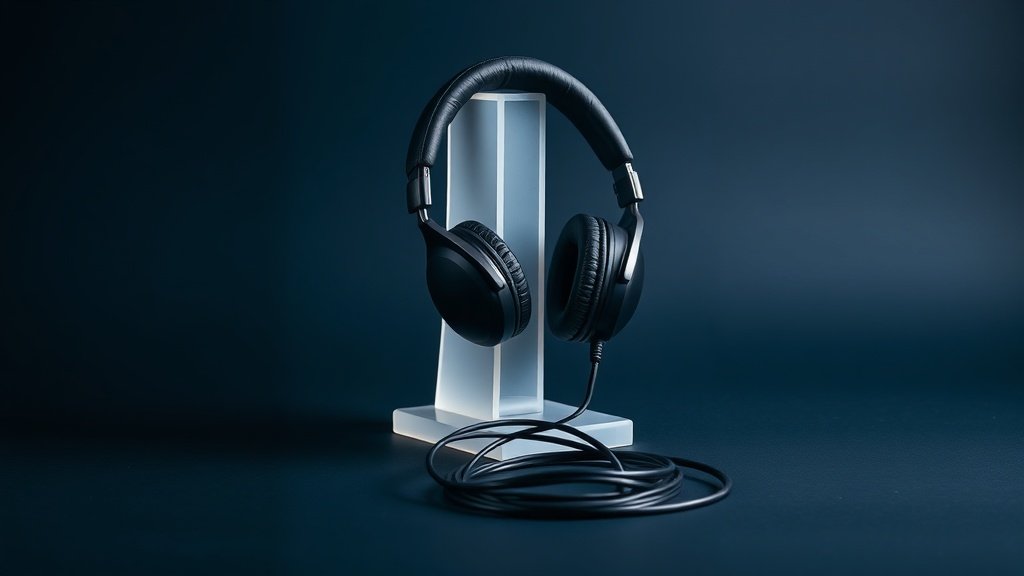
If you are shopping for a closed-back studio monitor headphone from Audio-Technica, the choice almost always comes down to two models: the ATH-M50x and the ATH-M70x. Both sit in the brand’s professional M-Series line-up, both are designed for critical listening environments, and both have earned genuine respect from engineers, producers, and serious enthusiasts. The question is not which one is ‘better’ in the abstract — it is which one fits your specific situation.
This comparison covers the two headphones across the criteria that matter most in a studio or home-recording context: sound character, build quality, comfort, features, and overall value. We have looked closely at what each model is designed to do, so you can make a confident call without guesswork.
Quick answer: for most people the ATH-M50x is the better buy — it’s more versatile, easier to power and cheaper, with a punchy, enjoyable sound. Choose the ATH-M70x only if you specifically want the flattest, most revealing reference tuning for critical mixing.
| Feature | Audio-Technica ATH-M50x Our pick |
Audio-Technica ATH-M70x |
|---|---|---|
| Typical price | $159.00 | $329.00 |
| Type | Over-ear, closed-back | Over-ear, closed-back |
| Driver | 45 mm dynamic | 45 mm dynamic |
| Impedance | 38 Ω | 35 Ω |
| Frequency response | 15 Hz – 28 kHz | 5 Hz – 40 kHz |
| Sensitivity | 99 dB/mW | 97 dB/mW |
| Max input power | 1,600 mW (1 kHz) | 2,000 mW (1 kHz) |
| Weight (no cable) | 285 g | 280 g |
| Sound signature | Punchy, slightly bass-forward, versatile | Flatter, analytical, reference-neutral |
| Detachable cable | Yes — 3 included (coiled + straight) | Yes — 3 included (coiled + straight) |
| Best for | Everyday listening, tracking, all-round studio use | Critical mixing & mastering |
| Verdict | Best all-rounder and value for most people | For the flattest, most revealing reference sound |
| Check price | View on Amazon | View on Amazon |
The ATH-M50x is the long-established, critically acclaimed workhorse that has built a massive following across home studios and professional environments alike. The ATH-M70x is the higher-tier sibling, engineered for those who need an even more extended and analytically precise listening experience. Read on to see which one earns a place on your head.
Audio-Technica ATH-M50x: the critically acclaimed all-rounder

The ATH-M50x has become something of a benchmark in the affordable professional headphone space. Its reputation is built on a sound signature that flatters a wide range of source material without straying into consumer-grade colouration — it is musical enough to enjoy, yet honest enough to trust during a mix. The detachable cable system, which is specifically highlighted in its product description, is a practical upgrade over fixed-cable rivals and means you are not binning the whole headphone if a lead wears out.
Audio-Technica pitches the ATH-M50x squarely at professional-grade use, and the closed-back dynamic design delivers solid passive isolation from ambient noise — useful whether you are tracking in a home studio or monitoring on the go. Build quality is robust, with a folding design that makes it reasonably portable for a full-size over-ear. It handles a broad range of tasks well: mixing, mastering reference checks, DJ monitoring, and everyday critical listening.
The honest limitation is that the ATH-M50x’s sound has a slight low-end presence that some purists find ever so slightly editorial. For the vast majority of users this is a non-issue, but if your work demands the most ruler-flat response possible, it is worth keeping in mind as you weigh up the two options here.
Audio-Technica ATH-M70x: the precision-first professional monitor
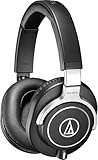

The ATH-M70x sits above the M50x in Audio-Technica’s professional line-up and is built with an explicitly analytical brief. Where the M50x aims to be versatile and widely appealing, the M70x is designed for listeners who need to hear exactly what is in a recording — nothing added, nothing glossed over. The closed-back dynamic architecture is shared with its sibling, but the tuning is noticeably more extended and flat in character, which makes it a natural choice for mastering engineers, broadcast professionals, and anyone whose job depends on catching subtleties that a more forgiving headphone might mask.
The ATH-M70x also comes with a detachable cable arrangement and maintains the professional build standards you would expect from this end of the M-Series range. The headphone feels purposeful and serious in use — this is not a pair you pick up for casual listening, but rather one you reach for when the work demands accuracy above all else. Its extended high-frequency response gives it a sense of ‘air’ and detail retrieval that sets it apart from the M50x in direct comparison.
The trade-off is straightforward: the ATH-M70x is the pricier of the two, and its more analytical tuning can feel less immediately rewarding for non-critical listening or for users who are simply starting out with studio headphones. It rewards experience and gives you what is there, not what you might wish was there.
Head-to-head: ATH-M50x vs ATH-M70x
Sound signature: The ATH-M50x delivers a sound that is professional and largely balanced, with a tad more body in the low end that many listeners find engaging. The ATH-M70x goes further towards a genuinely flat, extended response — its top end reaches noticeably further, revealing detail and spatial information that the M50x handles with slightly less precision. For pure analytical monitoring, the M70x has the edge; for a headphone that handles both mixing and enjoyable casual listening, the M50x is the more rounded performer.
Build and design: Both headphones share Audio-Technica’s professional closed-back dynamic construction, and both use a detachable cable system — a meaningful practical advantage over fixed-cable rivals. The M70x feels marginally more premium in the hand, which is consistent with its higher position in the range, but the M50x’s build is far from flimsy. Either will hold up well in a working studio environment with reasonable care.
Comfort: Both are full-size over-ear headphones intended for extended studio sessions. The M50x has well-padded ear cups and a headband that most users find comfortable across a long session. The M70x is similarly well-appointed in this regard. Neither is likely to cause discomfort during a normal working day, though individual head shapes and personal preference will always play a role — if possible, try before you buy.
Isolation: As closed-back designs, both headphones offer a meaningful degree of passive noise isolation — useful when tracking or working in a noisy environment. There is no significant difference between them in this respect; both do what a closed-back professional monitor should do.
Versatility: The ATH-M50x’s sound signature means it crosses over comfortably between studio use and everyday listening. The ATH-M70x, with its more clinical tuning, is a dedicated professional tool first and foremost. If you need one headphone to serve both mixing duties and commute listening, the M50x adapts more naturally. If your use case is purely professional and accuracy is the priority, the M70x is the more purposeful choice.
Value: The ATH-M50x is the more affordable option of the two. For users who are building their first proper studio setup, or who want a critically acclaimed professional headphone without stretching their budget, the M50x represents excellent value. The M70x commands a higher price that is justified by its more extended analytical performance, but that premium only pays off if your work genuinely benefits from that extra level of precision.
Frequently asked questions
Which sounds more accurate — the ATH-M50x or the ATH-M70x?
The ATH-M70x is tuned for a flatter, more extended response and is the more analytically accurate of the two. The ATH-M50x is honest and professional, but has a slightly fuller low-end character that the M70x deliberately avoids. For mastering or critical reference work, the M70x is the stronger tool; for general mixing and tracking, the M50x is more than capable.
Is the ATH-M70x worth the extra cost over the ATH-M50x?
It depends entirely on your workflow. If you are a mastering engineer, broadcast professional, or someone whose decisions hinge on catching the finest details in a recording, the M70x’s additional precision justifies the higher price. If you are a home-studio producer, podcaster, or a listener who wants a versatile professional headphone, the M50x delivers outstanding performance at a more accessible price point.
Which is better for long studio sessions — the ATH-M50x or the ATH-M70x?
Both are designed with extended studio use in mind and offer comparable comfort for long sessions. Neither stands clearly ahead of the other on this criterion — personal fit and head shape will matter more than any design difference between the two models.
Can I use either headphone for everyday listening outside the studio?
The ATH-M50x adapts comfortably to everyday listening thanks to its more engaging sound character. The ATH-M70x is a more single-minded professional tool, and its very flat tuning is less immediately enjoyable for casual use. If dual-purpose versatility matters, the M50x is the better fit.
Do both headphones use detachable cables?
Yes. The ATH-M50x is explicitly described as featuring a detachable cable, and the ATH-M70x likewise ships with a detachable cable arrangement as part of its professional specification. Both are therefore practical choices for working environments where cable wear and tear is a concern.
The verdict
Choose the ATH-M50x if you want a critically acclaimed, versatile professional headphone that handles mixing, tracking, and everyday listening with equal confidence. It is the more affordable option, its detachable cable makes it practical for long-term ownership, and its sound is trustworthy without being fatiguing. It is the natural starting point for anyone building a serious home studio or stepping up from consumer-grade cans for the first time.
Choose the ATH-M70x if your work demands the highest level of analytical precision and you want a headphone that reveals every detail a recording contains without editorial colouration. It is the right tool for mastering engineers, broadcast professionals, and experienced listeners who have already outgrown the M50x’s ever-so-slightly-flavoured presentation and need that extra layer of accuracy the M70x is built to deliver.
If your work sits somewhere in the middle — say, a producer who does their own mixing and occasional mastering — either headphone will serve you genuinely well. Both are professional-grade, both are built to last, and both carry the credibility of Audio-Technica’s M-Series heritage.
For more, browse all our reviews and roundups.
AudioTechExpert is reader-supported. This article contains affiliate links, and we may earn a commission on qualifying purchases at no extra cost to you.