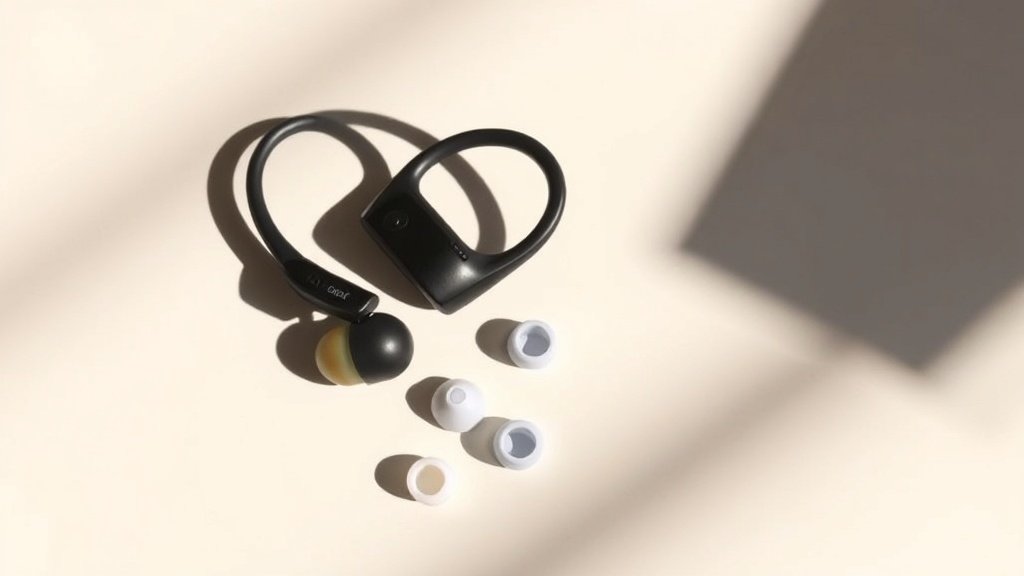
The headphones that sound extraordinary on your desk can become a liability the moment you step outside for a run, and understanding why could save you from both poor audio and genuine physical risk.
After years of obsessively buying, using and comparing audio gear, I have spent considerable time thinking about how headphones behave in controlled environments. But the outdoor sports context throws almost every studio priority out the window. Fit stability, sweat resistance, ambient sound management, and battery endurance take precedence over flat frequency response and wide soundstage. Getting those priorities wrong does not just ruin a run. In some situations it creates real danger.
This guide covers the physical and acoustic factors that matter most when selecting headphones for running, cycling, trail running, and general outdoor sport. We will look at fit and retention systems, ingress protection ratings, the genuine trade-offs between isolation and situational awareness, driver types suited to movement, connectivity reliability, and battery performance. By the end you will have a clear framework for evaluating any model against your specific use case.
Fit and Retention: The Factor That Overrides Everything Else
A headphone that falls out every two kilometres is useless regardless of how it measures on a frequency sweep. For running specifically, the in-ear form factor dominates because over-ear and on-ear designs trap heat, shift with head movement, and rarely seal consistently during physical exertion. Within in-ear designs, the key distinction is between standard earbud shapes that sit in the outer ear and in-canal designs with ear tips that form a seal inside the ear canal. In-canal designs with silicone or foam tips tend to stay put more reliably under vigorous movement, but only when paired with the correct tip size.
Most premium sport-oriented in-ears now include ear hooks or ear fins as secondary retention. The Jabra Elite Active series, for instance, uses a wingtip design that anchors against the outer ear ridge, adding a contact point beyond the ear tip itself. Shure offers its proprietary over-ear cable routing system on wired sport models, which routes the cable over the ear rather than dropping straight down, dramatically reducing the mechanical force that would otherwise pull the bud free. If you are evaluating any model, the first practical test is always a firm headshake followed by some light jogging. If it shifts, it will fall out on a descent.
Tip material matters beyond fit. Foam tips compress and expand, which provides excellent seal consistency but degrades faster when exposed to sweat over repeated sessions. Silicone tips are more durable in a sport context and easier to clean. Some manufacturers offer comply foam tips as an aftermarket upgrade for models that do not include them, which can transform a mediocre-fitting bud into a secure one. The Sony WF-1000XM5 uses silicone tips exclusively, but the ear design is angular enough that most users find fit either immediately excellent or persistently difficult, which is a reminder that no single design works for every ear anatomy.
Water and Sweat Resistance: Reading the IPX Rating Correctly
The IPX rating system is one of the most misunderstood specifications in consumer audio. The IP stands for Ingress Protection, and in the context of headphones the second digit indicates water resistance while the first is often omitted or replaced with X because dust protection testing is not performed. IPX4 means the device can withstand splashing from any direction, which covers sweat and light rain comfortably. IPX5 extends to low-pressure water jets. IPX7 means submersion to one metre for thirty minutes, and IPX8 indicates deeper or longer submersion capability.
For running and outdoor sport, IPX4 is the practical minimum. It handles sweat during intense sessions and light rain without issue. The Bose Sport Earbuds carry an IPX4 rating and have proven robust across extended periods of daily training use. Where runners get into difficulty is purchasing headphones with no IP rating at all, assuming that light sweat will not matter. Sweat is corrosive in a way that a brief rain shower is not. Salt and acids in perspiration attack driver housings and connector contacts over time, and warranty claims for sweat damage are routinely declined because manufacturers classify it separately from water resistance.
It is also worth noting that higher IP ratings do not automatically mean better overall build quality. A pair of IPX7-rated earbuds might have a fragile charging case that fails from repeated drops, which is equally frustrating in a sport context. Evaluate the full ecosystem including the case, because most truly wireless earbuds depend on their case for both storage and charging. A case that cannot survive being dropped from hip height on pavement is a design failure regardless of what the earbuds themselves are rated at.
In a sport context, the headphone that stays in your ears and survives your sweat will always outperform the one that sounds marginally better but refuses to cooperate with your anatomy or your weather.
Situational Awareness and the Isolation Trade-Off
This is the area where I see the most serious errors of judgement from runners, particularly those coming from a studio or audiophile background. High isolation feels like a premium feature in a critical listening context. In a road running or cycling context, it is a genuine hazard. A well-sealing in-canal earbud with passive isolation can attenuate traffic noise by fifteen to twenty decibels, which is enough to mask an approaching vehicle or cyclist when ambient levels are already moderate. On high-traffic roads or shared cycling paths, that isolation level is dangerous.
There are two main approaches to addressing this. The first is open-back or semi-open sport designs, the most recognised example being the AfterShokz bone conduction category, now branded as Shokz. The Shokz OpenRun Pro does not place anything in or over the ear canal at all. It transmits audio through the cheekbones directly to the cochlea, leaving the ears entirely unobstructed. The trade-off is sound quality: the frequency response is narrow, bass extension is limited, and high volumes can cause vibration discomfort. For road runners and commuter cyclists who prioritise safety, this is an entirely rational trade-off.
The second approach is transparency or ambient sound mode, now standard on many truly wireless earbuds including the Apple AirPods Pro 2 and the Sennheiser Momentum True Wireless 4. These use microphones on the outer housing to capture and mix external sound into what you hear through the drivers. The quality of transparency modes varies enormously. Apple has invested heavily in the processing chain for the AirPods Pro implementation, and it renders ambient sound naturally enough that most users can hold conversations while wearing them. Lower-cost implementations often introduce a hollow, processed quality to external audio that many users find more disorienting than pure isolation. If transparency mode is central to your use case, test it carefully before committing.
Bluetooth Reliability and Codec Considerations for Sport
Wired headphones are a non-starter for most running applications. Cable management during movement is distracting, and the mechanical noise of a cable brushing against clothing transmits directly into the ear canal via the cable itself, a phenomenon engineers refer to as microphonic noise. Wireless operation is the practical default, and that means understanding how Bluetooth behaves during vigorous outdoor movement. Standard Bluetooth 5.0 and later versions are considerably more stable than earlier iterations, but environmental interference from other devices, metal structures, and even certain body positions can cause dropout in any implementation.
The codec used for audio transmission affects both latency and audio quality. For music playback during running, latency is largely irrelevant since there is no synchronisation requirement with video. Audio quality does vary between codecs, however. SBC is the mandatory baseline and delivers acceptable quality at around 328 kilobits per second. AAC is generally better optimised for Apple device ecosystems. aptX and aptX HD offer higher data rates with compatible Android devices. Sony has developed LDAC, which transmits at up to 990 kilobits per second and is supported on the WF-SP800N and other Sony sport models. The practical listening difference between codecs is more audible at higher volumes and with complex musical material, but for typical podcast or playlist listening during running, SBC at a good connection is entirely adequate.
Antenna placement in truly wireless earbuds is a relevant engineering consideration that rarely appears in consumer reviews. Some early truly wireless designs placed antennas in the charging case connector area, which caused dropout when the earbuds were worn in certain orientations. Current flagship designs from Jabra, Sony, and Apple have addressed this with antenna placement optimised for consistent in-ear orientation, which is why flagship models tend to hold connection more reliably than budget alternatives at the same Bluetooth version.
Battery Life and Charging Practicalities
Battery life requirements for sport use depend entirely on your training volume. For runners who do thirty to forty-five minute sessions several times per week, a five or six hour earbud battery with a two-charge case is more than sufficient. For ultramarathon training, marathon preparation with long runs exceeding three hours, or multi-day events, the calculation changes significantly. The Jabra Elite 8 Active offers eight hours in the earbuds with an additional sixteen hours from the case, which covers most training schedules without daily charging anxiety. At the other end, some of the smallest sport earbuds offer only four to five hours per charge, which is limiting if sessions frequently extend beyond ninety minutes.
Charging case durability is directly relevant to sport use in a way it is not for commuting or office use. If you carry a case in a running vest pocket, it will encounter sweat, impact, and compression. Cases with rubberised coatings tend to handle this better than glossy polycarbonate, which scratches easily and can crack under impact. USB-C charging is now standard on most current models and is preferable to older proprietary connectors for longevity. Wireless charging cases, offered by Apple and several Sony and Jabra models, are a genuine convenience addition when available, allowing for casual topping-up on a charging pad without needing to locate a cable during a busy training week.
Choosing headphones based on sound quality measurements alone is the most common error runners make. Frequency response data tells you nothing about how a headphone behaves under sweat, movement, or three kilometres of pavement impact. Establish your fit, durability, and awareness requirements first, then apply sound quality as a secondary filter.
Ignoring IP ratings and assuming all earbuds handle sweat equally will shorten the lifespan of any headphone significantly. Sweat contains salt and organic acids that degrade driver components and connector contacts over time. Always confirm a minimum IPX4 rating for any headphone intended for regular exercise use, and clean the housings after sessions with a dry cloth rather than water.
Relying entirely on noise isolation while running on roads or shared paths creates a measurable safety risk. Even moderate passive isolation from a well-sealing earbud can mask vehicle approach sounds at typical ambient noise levels. If road running or cycling is part of your sport routine, either use bone conduction designs or ensure your chosen earbuds offer a high-quality transparency mode and use it consistently when in traffic.
Conclusion
Selecting headphones for running and outdoor sport is a process of prioritising the physical and environmental demands of the activity over the acoustic benchmarks that define quality in other contexts. Fit stability, ingress protection, situational awareness provisions, and battery endurance form the foundation of any sensible evaluation. Sound quality sits within those constraints rather than above them. Address the practical requirements first, and you will find that several well-engineered options exist at most price points that deliver genuinely satisfying audio within a framework that is also safe and durable enough to survive sustained training use.

FREE DOWNLOAD
Stop Guessing. Start Buying Smart.
The specs that actually matter, demystified.
Headphones, microphones, the spec sheet jargon you can ignore — all in one quick-reference PDF. Free, instant, no fluff.
Send Me the CheatsheetYou'll also receive occasional new guide notifications. Unsubscribe anytime. No spam, ever.