If you are shopping for a large-diaphragm condenser microphone and have narrowed it down to Rode’s own line-up, the choice between the Rode NT1 and the Rode NT2-A is one of the most common dilemmas in home and project studio recording. Both are well-regarded studio condensers from the same Australian brand, and both are aimed squarely at vocalists, podcasters, and musicians who want professional-quality capture without a professional studio budget.
This comparison looks at both products head to head, covering sound character, polar pattern flexibility, build quality, bundled accessories, and overall value. The goal is simple: help you decide which of these two specific microphones makes more sense for your situation, your room, and your recording habits.
Quick answer: for most people the RØDE NT1 is the easy pick — its ultra-low 4 dBA self-noise and clean cardioid sound are ideal for vocals, podcasts and streaming. Choose the NT2-A if you record varied sources and want multiple polar patterns plus onboard pad and high-pass switches.
| Feature | RØDE NT1 (Signature) Our pick |
RØDE NT2-A |
|---|---|---|
| Price | $146.00 | $335.20 |
| Type | Large-diaphragm condenser | Large-diaphragm condenser |
| Connection | XLR | XLR |
| Polar pattern | Cardioid (fixed) | Cardioid / omni / figure-8 |
| Frequency response | 20 Hz – 20 kHz | 20 Hz – 20 kHz |
| Self-noise | 4 dBA (ultra-quiet) | 7 dBA |
| Max SPL | 142 dB | 147 dB |
| Onboard switches | None | Pad + high-pass filter |
| Phantom power | 48 V required | 48 V required |
| Best for | Vocals, podcasts, streaming | Vocals + instruments, versatile studio use |
| Verdict | Our pick for most: ultra-low noise, simple, clean | Best for versatility — 3 patterns + switches |
| Check price | View on Amazon | View on Amazon |
In broad terms, the NT1 appeals to those who want a clean, quiet, no-frills workhorse, while the NT2-A is built for recordists who want more control and flexibility baked directly into the microphone itself. Read on to find out which suits you better.
Rode NT1: the ultra-quiet, no-fuss studio workhorse
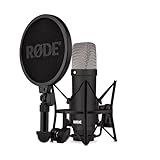

The Rode NT1 is a large-diaphragm condenser microphone that has earned a strong reputation as one of the quietest microphones in its class. It is designed primarily for studio vocal recording, acoustic instruments, and any application where a clean, transparent capture is the priority. The NT1 is a fixed cardioid microphone — meaning it picks up sound from the front and rejects sound from the sides and rear — which keeps things straightforward for anyone who does not need polar pattern switching.
Its standout strength is its exceptionally low self-noise, which makes it particularly well-suited to recording quiet sources like fingerpicked acoustic guitar, delicate vocals, or voiceover work where every subtle detail matters. The NT1 also comes bundled with a shock mount and pop filter, so you can get recording straight out of the box. Build quality is solid, with a full-metal body that feels genuinely robust.
The honest limitation is that the NT1 gives you one polar pattern and that is that. If you ever need to record a room, a stereo pair, or a conversation around a single microphone, you will find the fixed cardioid polar pattern a constraint. For single-source recording it is excellent, but it is not a flexible multi-purpose tool.
Rode NT2-A: the versatile studio solution with multi-pattern flexibility

The Rode NT2-A is also a large-diaphragm condenser, but it positions itself as a more feature-rich ‘studio solution’ — a phrase Rode uses in the product name itself. The NT2-A offers three selectable polar patterns (cardioid, omnidirectional, and figure-8), a switchable high-pass filter, and a pad switch, all accessible via controls on the body of the microphone. This makes it a significantly more versatile tool than the NT1 for recordists who work across different source types or recording scenarios.
The NT2-A is a strong choice for anyone who records vocals but also wants to capture rooms, record a choir in omni mode, use the figure-8 pattern for mid-side recording, or simply have the headroom that a pad switch provides when recording louder sources. Like the NT1, it is built to a high standard with a full-metal body, and Rode bundles it with a shock mount, pop filter, and carry case, meaning it is well-equipped out of the box.
Its limitation is straightforward: the NT2-A is the pricier of the two. If you know with confidence that you only ever need a cardioid microphone for vocal or single-instrument recording, you may find yourself paying for functionality you will rarely or never use. It is also a slightly larger, heavier microphone, which can matter if you are working in a compact home studio setup.
Head-to-head: NT1 vs NT2-A
Self-noise and transparency: Both microphones are in the same high-performing bracket for studio condensers, but the NT1 has built a particular reputation for being exceptionally quiet — a genuine standout characteristic. For recording the most delicate acoustic sources where noise floor matters most, the NT1 has a slight edge in this specific respect. The NT2-A is still impressively quiet for its class, but the NT1 is the one more often cited in this context.
Polar pattern flexibility: This is where the two products diverge most clearly. The NT1 is cardioid only, full stop. The NT2-A gives you cardioid, omni, and figure-8, switchable directly on the microphone. If you ever anticipate needing more than one pickup pattern — for room recording, mid-side stereo, or interviewing two people at once — the NT2-A wins this category outright. If cardioid is all you need, the NT1 keeps things admirably simple.
Onboard controls and versatility: The NT2-A includes a switchable high-pass filter and a pad, both of which add practical flexibility when dealing with bass-heavy sources or loud signals. The NT1 keeps things minimal with no switchable controls on the body. For a seasoned recordist who wants to shape the signal at the microphone rather than purely in software, the NT2-A offers more hands-on options.
Build quality and bundled accessories: Both microphones are built to a similarly high standard with full-metal construction. Both come with a shock mount and pop filter. The NT2-A adds a carry case to its bundle, which is a practical bonus for anyone who transports their gear. Neither microphone feels like a compromise on build for its price tier.
Sound character: Both are described as having a neutral, detailed character suited to studio work. The NT1 is often described as especially clean and transparent, while the NT2-A is noted for a full, warm capture that also retains detail. Neither is a heavily ‘coloured’ microphone in the vintage sense — both aim for accuracy — but there are subtle differences in character that may suit different voices and instruments differently.
Value: The NT1 is the more affordable of the two, which is a meaningful consideration if your needs are straightforwardly cardioid-only. The NT2-A costs more, but that premium buys you genuine additional functionality in polar pattern selection and onboard controls. Whether that represents value depends entirely on whether you will actually use those features.
Frequently asked questions
Which has better noise performance — the NT1 or the NT2-A?
Both are strong performers in terms of low self-noise, but the NT1 has a particular reputation for being one of the quietest studio condenser microphones available. If recording ultra-quiet sources with the lowest possible noise floor is your top priority, the NT1 is the one more frequently cited for this characteristic. The NT2-A is still excellent in this regard, but the NT1 edges it on this specific criterion.
Which is more versatile — the NT1 or the NT2-A?
The NT2-A is considerably more versatile. It offers three polar patterns, a high-pass filter switch, and a pad switch — all directly on the microphone body. The NT1 is fixed to a single cardioid pattern with no onboard controls. If you record a variety of sources or recording scenarios, the NT2-A is the more adaptable tool.
Is the NT2-A worth the higher price over the NT1?
It depends on your workflow. If you record primarily vocals or a single acoustic source and always in cardioid, the NT1 delivers exceptional quality at the lower price, and the extra cost of the NT2-A may not translate into benefits you will hear or use. If you want multi-pattern capability and onboard controls now or in the future, the NT2-A’s premium is well justified.
Which is better for home studio vocal recording — the NT1 or the NT2-A?
For straightforward vocal recording in a treated home studio, both are genuinely excellent choices. The NT1’s low noise floor can be a real advantage in a less-than-perfect acoustic environment. The NT2-A gives you the flexibility to try the high-pass filter to reduce room rumble and to experiment with polar patterns. Many vocalists would be very happy with either, but the NT1 is often the first recommendation for someone who wants simplicity and low noise above all else.
Do both microphones come with accessories included?
Yes, both the NT1 and the NT2-A include a shock mount and pop filter in their respective packages. The NT2-A also adds a carry case to its bundle. Neither requires you to immediately spend extra on essential accessories to get recording, which is a practical advantage shared by both products.
The verdict
Choose the NT1 if you record primarily in cardioid — vocals, voiceover, acoustic instruments — and you want the cleanest, quietest possible signal path at the more affordable price point. It is a focused, no-frills microphone that does its job outstandingly well without complication. For anyone building a home studio on a budget who knows they need a single great cardioid condenser, the NT1 is a compelling and well-considered choice.
Choose the NT2-A if you want the flexibility to grow into different recording scenarios, you work with varied source material, or you simply want onboard control over your polar pattern, filter, and pad without relying entirely on software. The higher price reflects real additional functionality, and for a recordist who will genuinely use those features, the NT2-A represents strong long-term value.
If you record exclusively in cardioid and your budget is the deciding factor, you will not feel shortchanged by the NT1. If you want one microphone that can handle a wider range of tasks as your recording evolves, the NT2-A is the more future-proof investment. Both are quality-built, well-regarded condensers from the same trusted brand — you are in good hands either way.
For more, browse all our reviews and roundups.
AudioTechExpert is reader-supported. This article contains affiliate links, and we may earn a commission on qualifying purchases at no extra cost to you.