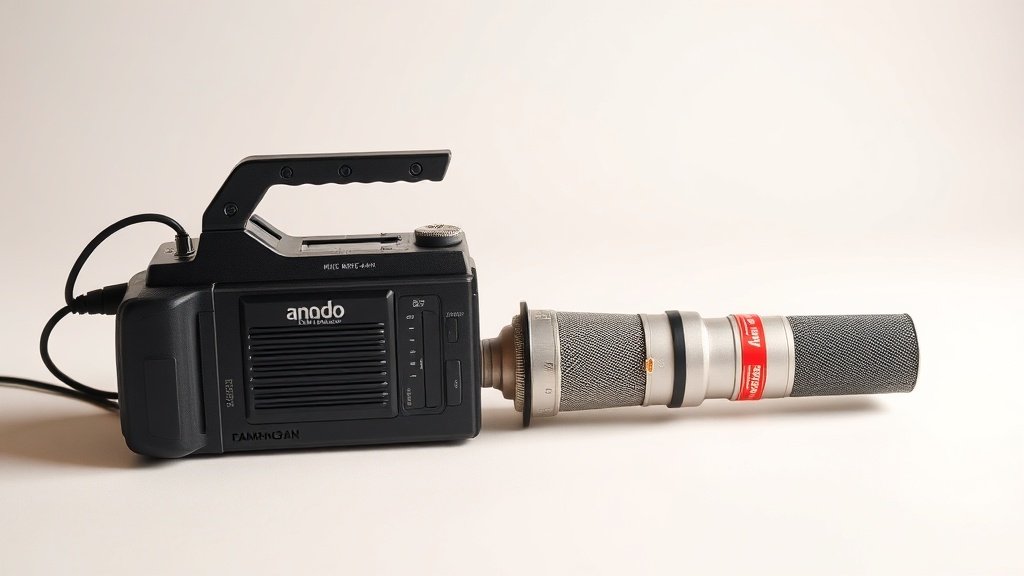
The choice between a field recorder and a dedicated microphone paired with an audio interface is one of the most consequential decisions a recording engineer can make, and most people get it wrong by focusing on the wrong variables entirely.
After years of obsessively buying, using and comparing audio gear, I have learned that the field recorder versus microphone-plus-interface question is never really about portability alone. It is about signal chain philosophy, workflow priorities, and the specific acoustic environments where you will be working most of the time. Get this decision right and every recording session becomes smoother. Get it wrong and you are fighting your gear on every job.
This guide works through the core technical and practical differences between the two approaches, examines the real-world conditions where each performs at its best, and gives you a clear framework for making the decision based on your actual use case rather than marketing language. I will reference specific products throughout because abstract comparisons do not help you make a purchase or understand where the engineering compromises actually sit.
Understanding What Each Setup Actually Is
A field recorder is a self-contained device: it houses preamps, analogue-to-digital conversion, storage, monitoring, and often a set of built-in microphones within a single portable chassis. Devices like the Sound Devices MixPre-3 II or the Zoom F6 are complete recording systems. You power them on, connect or use their built-in capsules, press record, and you have a file. There is no computer required, no driver management, no latency compensation, and no dependency on a stable mains supply. The entire signal chain from acoustic input to recorded file lives inside one box.
A microphone-plus-interface setup is a modular system. A microphone, whether that is a Shure SM7dB, a Rode NT1, or an AKG C414, connects to an audio interface such as a Universal Audio Volt 276 or a Focusrite Scarlett 4i4. The interface handles preamp gain, phantom power, and analogue-to-digital conversion, then passes the digital signal to a computer running recording software. Each component can be upgraded independently, and the quality ceiling is significantly higher than most self-contained field recorders at equivalent price points, but the system requires more infrastructure to function.
Where Field Recorders Have a Genuine Advantage
The primary advantage of a field recorder is operational independence. On a documentary shoot in a remote location, on a theatre stage during a live performance, or recording ambient sound in a forest at five in the morning, you do not have a laptop, an external drive, and a mains socket conveniently to hand. A field recorder running on AA batteries or a rechargeable internal cell solves that problem completely. The Sound Devices MixPre-6 II, for instance, can run on a standard USB power bank when mains power is unavailable, record to a standard SD card, and handle thirty-two-bit float files that make gain-staging errors essentially unrecoverable-in-post a practical non-issue. That last point matters enormously in unpredictable environments.
Thirty-two-bit float recording deserves particular attention here because it fundamentally changes how you think about gain in the field. Devices like the Zoom F3, the Tascam Portacapture X8, and the Sound Devices MixPre series record with dual-gain-stage ADC designs that preserve signal integrity across an enormous dynamic range. If a speaker unexpectedly shouts into your microphone at close range, or if a quiet ambient soundscape suddenly includes a cannon fire at a historical re-enactment, the recording will survive without clipping. That kind of resilience is simply not available in a standard interface-plus-DAW chain without very careful gain management and a degree of foreknowledge about what is going to happen acoustically.
Field recorders also tend to offer features specifically designed for location work: timecode generation and sync for multi-camera shoots, dual-mono recording at different gain levels, mixer-style fader control over multiple inputs, and ruggedised enclosures. The Zoom F8n Pro has eight full-size XLR-TRS combo inputs, dual SD card slots for redundant recording, and timecode I-O. No audio interface at a comparable price comes close to that feature set for location sound work.
Where a Microphone and Interface Setup Outperforms
For studio recording, podcast production, voiceover work, and home recording in a controlled acoustic environment, a dedicated microphone and interface setup consistently delivers superior audio quality for the money. The preamps in a mid-range audio interface like the SSL 2 Plus or the Audient iD14 Mk II are measurably cleaner and lower in noise than those found in field recorders at similar or even higher price points. That is a result of design priorities: field recorders are engineered for flexibility and resilience under hostile conditions, while studio interfaces are engineered to be as transparent as possible in stable conditions.
The microphone-plus-interface approach also gives you far greater flexibility in microphone selection. A field recorder accepts dynamic and condenser microphones through its XLR inputs, but the boutique condenser and ribbon microphone market, where options like the Coles 4038, the Royer R-121, or the Neumann U87 Ai live, is designed around the studio signal chain. These microphones benefit from low-noise, high-headroom preamps and stable phantom power delivery that interface manufacturers optimise for. Some ribbon microphones are genuinely sensitive to poorly regulated phantom power, and the consistency of a dedicated interface gives you confidence that the power rail is not going to cause problems.
From a workflow perspective, the computer-based approach integrates directly with your digital audio workstation. There is no file transfer step, no card reader, no converting between formats. You record directly into Pro Tools, Logic Pro, Reaper, or whatever software you use, and editing begins immediately. For high-volume production work, that efficiency compounds across dozens of sessions into a meaningful time saving.
The question is never simply which setup sounds better in isolation; it is which setup fails most gracefully in the conditions you cannot fully control.
The Hybrid Cases That Complicate the Decision
The boundary between field recorders and interfaces has blurred considerably over the last few years, and that complicates the decision in useful ways. The Sound Devices MixPre series can operate as a USB audio interface when connected to a computer, effectively functioning as both. The Zoom F6 similarly offers interface mode. If your work splits roughly evenly between location recording and studio-based production, a high-quality field recorder with interface mode may genuinely serve both contexts better than maintaining two separate systems.
Conversely, some audio interfaces have become surprisingly capable in the field. The Universal Audio Apollo Twin X is a serious studio interface, but its bus-powered operation and compact form factor mean some engineers use it on location with a laptop. The limitation is still the laptop dependency: battery life, operating system stability, and the physical fragility of a computer in a field environment remain genuine risks that a standalone recorder eliminates entirely.
There is also the question of built-in microphones. Many field recorders, including the Tascam DR-40X and the Zoom H5, include swappable capsule systems that provide a workable stereo microphone without any additional hardware. For run-and-gun journalism, field interviews, or recording rehearsals quickly, that convenience is real and practical. No microphone-plus-interface combination can match it for sheer speed of deployment.
Matching the Setup to Your Primary Use Case
The most honest advice I can give is to start with your primary use case and work outward from there, not inward from a specification sheet. If the majority of your recording happens in a fixed location with access to mains power and a computer, a high-quality audio interface paired with a carefully chosen microphone will serve you better in almost every measurable way. Spend the budget asymmetrically: a modest interface like the Focusrite Clarett Plus 2Pre paired with a genuinely excellent microphone like the Rode NT2-A will outperform an expensive field recorder in a treated room.
If location recording constitutes more than thirty percent of your work, the operational resilience of a dedicated field recorder becomes worth the audio quality trade-off at equivalent price points. The Zoom F3 is a remarkable device for its size and price: two channels of thirty-two-bit float recording in a unit smaller than a paperback book. Paired with a quality compact condenser like the Sanken COS-11D for lavalier work or a Sennheiser MKH 50 for location dialogue, it forms a system that is genuinely difficult to improve upon for the specific demands of location sound without spending considerably more money.
Consider also the redundancy requirements of your work. Broadcast and documentary clients typically require backup recording as a condition of the job. A field recorder with dual SD card slots and dual-gain-stage recording provides that redundancy internally. Replicating the same level of redundancy in a computer-based system requires additional hardware and considerably more complexity in the session setup.
Preamp Quality and Its Real-World Impact
One area where the marketing language around field recorders can be misleading is preamp quality. Several manufacturers advertise their preamps as studio-grade, and while devices like the Sound Devices MixPre series genuinely do offer preamp performance that approaches what you would find in a mid-tier studio interface, the majority of compact field recorders at the sub-five-hundred-pound price point have preamps with higher noise floors and lower maximum gain than a comparable interface. That matters most when you are recording quiet sources: acoustic instruments at a distance, quiet dialogue, or low-level ambient sound. In those situations, the noise floor of the preamp becomes audible, and a studio interface will generally perform better.
The practical implication is that if you are recording speech or music in a controlled environment with close-miked sources at healthy signal levels, most field recorder preamps are entirely adequate. The difference becomes meaningful when you are pushing gain above fifty decibels or recording in environments where the acoustic signal is inherently quiet relative to the noise floor of the preamp. Know where your use case sits on that spectrum before making a judgment based on preamp specifications alone.
Choosing a field recorder because it seems more professional is a common and costly error. For fixed-location studio and podcast work, a dedicated interface almost always delivers better audio quality per pound spent. Match the tool to the workflow, not to an aspiration about how the setup looks.
Overlooking the importance of gain range when selecting a field recorder leads to noisy recordings in demanding conditions. Not all field recorders offer the same maximum gain, and if you plan to record quiet sources or use low-sensitivity microphones like the Shure SM7B, verify that the preamp can provide sufficient clean gain before committing to a purchase.
Treating interface mode on a field recorder as equivalent to a dedicated studio interface is a misunderstanding of what interface mode actually provides. Interface mode on devices like the Zoom F series is a convenience feature, not a designed replacement for a dedicated interface; the latency performance, driver stability, and monitoring flexibility of a purpose-built interface will generally exceed what interface mode delivers in a production environment.
Conclusion
The field recorder versus microphone-plus-interface decision reduces to a single practical question: how much of your recording happens away from a stable power source and a computer, and how much of that work requires resilience to unpredictable acoustic events? If the answer is a significant proportion of your work, a field recorder is the correct tool. If the majority of your recording happens in a fixed environment with controlled acoustics, a dedicated microphone and interface will deliver better results at the same budget. Most working engineers eventually own both, but starting with the right one for your primary use case is what actually matters.
FREE DOWNLOAD
Stop Guessing. Start Buying Smart.
The specs that actually matter, demystified.
Headphones, microphones, the spec sheet jargon you can ignore — all in one quick-reference PDF. Free, instant, no fluff.
Send Me the CheatsheetYou'll also receive occasional new guide notifications. Unsubscribe anytime. No spam, ever.