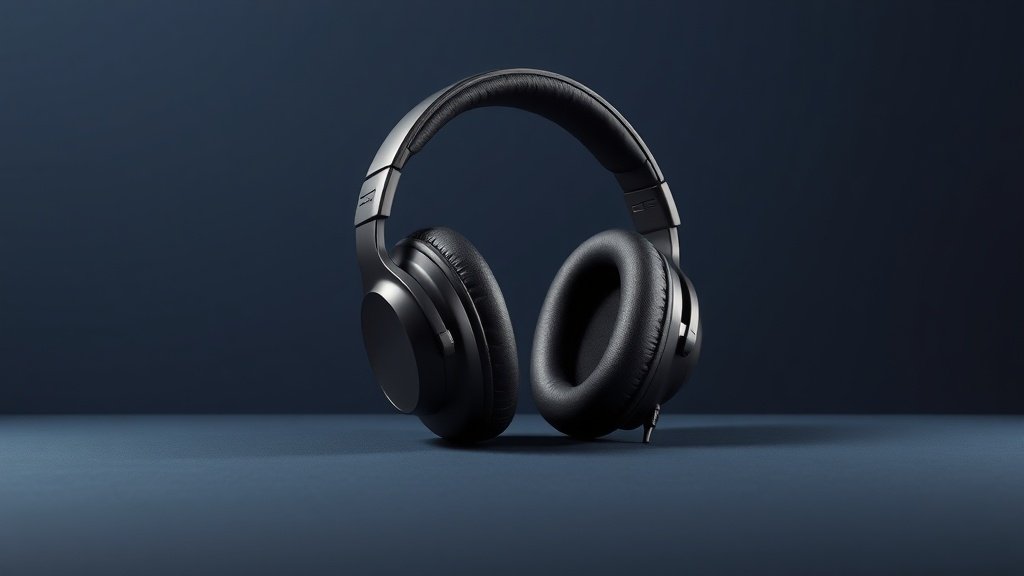
If you are shopping for a pair of professional studio monitor headphones and have narrowed it down to the Audio-Technica ATH-M40x and the Sony MDR-7506, you are in good company. Both are long-standing favourites in recording studios, home setups, and broadcast environments around the world. They sit in a similar price bracket, serve overlapping use cases, and are frequently mentioned in the same breath by engineers, podcasters, and musicians alike.
This comparison puts the two head-to-head across the criteria that actually matter when you are deciding where to spend your money: sound character, comfort, build quality, features, and overall value. We will be fair to both, because neither is a bad choice — they simply suit different working styles and priorities.
Quick answer: for most people the ATH-M40x is the more versatile pick — a flatter, more neutral tuning and a detachable cable make it easier to live with. Choose the Sony MDR-7506 if you want its bright, detailed classic-studio sound and don’t mind the fixed coiled cable.
| Feature | Audio-Technica ATH-M40x Our pick |
Sony MDR-7506 |
|---|---|---|
| Price | $109.00 | $113.00 |
| Type | Over-ear, closed-back | Over-ear, closed-back |
| Driver | 40 mm dynamic | 40 mm dynamic |
| Impedance | 35 Ω | 63 Ω |
| Frequency response | 15 Hz – 24 kHz | 10 Hz – 20 kHz |
| Weight | ~240 g | ~230 g |
| Sound signature | Flat, neutral, monitor-accurate | Bright, detailed, forward treble |
| Cable | Detachable (coiled + straight) | Non-detachable 3 m coiled |
| Amp recommended? | No — easy to drive | Helpful; 63 Ω likes a little power |
| Best for | Neutral mixing & everyday use | Tracking, detail, legacy studio use |
| Verdict | Our pick: flatter, more versatile, detachable cable | The classic — bright, detailed, ultra-durable |
| Check price | View on Amazon | View on Amazon |
Broadly speaking, the ATH-M40x tends to appeal to those who want a more neutral, flat monitoring response and the flexibility of detachable cables, while the MDR-7506 has earned its reputation as a workhorse trusted for its detail retrieval and compact folding design. Read on to find out which one belongs in your kit bag.
Audio-Technica ATH-M40x: the flat-response workhorse with modern flexibility


The Audio-Technica ATH-M40x is a closed-back, over-ear studio monitor headphone built for critical listening. It carries Audio-Technica’s professional-grade engineering pedigree and is positioned as a step into serious monitoring territory without crossing into eye-watering price ranges. The headline practical feature is its detachable cable system — the ATH-M40x ships with two cables included, meaning a broken lead is a quick swap rather than a trip to a repair shop.
The earcups swivel a full ninety degrees, which makes single-ear monitoring comfortable during live or broadcast sessions. Audio-Technica has fitted pro-grade earpads and a reinforced headband, both of which contribute to a sturdy feel during longer sessions. The sound signature is tuned towards accuracy rather than consumer-friendly bass emphasis, which makes the ATH-M40x a genuinely useful tool for mixing and tracking rather than casual listening.
One honest limitation: some users find the clamping force fairly firm out of the box, which can cause fatigue over very long sessions until the headband loosens with use. The earpads, while serviceable, are also the first component that tends to wear with heavy daily use — though replacements are widely available.
Sony MDR-7506: the legendary broadcast monitor with decades of trust

The Sony MDR-7506 is one of the most recognisable professional headphones in existence. It has been a fixture in broadcast booths, recording studios, and film sets for decades, and its reputation is built on consistent, detailed sound reproduction and robust build quality. It folds flat for easy transport, and its coiled cable — a design choice that suits stationary studio use — keeps slack tidy at a mixing desk or editing station.
Sony describes it as a large diaphragm headphone, and that driver size contributes to the spacious, detailed sound the MDR-7506 is known for. The closed-back design provides good passive isolation, which is useful when tracking vocals or instruments. The headphone is lightweight for its size, and many engineers report being able to wear it for extended periods without significant discomfort.
The honest limitation here is the cable: unlike the ATH-M40x, the MDR-7506 uses a fixed, non-detachable coiled cable. If the cable is damaged, repair or replacement is more involved. The coiled format also makes it less practical for use with portable devices or on the move, where a straight cable of adjustable length would be more convenient.
Head-to-head: ATH-M40x vs MDR-7506
Sound signature: Both headphones are tuned for professional monitoring rather than consumer listening, so neither artificially boosts bass to flatter music. The ATH-M40x is generally regarded as having a very flat, neutral response that reveals the true balance of a mix. The MDR-7506 has a slightly brighter character in the upper midrange and high frequencies, which some engineers find helpful for catching sibilance and fine detail — though it can occasionally make certain material sound a touch harsh over long sessions. Neither is ‘wrong’; the preference comes down to working style.
Build and durability: Both headphones feel built to last, but they take different approaches. The ATH-M40x uses a robust construction with a reinforced headband and pro-grade earpads, and its detachable cables are a significant practical advantage for longevity. The MDR-7506 is famously tough — its folding design is well-engineered — but the fixed cable means the whole unit is at risk if that cable sustains damage. For working professionals who put gear through hard use, the ATH-M40x’s replaceability gives it a practical edge.
Comfort: The MDR-7506 is notably lightweight and many users report it disappearing on the head after a short adjustment period. The ATH-M40x is comfortable too, but the firmer clamp can take some time to break in. For very long sessions — think eight-plus hours of editing — the MDR-7506 may have a slight advantage, though individual head shapes vary considerably.
Portability and versatility: The MDR-7506 folds into a compact form, making it easy to store and carry. The ATH-M40x also folds, and its swivelling earcups are handy for on-the-fly single-ear monitoring. The detachable cables on the ATH-M40x mean you can swap to a shorter straight cable for use with a phone or portable recorder, adding flexibility the MDR-7506 cannot match with its fixed coiled lead.
Value: Both headphones sit at a similar price point, making this a genuine comparison rather than a budget-versus-premium decision. The ATH-M40x arguably offers more long-term value given the detachable cable system, since cable wear is the most common point of failure in studio headphones. The MDR-7506 offers exceptional value for what has become a genre-defining professional tool, and its used and refurbished market is broad if budget is tight.
Frequently asked questions
Which sounds more accurate for mixing — the ATH-M40x or the MDR-7506?
Both are designed for accurate monitoring, but they have subtly different characters. The ATH-M40x leans towards a flatter, more neutral response, while the MDR-7506 has a brighter tilt that accentuates high-frequency detail. Engineers who find they are missing sibilance issues may prefer the MDR-7506; those who want the most neutral starting point often favour the ATH-M40x. Neither will mislead you the way a consumer headphone would.
Which is better for long studio sessions — the ATH-M40x or the MDR-7506?
The MDR-7506 has the edge here for many users, thanks to its lighter weight and well-established reputation for extended wearability. The ATH-M40x can feel slightly firmer during the break-in period, though most users find it becomes very comfortable with use. If long sessions are your primary concern, it is worth trying both if you can before committing.
Is the detachable cable on the ATH-M40x a meaningful advantage over the MDR-7506?
For working professionals, yes. Cable damage is one of the most common causes of headphone failure. The ATH-M40x lets you swap a worn or broken cable in seconds; with the MDR-7506, you are looking at a repair job or a replacement unit. The ATH-M40x also ships with two cables, so you have an immediate backup. If longevity matters to you, this is a real differentiator.
Can the MDR-7506 be used on the go, or is it purely a studio headphone?
The MDR-7506 folds compactly and can certainly be used outside the studio, but its coiled cable is designed with a stationary desk setup in mind. It becomes unwieldy when walking around. The ATH-M40x, with its included straight cable option, adapts more naturally to portable use. For studio-only work, the MDR-7506’s coiled cable is a non-issue.
Which headphone holds up better over years of use?
Both are known for durability. The ATH-M40x has the practical advantage of user-replaceable cables and widely available replacement earpads. The MDR-7506 is also well-supported in terms of spare parts, and its reputation for lasting years of hard professional use is well-deserved. If repairability is your priority, the ATH-M40x is the safer long-term bet; if you prefer a proven track record of near-indestructible daily use, the MDR-7506 has that reputation in abundance.
The verdict
Choose the Audio-Technica ATH-M40x if you want maximum flexibility, a neutral flat-monitoring sound signature, and the peace of mind that comes from detachable, swappable cables. It is the stronger choice for home studio owners who use their headphones across multiple sources — mixing desk, audio interface, and portable recorder alike — and for anyone who wants a headphone that can be maintained and kept alive for years without professional repair.
Choose the Sony MDR-7506 if you want a proven, lightweight studio monitor with decades of professional endorsement, a bright and detail-oriented sound that excels at catching mix problems, and a compact folding build that stores easily. It is especially well-suited to broadcast and voiceover work, editing suites, and anyone who already trusts it from past professional experience.
If you are genuinely torn, you would not go wrong with either. Both are legitimate professional tools that have earned their places in working studios. The decision ultimately comes down to whether you prioritise sound neutrality and cable flexibility (ATH-M40x) or lightweight comfort and high-frequency detail retrieval (MDR-7506).
For more, browse all our reviews and roundups.
AudioTechExpert is reader-supported. This article contains affiliate links, and we may earn a commission on qualifying purchases at no extra cost to you.