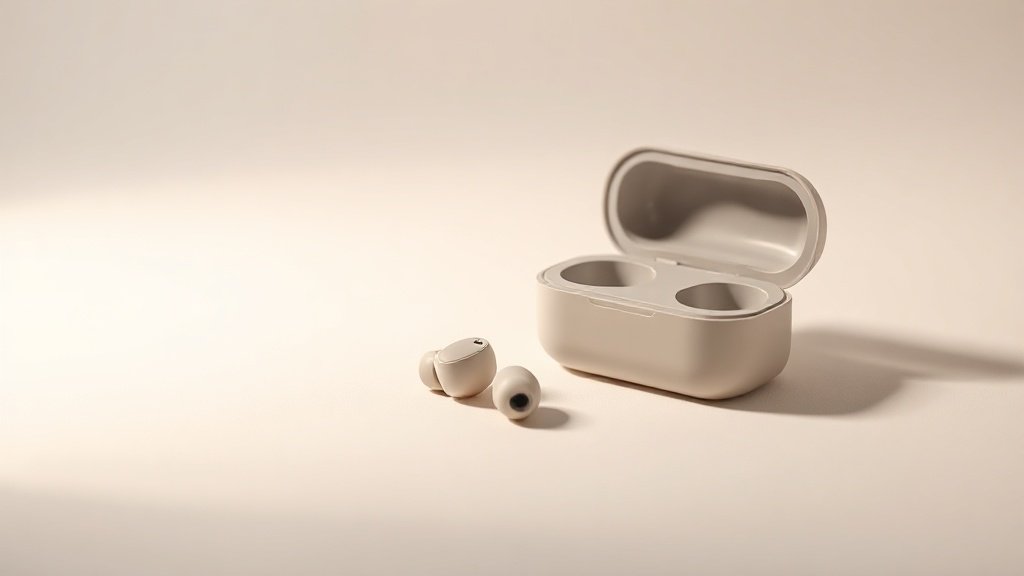
If earbuds constantly fall out, feel painful after ten minutes, or leave you rifling through tip sizes with no luck, your ears are probably on the smaller side — and that is a more common problem than most gear reviews acknowledge. Standard earbuds are engineered around an average ear canal size, which means anyone outside that range gets a frustrating, unstable fit and degraded sound because the seal is never quite right.
This guide exists specifically for that problem. Every product here was chosen because it addresses small-ear fit in some way — whether through a compact housing, ultra-small profile, flexible earhooks, or an ergonomic silicone design built to sit flush rather than protrude. We have ranked six options from the supplied list to cover different needs: daily commuters, side sleepers, gym-goers, and those who simply want something discreet and light.
You will find picks at different price points and with different priorities. Whether you need premium noise cancellation, a tiny invisible design, or sport hooks that stay put during a run, there is a recommendation here matched to the real shape of your ear.
Best overall: Nothing Ear (a)


The Nothing Ear (a) is a fully wireless earbud set that punches well above its position in the market. With 45dB hybrid active noise cancellation, hi-res audio support, and a six-microphone setup for calls, it offers a feature set that rivals earbuds costing considerably more. The clean, stem-style design keeps the housing relatively compact, which helps with fit for smaller ears — there is less mass sitting in the bowl of the ear, reducing the pressure that causes discomfort over long sessions.
The advanced equaliser means you can tune the sound signature to suit your preference rather than accepting a fixed factory tune, which is a genuinely useful feature for anyone who finds a bassy default fatiguing. Dual Connect lets you pair to two devices simultaneously, handy if you switch between a phone and a laptop. The 42.5-hour total playtime (earbuds plus case) means battery anxiety is essentially a non-issue for daily use.
The one honest limitation is that the stem design, while slim, does protrude outward — so if you are looking for something truly invisible or flat to the ear, this is not that product. It is, however, the most well-rounded performer on this list for someone who wants great noise cancellation and audio quality in a lighter, more manageable shell.
Buy this if: You want the best all-round audio performance and noise cancellation on this list and can tolerate a small visible stem.
Best premium: Bose QuietComfort Ultra (2nd Gen)

The Bose QuietComfort Ultra Earbuds in their second-generation form represent the top of the range on this list. Bose has a long-standing reputation for class-leading noise cancellation, and this model adds immersive audio to the mix — a spatial sound mode that adds dimension and depth to music and film. The IPX4 rating means they handle sweat and light rain without complaint, and USB-C charging keeps things modern and convenient.
For small ears, Bose earbuds have historically been a mixed bag because the StayHear tip system uses a wing rather than a deep insertion, which actually suits many people with smaller canals who find deep-fit earbuds uncomfortable. The housing is relatively compact and the eartip design is designed to rest lightly at the canal entrance rather than press deep inside. This makes them one of the more comfortable options for extended listening sessions.
The honest trade-off here is battery life: the earbuds themselves offer up to six hours of playback per charge as stated in the product title, which is shorter than several rivals on this list. For long flights or full-day use without access to the case, that could be a limitation worth noting. That said, the charging case tops them up quickly and the sound quality justifies the premium outlay.
Buy this if: You want the most premium sound and noise-cancelling experience available on this list and do not mind recharging more frequently.
Best for sport: Wireless Earbuds for Small Ear with Earhooks

This set is designed specifically with small ears in mind — it says so in the product title — and the inclusion of earhooks makes it one of the most secure-fitting options on this list for active use. Earhooks wrap around the outer ear and physically anchor the bud in place, which means they are not relying solely on tip friction inside a smaller canal. If you have had earbuds drop out mid-run, this design directly solves that problem.
The product runs on Bluetooth 5.3 for a stable wireless connection and delivers hi-fi stereo with deep bass. An LED display on the case gives you a clear read on battery status at a glance, which is more useful than a vague multi-light indicator. The IP7 waterproof rating means these can handle genuine sweat, rain, and the occasional splash without issue — a higher waterproofing standard than several others on this list.
The limitation is the earhook form factor itself: some users find hooks fiddly to fit correctly, and they can feel slightly less natural for casual everyday wear compared to a standard stem design. But for sport and fitness specifically, the secure fit outweighs that minor inconvenience.
Buy this if: You run, cycle, or train and need earbuds explicitly designed for smaller ears that will stay put no matter what.
Best invisible design: Invisible Mini Earbuds for Small Ear Canals

If discretion is the priority, these invisible mini earbuds are the most compact and discreet option on this list. Designed specifically for small ear canals, they use a soft silicone ergonomic body that sits flush inside the canal rather than protruding outward. The ‘skin’ colour option blends with most complexions, making them genuinely hard to spot in casual conversation — useful for office environments, meetings, or anyone who simply dislikes the look of visible earbuds.
The IPX5 waterproof rating gives them reasonable splash protection for daily use, and the focus on comfort over a long wear period makes them a practical choice for people who find standard earbuds cause soreness. They are designed for work and daily use rather than audiophile performance, so the emphasis is firmly on wearability and low profile.
The honest limitation is that with a compact, low-power design comes a shorter playtime per charge — the title states four to five hours per session, which is the shortest on this list. For a full working day, you will need to keep the case nearby. They also do not compete with the premium picks on pure sound quality, but that is not their purpose.
Buy this if: You want the most discreet, invisible fit possible for office or daily wear and comfort is your primary concern over audio performance.
Best for side sleepers: Smallest Sleep Earbuds

The ‘Smallest Sleep Earbuds’ are an upgrade 2026 version built around a very specific use case: wearing earbuds while lying on your side. The ultra-lightweight, low-profile design means there is minimal pressure against the pillow, which is exactly what side sleepers need — standard earbuds dig in and become painful within minutes of lying down. The ‘no low battery beep’ feature is a small but genuinely thoughtful touch; an unexpected alarm tone at 2am is something most sleep-earbud designs overlook entirely.
The product is described as designed for small ears, which means the housing dimensions are kept as slim as possible. This makes them suitable not just for sleeping but for any extended-wear scenario where bulk and pressure are the enemy — long commutes, desk work, or relaxation. The wireless design removes any cable that might tangle during sleep.
The limitation is that sleep earbuds by nature prioritise comfort and small size over audio performance. If you want rich, detailed sound, you will be better served by the Nothing Ear (a) or the Bose QuietComfort Ultra. For their intended job of comfortable overnight or relaxation listening, though, they are well-suited.
Buy this if: You are a side sleeper who wants wireless earbuds that will not press uncomfortably into your ear during the night.
Best budget: Back Bay Audio Tempo 30
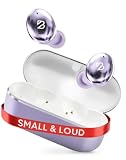
The Back Bay Audio Tempo 30 is specifically marketed for small ears and carries award-winning sound credentials for its category. Available in a lavender colourway among others, it is clearly designed with aesthetics in mind alongside function — a welcome change from the sea of black and white options. The sweatproof rating makes it viable for fitness use, and the comfortable fit for women is called out in the product title, though they will suit any listener with smaller ears equally well.
Back Bay Audio positions the Tempo 30 as a gift-worthy fitness option, and the combination of small-ear-specific design, Bluetooth wireless connectivity, and a clean finish makes it a genuinely presentable pick at its price point. It is the most affordable dedicated small-ear option on this list, which gives it a clear ‘best budget’ identity without compromising on the core fit promise.
The honest limitation is that at the budget end of the spectrum, you are making concessions on advanced features — there is no active noise cancellation or spatial audio here, and the feature set is more straightforward than premium alternatives. For everyday casual listening and gym sessions, however, it does exactly what it needs to.
Buy this if: You want a small-ear-specific earbud at the most accessible price on this list, especially for fitness use or as a gift.
How to choose earbuds for small ears
Prioritise housing size over tip size alone. Many earbuds allow you to swap tips for a smaller size, but if the housing itself is large, it will still press against the outer ear and cause discomfort or instability. Look for products that explicitly mention compact or small-ear design in their description, as the engineers have considered the whole fit rather than just the tip diameter.
Consider the insertion style. Deep-insertion earbuds rely on a tight canal seal, which can be uncomfortable for narrower canals. Shallow-fit designs, like those with a wing or hook anchor, sit at the canal entrance instead. Neither is objectively better — it depends on your anatomy — but knowing the difference helps you choose the right type for your ears.
Earhooks are your friend for sport. If earbuds regularly fall out during exercise, switching to a design with a physical earhook resolves the problem mechanically rather than relying on a friction fit inside the canal. The trade-off is slightly more involved fitting, but the security payoff during movement is significant.
For sleep and extended wear, weight is everything. A lighter, lower-profile earbud causes less pressure over hours of wear. If you are buying for sleep or long desk sessions, prioritise minimum weight and a flush profile over feature richness.
Match waterproofing to your use case. If you are running or training, aim for an IPX7 or higher rating. For commuting and office use, IPX4 or IPX5 is perfectly adequate. The rating system is standardised: IPX4 handles sweat and splashes, IPX5 resists directed water, and IPX7 means the earbuds can survive a brief submersion.
Frequently asked questions
Why do standard earbuds fall out of small ears?
Standard earbuds are designed around an average ear canal diameter. If your canal is narrower, the tip cannot form a proper seal and the earbud has nothing to grip against, so gravity and movement pull it free. Using a smaller tip helps, but if the housing is oversized for your outer ear, instability remains. Purpose-built small-ear designs address both dimensions.
Are all wireless earbuds suitable for small ears?
No. Most consumer earbuds assume an average ear geometry. Some include extra-small tip sizes in the box, which helps, but the housing shape matters as much as the tip. Products explicitly designed for small ears — like several on this list — consider the full fit picture and tend to perform far better for this audience.
Can I use sleep earbuds for general daily use?
Yes, though with caveats. Sleep earbuds are optimised for minimal pressure and low profile, which makes them comfortable for office work or commuting too. However, they typically sacrifice audio performance and feature depth to achieve that small size, so they are not the best choice if sound quality is a priority.
What is the difference between IPX4, IPX5, and IPX7?
These are international water resistance ratings. IPX4 means the earbuds can handle sweat and splashes from any direction. IPX5 adds resistance to a directed stream of water. IPX7 means the earbuds can be submerged briefly in water and survive. For gym use, IPX4 is the minimum to look for; for outdoor running in wet conditions, IPX5 or higher is preferable.
Do earhooks work for very small ears?
Generally yes — earhooks are actually well-suited to smaller ears because they anchor the earbud mechanically against the outer ear structure rather than relying on a tight canal seal. The physical hook holds the bud in place regardless of canal size. Some users find the fitting process takes a little practice, but once dialled in, the secure hold is excellent.
The verdict
For the best all-round experience on this list, the Nothing Ear (a) delivers the strongest combination of noise cancellation, audio quality, and comfort in a compact form that suits smaller ears well. For the best value dedicated small-ear option — especially for sport — the Wireless Earbuds for Small Ear with Earhooks directly addresses fit instability with a design built for exactly this problem.
For more, browse all our reviews and roundups.
AudioTechExpert is reader-supported. This article contains affiliate links, and we may earn a commission on qualifying purchases at no extra cost to you.