
Finding headphones that genuinely survive your workouts is harder than it sounds. Most earbuds look fine on paper but slip out mid-sprint, muffle your music with sweat, or run flat before you’ve finished your session. The wrong pair doesn’t just annoy you — it actively gets in the way of a good run or a focused gym session.
This guide cuts through the noise. We’ve selected the best headphones for running and gym use in 2026 across different styles — true wireless earbuds with earhooks, open-ear bone conduction headphones, and premium noise-cancelling options — so whatever your training looks like, there’s a clear recommendation here.
Whether you’re pounding pavements, cycling, lifting weights, or doing circuit training, the six picks below cover the full range from budget-friendly to feature-packed. Every one of them earns its place for a specific reason, and we’re honest about where each one falls short.
Best overall: Beats Powerbeats Pro 2


The Powerbeats Pro 2 is the headphone that serious athletes have been waiting for. Beats has taken everything that made the original Powerbeats Pro a gym-bag staple and upgraded it substantially: you get active noise cancellation, heart rate monitoring built into the earhooks, and a secure-fit earhook design that genuinely stays put whether you’re sprinting intervals or doing burpees. The sweat and water resistance rating means you don’t need to baby these in the rain or mid-cardio either.
Battery life is one of the standout numbers here — up to 45 hours total with the charging case. That’s comfortably enough for a full week of daily training without reaching for a cable. The ANC is a real addition too, useful for blocking out gym chatter or traffic noise on outdoor runs. The heart rate monitoring sets this apart from almost everything else at this level; it’s an athlete’s tool, not just a pair of earbuds dressed up in gym branding.
The honest limitation: these are a clear step up in price compared to most of the field, and the charging case is notably bulky. If your bag space is tight or your budget is strict, that matters. There’s also no transparency mode reported, which some runners who want ambient awareness on busy roads will miss.
Buy this if: you train hard and often, want heart rate data without a chest strap, and are willing to invest in the best-rounded sport earbud on this list.
Best premium alternative: JBL Endurance Peak 4
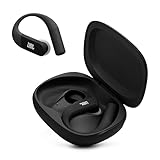
JBL’s Endurance Peak 4 is a well-established name in sport audio, and the Peak 4 carries that reputation forward with a compelling set of specs. True wireless noise cancellation, a claimed 48 hours of total playback across buds and case, and a water and dust-proof build make this a serious contender for both gym and outdoor use. The earhook design is JBL’s signature ‘FlexSoft’ style — it wraps around the ear and locks in securely without pinching.
For gym goers in particular, the ANC is a practical feature — it’s easier to zone in on a set when you’re not distracted by the ambient clatter of plates and chatter. Sound quality from JBL here leans toward a punchy, bass-forward signature that suits energetic training well. Call quality is also respectable, which matters if you take calls between sets.
The limitation worth noting: at this tier, some listeners find JBL’s tuning a touch heavy-handed in the low end — if you prefer a more balanced or analytical sound, the bass emphasis may feel excessive on certain tracks. It’s a style choice, but worth knowing before you buy.
Buy this if: you want a trusted brand, long battery life, and proper ANC in a sport earbud without paying flagship prices.
Best open-ear: SHOKZ OpenMove
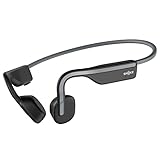
Bone conduction headphones work on a fundamentally different principle to conventional earbuds: small pads rest against your cheekbones and transmit sound through vibration rather than through your ear canal. The result is that your ears stay completely open, meaning you can hear traffic, other runners, your coach, or anyone calling your name while still listening to music. For road running especially, that situational awareness can be genuinely important for safety.
The SHOKZ OpenMove is the most accessible entry point into the SHOKZ range — the brand that effectively defined the mainstream bone conduction category. It’s lightweight, it’s sweatproof, and it pairs quickly over Bluetooth. The headband wraps around the back of the head and sits comfortably even during longer sessions. It comes with a sticker pack, which is a small but endearing touch.
The real limitation here is audio quality in the conventional sense: bone conduction simply doesn’t deliver bass depth or stereo separation the way in-ear earbuds do. If big sound is your priority, this isn’t your pick. It’s also worth knowing the OpenMove sits at the more modest end of the SHOKZ line-up — higher-end models offer more features, though at a higher price.
Buy this if: you run on roads or busy paths and want to stay fully aware of your surroundings without removing your headphones.
Best value: Aptkdoe Bluetooth 5.4 Sport Earbuds

The Aptkdoe wireless earbuds represent a strong option for buyers who want a well-specified sport earbud at a more affordable price point. Bluetooth 5.4 is a modern standard that improves connection stability compared to older versions — useful during high-movement activities like running where your phone may be bouncing around in a pocket or armband. The claimed 75-hour total battery life is one of the higher numbers in this category, and the IPX7 waterproofing means full submersion resistance, not just splash protection.
The earhook design adds security for gym and run use, and the ENC (Environmental Noise Cancellation) microphone system is aimed at cleaner calls rather than blocking out ambient sound during listening — a distinction worth understanding. Deep bass stereo is called out specifically, making these a good match for high-energy training playlists. This is a newer brand, but the specs-per-pound ratio is genuinely hard to argue with at this price.
The honest caveat: Aptkdoe is a lesser-known brand without the same track record as JBL or Beats. Build quality and long-term durability are harder to verify than with established names, and customer support experience may vary. The claimed battery figures are also worth treating with healthy scepticism until real-world use confirms them.
Buy this if: you want a capable, modern-spec sport earbud at the most affordable price on this list and don’t mind going with a newer brand.
Best bone conduction upgrade: PSIER Open Ear Headphones
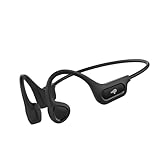
The PSIER bone conduction headphones offer an updated take on the open-ear format at a very accessible price. At just 23 grams, these are strikingly light — you’ll genuinely forget you’re wearing them during a longer run, which matters more than most people realise. Bluetooth 6.0 is listed as the connectivity standard, which promises improved efficiency and range. IPX5 sweat resistance is solid for running and gym use, even if it’s a step below the IPX7 rating of some earbuds here.
The open-ear design delivers the same core benefit as the SHOKZ OpenMove: full situational awareness while you train. For gym use, that means you can hear a spotter or a trainer without removing your headphones. For outdoor cycling and running, it means you’re not cut off from your environment. The PSIER undercuts the SHOKZ OpenMove on price, making it a compelling choice for anyone curious about bone conduction who isn’t yet ready to spend more.
The trade-off is battery life: 10 hours from a single charge is notably shorter than most earbuds in this roundup. For daily training sessions that’s perfectly workable, but it won’t last a full week of use without charging. Sound quality, as with all bone conduction designs, will feel thin compared to in-ear options.
Buy this if: you want to try bone conduction at the lowest cost of entry, prioritise a featherlight fit, and don’t need multi-day battery life.
Best budget earbud: occiam ANC Sport Earbuds

The occiam wireless earbuds punch well above their price with a spec sheet that includes active noise cancellation, IPX7 waterproofing, over-ear hooks, and a claimed 90-hour total battery life. For a budget sport earbud, that’s a genuinely impressive collection of features. The matte black finish is clean and understated — they don’t look cheap, which matters if you wear them commuting as well as in the gym.
The ANC here is a practical addition for gym use — tuning out the ambient soundtrack of a commercial gym (fans, HVAC, background music you didn’t choose) is a legitimate quality-of-life improvement. The stereo bass tuning leans into a V-shaped sound profile suited to workout music. The over-ear hooks add stability for running, and the mic handles calls adequately.
The limitation at this price tier is always consistency: budget earbuds vary more unit-to-unit in build quality and the ANC performance won’t rival that of the Beats or JBL options. The occiam brand lacks the recognition and ecosystem integrations of the premium picks. But for value-conscious buyers who simply want solid, feature-rich sport earbuds, this is an honest recommendation.
Buy this if: you’re on a tight budget, want ANC and waterproofing without compromise on the core features, and are happy to forgo brand prestige.
How to choose headphones for running and gym
Fit style matters more than sound quality. The most sonically impressive earbuds are useless if they fall out mid-run. For high-movement activities, prioritise over-ear hooks or a bone conduction band over standard tip-only designs. Secure fit isn’t a nice-to-have — it’s the baseline requirement for sport headphones.
Understand waterproofing ratings. IPX4 means splash resistance; IPX5 handles sweat and light rain; IPX7 means the earbud can survive brief submersion (around 1 metre for 30 minutes). For running in all weathers or heavy sweat sessions, aim for IPX5 at minimum. IPX7 gives you the most flexibility without worrying about damage.
Open-ear vs closed-ear is a safety and preference choice. Bone conduction and other open-ear designs let ambient sound in. This is excellent for road running, cycling, or any situation where hearing traffic or people matters. Closed in-ear designs with ANC block all that out, which is better for gym focus but potentially hazardous on busy roads. Match the design to where you train most.
Battery life should match your weekly training load. If you train for an hour daily, even 10 hours on a single charge lasts nearly two weeks between charges. If you do long runs or train multiple times a day, prioritise higher total battery or check charging speed. Many of these earbuds charge enough for a session in 15-20 minutes via fast charging, which is practically useful.
ANC is genuinely useful in gym settings. Active noise cancellation in a gym context isn’t about blocking out traffic — it’s about reducing the drone of HVAC systems, background music, and general ambient noise so your music comes through more clearly at a lower volume. Lower volume over time is better for hearing health, so ANC isn’t just a premium feature; it’s a genuinely practical one.
Frequently asked questions
Are bone conduction headphones better for running?
They’re better for safety on roads, because they leave your ears open to hear traffic and other people. They’re not better for sound quality — conventional earbuds deliver fuller, more detailed audio. If you train mostly outdoors on busy routes, bone conduction is worth considering seriously. If you train in the gym or on a treadmill, a standard earbud will serve you better.
What does IPX7 waterproofing actually mean?
IPX7 means the earbuds are rated to withstand submersion in up to 1 metre of water for 30 minutes. In practical terms, it means they’ll survive sweat, rain, and the odd accidental drop in a puddle without issue. It doesn’t mean you should swim with them. IPX5 (a common alternative) covers sweat and rain but not submersion.
Is Bluetooth 5.4 meaningfully better than 5.0 for sport use?
In practical terms, the main benefit for sport use is improved connection stability during movement, slightly lower latency, and better power efficiency extending battery life. The jump from 5.0 to 5.4 is incremental rather than transformative — you’re unlikely to notice a dramatic difference in day-to-day use, but it’s a positive sign that the hardware is current-generation.
Can I use gym headphones for commuting too?
Yes, and most people do. The main consideration is whether you want ANC for commuting noise (trains, buses) and whether the design looks reasonable in everyday settings. The picks in this roundup with ANC — the Beats Powerbeats Pro 2, JBL Endurance Peak 4, and occiam — are genuinely dual-purpose. Bone conduction designs are less conventional-looking but work fine for commuting if you don’t mind the aesthetic.
How important is call quality in sport headphones?
More important than most buyers expect. ENC (Environmental Noise Cancellation) microphones are designed to filter out wind noise and ambient sound during calls, which matters if you take calls while running or between sets. All the earbuds in this roundup include mics, but ENC-equipped models handle windy outdoor calls noticeably better than standard single-mic designs.
The verdict
The Beats Powerbeats Pro 2 is our top overall pick: it’s the most complete sport earbud on this list, with ANC, heart rate monitoring, secure earhooks, and exceptional battery life all in one package. For the best balance of features and value, the JBL Endurance Peak 4 delivers trusted performance, solid ANC, and long playtime at a more approachable investment.
For more, browse all our headphone reviews and roundups.
AudioTechExpert is reader-supported. This article contains affiliate links, and we may earn a commission on qualifying purchases at no extra cost to you.