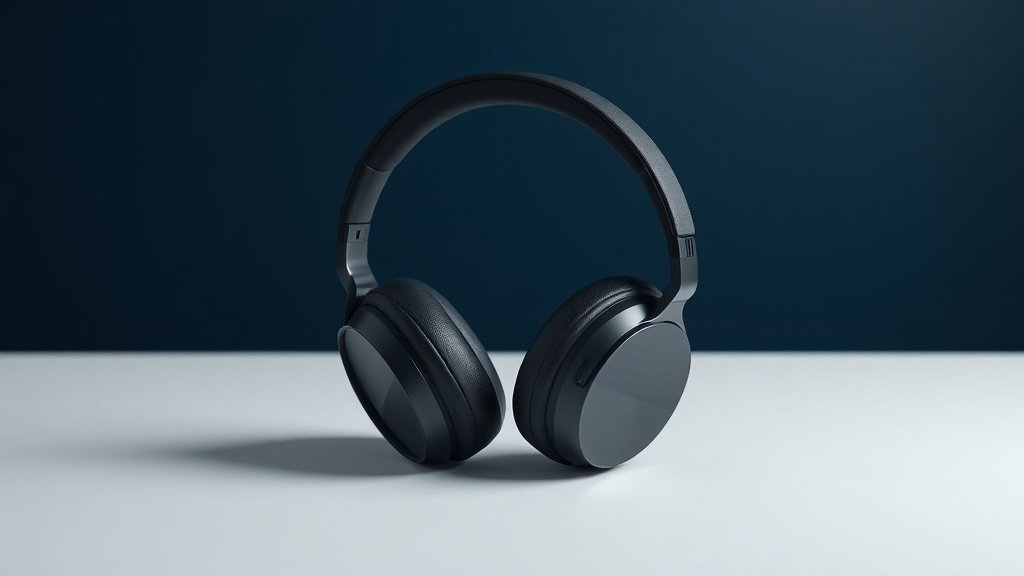
If you wear glasses, you already know the drill: put on a pair of headphones, enjoy about twenty minutes of music, then start feeling that slow squeeze of the frame pressing into the side of your head. By the hour mark, it’s less ‘listening session’ and more ‘mild headache’. The wrong pair of headphones can turn spectacle arms into instruments of discomfort.
This guide is built around that specific problem. Every pick here is a wireless over-ear or open-ear design chosen because its construction, clamping behaviour, or cushion depth makes it genuinely friendlier to glasses wearers than the average set of cans. We’ve ranked them by how well they balance comfort, sound quality, and noise cancellation — with honest trade-offs so you know exactly what you’re getting into.
Whether you’re commuting, working from home, or just want to listen without wincing, there’s an option here for you. We’ve covered the premium end, a sensible budget choice, and everything in between.
Best overall: Bose QuietComfort Headphones
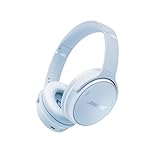

The Bose QuietComfort Headphones have built a well-earned reputation for being among the most comfortable over-ear headphones on the market, and that directly benefits glasses wearers. The earcups are generously padded and soft, which means the seal around your ear doesn’t depend on crushing force against your spectacle arms. Bose has historically tuned the clamping force on this line to be notably lighter than many competitors, making longer sessions far more bearable.
Beyond the comfort story, these are proper active noise-cancelling headphones. The ANC here is some of the most effective available in a consumer wireless headphone, blocking out the kind of low-frequency drone — planes, trains, open-plan offices — that makes focus difficult. They connect over Bluetooth, charge via USB-C, and deliver deep bass alongside a well-balanced sound that suits most genres. The Ice Blue limited edition colour is a nice bonus if you care about how your kit looks.
The limitation worth naming: at this price point, some rivals offer slightly more detail in the high frequencies, so if you’re an analytical listener who wants every shimmer of a hi-hat, you may find the tuning a touch warm and smooth. But for comfort-led listening, that smoothness is a feature, not a bug.
Buy this if: you wear glasses for long stretches and want the most comfortable ANC headphone in this list without compromise.
Best premium: Sony WH-1000XM6

The Sony WH-1000XM6 is Sony’s flagship noise-cancelling headphone and it arrives with a serious specification sheet. The title calls out an HD NC Processor QN3, twelve microphones, and an Adaptive NC Optimiser — meaning the headphone actively analyses your environment and adjusts its noise cancellation in real time. For glasses wearers, this matters because the seal around the ear affects how well passive noise isolation works; the adaptive system compensates intelligently when that seal isn’t perfect due to a glasses arm.
Sony has also worked with engineers on the sound tuning, and the result is described as studio-quality — which in practice means a more neutral, detailed presentation than the average consumer headphone. The battery life stated in the title is thirty hours, which is exceptional for a flagship wireless headphone and means you’re not hunting for a charger mid-day. The Sand Pink colourway is understated and refined.
The honest trade-off: the WH-1000XM6 sits at the top of the price range in this list. It’s a clear step up in cost, and the feature complexity — multiple mics, adaptive systems, engineer tuning — means there’s more to configure if you want to get the most from it. For most listeners, the defaults will be excellent, but it’s worth knowing this is a more involved product than a simple ‘put it on and press play’ headphone.
Buy this if: you want the most technically accomplished noise-cancelling headphone here and are happy to pay a premium for adaptive ANC that works even with glasses disrupting the seal.
Best for spatial audio: Bose QuietComfort Ultra

The Bose QuietComfort Ultra takes everything the standard QuietComfort line does well — that famously comfortable fit, effective active noise cancellation, and deep bass — and adds spatial audio to the mix. Spatial audio gives music and video a more three-dimensional, room-filling quality rather than sound that sits flatly inside your head, which is a genuinely different listening experience once you’ve tried it.
For glasses wearers, the comfort credentials are essentially the same as the standard QuietComfort: soft, well-padded earcups and a lighter clamping force than many rivals. The Deep Plum limited edition colour looks premium on the shelf and in person. USB-C charging and Bluetooth connectivity keep things straightforward, and the up-to-24-hour battery life (stated in the title) is enough for most full travel days.
The limitation: spatial audio processing can use more battery than standard playback, so the headline battery figure may vary in practice. It’s also worth noting this is a more expensive option than the standard QuietComfort, so if spatial audio isn’t a feature you’ll use regularly, the standard model may be the smarter spend.
Buy this if: you want Bose’s comfort-first design with the added dimension of spatial audio for films, gaming, or immersive listening.
Best budget: Sony WH-CH520

The Sony WH-CH520 is the most affordable option in this list and makes a strong case that you don’t need to spend a fortune to get a decent wireless headphone. It’s an on-ear Bluetooth headset with a microphone built in, and the title highlights an impressive battery life of up to fifty hours — which is extraordinary at this price point and means you could realistically go a week of daily commutes without charging.
For glasses wearers, on-ear designs are a bit of a mixed bag: they can sometimes press against spectacle arms more directly than over-ear designs that wrap fully around the ear. That said, the WH-CH520’s lightweight build works in its favour here, because less weight means less downward pressure overall. It’s not the choice for marathon listening sessions, but for a few hours at a time it holds up well.
The trade-off is clear: there’s no active noise cancellation here. If you need to block out a busy office or a noisy commute, this isn’t the headphone for that job. It’s a straightforward, comfortable, affordable wireless headphone for relaxed listening in quieter environments, or for calls where the built-in mic is the priority.
Buy this if: you’re on a tight budget, don’t need noise cancellation, and want a lightweight option that won’t strain your glasses arms.
Best long-haul playtime: Nothing Headphone (a)

The Nothing Headphone (a) 2026 is a bold entry that leads with a jaw-dropping headline figure from its title: 135 hours of playtime. Even accounting for real-world variation, that puts this in a completely different league from most wireless headphones and means glasses wearers who travel frequently or work long days won’t be anchored to a charging cable. It pairs Bluetooth 5.4 with LDAC Hi-Res audio support, which means it can handle higher-quality audio streams from compatible sources.
The adaptive active noise cancellation and five HD microphones round out a feature set that punches well above what you might expect at this price. The Ultra Bass via app feature suggests the low-end character of the headphone can be shaped to your taste, which is a useful flexibility. The Pink colourway is clean and contemporary. For glasses wearers specifically, the over-ear wireless design is the right starting point for comfort.
The honest caveat: Nothing is a newer brand than Bose or Sony, and while their products have earned genuine praise, the long-term durability and after-sales support track record is shorter. The 135-hour figure also likely reflects a low-volume, ANC-off scenario — real-world use with ANC active will be lower, though still likely excellent.
Buy this if: you want an ANC wireless headphone with an extraordinary battery life and don’t want to be tethered to a charger, even on long trips.
Best for glasses-friendly open wear: Nothing Ear (Open)

The Nothing Ear (Open) takes an entirely different approach to the glasses problem: it sidesteps the seal issue altogether by using an open-ear design with adjustable earhooks rather than earcups that press against the head at all. Because nothing wraps around or presses on your ears, there’s no interaction with spectacle arms whatsoever — making this arguably the most inherently glasses-friendly design in this entire list.
These are earbuds rather than full-sized headphones, and the title highlights their ultra-light build, multipoint Bluetooth connection (so you can pair to two devices simultaneously), IP54 water resistance, and clear voice technology for AI-assisted calls. ChatGPT integration is called out directly in the title, which points to a device designed with productivity and communication in mind as much as music listening. Fast charging keeps downtime short.
The trade-off with any open-ear design is noise isolation: because the ear canal isn’t sealed, you get no passive noise blocking and no ANC. These are a poor choice for noisy commutes or loud offices if you want to lose yourself in music. They’re excellent for people who need to stay aware of their surroundings — cyclists, dog walkers, people in open-plan offices who need to hear colleagues — while still having something in their ears.
Buy this if: you want zero interaction between headphones and glasses arms, and you don’t mind trading noise isolation for complete situational awareness.
How to choose headphones for glasses wearers
Over-ear beats on-ear for most glasses wearers. Over-ear headphones have earcups that fully encircle the ear, so the cushion presses against your head around the ear rather than on it. This means the spectacle arm sits inside the earcup rather than being squeezed between cushion and skull. On-ear headphones press directly on the ear and are more likely to create a pinch point where the frame sits.
Clamping force matters more than cushion softness. A headphone with very soft cushions but aggressive clamping will still cause discomfort. Look for headphones described as having a lighter or more relaxed clamp — or that have earned a reputation for comfort in reviews. Brands like Bose have historically prioritised lower clamping force, which directly benefits glasses wearers.
Cushion depth is your friend. Deeper earcups create more space inside the cup, which means more room for the spectacle arm without distorting the seal. Shallow earcups force the spectacle arm to compress the cushion, breaking the seal and increasing pressure on the side of your head. If you wear thicker-framed glasses, prioritise headphones with more substantial cushioning.
Open-ear designs are worth considering. If comfort over long periods is your absolute priority and you can live without noise isolation, open-ear earbuds eliminate the glasses conflict entirely. They’re not for everyone, but for certain use cases — working outdoors, exercising, staying aware of your environment — they solve the problem at the source.
ANC can compensate for a broken seal. Headphones with adaptive noise cancellation, like the Sony WH-1000XM6, can detect and adjust for a compromised acoustic seal. This doesn’t fix physical discomfort, but it does mean the noise-cancelling effectiveness is less impacted by glasses arms disrupting the earcup seal than it would be with a fixed ANC system.
Frequently asked questions
Why do headphones hurt when you wear glasses?
Most over-ear headphones create a tight seal around the ear by pressing their earcups firmly against the head. When you wear glasses, the spectacle arms run across that same area. The headphone cushion compresses the spectacle arm into your skull, creating a pressure point that builds discomfort over time. The severity depends on the clamping force, the cushion depth, and the thickness of your frames.
Are over-ear or on-ear headphones better for glasses wearers?
Over-ear headphones are generally better. Because the earcup encircles the entire ear, the spectacle arm sits inside the cushion’s perimeter rather than being sandwiched between the cushion and your head. On-ear designs press directly onto the ear and are more likely to trap and squeeze the glasses arm.
Does wearing glasses affect noise cancellation?
It can, yes. Passive noise isolation relies on a good acoustic seal between the earcup and your head, and a spectacle arm running through the cushion breaks that seal slightly. This affects both passive isolation and the effectiveness of hybrid ANC systems. Headphones with adaptive noise cancellation — which continuously measure and adjust for the environment — handle this better than fixed systems.
Can I adjust headphones to be more comfortable with glasses?
Yes, in a few ways. Loosening the headband slightly reduces clamping force. Warming the earcup cushions slightly (from body heat or briefly placing them near warmth) can make them more pliable around the spectacle arm. Some people also find that tilting the earcup slightly so the rear of the cushion sits more firmly helps redistribute pressure. Ultimately, though, choosing a headphone designed with comfort as a priority is more effective than adjusting a poorly fitting pair.
Are wireless headphones better for glasses wearers than wired?
The wireless versus wired distinction doesn’t directly affect how a headphone interacts with glasses. Comfort comes down to clamping force, cushion depth, and earcup size regardless of whether there’s a cable. That said, wireless headphones tend to be purchased more recently and often reflect updated ergonomic design thinking, so you may find more comfort-focused options in the wireless category.
The verdict
For the best overall experience, the Bose QuietComfort Headphones lead this list — their famously soft, low-clamp design is the gold standard for glasses wearers who want ANC and all-day comfort without compromise. For the best value, the Sony WH-CH520 delivers solid wireless performance and an exceptional battery life at the most accessible price in this roundup, making it the smart pick if your budget is the priority.
For more, browse all our reviews and roundups.
AudioTechExpert is reader-supported. This article contains affiliate links, and we may earn a commission on qualifying purchases at no extra cost to you.