Finding a great pair of headphones without spending a fortune used to mean settling for muddy bass, crackly calls, or a battery that died mid-commute. In 2026, that trade-off has largely disappeared. The sub-$200 bracket is now packed with genuinely capable over-ear and in-ear options that punch well above their price tag.
This guide cuts through the noise — literally. We have compared and ranked the best headphones under 200 across every main use case: daily commuting, gym sessions, long-haul travel, and focused work. Every pick here is available on Amazon right now, so you can buy with confidence.
Whether you want the cleanest active noise cancellation, the longest battery life, or the most secure fit for running, there is a pick below that is exactly right for you. Read on to find yours.
Best overall: Sony WH-CH720N
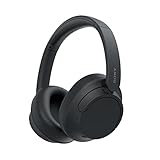

The Sony WH-CH720N is the pick here because it nails the fundamentals and the numbers back it up. It is remarkably light: at around 192 g it is one of the lightest wireless ANC over-ears independent reviewers have put on the scales — exactly what you want for all-day wear. Battery is the other standout: independent lab testing clocked it at just over 40 hours with noise cancelling on, comfortably past Sony’s own 35-hour rating, so it realistically goes a couple of weeks of commutes between charges. It connects over Bluetooth with a built-in mic and Alexa on board, so calls, meetings and voice assistants work without any extra kit.
The noise cancelling is good rather than flagship-grade — independent measurements put it around 20 dB of reduction across the low frequencies, peaking near 28 dB at 80 Hz, so it takes the edge off engine and traffic rumble without fully silencing a busy open-plan office. That is an honest, sensible result at this price, and paired with Sony’s tuning it makes the CH720N the most credible name-brand ANC pick on this list.
The honest limitation is that this is not Sony’s flagship experience — buyers upgrading from premium Sony headphones will notice the difference in build materials and sound refinement. But as an entry point to the Sony ecosystem with real ANC, a proper mic, and Alexa integration, it is hard to beat at this price.
Buy this if: you want a trusted brand name, genuine active noise cancellation, and hands-free voice assistant support in a wireless over-ear headphone.
Best for long-haul travel: JBL Tune 770NC

The JBL Tune 770NC is a wireless over-ear headphone built around two priorities that travellers care about most: battery endurance and adaptive noise cancellation. JBL quotes up to 70 hours of total battery life with Speed Charge support, which means even if you forget to charge before a trip, a short top-up gives you meaningful playback time. That figure comes straight from the product title, and it is one of the highest in this list.
The Tune 770NC also uses adaptive noise cancellation with a Smart Ambient mode, letting you dial in how much of the outside world you want to hear — useful when you need to catch a gate announcement without pulling the headphones off. Bluetooth 5.3 keeps the connection stable across a range of devices, and the foldable, lightweight design means it packs down neatly into a carry-on bag.
The trade-off is that JBL’s house sound leans toward boosted bass, which is crowd-pleasing on a long flight but may feel heavy-handed for listeners who prefer a more neutral presentation. If you want a flatter, more analytical sound, look elsewhere in this list.
Buy this if: you travel frequently and need a foldable, long-battery ANC over-ear headphone that can keep up with a full day of flights and layovers.
Best for premium wireless audio: Soundcore Space 2 by Anker

The Soundcore Space 2 is Anker’s most feature-rich over-ear headphone in this list, and it makes a compelling case for sitting at the top of the budget wireless tier. It supports LDAC, the high-resolution wireless audio codec that transmits significantly more data than standard Bluetooth audio — which means music sounds noticeably more detailed when you are streaming from a compatible source. Hi-Res Wireless Audio certification backs that up.
Beyond audio quality, the Space 2 packs in active noise cancellation, a 50-hour playtime claim, dual-device connection so you can switch between your phone and laptop without re-pairing, and a Nap Mode that is a genuinely thoughtful addition for anyone who uses headphones to block out noise while resting. Wearing detection pauses playback when you take the headphones off, which is one of those small conveniences that quickly becomes indispensable. Bluetooth 6.1 is among the most modern wireless standards in this list.
The limitation to flag is that LDAC’s quality advantage only applies when your source device supports it — on devices that do not, you fall back to standard Bluetooth audio. App-dependent customisation also means the full feature set requires a smartphone and the Soundcore app.
Buy this if: you want the best wireless audio quality available in this price bracket, with LDAC support, dual connection, and a full modern feature set.
Best budget pick: Soundcore Q20i by Anker

The Soundcore Q20i is one of the most affordable routes into hybrid active noise cancellation without meaningful compromise. It is an over-ear Bluetooth headphone with up to 40 hours of ANC playback, Hi-Res Audio certification, and a Transparency Mode that lets ambient sound pass through when you need to stay aware of your surroundings. For the price, that is an impressive checklist.
The Q20i’s hybrid ANC uses both feedforward and feedback microphones to tackle a broader range of frequencies — a technique typically found on more expensive headphones. The bass tuning is deliberately generous, which suits commuters and casual listeners who want music to feel energetic. App support via the Soundcore app lets you adjust the EQ and ANC level to taste, which is a meaningful personalisation option at this price point.
The honest limitation is that the Q20i’s noise cancellation, while effective for the price, does not reach the depth of more expensive ANC headphones. High-frequency sounds like voices still bleed through more than they would on a premium set. Build quality is solidly plastic — fine for everyday use, but not luxurious.
Buy this if: you want hybrid ANC, Hi-Res Audio, and app-based EQ customisation at the most affordable price in this over-ear list.
Best over-ear for spatial audio: JLab JBuds Lux ANC

The JLab JBuds Lux ANC is an over-ear Bluetooth headphone that adds spatial audio to the standard ANC feature set — a combination that is still relatively rare at this price. Spatial audio creates a more three-dimensional, immersive soundstage, making films and music feel as though they are happening around you rather than inside your head. For anyone who uses headphones primarily for entertainment rather than just music, that distinction matters.
JLab has built a solid reputation for delivering strong value in personal audio, and the JBuds Lux ANC represents the brand’s push into more premium territory. Active noise cancellation, Bluetooth connectivity, and the over-ear design all combine to give you a headphone that works equally well on a commute or planted on a sofa watching a film. The sage colourway is a welcome departure from the sea of black and white options in this category.
The trade-off is that JLab does not yet carry the same premium-audio reputation as Sony or JBL, and buyers who prioritise brand prestige may hesitate. Spatial audio processing can also add a slight processing artefact to some music that purists will notice, though most listeners will find it enjoyable.
Buy this if: you want spatial audio and ANC in a single over-ear headphone, and you use your headphones as much for films and TV as for music.
Best wireless earbuds for sport: Sport Bluetooth 5.4 Earbuds with Earhooks

These sport earbuds are built around a single priority: staying in your ears during intense exercise. The over-ear earhook design physically anchors each earbud in place, which makes them far more secure than standard in-ear tips during running, gym sessions, or circuit training. Bluetooth 5.4 is among the latest wireless standards and provides a stable, low-latency connection that holds up when your phone is in a pocket or armband.
The headline feature is a remarkable 75-hour total stereo playback claim — one of the highest in this entire list — which means you will almost never need to think about charging during a normal week of workouts. Four ENC microphones handle call quality and noise reduction, and IP7 waterproofing means sweat and rain are a non-issue. The combination makes these a genuinely all-weather, all-workout option.
The limitation is that earhook designs are bulkier and less discreet than standard earbuds, which makes them less appealing for everyday commuting or office use. If you want one pair that does everything, look at another pick. But for pure sport performance and endurance, these lead the field here.
Buy this if: you run or train hard and need earbuds that stay put, survive sweat and rain, and last a full week between charges.
How to choose headphones under £200
Over-ear or in-ear? Over-ear headphones — the kind with cushioned cups that sit around your ears — generally offer better passive isolation, more comfortable extended wear, and stronger bass response. In-ear earbuds are more portable and more discreet, and sport models with earhooks are far more secure during exercise. Choose based on your primary use case rather than defaulting to one type.
Active noise cancellation: do you actually need it? ANC adds cost and, in cheaper implementations, can introduce a faint pressure sensation some listeners find uncomfortable. If you mainly listen at home or in quiet offices, a good passive seal from a well-fitted over-ear or in-ear design may be all you need. If you commute by train or fly regularly, ANC is worth paying for — look for ‘hybrid ANC,’ which tends to be more effective than single-microphone systems.
Battery life matters more than you think. The headline battery figure on a product listing usually includes the charging case (for earbuds) or assumes ANC switched off (for over-ears). A product claiming 70-plus hours total is far less likely to leave you stranded than one claiming 20. If you regularly forget to charge your devices, prioritise battery endurance above almost everything else.
Codec support affects wireless sound quality. Standard Bluetooth audio (SBC) is adequate, but if you stream high-quality music and your phone supports it, a headphone with LDAC or aptX HD will deliver noticeably more detail. Check your phone’s Bluetooth settings to see which codecs it supports before spending extra on a high-res-capable headphone.
Fit and comfort for long sessions. No headphone sounds good if it hurts after 30 minutes. Look for adjustable headbands, soft ear cushion materials, and lightweight construction if you plan to wear your headphones for hours at a time. Earhooks are a must for sport; memory-foam cushions help for desk listening.
Frequently asked questions
Is active noise cancellation worth it under $200?
Yes, genuinely. Several picks in this list — including the Sony WH-CH720N and Soundcore Q20i — deliver hybrid ANC that meaningfully reduces low-frequency ambient noise like engine rumble and air conditioning. It is not as deep as $400 flagship ANC, but it is far better than nothing and makes a real difference on public transport or in open-plan offices.
Can I use these headphones for calls and video meetings?
Most of the over-ear picks in this list include a built-in microphone and are perfectly usable for calls and video meetings. The Sony WH-CH720N even has Alexa built in. For very demanding call environments, look for models that specify ENC (environmental noise cancellation) on their microphones, as these filter background noise more aggressively during calls.
What does IP7 or IPX7 waterproofing actually mean?
An IPX7 or IP7 rating means the device can survive being submerged in up to one metre of water for 30 minutes. In practical terms, your earbuds will handle sweat, rain, and the occasional splash without any issue. It does not mean they are suitable for swimming. Several sport-focused picks in this list carry this rating, which is reassuring for outdoor workouts in changeable weather.
Do I need to use an app to get the best out of these headphones?
Not necessarily — all the headphones here work perfectly well out of the box. However, models with companion apps (like the Soundcore range) let you customise the EQ, adjust ANC levels, and access extra features like spatial audio modes. If you like to fine-tune your sound, an app-enabled headphone is worth prioritising. If you prefer a plug-and-play experience, the Sony and JBL options work brilliantly without any app.
Are wireless earbuds or over-ear headphones better for the gym?
For gym use specifically, sport earbuds with earhooks — like the sport Bluetooth 5.4 earbud pick in this list — are generally the better choice. They are lighter, more secure during movement, and less likely to overheat during intense exercise than over-ear cups. Over-ear headphones are better for stationary activities like cycling or weight training where movement is more controlled.
The verdict
Best overall: the Sony WH-CH720N is the pick we would recommend to most readers — trusted brand, genuine ANC, Alexa built in, and wireless Bluetooth over-ear comfort that covers commuting, travel, and desk use in one package.
Best value: the Soundcore Q20i by Anker gives you hybrid ANC, Hi-Res Audio certification, and app-based EQ at the lowest price in the over-ear section — it is the smart buy if your budget is tighter but you refuse to give up noise cancellation.
For more, browse all our reviews and roundups.
AudioTechExpert is reader-supported. This article contains affiliate links, and we may earn a commission on qualifying purchases at no extra cost to you.