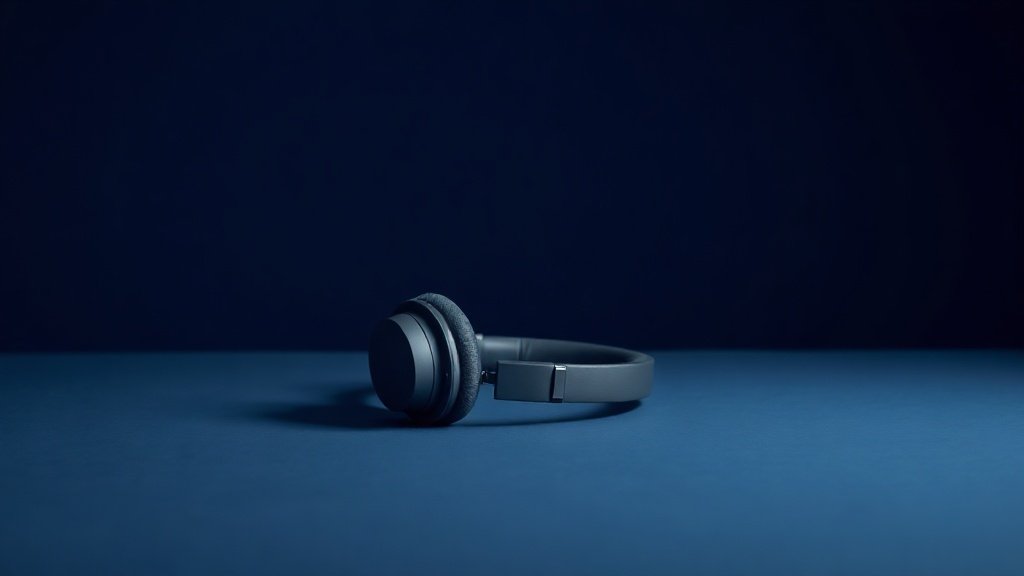
Finding a decent pair of headphones without spending a fortune used to mean settling for muddy sound and cheap plastic that cracked after a few months. That’s no longer the case. The budget headphone market has genuinely grown up, and in 2026 you can get wireless connectivity, active noise cancelling, and solid sound quality without breaking the bank.
This guide rounds up the best headphones under 50 in 2026, tested and ranked so you don’t have to wade through hundreds of listings. Whether you need something for the daily commute, long study sessions, or just casual listening at home, there’s a pick here that fits your life.
We’ve kept the list tight — six strong options covering everything from ultra-budget wired headphones to surprisingly capable wireless sets with ANC. Every product here was selected from a real shortlist; none of them are filler.
Best overall: Sony WH-CH520


The Sony WH-CH520 is the pick under $50 because it gets the essentials genuinely right. It is feather-light at around 147 g, and battery is the standout: Sony rates it at 50 hours, and independent testing actually measured just over 55 hours — remarkable at this price, with a three-minute charge adding about 90 minutes of playback. It runs Bluetooth 5.2 with Multipoint (pair a phone and laptop at once) and Fast Pair, and the on-ear design keeps it compact. The tuning leans warm, with emphasised bass and mids rather than strict neutrality, but for a sub-$50 daily pair that is an easy trade.
The headline strength here is the battery life — Sony lists up to 50 hours of playtime, and there’s quick charging on board for those moments when you’ve forgotten to plug in overnight. Add a built-in microphone for calls and it covers the basics of a modern commuter headphone without asking you to compromise on brand quality or reliability.
The trade-off is that it’s an on-ear design rather than over-ear, which means extended listening sessions can feel a little less comfortable than a fully cushioned over-ear cup. It also lacks active noise cancelling, so it won’t block out a busy train the way pricier models do.
Buy this if: You want a trustworthy Sony wireless headphone with excellent battery life and quick charging for everyday use.
Best value: Soundcore Q20i

The Soundcore by Anker Q20i is arguably the most impressive value proposition in this entire list. It’s a wireless over-ear Bluetooth headphone that brings hybrid active noise cancelling, Hi-Res Audio certification, and a transparency mode — features you’d typically expect to pay significantly more for.
The Q20i’s ANC is the real talking point. Hybrid active noise cancelling uses microphones both inside and outside the ear cup to more effectively reduce ambient noise, which makes a genuine difference on public transport or in a busy office. The transparency mode lets you hear your surroundings without taking the headphones off — handy when someone’s trying to talk to you. You can also customise the sound via an app, which gives you control over the bass response and EQ that most budget headphones simply don’t offer.
Battery life is listed at 40 hours with ANC running, which is excellent for the category. The limitation is that the build, while functional, leans on plastic and doesn’t feel as premium in the hand as the Sony or Beats options. The ear cushions are adequate rather than luxurious.
Buy this if: You want active noise cancelling and app-based customisation at the lowest possible price.
Best battery life: JBL Tune 720BT

The JBL Tune 720BT is a wireless over-ear headphone built around JBL’s ‘Pure Bass Sound’ tuning — a signature that leans into punchy low-end response, which tends to suit pop, hip-hop, and electronic music particularly well. It uses Bluetooth 5.3 for a stable wireless connection, and the design is foldable and lightweight, making it genuinely portable.
The standout feature is the battery. JBL rates the Tune 720BT at up to 76 hours of playtime, which is exceptional at any price. There’s also Speed Charge for topping up quickly when you’re in a hurry. For anyone who forgets to charge their devices regularly, or who travels often, this level of battery endurance is genuinely reassuring.
The limitation is that the Tune 720BT doesn’t include active noise cancelling, so it relies on passive isolation from the ear cups alone. In very noisy environments that may not be enough. The bass-forward tuning is also a matter of taste — if you prefer a more neutral, accurate sound, you might find it a touch heavy-handed.
Buy this if: You want the longest battery life in the category and enjoy a bass-rich, energetic sound signature.
Best for commuters: Nothing Headphone (a) 2026

The Nothing Headphone (a) 2026 is a wireless over-ear Bluetooth headphone running Bluetooth 5.4 — the latest standard — and packs adaptive active noise cancelling alongside LDAC Hi-Res audio support. LDAC is a high-quality wireless codec that transmits significantly more audio data than standard Bluetooth, which matters if you’re streaming from a lossless or high-resolution source.
The headline numbers are remarkable for the category: Nothing claims up to 135 hours of total playtime, and there are five HD microphones built in for calls and noise cancellation. An ultra-bass mode is accessible via the companion app, letting you shape the low-end to taste. For a commuter who wants serious features in a modern-looking package, this is a compelling option.
The limitation is that Nothing is a relatively young audio brand, and the Headphone (a) 2026 is a new model, so long-term reliability data is limited. Those used to Sony’s or JBL’s established track records may want to factor that in. The design is also bold and distinctive — which is either a selling point or a drawback depending on your personal style.
Buy this if: You want cutting-edge Bluetooth, adaptive ANC, and exceptional battery stamina in a head-turning design.
Best wired budget pick: Sony MDR-ZX110

The Sony MDR-ZX110 is about as straightforward as headphones get: a wired on-ear pair from Sony’s ZX Series, finished in black. There’s no Bluetooth, no ANC, no companion app — just a simple analogue connection that works with anything that has a headphone socket. That simplicity is genuinely its strength.
For students, younger listeners, or anyone who just needs a reliable pair of headphones to plug into a laptop, tablet, or instrument — without worrying about charging or pairing — the MDR-ZX110 delivers. Sony’s build quality at this price point is better than most no-name alternatives, and the ZX Series has been a consistent recommendation for years precisely because it does the basics well.
The obvious limitation is that it’s wired. In a world of increasingly wireless-only devices, you may need a USB-C or Lightning adapter depending on your device. There’s also no microphone listed, so it’s purely for listening rather than calls.
Buy this if: You want the most affordable, no-fuss wired option from a brand you can trust.
Best step-up pick: Nothing Headphone (1)

The Nothing Headphone (1) is the flagship of Nothing’s headphone range and it shows. This is a wireless over-ear headphone with hybrid active noise cancelling supported by six microphones — more than almost anything else in this price bracket. It’s KEF-tuned, meaning the acoustic engineering was developed in partnership with KEF, a respected British loudspeaker brand, lending genuine credibility to its sound credentials.
The feature list goes further: Hi-Res Audio certification, spatial sound processing, fast charging, and a comfort-focused fit design are all included. Eighty hours of playtime is listed in the title, which puts it among the better performers in the battery department as well. For a buyer who wants the most technically capable headphone in this roundup and is happy to spend a little more relatively speaking, the Headphone (1) makes a strong case.
The limitation is that KEF-tuned and spatial sound processing are qualities that are difficult to evaluate until you’ve actually heard them — marketing language sometimes outpaces the real-world result. As a newer product from a brand still building its audio reputation, it’s worth reading early user reviews before committing. The white colourway also shows marks more readily than a darker finish.
Buy this if: You want the most fully featured headphone in this list, with professional acoustic tuning and a premium feel.
How to choose your headphones under 50
Wired vs wireless: Wired headphones are simpler, cheaper, and never need charging. Wireless gives you freedom of movement and a cleaner desk. If your device has no headphone socket, factor in the cost of an adapter when comparing prices.
Active noise cancelling: ANC uses microphones to reduce ambient sound electronically. It’s excellent for low-frequency rumble like trains and planes, less effective against voices. At this price point it works well enough to make a real difference, but it won’t be as powerful as what you’d find on a premium headphone costing three or four times as much.
Battery life: For daily commutes, anything over 30 hours is plenty. If you regularly forget to charge or travel long haul, look for models with 50-plus hours and quick charging. The JBL Tune 720BT and the Nothing Headphone (a) 2026 are the standouts here.
On-ear vs over-ear: Over-ear headphones fully surround your ear and tend to be more comfortable over long sessions. On-ear headphones press against the ear, are usually lighter, but can cause fatigue after a couple of hours. Think honestly about how long you’ll be wearing them at a stretch.
Sound signature: Some headphones are tuned to emphasise bass; others aim for a more balanced, neutral sound. Neither is objectively correct — it comes down to the music you listen to and personal preference. Bass-heavy tuning suits electronic, hip-hop, and pop; a more neutral sound suits classical, acoustic, and podcasts.
Frequently asked questions
Can you really get good headphones for under 50?
Yes, genuinely. The budget headphone market has improved dramatically. Wireless connectivity, ANC, and Hi-Res Audio certification are all available at this price in 2026. You’re making real compromises compared with a 200-plus headphone, but for everyday listening the gap is smaller than it used to be.
Is active noise cancelling worth it at this price?
For commuters and office workers, yes. Budget ANC won’t eliminate every sound, but it meaningfully reduces background noise and makes listening more relaxed. If you mainly use headphones at home in a quiet environment, you can save money by skipping it.
What does Hi-Res Audio mean?
Hi-Res Audio is a certification indicating the headphones can reproduce a wider range of frequencies than standard audio. In practice, you’ll only notice the difference if you’re streaming from a high-resolution source. For Spotify or YouTube listening, it’s a nice-to-have rather than essential.
Are wired headphones still worth buying?
Absolutely. They’re simpler, they never run out of battery, and they often sound excellent for their price. The Sony MDR-ZX110 is proof that you don’t need Bluetooth to get reliable, decent-sounding audio. Just check your device has a headphone socket first.
Which headphone is best for long commutes?
Prioritise ANC, comfort, and battery life. The Soundcore Q20i offers all three at the lowest cost. The Nothing Headphone (a) 2026 adds a longer battery rating and Bluetooth 5.4 if you want to future-proof your purchase.
The verdict
Our top overall pick is the Sony WH-CH520 — it combines Sony’s reliability, a generous battery, and quick charging in a lightweight wireless package that suits most listeners perfectly. For the best value, the Soundcore by Anker Q20i is the one to beat: hybrid ANC, app customisation, and Hi-Res Audio at the lowest end of the price scale make it a remarkable buy for anyone who wants serious features without serious spending.
For more, browse all our reviews and roundups.
AudioTechExpert is reader-supported. This article contains affiliate links, and we may earn a commission on qualifying purchases at no extra cost to you.