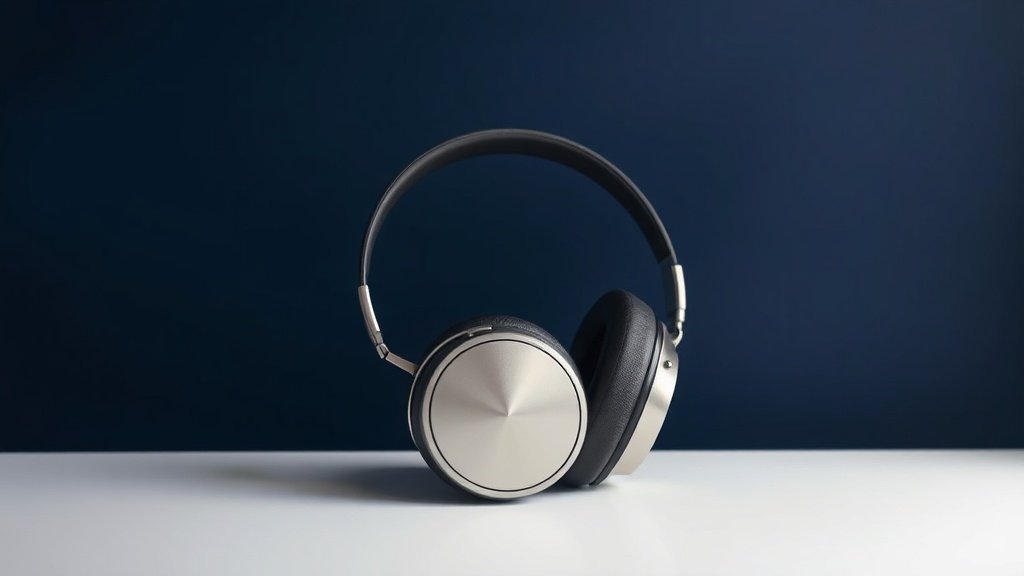
Spending serious money on headphones means you expect more than passable sound. You want noise cancellation that actually works, build quality that holds up, and audio performance that justifies the price tag. The problem is the market is flooded with options that look premium but deliver bargain-bin results the moment you put them on.
This guide cuts through the noise. We looked at the best high-end wireless over-ear headphones available on Amazon right now and narrowed the list to six picks that genuinely deliver at the top of the market. Every product here was selected from the same pool — no filler, no padding, no products we added to make the list look good.
Whether you are a daily commuter, a work-from-home professional, a frequent flyer, or someone who just wants the best possible listening experience at their desk, there is a pair here for you. Read on for the full breakdown.
Best overall: Sony WH-1000XM6


The Sony WH-1000XM6 is Sony’s current flagship wireless over-ear headphone, and it earns that title. Built around Sony’s HD NC Processor QN3 and equipped with twelve microphones, it represents a genuine leap in noise cancellation technology. The title does not use the phrase ‘studio-quality’ lightly — these headphones are tuned to a standard that professional and serious listening environments demand.
The twelve-microphone array means the WH-1000XM6 is not just cancelling ambient noise passively; it is actively processing and adapting to your environment in real time. That matters in unpredictable settings like crowded transport or open-plan offices where noise sources shift constantly. Call quality also benefits directly from that microphone count.
The one limitation to name honestly: the WH-1000XM6 sits at the top of the Sony consumer range, which means it is priced accordingly. If you are after Sony performance on a tighter budget, this is not the entry point — but if you want the best Sony currently makes in this category, this is it.
Buy this if: you want the most technically advanced noise cancelling Sony has ever shipped in a consumer over-ear headphone.
Best premium luxury pick: Sony 1000X THE COLLEXION

The Sony 1000X THE COLLEXION takes the same core technology found in Sony’s flagship wireless headphones — including the HD NC Processor QN3, twelve microphones, and spatial audio — and wraps it in curated luxury materials. This is not a standard product release; it is Sony’s answer to the question of what a truly premium, design-forward version of their best noise cancelling headphone would look like.
The phrase ‘mastered by engineers’ in the product title signals that this is not just a cosmetic exercise. The acoustic performance is held to the same standard as Sony’s top-tier hardware, while the material choices elevate it into a category that sits comfortably alongside fashion and lifestyle accessories as much as audio gear. If you are the kind of buyer who cares that your headphones look as considered as they sound, the COLLEXION addresses that directly.
The honest trade-off here is battery life: the COLLEXION offers 24 hours per charge, which is solid but not exceptional by 2026 standards when competitors are pushing significantly further. For a product positioned at this price point and prestige level, some buyers may expect more endurance.
Buy this if: you want Sony’s best noise cancelling performance dressed in luxury materials and are willing to pay the premium for both.
Best audiophile wireless: Sennheiser HDB 630

The Sennheiser HDB 630 is the pick for the listener who genuinely cares about audio fidelity above all else. The ‘Hi-Res Audiophile Sound’ designation in the title is not just marketing language at this level — Sennheiser’s heritage in reference-class audio means it carries real weight. The inclusion of a parametric EQ sets the HDB 630 apart from most consumer headphones: parametric EQ gives you precise, frequency-specific control over your sound signature rather than a handful of preset modes.
The HDB 630 also ships with a USB-C low-latency Bluetooth adapter, which addresses one of the persistent frustrations with wireless audio — the codec bottleneck. Using the included adapter, you bypass standard Bluetooth compression paths and keep the signal as clean as possible. For audiophiles who have historically avoided wireless headphones for this reason, that is a meaningful inclusion.
With 60 hours of battery life stated in the title, endurance is genuinely exceptional. The one limitation worth noting is that adaptive noise cancellation, while present, is a secondary concern for this product — the HDB 630 is built for sound quality first, and buyers chasing the deepest possible noise cancellation might find the Sony WH-1000XM6 a closer fit for that specific need.
Buy this if: you are an audiophile who wants Hi-Res wireless audio, parametric EQ control, and exceptional battery life in a single pair of headphones.
Best Apple ecosystem pick: Apple AirPods Max 2

The Apple AirPods Max 2 is the go-to recommendation for anyone already deep in the Apple ecosystem. Active noise cancellation, adaptive audio, and personalised spatial audio are all present, and the addition of Live Translation — a feature that translates spoken language in real time through the headphones — is a genuinely useful upgrade for international travellers and multilingual households.
Personalised spatial audio is worth understanding for those unfamiliar: it uses your device’s camera to map your ear shape and adjusts the three-dimensional sound presentation accordingly. The result is a spatial audio experience that feels tailored rather than generic. Combined with adaptive audio, which blends noise cancellation and transparency mode dynamically depending on your environment, the AirPods Max 2 offers a listening experience that adjusts itself around your day rather than requiring manual switching.
The honest limitation is straightforward: these headphones perform best — and in some cases exclusively — within the Apple device ecosystem. Android users and non-Apple households will not access the full feature set, and the value proposition shrinks considerably outside of iPhone and Mac pairing. If you are not on Apple hardware, look elsewhere on this list.
Buy this if: you are an iPhone or Mac user who wants best-in-class spatial audio, Live Translation, and seamless Apple device integration.
Best for long battery life: Nothing Headphone (1)

The Nothing Headphone (1) is a strong all-rounder from a brand that has built its identity around distinctive design and genuine value at the upper end of the mid-range. This model brings hybrid active noise cancellation, Hi-Res Audio certification, KEF-tuned sound — KEF being a respected British speaker and headphone manufacturer — and a six-microphone setup into a single package at a price that undercuts most of the competition on this list.
The KEF tuning is a genuine differentiator. Rather than relying solely on in-house acoustic engineering, Nothing partnered with an established name in high-fidelity audio to shape the sound profile. Spatial sound and fast charging round out the feature set, and with 80 hours of claimed playtime, endurance is one of the strongest arguments for picking this over more expensive rivals.
The limitation here is brand familiarity. Nothing is a younger brand compared to Sony, Sennheiser, Apple, or Focal, and some buyers will feel more confident in a name with decades of audio heritage behind it. That hesitation is understandable, but the specifications and tuning partnership suggest the Headphone (1) punches well above its position on this list.
Buy this if: you want Hi-Res Audio with expert acoustic tuning and outstanding battery life without paying flagship prices.
Best design-led premium pick: Focal Bathys

Focal is a French audio house with a reputation that sits firmly in the audiophile and high-end consumer space, and the Focal Bathys Bluetooth headphones with active noise cancellation represent their entry into premium wireless listening. Focal’s headphones are known for their driver engineering and acoustic precision, and the Bathys brings that heritage into a wireless, noise-cancelling form factor.
For buyers who have always associated Focal with wired studio and hi-fi listening, the Bathys is significant because it does not ask you to compromise on the brand’s acoustic philosophy to go wireless. The combination of Focal’s sound tuning and active noise cancellation in an over-ear wireless headphone is the core appeal here — this is a product for listeners who know the brand and trust what it stands for.
The limitation is that the Focal Bathys title gives relatively limited detail compared to some competitors on this list, which means some feature comparisons require further research. What is clear from Focal’s positioning is that these are headphones built for listening quality above all else, and buyers chasing maximum battery endurance or the deepest possible noise cancellation spec sheets may find other picks here more explicitly suited to those priorities.
Buy this if: you are a Focal loyalist or a listener who wants European audiophile-grade engineering in a wireless over-ear package.
How to choose your high-end headphones
Decide what ‘high-end’ means for you. For some buyers, it means the deepest possible noise cancellation for commuting or travel. For others, it is about audio fidelity — Hi-Res Audio certification, audiophile tuning, or a specific sound signature. These are different priorities, and different headphones on this list serve them differently. The Sony WH-1000XM6 and its twelve-microphone array is built for the former; the Sennheiser HDB 630 with its parametric EQ and Hi-Res sound is built more for the latter.
Consider your ecosystem. If you use an iPhone, the AirPods Max 2 offers features — personalised spatial audio, Live Translation, adaptive audio — that work seamlessly and deeply within Apple hardware. If you are on Android or use multiple device types, an ecosystem-agnostic option like the Sony or Sennheiser will serve you better day to day.
Battery life matters more than you think. Needing to charge your headphones mid-trip is genuinely annoying. The picks on this list range from 24 hours to over 100 hours. If you travel frequently or simply hate cables, give battery endurance serious weight in your decision. The Nothing Headphone (1) at 80 hours and the Sennheiser HDB 630 at 60 hours are standouts here.
Think about call quality and microphone count. If you spend time on video calls or voice calls while wearing headphones, the microphone array matters as much as the audio drivers. More microphones generally means better voice isolation and cleaner call audio. The WH-1000XM6’s twelve-microphone setup is exceptional for this use case.
Brand heritage is not just marketing. Sennheiser, Focal, Sony, and Apple all have different acoustic philosophies and long track records. Nothing is younger but has brought in KEF as a tuning partner. Knowing which brand’s sound philosophy aligns with your taste is a shortcut to satisfaction — especially at this price level where returns and regrets are more painful.
Frequently asked questions
Are wireless high-end headphones as good as wired ones?
Increasingly, yes — particularly with modern codecs and dedicated low-latency adapters like the one bundled with the Sennheiser HDB 630. The gap between high-quality wireless and wired listening has narrowed significantly. For most listeners, the convenience of wireless outweighs the marginal differences that remain.
What is the difference between adaptive noise cancellation and standard ANC?
Standard ANC applies a fixed noise-cancellation profile. Adaptive ANC continuously monitors your environment and adjusts the cancellation in real time — so it responds differently to a quiet office versus a loud train carriage without you needing to change settings manually. The Sennheiser HDB 630 and Apple AirPods Max 2 both feature adaptive approaches.
Is Hi-Res Audio certification worth paying for?
Hi-Res Audio certification means the headphone is verified to reproduce audio at a higher resolution than standard CD quality. Whether you can hear the difference depends on the quality of your source material and your listening sensitivity. For dedicated music listeners with high-quality streaming subscriptions, it is worth prioritising. For casual listening, it is less critical.
Do I need a specific codec to get the best wireless audio quality?
Codec support matters — especially if you use a high-resolution streaming service. LDAC, for example, is a codec that allows significantly more audio data to be transmitted wirelessly than standard Bluetooth. The Nothing Headphone (a) explicitly supports LDAC, which is a meaningful feature for listeners who want wireless Hi-Res Audio without a dedicated adapter.
How long should high-end headphones last?
A well-built pair of premium headphones should last several years with reasonable care. Battery longevity is the most common point of degradation in wireless models — batteries hold less charge over time. Most flagship headphones allow battery replacement either through the manufacturer or authorised service centres. Build quality in the picks on this list is generally at a level that supports a multi-year lifespan.
The verdict
The Sony WH-1000XM6 is our top overall pick — its twelve-microphone array, HD NC Processor QN3, and studio-quality audio make it the most complete high-end wireless headphone on this list for the widest range of buyers.
For the best value at a high-end level, the Nothing Headphone (1) earns the nod — KEF-tuned Hi-Res Audio, 80 hours of battery life, and a six-microphone setup at a price that sits clearly below the flagship tier.
For more, browse all our reviews and roundups.
AudioTechExpert is reader-supported. This article contains affiliate links, and we may earn a commission on qualifying purchases at no extra cost to you.