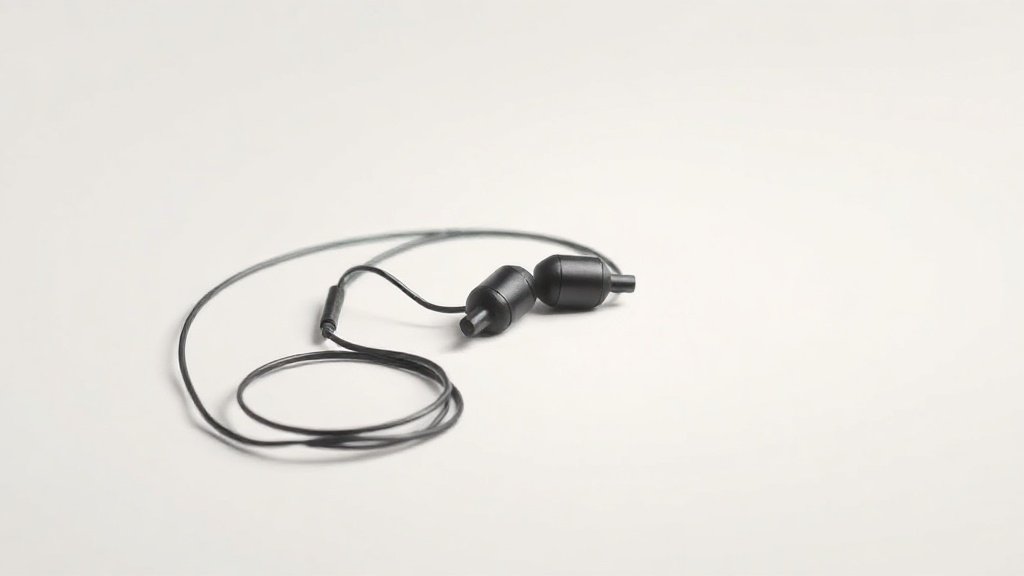
Finding the right pair of in-ear monitors or earbuds in 2026 is harder than it should be. The market spans everything from budget multi-driver wired IEMs aimed at musicians to premium wireless earbuds with flagship noise cancellation — and the marketing rarely tells you which is actually built for your ears and your life.
This guide cuts through the noise. We have compared and ranked the best picks across the full spectrum: studio-grade monitoring, audiophile hi-fi listening, everyday wireless convenience, and sport-ready ANC. Whether you are a gigging musician, a commuter, or someone who just wants honest sound for the money, there is a pick here for you.
Every product on this list is chosen for a specific reason. We name the trade-offs plainly, skip the hype, and let you make the call. Here is who each one is actually for.
Best overall: Sony WF-1000XM6


The Sony WF-1000XM6 is the standout in-ear pick, and the measurements match the reputation. In independent lab testing it cut roughly 88% of ambient noise across the frequency range — best-in-class ANC — driven by the same QN3e cancellation chip as Sony’s full-size flagship plus an extra outward-facing microphone on each bud. Battery is strong for true wireless too: independent testing measured about 9 hours 41 minutes from the buds with ANC on, comfortably past Sony’s 8-hour rating, with two further charges in the case for around 24 hours all in.
The noise cancellation is the headline feature, and it is designed to compete at the very top of the market. If you spend time on commutes, in open-plan offices, or on flights, the WF-1000XM6 is engineered to isolate you from all of it without you having to reach for a cable. The sound signature is tuned for studio-quality reproduction, meaning you are not just getting blocked-out silence — you are getting real, detailed audio to fill it.
The honest limitation: these are a premium wireless product, and that comes with a premium price. If you primarily need a wired stage monitor or a budget daily driver, there are more cost-effective options further down this list. But as an all-round wireless earbud that handles both listening quality and noise cancellation at the highest level, nothing else on this list matches it.
Buy this if: you want the best single wireless earbud for commuting, travel, and serious listening without any compromises.
Best premium wired IEM: Shure SE425 PRO

The Shure SE425 PRO is a professional-grade wired in-ear monitor with a dual-driver hybrid design and a reputation built over years of stage and studio use. The ‘PRO’ designation is not marketing — this is a tool trusted by audio engineers and performing musicians who need accurate, detailed sound in demanding environments.
The standout feature is what Shure calls ‘detailed sound’ via its dual-driver hybrid setup, paired with sound-isolating earphone technology that physically blocks ambient noise rather than cancelling it electronically. The result is a clean, accurate listening experience that does not colour or exaggerate the signal. The detachable cable is a practical bonus: if a cable gets damaged during a tour or session, you replace the cable, not the earphone. Shure also highlights its ‘durable quality’ — this is a product built to outlast cheaper alternatives significantly.
The limitation is that this is a wired-only product with no wireless capability and no microphone. For anyone who needs Bluetooth or hands-free calling, look elsewhere. But as a wired professional IEM for stage monitoring or critical listening, the SE425 PRO is the most serious option on this list.
Buy this if: you are a musician, audio engineer, or audiophile who wants professional wired monitoring with long-term durability.
Best for active use: Nothing Ear (3)
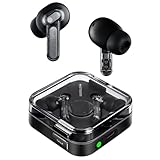
The Nothing Ear (3) is a modern wireless earbud built for people who want serious ANC performance in an everyday, sport-friendly package. The title lists 45dB Hybrid Active Noise Cancellation — one of the stronger ANC ratings in the wireless earbud segment — alongside a 12mm dynamic driver with bass boost tuning and six microphones for call quality. That is a lot of technology packed into what Nothing positions as a lifestyle product.
The ‘Dual Connect’ feature allows simultaneous pairing across devices, which is genuinely useful if you switch between a phone and a laptop throughout the day. The six-mic array means call quality is a real priority here, not an afterthought. The sport-earbud design suggests it is built to stay in place during movement, making it a strong choice for gym sessions, runs, or commutes where you do not want to babysit your earbuds.
The trade-off compared to the Sony WF-1000XM6 is that the Nothing Ear (3) is a step down in overall audio refinement and brand heritage in the premium wireless space. It is a strong all-rounder rather than a best-in-class performer. For the price, though, the feature set is hard to argue with.
Buy this if: you want strong ANC, sport-ready fit, and multi-device wireless convenience at a more accessible price point.
Best hi-fi wired IEM: Technics EAH-TZ700

The Technics EAH-TZ700 is a premium wired in-ear monitor from one of the most respected names in hi-fi audio. Technics positions this as a ‘High-Fidelity’ IEM with an ‘Innovative 10mm Driver’ engineered specifically for ‘Ultra-Low Distortion.’ That is a specific and meaningful claim: lower distortion means the sound you hear is closer to the original recording with less unwanted artefact or colouration.
The EAH-TZ700 is built for the serious listener who wants the closest thing to a reference-quality listening experience in an in-ear format. The black and gold finish signals that Technics is not trying to hide this as a budget product — it is a deliberate statement of premium intent. For audiophiles who listen to high-resolution audio files and want an IEM that can resolve that detail faithfully, the EAH-TZ700 is the most hi-fi-focused pick on this list.
The honest limitation is that this is a wired-only product positioned at the top of the price range. It is not a commuter earbud or a wireless convenience product. It rewards sitting down and listening critically rather than being used on the move.
Buy this if: you are a dedicated hi-fi listener who wants ultra-low distortion and reference-quality sound from a wired in-ear monitor.
Best value multi-driver IEM: KZ ZAS
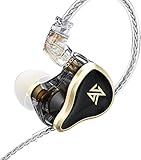
The KZ ZAS delivers eight hybrid drivers — seven balanced armatures plus one dynamic driver — in a wired IEM that sits at the more affordable end of this list. KZ has built a reputation for offering multi-driver technology at prices that would have been unthinkable a few years ago, and the ZAS is one of their most well-known examples of that philosophy.
The 7BA+1DD configuration means the ZAS is designed to handle different frequency ranges with dedicated drivers, theoretically improving separation and detail across the full spectrum. The title highlights ‘HiFi Deep Bass Sound’ alongside ‘Clear Sound Secure Fit,’ and the eight-core cable is a practical upgrade over cheaper stock cables on budget IEMs. Sound isolation is passive, using the physical seal of the ear tip rather than electronics.
The limitation is that more drivers do not automatically mean better-tuned sound. Budget multi-driver IEMs can sometimes produce an uneven or over-coloured presentation compared to a single well-engineered driver like the Technics EAH-TZ700. But for the price, the KZ ZAS offers a genuinely impressive feature set for curious listeners stepping into multi-driver territory.
Buy this if: you want to explore multi-driver IEM technology without spending at the premium end of the market.
Best for stage performers: Sennheiser IE 100 Pro Wireless

The Sennheiser IE 100 Pro Wireless is a professional in-ear monitor designed with stage performers explicitly in mind. Sennheiser’s ‘Pro Audio’ branding here is not cosmetic — the IE 100 Pro line is part of Sennheiser’s dedicated live-performance monitoring range, used by touring musicians and live audio engineers who need reliable, accurate monitoring at volume.
The wireless version adds the freedom of movement that stage performers need, removing the cable run to a belt-pack receiver. For a vocalist, guitarist, or drummer who needs to hear their own mix clearly without being tethered to a monitor wedge, this kind of professional IEM wireless system is the practical solution. Sennheiser’s reputation for accurate, trustworthy sound reproduction in professional contexts makes the IE 100 Pro a reassuring choice for anyone gigging regularly.
The limitation here is that professional wireless monitoring systems are a different category to consumer wireless earbuds — they typically require a compatible wireless transmitter system to function, which adds to total cost and setup complexity. This is a serious tool for serious performers, not a casual everyday earbud.
Buy this if: you are a performing musician or live audio professional who needs reliable wireless in-ear monitoring on stage.
How to choose your in-ear monitor or earbud
Wired versus wireless: Wired IEMs offer zero latency and no battery management, making them the default choice for studio monitoring, stage use, and critical listening. Wireless earbuds offer convenience and freedom of movement, which matters for commuters, gym users, and anyone who dislikes cables in daily life. Decide which matters more to you before anything else.
Active noise cancellation versus passive isolation: ANC uses microphones and processing to electronically cancel ambient sound — it is excellent for low-frequency drone like planes and trains. Passive isolation uses the physical seal of the ear tip to block noise mechanically — it works across more frequency ranges and requires no battery. Professional wired IEMs like the Shure SE425 PRO and KZ ZAS use passive isolation. The Nothing Ear (3) and Sony WF-1000XM6 use active cancellation.
Driver configuration: A single well-engineered driver (like the Technics EAH-TZ700’s 10mm unit) can outperform a poorly tuned multi-driver design. More drivers are not automatically better — but in a well-implemented hybrid design like the KZ ZAS or Shure SE425 PRO’s dual-driver setup, they can improve separation between bass, mid, and treble frequencies.
Use case match: A stage performer needs something different from a commuter, who needs something different from a home audiophile. The Sennheiser IE 100 Pro Wireless is built for stage; the Sony WF-1000XM6 for travel; the Technics EAH-TZ700 for home listening. Match the product to your primary environment rather than chasing the most expensive option.
Budget reality: Spending more generally buys better build quality, more refined tuning, and more reliable long-term performance. But the gap between budget and mid-range has narrowed significantly — the KZ ZAS proves that multi-driver technology is no longer exclusively expensive. Set a realistic budget and find the best option within it rather than stretching for features you will not use.
Frequently asked questions
What is the difference between an IEM and a regular earbud?
An in-ear monitor (IEM) uses a tip that inserts into the ear canal to create a physical seal, providing sound isolation and a more stable fit. A standard earbud typically sits at the entrance of the ear canal without sealing. IEMs generally offer better noise isolation and more accurate sound, which is why they are preferred by musicians and audio engineers.
Are wired IEMs better than wireless earbuds for sound quality?
Wired IEMs eliminate Bluetooth compression and battery variables, which can give them an edge in pure audio fidelity. However, modern wireless codecs like aptX Lossless (as supported by the Bowers and Wilkins Pi8) have narrowed the gap considerably. For critical monitoring or audiophile listening, wired is still the safer choice. For everyday use, a good wireless earbud is more than adequate.
How many drivers do I actually need in an IEM?
There is no universal answer. More drivers can improve frequency separation, but only if the crossover and tuning are well-implemented. A single high-quality driver like the one in the Technics EAH-TZ700 can outperform a poorly tuned eight-driver design. Focus on how the product sounds and who built it rather than the driver count alone.
Can I use a professional IEM like the Shure SE425 PRO for everyday listening?
Absolutely. Professional IEMs are often excellent for everyday listening precisely because they are tuned for accuracy rather than exaggerated bass or treble. The Shure SE425 PRO’s sound-isolating design also works well on commutes. The main trade-off is the lack of wireless connectivity and the typically more neutral — some would say less exciting — sound signature compared to consumer-tuned earbuds.
Does active noise cancellation affect sound quality?
In lesser implementations, ANC processing can introduce a subtle hiss or alter the sound signature slightly. In top-tier products like the Sony WF-1000XM6, Sony has engineered the ANC system to work alongside the audio processing rather than against it, targeting ‘studio-quality sound’ even with ANC active. At the budget end, you may notice more compromise.
The verdict
The Sony WF-1000XM6 is the best overall pick on this list: it combines flagship noise cancellation, studio-quality sound, and genuine wireless convenience in a single package that is hard to argue with for most listeners.
For the best value, the KZ ZAS punches well above its price bracket with an eight-driver hybrid configuration, solid passive isolation, and a durable cable — an impressive entry point into serious IEM listening.
For more, browse all our reviews and roundups.
AudioTechExpert is reader-supported. This article contains affiliate links, and we may earn a commission on qualifying purchases at no extra cost to you.