Getting your rap vocals to hit the way they do in your head is harder than it looks. The wrong microphone will flatten your delivery, colour your tone in ways you never asked for, or pick up every car outside and your neighbour’s TV. Most rappers are either spending too much on gear they do not need yet, or clinging to a mic that is actively holding them back.
This guide cuts through the noise. We have taken a closed list of mics available right now on Amazon and ranked the ones that genuinely make sense for rap vocals — whether you are laying down demos in a bedroom, recording in a treated home studio, or building a broadcast-ready booth. Every pick is a real product with a real angle, and we name the trade-offs honestly.
If you rap, freestyle, record, stream, or podcast your way through verses, there is something here for you. Here is the shortlist.
Best overall: Shure SM7B
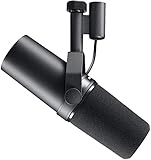
The Shure SM7B is the mic that shows up on more professional vocal recordings than almost anything else in this price bracket, and for good reason. It is a dynamic studio microphone with an XLR output, built for close-up vocal work in broadcast, podcasting, streaming, and — critically — vocal recording. That wide frequency range mentioned in the product title means it handles the full weight of a rapper’s voice, from chest-heavy low-end to sharp consonants, without anything feeling artificially scooped or boosted.
The smooth, warm audio character the SM7B is known for works especially well for rap. Aggressive deliveries stay controlled rather than harsh, and the detachable windscreen handles plosives — those hard ‘p’ and ‘b’ sounds — without making you stand three feet back from the capsule. This is a mic you can perform into, not just carefully record behind.
The one real limitation: the SM7B requires an audio interface with a clean, high-gain preamp to sound its best. If your interface is underpowered, you will be chasing the gain knob. Budget accordingly for the rest of your signal chain.
Buy this if: You want a broadcast-quality dynamic mic that will still be relevant to your setup in ten years’ time.
Best value duo: Shure SM58 (2-Pack)

The Shure SM58 is one of the most trusted cardioid dynamic vocal microphones ever made, and this listing gives you two of them. That makes this pack an interesting proposition for rap setups — one for recording, one for live use or as a backup, or both live if you are doing collaborative sessions or battles where two mics need to be on at the same time.
The SM58 is built to handle the punishment of live performance. Its cardioid pickup pattern focuses on what is directly in front of it and rejects sound from the sides and rear, which matters in untreated rooms. If you are recording in a space that is not acoustically treated, a dynamic mic like this will be far more forgiving than a large-diaphragm condenser.
The honest trade-off here is that the SM58, as a live vocal mic, does not have quite the same studio-polished character as a purpose-built recording mic. It will get the job done cleanly, but if your entire focus is bedroom studio recording for distribution rather than live performance, the SM7B or RØDE PodMic may serve you better as a primary recording tool.
Buy this if: You need two reliable dynamic vocal mics — for live sessions, collaborative recording, or a main-and-backup setup.
Best broadcast dynamic: RØDE PodMic

The RØDE PodMic is a cardioid dynamic broadcast microphone with an XLR output, built specifically for the spoken and performed word. That broadcast focus translates directly to rap — close-miking, punchy delivery, and a mic that flatters a voice without needing expensive post-processing. RØDE designed this for people who want professional results without a professional studio budget.
It pairs with an audio interface (the product title mentions the RØDECaster and AI-1 as examples), so you will need that extra piece of kit. Once connected, though, the PodMic rewards proximity performance — the closer you get, the more body and warmth your vocals carry. That suits the intimate, direct style of rap recording well.
The limitation is the same as any XLR dynamic: you cannot plug this straight into a laptop. If you do not already own an interface or mixer, factor that cost in. RØDE themselves note that if you want plug-and-play USB, you should look at the PodMic USB — but that is a different product entirely.
Buy this if: You already have an audio interface and want a dedicated broadcast-voiced dynamic mic that punches above its price bracket.
Best USB option: Blue Yeti


The Logitech Blue Yeti is the most accessible mic on this list in terms of sheer ease of use — it is a USB condenser microphone that plugs directly into a Mac or PC with no interface required. That plug-and-play setup removes the biggest barrier for anyone just starting out or recording in a non-permanent setup. It also includes Blue VO!CE effects processing built in, which can be useful for shaping your vocal tone without additional software.
The four pickup patterns give you flexibility that most mics at this level do not offer. For rap recording, the cardioid setting is your default — focused on the front, rejecting the room. For collaborative sessions where two people are recording face to face, other patterns open up. This is a genuinely versatile tool for a creator who wears multiple hats: recording, streaming, podcasting, and gaming all in one.
The honest limitation of the Blue Yeti is that, as a condenser microphone, it picks up more of the room than a dynamic mic. In an untreated space, you may find yourself fighting reflections and background noise. It also sits larger and bulkier on a desk than its competitors. If your room is not reasonably quiet and treated, a dynamic mic will give you cleaner results without extra effort.
Buy this if: You want a no-interface, plug-and-play USB mic for home recording, streaming, and content creation with zero extra kit required.
How to choose your microphone for rap vocals
Dynamic vs condenser: Dynamic mics — like the SM7B, SM58, and PodMic — are more forgiving in untreated rooms. They focus tightly on your voice and reject ambient noise. Condenser mics — like the Blue Yeti — capture more detail and air, but they also capture every reflection, hum, and outside noise. For most bedroom rap setups, a dynamic mic is the safer starting point.
XLR vs USB: XLR mics require an audio interface to connect to your computer, which adds cost but also gives you better preamps, lower noise floors, and more upgrade flexibility over time. USB mics plug straight in and are ideal if you want simplicity and portability. If you are serious about recording rap vocals long-term, building towards an XLR setup is worth it.
Polar pattern: For solo rap recording, cardioid is the pattern you want. It picks up what is directly in front of it and rejects the sides and rear, which is essential in a room that is not fully treated. Every mic on this list is cardioid or includes a cardioid mode.
Room treatment: No microphone fixes a bad-sounding room. Even the best mic on this list will sound worse in a reflective, echoey space than a modest mic in a well-treated one. Soft furnishings, hanging blankets, and purpose-built panels all help before you spend more on the mic itself.
Your whole signal chain matters: The mic is only one part of the picture. A great XLR mic paired with a poor-quality interface will underperform. Make sure your interface has enough clean gain for whichever mic you choose, especially if you opt for a dynamic mic that needs a higher gain signal.
Frequently asked questions
Do I need a condenser mic for rap vocals?
Not at all. Many professional rap recordings are made on dynamic mics like the Shure SM7B. Dynamic mics handle loud, close deliveries well and are far more forgiving in untreated rooms. Condensers can sound excellent but require better acoustic conditions to shine.
Can I record rap vocals with a USB mic?
Yes. A USB mic like the Blue Yeti is a perfectly legitimate tool for recording rap vocals, especially for demos, home sessions, and content creation. For long-term studio work, an XLR setup typically gives you more control and upgrade headroom, but USB is a solid and practical starting point.
What is the difference between the SM58 and the SM7B?
Both are Shure dynamic mics with cardioid pickup patterns, but they are built for different primary uses. The SM58 is a live vocal mic designed to survive the rigours of performance and touring. The SM7B is a studio-focused broadcast mic engineered for close-up recording, with a smoother, warmer character and a more sophisticated design. For pure studio rap recording, the SM7B has the edge; for live or dual-purpose use, the SM58 is the more practical tool.
Do I need an audio interface for the mics on this list?
It depends on the mic. The Blue Yeti connects directly via USB — no interface needed. The Shure SM7B, Shure SM58, and RØDE PodMic all use XLR connections and require an audio interface or mixer to connect to your computer.
Is the RØDE PodMic good for rap?
Yes. The PodMic is a broadcast-focused dynamic mic, and that broadcast character — punchy, full-bodied, close-mic-friendly — translates very well to rap vocals. Its cardioid pattern handles untreated rooms well, and it rewards an energetic, up-close delivery style.
The verdict
The Shure SM7B is the top overall pick here — a broadcast-grade dynamic mic that handles rap vocals with authority, warmth, and professionalism across every setting. If you are looking for the best all-round value and versatility, the Blue Yeti earns its place as the most accessible option, delivering solid results straight out of the box with no extra kit required.
For more, browse all our reviews and roundups.
AudioTechExpert is reader-supported. This article contains affiliate links, and we may earn a commission on qualifying purchases at no extra cost to you.