Shopping for over-ear headphones in 2026 means wading through a sea of bold claims, confusing specs, and suspiciously similar-looking products. Whether you want to block out a noisy commute, get serious about music at your desk, or simply find a reliable everyday pair that won’t fall apart in six months, the options can feel overwhelming. The good news: a handful of genuinely strong products stand out from the crowd.
This guide cuts through the noise. We’ve ranked the best over-ear headphones available right now, covering wireless and wired options, active noise cancellation, long battery life, and deep bass — so whatever your priority, you’ll find a clear recommendation below. Every pick has been chosen on its own merits, with honest trade-offs included.
Whether you’re a casual listener, a home-office worker, a commuter, or someone who wants studio-quality monitoring without paying studio prices, there’s something here for you. Read through the picks, check the comparison table, and zero in on the pair that fits your life.
Best overall: JBL Live 770NC

The JBL Live 770NC is the headline pick in this roundup, and it earns that spot through a combination of capable True Adaptive Noise Cancelling, a Smart Ambient mode for when you need to stay aware of your surroundings, and a genuinely impressive battery rating of up to 65 hours. That’s a serious amount of listening time — enough to cover a week of commuting without reaching for a cable.
The Live 770NC also comes with a comfort-fit fabric headband and a carrying pouch, which means JBL has thought about the full ownership experience, not just the on-paper spec sheet. The Sandstone colourway gives it a premium look that’s a bit more interesting than the usual all-black finish. It handles both the ‘block everything out’ mode and the ‘let me hear the world’ mode without requiring a faff through menus.
The honest limitation here is that, at this tier, you’re competing with some very well-established names, and listeners with very refined tastes may find the tuning a touch V-shaped compared to more neutral alternatives. That said, for most people, the balance is enjoyable rather than fatiguing.
Buy this if: you want a do-it-all wireless over-ear with strong noise cancellation and marathon battery life.
Best premium: Beats Studio Pro
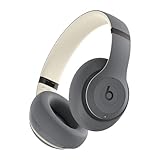

The Beats Studio Pro sits at the top of the price range in this selection and positions itself as a travel-and-commute companion with serious credentials. It offers Active Noise Cancelling, up to 40 hours of battery life, and compatibility with both Apple and Android devices — which is worth noting because many ‘premium’ headphones still treat Android users as an afterthought.
The Studio Pro carries Beats’ well-known design DNA: bold, confident styling that’s recognisable without being garish. The Exclusive Sand Gray colourway is understated enough to work in professional settings, while still looking deliberate rather than forgettable. For Apple ecosystem users in particular, the integration tends to be smooth and responsive.
The limitation to name honestly is battery life: at up to 40 hours, it trails some rivals in this very roundup. If you’re a heavy traveller who forgets to charge, that’s worth factoring in. But if sound quality and brand ecosystem matter most to you, the Studio Pro delivers where it counts.
Buy this if: you’re an Apple user who wants premium noise-cancelling headphones that also work properly with Android.
Best value: Soundcore Q30

The Soundcore Q30 by Anker punches well above its price point, and it does so with a surprisingly thoughtful feature set. You get Hybrid Active Noise Cancelling with multiple modes, Hi-Res Audio certification, a custom EQ through the Soundcore app, up to 50 hours of playtime, and multipoint connection so you can stay paired to two devices at once. That last feature alone justifies the price for anyone who switches between a laptop and a phone throughout the day.
The Q30 is the kind of product that makes you question why you’d spend significantly more. The multipoint connection and the app-based EQ give you real control over the sound without needing an audio degree. The comfortable fit means it’s wearable for long sessions without the ear fatigue that cheaper pads tend to cause.
The trade-off is that the noise cancellation, while genuinely useful, doesn’t match the outright performance of the more expensive options in this list. In very loud environments — busy trains, open-plan offices with lots of chatter — you’ll still hear some bleed-through. But for the money, it’s a minor complaint.
Buy this if: you want hybrid ANC, Hi-Res Audio, and multipoint connection without spending a premium price.
Best for bass lovers: Skullcandy Crusher Evo

The Skullcandy Crusher Evo is built around one specific idea: serious, physical bass. Skullcandy’s Multi-Sensory Bass system is the defining feature here — it doesn’t just play low frequencies, it lets you feel them, with an adjustable haptic bass slider that you can tune to your preference. If you love music that hits hard — hip-hop, electronic, bass-heavy pop — this is genuinely a different experience from a standard pair of headphones.
The Crusher Evo also offers a noise-isolating over-ear fit, which provides passive isolation without active electronics burning through battery. With up to 40 hours of battery life and a built-in microphone for calls on both iPhone and Android, it handles everyday practicalities alongside the bass spectacle. The Primer colourway has a clean, unfussy look.
The limitation is clear: if you prefer a neutral, flat sound signature for podcasts, classical music, or analytical listening, the Crusher Evo is not your headphone. The bass emphasis is baked in, and even at lower slider settings, the character of the sound leans heavy. That’s a feature for its audience — just be sure you’re in that audience before buying.
Buy this if: you want headphones that make bass music feel physical and immersive, with a long battery to match.
Best budget wireless: JBL Tune 770NC

The JBL Tune 770NC is the more affordable JBL option in this roundup, and it gives up less than you might expect. It features Adaptive Noise Cancelling with Smart Ambient, Bluetooth 5.3, up to 70 hours of battery life with Speed Charge, and a lightweight, foldable design — all at a price that’s noticeably easier to justify than the Live 770NC above it.
The 70-hour battery claim is particularly striking at this price level. Speed Charge means a quick top-up can give you a meaningful amount of listening time if you’ve forgotten to plug in overnight. The foldable design makes it genuinely portable rather than just theoretically so, and the lightweight build means it doesn’t feel like a burden during long listening sessions.
The honest trade-off is that the Tune 770NC sits one rung below the Live 770NC in JBL’s range, and that’s reflected in some of the finer details — the noise cancellation is adaptive rather than ‘True Adaptive,’ and the fit materials are a step down. For most listeners, this won’t matter day to day, but if you’re a frequent flyer or a heavy commuter, the extra spend on the 770NC may be worth it.
Buy this if: you want JBL’s solid wireless performance and ANC at the most accessible price in this roundup.
Best wired studio option: OneOdio Wired Over-Ear

Not every listening situation calls for Bluetooth, and the OneOdio Wired Over-Ear headphones make a strong case for keeping a corded pair around. Designed with studio monitoring and DJ mixing in mind, these headphones come with 50mm drivers and a dual-connection system — a 1/4-inch to 3.5mm jack — which means they work with professional audio interfaces, keyboards, amplifiers, and laptops without needing an adaptor hunt.
If you’re recording at home, podcasting, or practising an instrument, a wired monitoring headphone gives you zero latency, which wireless simply cannot match. The OneOdio is honest about what it is: a tool for people who need to hear what’s actually being recorded, rather than a consumer headphone dressed up in studio clothing. The Hi-Res Studio Monitor labelling signals a focus on accuracy and detail over bass boost or artificial enhancement.
The limitation is equally honest: there’s no Bluetooth, no noise cancellation, and no app. You plug in, you listen. For commuting or gym use, look elsewhere. But for desk-based recording, mixing practice, or any situation where you need a wired signal path, this is the most practical pick in the list.
Buy this if: you need a wired studio monitoring headphone for recording, mixing, or instrument practice at home.
How to choose your over-ear headphones
Wireless or wired? Wireless is more convenient for commuting, exercise, and everyday use, but wired gives you zero latency — essential if you’re recording or monitoring audio in real time. Most people are well served by a wireless pair; those doing home recording should seriously consider a wired option like the OneOdio in this list.
Active noise cancellation — do you need it? ANC is genuinely useful in noisy environments: commuter trains, open-plan offices, aeroplanes. If you mostly listen at home in a quiet room, you’re paying for a feature you’ll rarely use. If your environment is loud, it’s worth prioritising — look for ‘hybrid’ or ‘adaptive’ ANC labels, which tend to be more effective than basic single-microphone implementations.
Battery life matters more than you think. A pair with 40 hours of battery is fine for most people; a pair with 65 to 76 hours means you can genuinely forget about charging for a week. Speed Charge features — where a short plug-in gives you several hours of listening — are a genuinely useful safety net, not just a marketing line.
Sound signature: neutral vs. bass-boosted. Most consumer headphones are tuned to emphasise bass and treble, which sounds exciting on first listen. If you want something more accurate for mixing or podcasting, look for ‘studio monitor’ or ‘Hi-Res Audio’ labelling. If you want music to feel energetic and fun, a bass-forward tuning like the Crusher Evo’s is a legitimate choice — just go in knowingly.
Fit and comfort for long sessions. Over-ear headphones should fully enclose your ear, not rest on it. Fabric headbands distribute clamping pressure better over long sessions. Foldable designs are more practical to carry. If you plan to wear your headphones for three or four hours at a stretch, pay attention to weight and padding descriptions rather than just sound specs.
Frequently asked questions
What is the difference between active noise cancellation and noise isolation?
Active noise cancellation (ANC) uses microphones and electronics to detect ambient sound and generate an opposing signal that cancels it out. Noise isolation is passive — it’s simply the physical seal the ear cups create around your ears. ANC is better for constant low-frequency noise like engines; noise isolation is effective across a broader range of sounds and doesn’t require battery power.
Are over-ear headphones better than on-ear headphones?
For long listening sessions, over-ear headphones (which fully enclose the ear) are generally more comfortable than on-ear models (which rest against the ear). Over-ear designs also tend to provide better passive isolation. On-ear headphones are typically lighter and more compact, which suits commuters who prefer something smaller in a bag.
How important is Bluetooth version?
A newer Bluetooth version (such as 5.3, which appears in several picks here) generally means a more stable connection, lower power consumption, and better range. In practice, the difference between Bluetooth 5.0 and 5.3 is unlikely to be noticeable in everyday use. Connection quality matters far more than version number for most listeners.
What does multipoint connection mean?
Multipoint connection allows the headphones to stay paired to two devices simultaneously — for example, your laptop and your phone — and switch between them automatically when one device starts playing audio. It’s a practical feature for anyone who works at a desk and also takes calls on their phone.
Do I need Hi-Res Audio certified headphones?
Hi-Res Audio certification means the headphones are capable of reproducing a wider frequency range than standard CD quality. Whether you’ll hear the difference depends on the quality of your audio source files and streaming settings. For casual listening on standard streaming plans, the certification is a nice-to-have rather than essential. For serious home listening or studio monitoring, it’s worth prioritising.
The verdict
The JBL Live 770NC is our top overall pick: it balances True Adaptive Noise Cancelling, Smart Ambient mode, long battery life, and a comfortable fit in a single well-rounded package. For best value, the Soundcore Q30 by Anker is the standout — hybrid ANC, Hi-Res Audio, app-based EQ, and multipoint connection at a price that’s hard to argue with.
For more, browse all our reviews and roundups.
AudioTechExpert is reader-supported. This article contains affiliate links, and we may earn a commission on qualifying purchases at no extra cost to you.