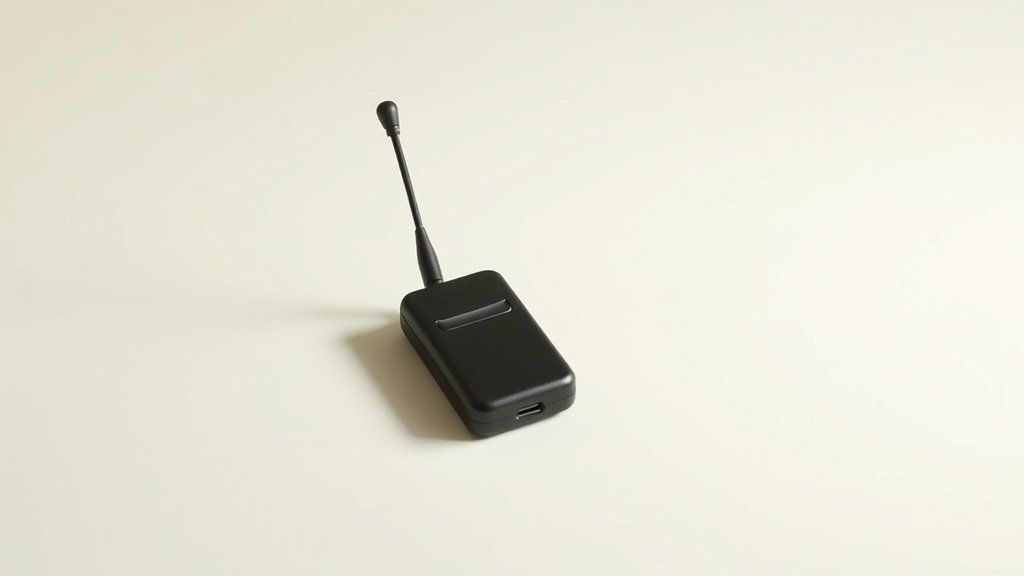
Getting decent audio from your phone or camera without a tangle of cables used to mean spending a fortune. Today, wireless lavalier microphones have come down in price dramatically, and the quality gap between budget and premium has narrowed enough that most creators can find something genuinely useful without breaking the bank. The problem is the market is flooded with options that look identical but perform very differently.
This guide cuts through the noise. We have compared and ranked the best wireless lavalier microphones available right now, covering everything from flagship dual-transmitter systems to tiny plug-and-play clip-ons that slip straight into your iPhone. Whether you are a solo vlogger, a podcast host on the move, or a videographer running two-person interviews, there is a pick here that fits your workflow.
Every recommendation below is chosen for real-world usability: how it sounds in the field, how easy it is to set up, and whether it is worth the money. We name one limitation for every pick, because no microphone is perfect and you deserve the honest version.
Best overall: DJI Mic 2

The DJI Mic 2 is the most complete wireless lavalier system in this roundup. The kit includes two transmitters, one receiver, and a charging case, making it genuinely ready to record from the moment it arrives. That dual-transmitter setup means you can wire up two speakers at once — invaluable for interviews, panel discussions, or documentary-style shoots where you need more than one voice captured cleanly.
What sets this apart from cheaper alternatives is the combination of intelligent noise cancelling and 32-bit float internal recording. The 32-bit float detail in the title is significant: it means each transmitter records a safety copy internally, so even if your camera levels are set wrong, you have a clean backup that is almost impossible to clip. The range listed in the title is 250 metres, which is genuinely useful outdoors. It is also compatible with iPhone, Android, and cameras, so it works across a wide variety of setups.
The honest limitation is price. The DJI Mic 2 sits at the premium end of this list, and if you only ever record solo talking-head videos in a quiet room, the dual-transmitter system is more than you need. But for anyone who records regularly and wants professional-grade reliability, this is the one to buy.
Buy this if: you need a professional dual-transmitter wireless system with internal recording backup for interviews or multi-speaker shoots.
Best for iphone and android: Mini Mic Pro

The Mini Mic Pro positions itself as the number-one microphone for iPhone and Android, and its design backs that claim up. It is a compact wireless lavalier microphone built around the idea that your phone is your camera, and it should be as effortless as possible to get good audio from it. The plug-and-play design means no Bluetooth pairing headaches and no app required — you just clip on, plug in, and record.
The title highlights clear voice and noise cancelling as core features, which matters most in busy environments like street interviews, vlogging outdoors, or TikTok content shot in cafes. For creators who move fast and do not want to think about audio settings, that simplicity is a genuine strength. The ‘Mini Mic Pro’ name also suggests this is a refreshed or updated model, which is reassuring in a category where older designs have well-known weaknesses.
The limitation is that a phone-first design does come with trade-offs for more complex setups. If you are shooting on a dedicated mirrorless camera with XLR inputs, this is not the tool for that job. But for smartphone-centric creators, it punches well above its size.
Buy this if: you primarily shoot on your iPhone or Android phone and want a clean, no-fuss wireless lavalier that just works.
Best budget: occiam Mini Lavalier Microphone
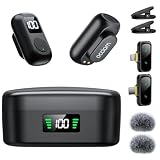
The occiam Mini Lavalier Microphone is the most accessible entry in this roundup and offers a surprisingly complete package at the budget end. It is a compact wireless clip-on mic compatible with both iPhone and Android, built with noise reduction built in and a magnetic mini lapel design that makes it easy to attach discreetly to clothing. The inclusion of a 54-hour charging case is the headline feature from the title — that is a substantial reserve of power for a device this small.
For YouTube creators, podcasters, TikTokers, and anyone doing vlogging or video recording on a tight budget, the occiam delivers the essentials without demanding a premium outlay. The noise reduction helps clean up recordings in less-than-ideal acoustic environments, which is exactly where budget creators tend to find themselves shooting — kitchens, bedrooms, and outdoor locations with ambient noise.
The limitation is that budget wireless mics tend to have shorter effective range and less sophisticated noise processing than premium rivals. You will likely notice a difference in challenging acoustic conditions compared to the DJI Mic 2. But for everyday content creation, the occiam offers a compelling entry point.
Buy this if: you are just starting out and want an affordable wireless lavalier with a generous charging case for regular content creation on your phone.
Best versatile kit: PQRQP 3-in-1 Wireless Lavalier
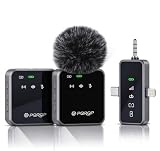
The PQRQP 3-in-1 Wireless Lavalier Microphone is built for creators who need one kit to work across multiple devices. The title spells out compatibility with iPhone, Android, and camera, which means you are not locked into a single ecosystem. That flexibility is increasingly important as creators often shoot across multiple platforms and devices in the same week. The 3-in-1 designation refers to multi-device compatibility rather than three separate microphones, so manage expectations accordingly.
The title calls out a 328-foot range and an 18-hour battery life, both of which appear directly in the product name and represent meaningful specs for a clip-on mic at this level. The noise cancelling and clip-on design make it suitable for interviews, TikTok, YouTube, and instrument recording — a broader use-case spread than most competitors in this price bracket.
The limitation is that the PQRQP brand is less established than DJI or recognised consumer electronics names, and support and documentation may be thinner. That said, the hardware spec list from the title is genuinely strong for the price, and for versatile creators who need cross-device flexibility, it represents solid value.
Buy this if: you shoot across iPhone, Android, and camera and want one wireless lavalier kit that covers all three without buying separate accessories.
Best dedicated clip-on: DJI Lavalier Microphone

The DJI Lavalier Microphone is a dedicated wired lavalier designed to pair with DJI wireless transmitter systems, and it earns its place here as the best option for anyone already in the DJI wireless ecosystem who wants to upgrade their microphone capsule. Unlike the full DJI Mic 2 kit, this is the microphone element on its own — a purpose-built clip-on capsule from one of the most trusted names in compact audio gear.
The DJI brand carries real credibility in the creator hardware space, and a dedicated lavalier from that stable benefits from the same engineering attention that made their wireless systems popular. For users who already own a DJI wireless transmitter and want to replace or add a higher-quality clip-on capsule, this is the natural choice. It is also a cleaner, lighter option for situations where you only need the microphone and already have a transmitter system.
The limitation is that this is not a standalone wireless solution — it is a capsule and needs a compatible transmitter to send audio wirelessly. If you are starting from scratch, the DJI Mic 2 full kit is a better starting point. But as a component upgrade, it is hard to beat within this list.
Buy this if: you already own a compatible DJI wireless transmitter and want a dedicated, high-quality lavalier capsule to pair with it.
How to choose your wireless lavalier microphone
Device compatibility comes first. The most common frustration with wireless lavalier mics is buying one that does not connect properly to your device. Confirm whether the receiver uses a Lightning connector, USB-C, or a standard 3.5mm jack before you buy. If you shoot on multiple devices, look for kits that include adapters or are explicitly labelled as compatible with your specific setup.
Range matters more outdoors. In a controlled indoor setting, most wireless lavalier mics will perform adequately within a few metres. If you are filming documentaries, events, or outdoor interviews where the subject might move away from the camera, prioritise a system with a stated range well above your expected working distance. Walls and interference reduce real-world range below the stated maximum.
Internal recording is a safety net worth having. Some systems, like the DJI Mic 2, record audio internally on the transmitter as a backup. If your camera’s gain is set incorrectly, you still have a usable recording. For professionals or anyone filming important events once, that safety net is invaluable. For casual creators, it is a nice-to-have rather than essential.
Battery life and charging convenience. A microphone that dies mid-shoot is useless. Consider not just the battery life of the transmitter and receiver, but how they charge. Charging cases that top up the system between shoots — like the one included with several picks here — are far more practical than wall-charger-only solutions.
Noise cancelling quality varies enormously. Every wireless lavalier on the market now claims noise cancellation, but the implementation ranges from genuinely effective to barely noticeable. As a rule, established brands with more engineering resources tend to deliver better results. If audio quality in noisy environments is your priority, invest in a better-known system rather than a generic one.
Frequently asked questions
Do wireless lavalier microphones work with any camera or phone?
Not automatically. Most modern wireless lavalier systems come with adapters for common connections, but you should always check the receiver’s output connector matches your device’s input. Systems labelled as compatible with iPhone, Android, and camera are your safest bet for multi-device use.
Is a wireless lavalier better than a shotgun microphone?
They serve different purposes. A lavalier clips to the speaker and moves with them, keeping consistent distance from the mouth regardless of how they move. A shotgun microphone is directional and mounted on the camera or a boom pole — better for capturing natural room sound or subjects who cannot wear a clip-on. For talking-head video and interviews, a lavalier is generally the cleaner choice.
What does 32-bit float recording mean and why does it matter?
32-bit float is a recording format that captures an extremely wide dynamic range, meaning it can record both very quiet and very loud sounds without clipping or losing detail. In practice, it acts as a safety net: even if your input levels are badly set, you can recover the audio in post-production. It is a feature found in more advanced systems like the DJI Mic 2.
How far can a wireless lavalier microphone transmit?
Stated range figures are always measured in ideal, open-air conditions. Real-world range indoors or in areas with wireless interference is typically much shorter. A system rated for a long range will perform better in a crowded environment than a short-range system, so erring on the side of more range is sensible if you plan to shoot in complex spaces.
Can I use a wireless lavalier microphone for music or instruments?
Some models — including the PQRQP 3-in-1 — explicitly list instrument recording as a use case. However, lavalier mics are primarily optimised for voice. For serious music recording, a dedicated instrument microphone is preferable. For casual content that includes music or instrument demonstration, a versatile lavalier can work adequately.
The verdict
For most creators, the DJI Mic 2 is the best wireless lavalier microphone in this roundup — the dual-transmitter system, 32-bit float internal recording, and long range make it a genuinely professional tool that grows with your needs. If you are working on a tighter budget and primarily shooting on your phone, the occiam Mini Lavalier Microphone delivers the essentials at the most accessible price point and is the best-value pick here.
For more, browse all our reviews and roundups.
AudioTechExpert is reader-supported. This article contains affiliate links, and we may earn a commission on qualifying purchases at no extra cost to you.