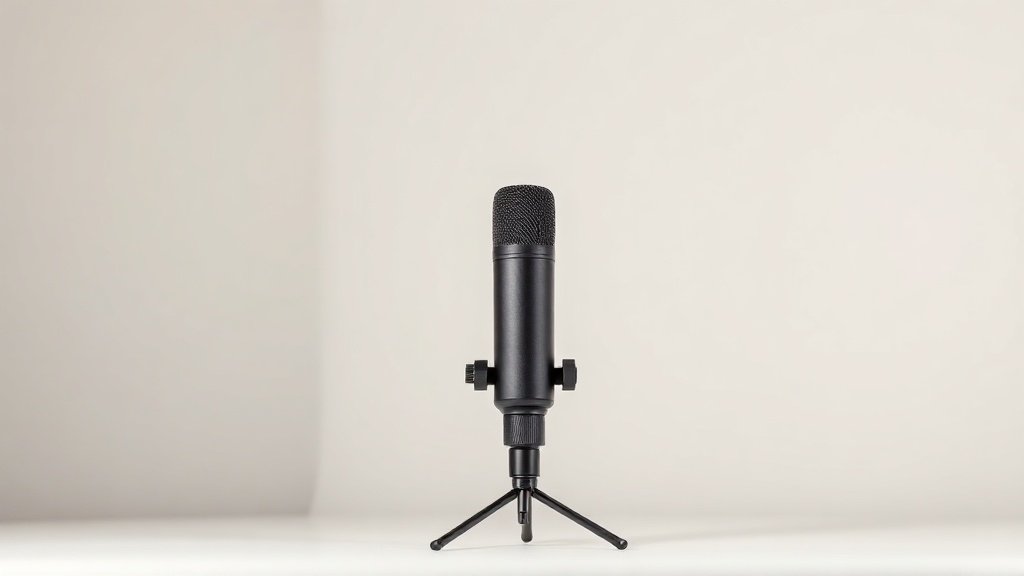
If you’re shopping for a dedicated condenser microphone and keep landing on these two names, you’re not alone. The Blue Yeti from Logitech Creators and the Audio-Technica AT2020 are two of the most recommended mics in their class, and for good reason — both deliver genuine recording quality that would have cost serious money not so long ago. The question is which one actually fits your situation.
The core difference comes down to connection and flexibility. The Blue Yeti connects directly over USB, bundles in multiple pickup patterns and onboard processing via Blue VO!CE, and is designed to be genuinely plug-and-play. The Audio-Technica AT2020, on the other hand, uses a traditional XLR connection, which means it needs an audio interface or mixer to work — making it the more involved setup but also the more expandable one.
This comparison covers setup, sound capture, features, build, and the kind of buyer each mic suits best. We’ve kept it honest: both mics have real strengths and real trade-offs depending on what you need.
Blue Yeti: the all-in-one USB workhorse for creators


The Blue Yeti is built for people who want professional-sounding audio without building a full studio rig. It connects directly to a Mac or PC via USB — no interface, no drivers, no fuss — and gets you recording in minutes. That plug-and-play promise is genuinely delivered, and it’s a big reason why the Yeti has become a go-to for podcasters, streamers, and home-studio beginners alike.
Where the Yeti stands apart is its four switchable pickup patterns: cardioid, bidirectional, omnidirectional, and stereo. That kind of flexibility is almost unheard of in a single USB mic. Couple that with Blue VO!CE software effects — which let you shape your voice with filters, effects, and presets in real time — and you have a genuinely feature-rich package. There’s also a built-in headphone jack with zero-latency monitoring, a gain knob, and a mute button right on the body.
The honest limitation is size and weight. The Yeti is a substantial piece of kit, and its included stand keeps it fairly low on the desk. Serious users often end up buying a boom arm, which adds cost. The USB-only connection also means it’s tied to a computer; it won’t slot into a more elaborate analogue signal chain the way an XLR mic would.
Audio-Technica AT2020: the no-nonsense XLR condenser for the growing studio
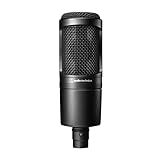
The Audio-Technica AT2020 is a studio-grade cardioid condenser with an XLR output, designed for project and home studio work where you want your microphone to be part of a proper signal chain. It captures sound in a fixed cardioid pattern — focused on what’s in front of it and rejecting sound from behind — which is exactly what you want for vocals, voiceover, and instrument recording in a treated space.
The AT2020’s reputation rests on its sound quality relative to its price point. Audio-Technica has engineered it with a wide dynamic range and a natural, detailed sound character that stands up well against mics in higher price brackets. Because it’s XLR, it pairs with any audio interface, mixer, or preamp you choose, meaning it can grow with your setup over time rather than becoming a bottleneck.
The limitation is equally clear: you cannot use the AT2020 on its own. You’ll need a separate audio interface that provides phantom power, which adds to the total outlay and the complexity of the setup. There’s no onboard gain control, no mute button, and no headphone monitoring on the mic itself — all of that lives in your interface. For someone starting from scratch, that’s a meaningful extra step.
Head-to-head: Blue Yeti vs Audio-Technica AT2020
Setup and ease of use: The Blue Yeti wins this category decisively. Plug it into a USB port, open your recording software, and you’re done. The AT2020 requires phantom power from an audio interface, which means extra hardware and an extra cable before you can record a single note. For beginners or those who travel, the Yeti’s simplicity is a genuine advantage.
Sound capture: Both are cardioid condenser microphones, so they share a broadly similar character — sensitive, detailed, and suited to close-proximity recording. In a well-treated room with a good interface, many listeners find the AT2020’s output to have a slightly more neutral, studio-accurate character. The Yeti performs very well in its own right, though its built-in preamp and analogue-to-digital conversion are ultimately constrained by whatever USB circuit Blue has fitted. The AT2020’s quality ceiling is set by the interface you pair it with, which can be upgraded independently.
Pickup pattern flexibility: The Blue Yeti is the clear winner here. Four switchable patterns mean you can record a solo voice, a two-person interview, a room, or a band — without buying additional equipment. The AT2020 offers only cardioid, which covers the majority of use cases but nothing beyond them.
Onboard features: Again, the Yeti leads. Gain control, mute, zero-latency headphone monitoring, and Blue VO!CE real-time processing all live on or alongside the microphone itself. The AT2020 offers none of these — everything is handled downstream by your interface and software.
Expandability and future-proofing: The AT2020 wins here. An XLR mic slots into any setup, can be paired with better preamps as your budget grows, and is compatible with professional studio workflows. The Yeti is permanently USB-only; if you outgrow computer-based recording or want to connect to a mixing desk, it can’t follow you there.
Build and portability: Both feel well-built and substantial. The Yeti is the bulkier of the two due to its integrated stand and larger body. The AT2020 has a more conventional studio-mic form factor and fits standard mic clips and boom arms without any adaptor. Neither is fragile, but the AT2020 is slightly easier to integrate into a typical studio stand setup.
Frequently asked questions
Which is easier to set up — the Blue Yeti or the Audio-Technica AT2020?
The Blue Yeti is significantly easier to set up. It connects via USB and works immediately with any Mac or PC — no additional hardware needed. The AT2020 requires a separate audio interface with phantom power before it can be used at all, making it a more involved starting point.
Which produces better sound quality — the Blue Yeti or the AT2020?
Both are capable condenser microphones that deliver genuinely good results. The AT2020 has the potential for a slightly higher quality ceiling because its output depends on the interface you pair it with — you can upgrade the interface and improve the sound without changing the mic. The Yeti’s quality is fixed by its internal circuitry, which is solid but cannot be improved externally.
Is the Blue Yeti worth the premium over the AT2020?
It depends on what you’re paying for. The Yeti includes four pickup patterns, onboard monitoring, a mute button, and Blue VO!CE processing — features the AT2020 simply doesn’t have. If those extras matter to you and you don’t already own an audio interface, the Yeti may represent better value overall. If you already own an interface, the AT2020 is the more sensible choice.
Can the AT2020 be used without an audio interface?
No. The AT2020 is an XLR microphone and requires a separate audio interface or mixer that supplies phantom power. It cannot connect directly to a computer on its own. This is the key practical difference between it and the Blue Yeti.
Which microphone is better for podcasting and streaming — the Blue Yeti or the AT2020?
For most podcasters and streamers who want a fast, self-contained setup, the Blue Yeti is the more practical choice — especially the multi-pattern capability for co-hosted shows. The AT2020 is equally capable for solo recording in a proper studio setup, but the added complexity of an interface makes it less convenient for on-the-go or desktop use.
The verdict
Choose the Blue Yeti if you want to get started quickly, prefer a single cable setup, record in more than one configuration (stereo, omnidirectional, bidirectional), or value having controls and monitoring built into the microphone itself. It’s the stronger all-in-one solution for podcasters, streamers, gamers, and home creators who don’t want to invest in a wider audio chain.
Choose the Audio-Technica AT2020 if you already own — or are planning to buy — an audio interface, and you want a microphone that can grow with a proper studio setup. Its XLR connection and neutral character make it the more future-proof option for anyone serious about music production, voiceover work, or building out a home studio over time.
Either way, both mics are genuinely solid choices. If your priority is simplicity and features straight out of the box, the Yeti delivers. If your priority is audio chain flexibility and long-term scalability, the AT2020 earns its place.
For more, browse all our reviews and roundups.
AudioTechExpert is reader-supported. This article contains affiliate links, and we may earn a commission on qualifying purchases at no extra cost to you.