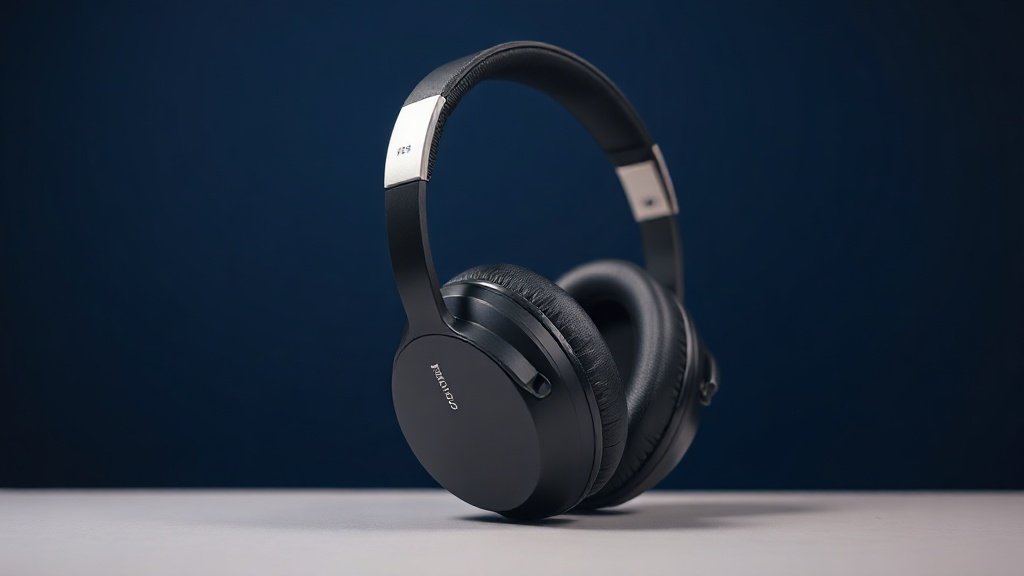
The headphone you use during a late-night recording session and the one you reach for during a final mix are solving entirely different problems, and treating them as interchangeable is one of the most consistent ways engineers undermine their own work.
Studio headphones are not a single category. The term covers three distinct use cases, each with its own acoustic priorities, and a design that excels at one task can actively mislead you during another. Closed-back isolation is essential when a vocalist is recording with a click track but counterproductive when you are trying to analyse low-frequency balance across a full mix. Understanding why each type is built the way it is will save you from buying the wrong tool twice.
This guide covers the three primary roles headphones play in professional audio work: tracking, mixing, and mastering. For each role it explains what the headphone needs to do, what design characteristics serve that purpose, and where real products sit in relation to those requirements. The aim is not to name a single best option but to give you a framework for evaluating what you already own and what gaps you might need to fill.
What Tracking Demands From a Headphone
Tracking means recording. The performer is in the room, often with a live microphone, and the headphone has one job above all others: stop bleed. A closed-back design with strong passive attenuation is the baseline requirement. If the click track or the backing mix leaks out of the ear cups and into the microphone, you have a problem that cannot be fixed in post. This is why open-back headphones, regardless of how accurate they sound, are almost never used for tracking by the performer.
The Sony MDR-7506 has been a tracking staple for decades, and the reason is not its flat frequency response. It has a slight presence boost that makes it easier for performers to hear their own voice without asking for more level in the mix. The Audio-Technica ATH-M50x offers a more pronounced low end that many performers prefer for monitoring themselves during vocal takes. Neither of these is a neutral reference tool, but neutrality is not the primary requirement during tracking. Reliable isolation and a consistent, comfortable sound that keeps the performer confident are what matter.
Comfort over extended sessions is also worth taking seriously at the tracking stage. A vocalist doing four or five takes across an hour needs a headphone that does not create fatigue or pressure points. Clamping force, ear cup depth, and headband padding all feed into that. The beyerdynamic DT 770 Pro is frequently cited for this reason, offering good isolation alongside a more generous fit than the MDR-7506 for longer sessions.
What Mixing Demands From a Headphone
Mixing asks a fundamentally different question. You are no longer just monitoring your own performance. You are making decisions about the entire stereo image, about frequency balance across the full spectrum, and about the relationship between elements in the mix. A headphone that flatters or colours the sound will lead you to make compensatory moves that only make the mix worse when heard on speakers.
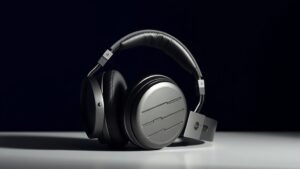
Open-back headphones are the standard recommendation for mixing because their design reduces the sense of the sound being trapped inside the head. The Sennheiser HD 650 has been a reference point for open-back mixing headphones for many years. Its frequency response tilts very slightly warm, which is a known characteristic that experienced engineers account for. The Beyerdynamic DT 990 Pro has a more pronounced high-frequency lift, which can make mixes sound bright and lead engineers to roll off too much air, creating dull-sounding results on other systems. Knowing the character of your headphone is as important as the character itself.
The AKG K702 offers a wider soundstage presentation than most closed-back designs and has become a widely used reference for mixing engineers who work primarily on headphones. The Audeze LCD-X, a planar magnetic design, provides exceptionally low distortion and a bass response that is consistently regarded as more reliable than many dynamic driver alternatives at the mixing stage. The trade-off is weight and cost. Planar magnetic headphones are heavier and more expensive, and for many engineers the Sennheiser HD 600 or HD 650 remains the most practical entry point into serious mixing on headphones.
A mixing headphone that flatters the low end will cause you to cut bass you should keep, and you will not discover the mistake until the track plays somewhere else.
What Mastering Demands From a Headphone
Mastering is the stage at which small decisions carry the most weight. A mastering engineer is listening for things that most people never consciously notice: slight tonal imbalances across the full programme, transient consistency, the relationship between the loudest and quietest moments, and how the stereo field holds together at different playback levels. A headphone for mastering needs to be as transparent as possible and as consistent as possible across repeated listening sessions.
The Sennheiser HD 800 S is one of the most widely used headphones in professional mastering environments. Its frequency response is not perfectly flat, and its soundstage is wider than any speaker-based listening environment, but its resolution in the upper midrange and high frequencies is exceptional. Engineers use it specifically because it reveals detail that other headphones compress or obscure. The Focal Utopia, at a higher price point, is used in a similar role, with extremely low distortion and a midrange clarity that makes it easier to hear the kind of colouration that mastering processing can introduce.
Mastering on headphones requires an additional layer of critical awareness. The stereo imaging presented by headphones is fundamentally different from speaker-based imaging, with centre elements perceived as inside the head rather than projected in front of the listener. Some engineers use crossfeed plugins such as those built into products like the Sonarworks SoundID Reference software to introduce a degree of speaker-like crosstalk. This does not make headphone mastering equivalent to speaker mastering, but it does reduce the most misleading aspects of purely in-head stereo perception. Sonarworks also offers headphone correction profiles that adjust the measured frequency response of specific models toward a reference curve, which is particularly useful at the mastering stage where even small tonal deviations matter.
Impedance, Amplification, and the Gear Behind the Headphone
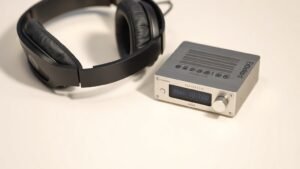
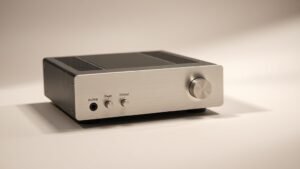
The electrical requirements of a headphone affect how it performs in each of these roles. High-impedance headphones such as the Sennheiser HD 800 S at 300 ohms or the beyerdynamic DT 880 Pro at 250 ohms need a capable headphone amplifier to reach their full potential. Running a 300-ohm headphone from a laptop headphone output will produce reduced volume and a different tonal balance than the same headphone through a dedicated amplifier. For tracking this matters less, since most interfaces provide enough output for low-impedance closed-back models. For mixing and especially mastering, a dedicated headphone amplifier is worth considering seriously.
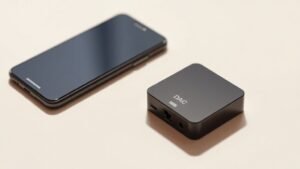
The Grace Design m900 is a well-regarded headphone amplifier used in mastering contexts for its low noise floor and accurate output. The SPL Phonitor series adds a crossfeed matrix that addresses the in-head stereo issue directly in hardware. For engineers working at the mixing and mastering level, pairing the right headphone with a high-quality DAC and amplifier is not an optional upgrade. The DAC inside an audio interface is often adequate for tracking and rough mixing, but the audible differences at the mastering level are real enough to justify the investment in a dedicated unit.
Building a Headphone Setup Across All Three Roles
Few engineers can justify separate headphones for each role when starting out, and the practical answer is to understand the limitations of what you own rather than to pursue perfection in each category simultaneously. A closed-back headphone such as the Audio-Technica ATH-M50x will handle tracking reliably and give you a workable, if coloured, reference for rough mixing. When budget allows, adding an open-back reference such as the Sennheiser HD 600 or HD 650 changes the mixing work significantly by reducing the sense of in-head compression and providing a more balanced frequency reference.
For engineers doing mastering work, the step up to a high-resolution open-back such as the Sennheiser HD 800 S or Focal Clear MG, combined with calibration software, moves the work into a genuinely professional domain. The key is not to skip the middle step. Attempting to master on a headphone that was designed primarily for tracking comfort rather than spectral accuracy will produce results that translate poorly to other systems, no matter how experienced the engineer.
Using the same closed-back headphone for both tracking and mastering produces unreliable results at the mastering stage. Closed-back designs introduce colouration and restrict the sense of space in ways that cause mastering decisions to translate poorly when heard on speakers or in other listening environments. Reserve the mastering role for a transparent open-back headphone with a known frequency response.
Ignoring the headphone amplifier means the headphone you purchased is not performing as designed. High-impedance reference headphones are voiced by their manufacturers with a particular output impedance and gain structure in mind. Running them underpowered from a consumer device output changes their tonal balance and reduces their dynamic resolution. A dedicated headphone amplifier is part of the signal chain, not an accessory.
Assuming a flat frequency response on paper means accurate monitoring in practice is a common source of mix translation problems. Headphone frequency response measurements are taken on standardised artificial ears that do not replicate individual listener anatomy. Two engineers can perceive the same headphone differently, and what measures flat on a rig does not always sound flat in use. Reference your mixes regularly on speakers and on consumer earphones to check translation across systems.
Conclusion
Choosing studio headphones well means understanding that tracking, mixing, and mastering each require different acoustic priorities. Isolation and performer comfort define the tracking role. Frequency transparency and open-back design define the mixing role. Resolution, low distortion, and access to calibration tools define the mastering role. Match the tool to the task, know the colouration of whatever you are using, and reference constantly on other systems.
FREE DOWNLOAD
Stop Guessing. Start Buying Smart.
The specs that actually matter, demystified.
Headphones, microphones, the spec sheet jargon you can ignore — all in one quick-reference PDF. Free, instant, no fluff.
Send Me the CheatsheetYou'll also receive occasional new guide notifications. Unsubscribe anytime. No spam, ever.