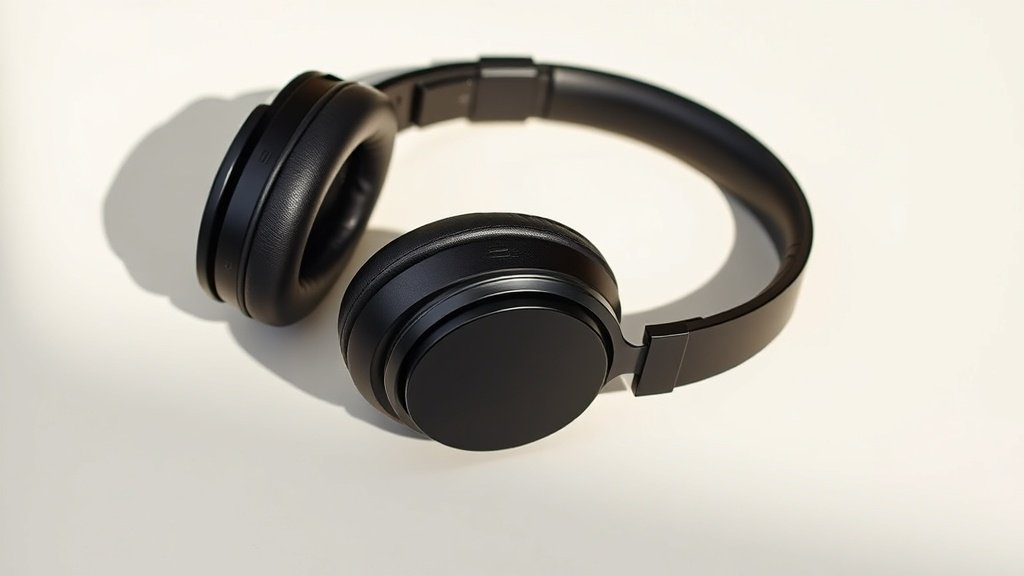
Most travellers pick headphones for long flights based almost entirely on noise cancelling ratings, but the factors that actually determine whether you land feeling refreshed or wrecked have very little to do with how aggressively a headphone suppresses engine roar.
I have been on enough long-haul flights with enough different headphones to know that the marketing conversation and the real-world conversation are almost entirely separate. Noise cancelling technology has become genuinely excellent across a wide range of price points, which means it is no longer the variable that separates a good travel headphone from a bad one. What separates them now is a set of factors that get far less airtime: clamping force over twelve hours, earcup depth, codec compatibility with the seat-back entertainment system, battery behaviour under real conditions, and the way a particular sound signature interacts with cabin pressure and ambient noise floors.
This guide works through each of those factors in detail. It is not a ranking of products. It is a framework for evaluating any headphone against the specific demands of long-distance air travel, which are genuinely different from the demands of commuting, studio monitoring, or home listening. By the end you will have a clear method for assessing whether a headphone you already own or are considering will actually serve you well at 35,000 feet.
Why Comfort Architecture Matters More Than Spec Sheets
The single biggest predictor of how a headphone performs on a long flight is not its noise cancelling depth or its frequency response curve. It is how the physical structure distributes pressure across your head over many hours. A headphone that feels perfectly fine for a forty-minute commute can become genuinely painful by hour four of a long-haul flight. The variables involved are clamping force, headband padding distribution, earcup depth, and the material properties of the ear cushions under sustained warmth and sweat.
Clamping force is worth understanding quantitatively. Most headphones clamp somewhere between 3 and 5 Newtons of force against the sides of the head. At the lower end, headphones feel secure but light. At the higher end, they hold very firmly but begin to create measurable fatigue in the temporomandibular joint and around the ears after two to three hours. The Sony WH-1000XM5 has a relatively low clamping force for its class, which is part of why it gets consistent positive feedback from long-haul travellers. The Bose QuietComfort 45 uses a similar philosophy. Neither of those is a recommendation in itself, but they illustrate what to look for: manufacturers who have consciously optimised clamping force downward for comfort rather than upward for fit security during movement.
Earcup depth is underrated. If your ear touches the inner driver grille or the foam baffle inside the cup, even lightly, that contact creates cumulative irritation. You want at least 20mm of internal depth in the cup, ideally 25mm or more. This is almost never listed in manufacturer specifications, which means you need to either handle the headphone in person or research user measurements from communities like the Head-Fi forums, where members frequently post caliper measurements of internal cup dimensions.
Understanding Codec Support in the Air
Wireless audio codec support matters on a long flight in two distinct ways, and most travellers only consider one of them. The obvious consideration is streaming quality from your own device. If you are listening to music stored on your phone or playing from a streaming service, the codec negotiated between your phone and your headphone determines both audio quality and latency. AAC performs well with iPhones. aptX and aptX HD perform well with many Android devices. LDAC, which Sony has made available across a wide range of its wireless headphones, transmits a higher bitrate than the others and is audibly beneficial for high-resolution audio files, though the difference on heavily compressed streaming content is modest.
The less obvious consideration is seat-back entertainment systems. The in-flight entertainment on most long-haul carriers still uses a 3.5mm analogue output, which means your wireless headphone needs to work passively via an included cable. Some headphones do not function at all when the battery is flat, and some impose significant signal degradation in passive mode because the driver impedance and sensitivity are optimised for amplified wireless operation rather than the low-power output of a seat-back jack. Before any long flight, test your headphone in passive wired mode through the type of source that in-flight systems resemble, which is typically a low-output headphone amplifier stage with no great current delivery. You may find the experience significantly worse than wireless mode, which is worth knowing before you board a thirteen-hour flight.
The Bose QuietComfort 35 series and the Sennheiser Momentum 4 Wireless both perform competently in passive wired mode, which is not a given across the category. The included cables and the impedance characteristics of those headphones make them reasonable choices for mixed wireless and wired use across a long flight.
The headphone that sounds best on your desk at home is not necessarily the one that serves you best when cabin pressure drops and you are wearing it for eleven hours straight.
Battery Life and Real-World Endurance
Manufacturer battery life figures are measured under controlled conditions that do not reflect flight use. Tested at moderate volume with noise cancelling active and no wireless streaming, a headphone rated at 30 hours might deliver that in a lab. On a flight, where you are pushing volume higher to compete with residual noise that the ANC has not fully suppressed, streaming audio continuously, and operating in an environment with potential Bluetooth interference from dozens of nearby devices, real-world endurance tends to run 15 to 25 percent shorter than the rated figure.
For a flight over 10 hours, a headphone rated at 20 hours of ANC-on battery life is genuinely borderline. For flights over 14 hours, you want a headphone rated at 30 hours or more, and you should plan to use passive wired mode for at least a portion of the flight to conserve battery. The Sony WH-1000XM5 is rated at 30 hours with ANC on. The Sennheiser Momentum 4 Wireless is rated at 60 hours, which is enough margin that battery anxiety essentially disappears even on the longest commercial routes. That margin matters more than you might expect when you are tired and do not want to manage a device.
Fast charging is a genuinely useful feature for travel use specifically. A headphone that delivers three hours of playback from a ten-minute charge gives you a meaningful safety net during a layover. This is worth checking in the specifications when evaluating any travel headphone, because it varies significantly across models even within the same brand family.
Sound Signature and the Cabin Noise Floor
Aircraft cabin noise is not uniform across the frequency spectrum. The dominant energy sits in the low-to-mid frequency range, roughly 80Hz to 400Hz, generated by engine vibration transmitted through the airframe and by air movement across the fuselage. Active noise cancellation addresses most of this, but it does not eliminate it entirely, and even well-implemented ANC leaves a residual noise floor that is tilted toward low-mid frequencies. This has a direct implication for sound signature preference on flights.
A headphone with a warm, bass-heavy sound signature will have that character reinforced and obscured by the residual cabin noise floor. Bass detail gets muddied. A headphone with a relatively neutral or slightly bright tonal balance tends to offer better perceived clarity in flight conditions because the frequency ranges where it has more energy, the upper mids and lower treble, are the ranges least polluted by cabin noise. This does not mean you should use an analytically bright headphone on a flight if you find that fatiguing. It means that a headphone tuned neutrally, such as those following a Harman-target-adjacent response, tends to translate better to flight conditions than one tuned with heavy bass emphasis.
Equalisation can help here. If your headphone has a companion app with parametric or graphic EQ, consider cutting 3 to 4dB in the 100Hz to 300Hz range before a long flight and see whether perceived clarity improves. The Sony Headphones Connect app and the Bose Music app both offer onboard EQ adjustment that persists in the headphone firmware, meaning your adjusted settings will remain active without needing your phone connected.
Physical Practicalities That Get Overlooked
How a headphone folds, how it packs, and how it interacts with the seat environment are practical considerations that matter enormously over the duration of a long flight but receive almost no attention in standard reviews. A headphone that folds flat into a slim case is meaningfully easier to manage in an economy seat than one that comes in a rigid clamshell. The case dimension matters when it is going under the seat in front of you rather than in an overhead bin that may fill before you board.
The headband adjustment mechanism is worth examining specifically for in-seat use. Some headbands ratchet with discrete steps and hold their position reliably when you adjust them while wearing the headphone. Others use a smooth slider that creeps over time under the weight of the earcups. On a long flight where you are moving between upright and reclined positions, and potentially sleeping, a headband that holds its adjustment without drifting is noticeably less irritating than one that requires frequent correction.
Multipoint Bluetooth connection, the ability to pair simultaneously with two devices, is genuinely useful in flight if you carry both a phone and a tablet or laptop. It allows you to take a notification audio cue from one device without disconnecting from the other. This feature is now available on several current headphones including the Jabra Evolve2 85, the Sony WH-1000XM5, and the Bose QuietComfort Ultra, and it removes a small but real friction from managing multiple devices over a long journey.
Buying a headphone based on noise cancelling depth alone is the most common and most costly mistake long-haul travellers make. ANC quality across premium headphones is now close enough that the comfort architecture and battery behaviour under real conditions will define your experience far more than which brand measures half a decibel better at suppressing engine noise.
Testing headphones only in a quiet shop before a long flight gives you almost no useful information about how they will perform in the air. Wear the headphone for at least two hours in a warm environment before committing to it for travel, and test it in passive wired mode through a low-output source to understand how it sounds when the battery is depleted.
Ignoring the sound signature interaction with cabin noise means arriving at your destination fatigued without knowing why. A warm, bass-heavy tuning that sounds enjoyable at home can feel thick and congested against the low-mid residual noise floor of a pressurised cabin, making you push volume higher and increasing listening fatigue over a long flight.
Conclusion
Choosing headphones for long flights well means evaluating comfort architecture over hours rather than minutes, understanding how the sound signature interacts with the specific noise profile of a pressurised cabin, verifying passive wired performance for seat-back entertainment systems, and ensuring battery endurance has genuine margin beyond the rated figure. These are the variables that determine whether a long flight is something you endure or something that is, at minimum, sonically tolerable from takeoff to landing.
FREE DOWNLOAD
Stop Guessing. Start Buying Smart.
The specs that actually matter, demystified.
Headphones, microphones, the spec sheet jargon you can ignore — all in one quick-reference PDF. Free, instant, no fluff.
Send Me the CheatsheetYou'll also receive occasional new guide notifications. Unsubscribe anytime. No spam, ever.