Most people who buy headphones for film and spatial audio end up with something optimised for music instead, and the difference in experience is significant enough to matter every single time they press play.
Choosing headphones specifically for film and spatial audio formats requires a different set of priorities than choosing them for critical music listening. The things that make a pair of headphones excellent for dissecting a studio mix, such as tight bass control and a forward midrange, are often exactly the qualities that make cinematic soundscapes feel compressed and claustrophobic. After years of obsessively buying, using and comparing audio gear, I have learned to treat these as genuinely separate categories.
This guide covers the core technical factors that shape the film-watching experience through headphones: soundstage width and depth, driver architecture, virtual surround processing, open-back versus closed-back design, and the role of digital signal processing in modern spatial audio formats. I will also explain what to look for when assessing headphones against Dolby Atmos for Headphones, Sony 360 Reality Audio, and the spatial layers built into streaming platforms.
Why Soundstage Is the Single Most Important Factor
In studio mixing, soundstage imaging matters because you need to place instruments accurately within a stereo field. In film, soundstage matters for an entirely different reason: you need to believe that a helicopter is behind you, that dialogue is coming from the screen rather than inside your skull, and that the ambient noise of a forest extends outward in every direction. That is a much harder perceptual challenge, and it is one that most headphones simply fail at unless they are specifically designed or processed to meet it.
Soundstage in headphones is determined partly by driver tuning, partly by the physical geometry of the ear cup and pad, and partly by the headphone software or DSP chain sitting between the source and your ears. A headphone with a naturally wide soundstage, such as the Sennheiser HD 800 S, achieves that width through a combination of its angled driver design and its ear cup geometry, which places the driver away from the ear rather than directly against it. That physical distance creates inter-aural cues that the brain interprets as spatial width.
Headphones with smaller ear cups and drivers positioned closer to the ear, regardless of how well they measure technically, tend to produce what engineers call an in-head localisation effect, where the entire stereo image collapses to a point between your temples. For music that is often acceptable or even desirable. For a film mixed with precise object-based spatial audio, it is immersion-destroying. Width and depth in the soundstage are not luxuries in this context. They are functional requirements.
Open-Back or Closed-Back for Film Listening
Open-back headphones consistently produce wider, more natural soundstages than closed-back designs, and the physics behind that are straightforward. When the back of the driver is sealed, pressure builds behind the diaphragm and distorts the low-frequency response in ways that affect spatial perception. The bass becomes louder and more impactful, but it also bleeds into the midrange in ways that obscure the low-level spatial cues that spatial audio formats rely on.
The Beyerdynamic DT 990 Pro and the AKG K712 Pro are both open-back designs with well-regarded soundstage performance, and both are used regularly in broadcast and post-production environments precisely because they present spatial information clearly rather than loudly. Neither is a premium audiophile purchase, which makes them practical entry points for film listening without a significant financial commitment.
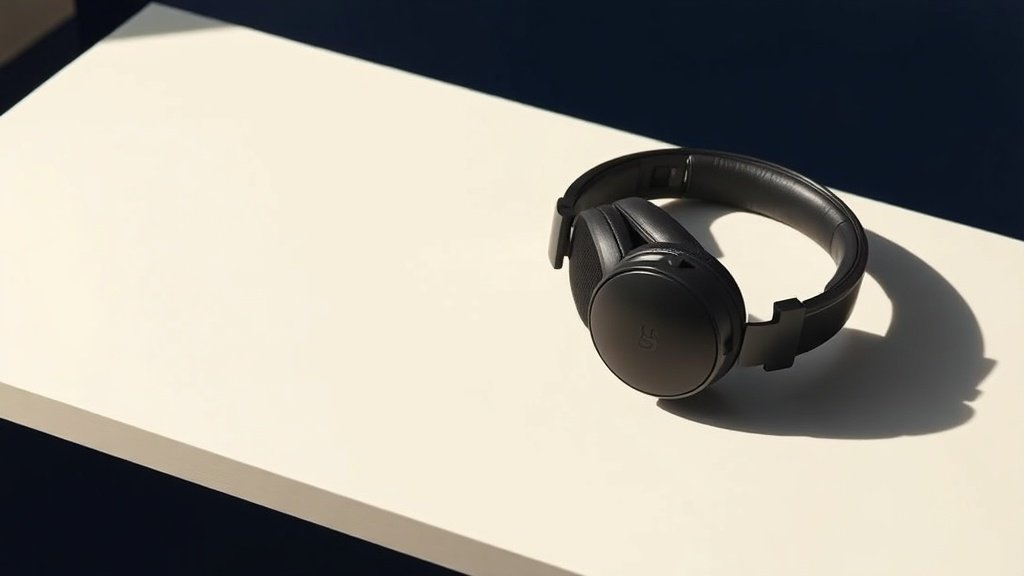
Closed-back headphones have a genuine use case in film watching, specifically when you are in a shared environment and do not want to disturb other people, or when external noise would otherwise ruin the experience. The Sony WH-1000XM5 and the Bose QuietComfort Ultra Headphones both offer active noise cancellation combined with virtual spatial audio processing, which partially compensates for the closed-back soundstage limitation. These are practical compromises rather than ideal solutions, and it is worth understanding them as such rather than expecting them to match an open-back headphone in a quiet room.
The headphone that disappears into the film is almost always the one with the widest, most naturally positioned soundstage, not the one with the most dramatic bass response.
Understanding Virtual Surround and Spatial Audio Formats
Dolby Atmos for Headphones, Sony 360 Reality Audio, and Apple Spatial Audio with head tracking all use a technique called binaural rendering to create the perception of surround sound through a standard two-driver headphone. The process involves applying Head-Related Transfer Function data, commonly abbreviated as HRTF, to each audio object in the mix. The HRTF is essentially a mathematical model of how your specific ear shape, head size, and shoulder geometry affect how sound arrives at your eardrums from different directions.
The problem with HRTF-based processing is that the transfer functions vary significantly between individuals. A binaural rendering that sounds convincingly three-dimensional to one person may sound flat, reverberant, or slightly queasy to another. Platforms including Apple and Sony have begun offering personalised HRTF measurement using the camera on a mobile device to map ear geometry, and this genuinely improves spatial accuracy for a meaningful proportion of listeners. If you are serious about spatial audio for film, enabling personalised spatial audio on the platform level is one of the highest-impact steps you can take before spending more money on hardware.
The headphone itself also shapes how well binaural rendering translates. A headphone with a strongly coloured frequency response, particularly one with elevated or recessed treble, will alter the HRTF cues that the rendering engine is trying to deliver. Headphones with a relatively neutral or gently warm response, such as the Audeze LCD-2 Classic or the Focal Clear MG, tend to present binaural content more accurately than highly V-shaped headphones because they are not adding their own strong tonal character on top of the spatial processing.
Driver Technology and What It Means for Spatial Reproduction
Most headphones use dynamic drivers, which are moving-coil transducers similar in principle to a loudspeaker cone. Dynamic drivers are capable of excellent bass extension and are generally well suited to the low-frequency requirements of film audio, where LFE content and deep ambient rumble are central parts of the mix. The trade-off is that larger dynamic drivers can struggle with transient speed at higher frequencies, which affects the sharpness of spatial cues.
Planar magnetic drivers, used in headphones such as the HiFiMAN Sundara and the Audeze LCD series, move the entire diaphragm surface uniformly rather than pistoning from the centre. This results in lower distortion at high listening levels and faster transient response across the full frequency range. For spatial audio reproduction, the improved high-frequency precision is relevant because the HRTF cues that signal elevation and distance are encoded primarily in the upper midrange and lower treble regions, roughly between three and twelve kilohertz. A driver that reproduces this range cleanly and with low distortion will deliver spatial cues more accurately.
Electrostatic headphones, such as those in the Stax SR series, take transient precision further still, but they require dedicated energiser amplifiers and represent a significant investment that is difficult to justify solely on the basis of film watching. For most people working within a sensible budget, a well-chosen planar magnetic or open-back dynamic driver headphone will deliver the spatial performance needed for immersive film audio without requiring a complete rethinking of the listening setup.
Amplification and DAC Considerations for Spatial Audio Headphones
Planar magnetic headphones, in particular, tend to require more amplifier current than typical dynamic driver designs. The HiFiMAN Sundara, for example, has a relatively low impedance of around thirty-seven ohms but a low sensitivity of around ninety-four decibels per milliwatt, which means it needs a capable amplifier to reach satisfying listening levels without running out of headroom. Driving it from a phone output or a laptop headphone socket will result in audible compression at moderate volumes, which directly undermines the dynamic range that makes film audio feel cinematic.
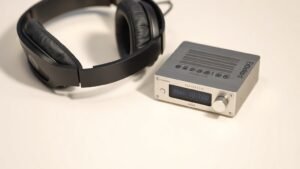
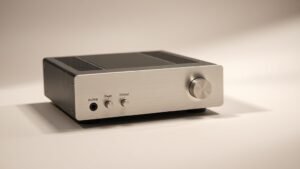
A dedicated headphone amplifier and DAC combination, such as the iFi Audio Zen DAC 3 or the Schiit Magni and Modi stack, provides the current delivery and clean signal path that these headphones need. For wireless spatial audio applications with Dolby Atmos content from streaming platforms, the Bluetooth codec chain also matters. aptX Lossless and LDAC both support higher bitrates than standard SBC or AAC, and for Atmos content that is being decoded and rendered in the headphone or in the accompanying app, using the highest quality codec the platform supports will reduce artefacts in the spatial processing.
Buying closed-back headphones for film and then wondering why the spatial audio feels flat is one of the most common errors in this category. The physics of a sealed ear cup work against binaural rendering, and the compromise requires either very good DSP compensation or an acceptance that the spatial experience will be reduced compared to an open-back design.
Choosing headphones based on bass impact rather than soundstage width is a category error when the goal is cinematic immersion. Elevated low frequencies can make individual effects feel dramatic in isolation but they mask the low-level spatial cues that spatial audio formats use to establish the listening environment, making the overall experience feel smaller rather than larger.
Ignoring the platform-level spatial audio settings and relying entirely on headphone hardware is leaving significant performance on the table. Enabling head tracking on Apple devices, configuring personalised HRTF profiles on Sony 360 Reality Audio, and selecting the correct Dolby Atmos output mode on the streaming platform can all meaningfully improve spatial accuracy before any hardware change is considered.
Conclusion
The most effective headphone setup for film and spatial audio is one where soundstage width, driver transparency in the critical HRTF frequency range, and platform-level spatial processing are all working together rather than against each other. An open-back headphone with a relatively neutral tonal balance, driven cleanly by a capable amplifier, and paired with properly configured spatial audio settings at the software level will outperform a more expensive but poorly matched closed-back alternative in almost every cinematic listening scenario.

FREE DOWNLOAD
Stop Guessing. Start Buying Smart.
The specs that actually matter, demystified.
Headphones, microphones, the spec sheet jargon you can ignore — all in one quick-reference PDF. Free, instant, no fluff.
Send Me the CheatsheetYou'll also receive occasional new guide notifications. Unsubscribe anytime. No spam, ever.