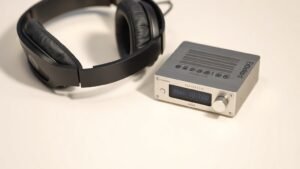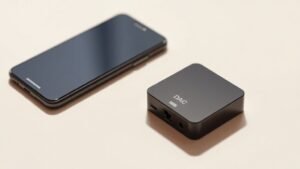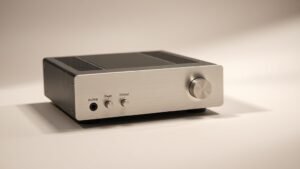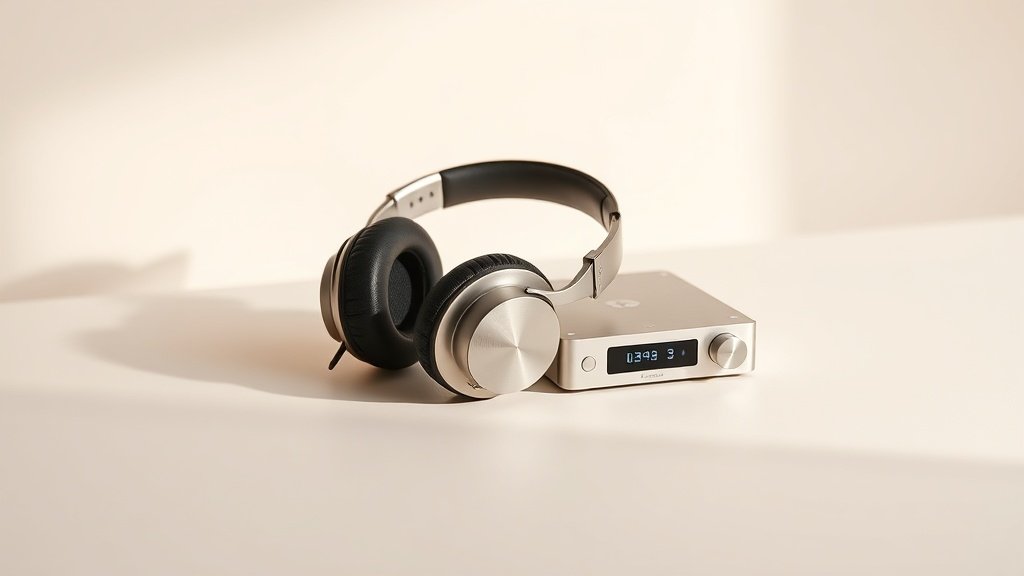
Spend the money in the wrong order and you could own a five-hundred-pound DAC feeding headphones that cannot resolve what it is doing, or high-end cans revealing every flaw in a source that was never good enough to begin with.
This is the upgrade question I hear more than almost any other, and it does not have a single clean answer. The honest response is that both components matter, but they do not matter equally at every price point or in every listening context. Where the bigger gain lives depends on what you already own, how you are using it, and what is genuinely limiting the sound you are hearing right now.
This guide works through the relationship between headphones and DACs from first principles. It covers how each component contributes to sound quality, what the point of diminishing returns looks like for each, and how to diagnose which end of your chain is the weak link. The goal is to give you a framework for making that decision with your own gear, rather than a generic recommendation that ignores your situation.
What Each Component Actually Does to the Signal
A DAC, or digital-to-analogue converter, takes a bitstream and turns it into a voltage waveform. At its most basic, it determines how accurately the digital file you are playing is translated into an analogue signal. Poor DAC performance shows up as increased noise floor, distortion at the conversion stage, and a kind of flatness or harshness that is hard to name but easy to hear once you know what you are listening for. A good DAC preserves the integrity of that conversion and keeps its own colouration as low as possible.
Headphones are transducers. They take that electrical signal and move air. Everything downstream of the DAC, including the amplifier stage, feeds into what the drivers are asked to do. Headphone quality determines the resolving power of the whole chain. A more capable headphone reveals more of what the source and amplifier are providing. A less capable one acts as a ceiling, hiding both the benefits of a better DAC and the flaws of a worse one. This is the core dynamic that shapes the whole upgrade question.
The Entry Level: Where Headphones Win Almost Every Time
At the entry level, roughly up to around two hundred pounds per component, headphones deliver a more audible return on investment than a DAC upgrade. The gap between a thirty-pound pair of bundled earphones and a hundred-and-fifty-pound pair of dedicated over-ear headphones is enormous, and you will hear every penny of it immediately. The gap between a thirty-pound DAC and a hundred-and-fifty-pound DAC, while real, is considerably smaller in perceptual terms.
The reason is straightforward. Budget headphones have fundamental driver and acoustic limitations: uneven frequency response, poor imaging, limited dynamic range, and physical designs that compromise the listening experience. These are not things a better source fixes. A Sennheiser HD 560S, for instance, sounds meaningfully more open and detailed than budget alternatives because of the driver design and housing geometry, not because of what is feeding it. You could run it from a modest DAC like the AudioQuest DragonFly Black and still be getting the majority of what that headphone can offer.
At this level, most built-in DACs in modern laptops and phones have improved enough that they are not the primary bottleneck. There are exceptions, particularly on older hardware or devices with noisy motherboard audio, but for most people starting out, the headphone is where the money does the most work.
The Mid Tier: Where the Balance Starts to Shift
Once you are running headphones in the three-hundred to six-hundred-pound range, the calculus changes. Headphones at this level, such as the Sennheiser HD 650, the Beyerdynamic DT 1990 Pro, or the Audeze LCD-2 Classic, have genuine resolving capability. They can distinguish between source components. Feed a HD 650 from a mediocre built-in soundcard and from a dedicated DAC like the Chord Mojo 2 or the RME ADI-2 DAC FS, and you will hear a real difference. The headphone is no longer the ceiling.
At this tier, the DAC and amplifier stage become meaningfully relevant, and it is worth separating them in your thinking. Many DACs at this price point include a headphone amplifier. Whether that amplifier is adequate depends on what you are driving. The HD 650 is famously power-hungry relative to its impedance, and it benefits from a proper amplifier in a way that an easy-to-drive headphone like the Grado SR325x does not. Getting the amplification right is part of the DAC conversation here because they are often bundled.
A headphone that cannot resolve the difference between source components is a ceiling, not a listener, and no DAC upgrade will lift that ceiling.
High End: When the DAC Starts to Justify Its Price
Above six hundred pounds per component, the hierarchy flips again in a more nuanced way. At this level, you are likely already running headphones with serious resolving power: something like the Focal Clear, the Hifiman Arya, or the Dan Clark Audio Aeon 2. These are transducers that will expose shortcomings in the rest of your chain in ways that budget and mid-tier headphones simply cannot. A genuinely excellent DAC now earns its place.
The RME ADI-2 DAC FS is a benchmark here. Its measurement performance is near the limits of what test equipment can currently resolve, and subjectively it presents a clean, low-noise foundation that high-resolving headphones translate into a more spacious and precise soundstage. The Chord Hugo 2 operates on a different design philosophy, using a high-tap-length filter approach that its makers argue reduces time-domain errors, and it is a genuinely different listening experience. Whether that difference is worth the price is a personal question, but with a capable headphone in the chain, you will hear it.
At this level, the honest answer is that both components matter in roughly equal measure, and the weakest link in the chain becomes the bottleneck. If you are running a Focal Clear from a mid-range DAC, upgrading the DAC will be audible. If you are running a modest mid-range headphone from a high-end DAC, the headphone is limiting what you can hear. The upgrade priority should always be directed at whichever component is the current ceiling.
How to Diagnose Which Component Is Your Weak Link
The most reliable method is the borrow-and-compare test. If you can borrow a significantly better DAC and run it with your current headphones, you have your answer. If you hear a clear and consistent improvement, your DAC was limiting you. If the improvement is subtle or ambiguous, your headphones are the ceiling and will not resolve more of what the better DAC is providing.
There is also a practical shortcut using streaming services. Tidal and Apple Music both offer lossless and high-resolution tiers. If you are already on lossless and your listening experience feels flat or fatiguing, the issue is rarely the file quality and much more often the transducer. Fatigue specifically, that sensation of listening strain after an hour or two, is very often a headphone characteristic tied to driver resonance or poor high-frequency response, not a DAC artefact. A better DAC does not fix a headphone that has a harsh treble character.
Noise is a different diagnostic. If you hear a hiss floor when no music is playing, or a low-level hum, that is almost certainly a DAC or amplifier issue, not a headphone issue. High-sensitivity in-ear monitors like the Campfire Audio Andromeda are particularly revealing here because their sensitivity exposes noise floors that a less sensitive headphone would mask entirely. If you run sensitive IEMs and hear background noise, that is a direct signal to look at your source and amplifier chain before the headphones.
The Role of the Amplifier Stage in This Decision
Many people treat the DAC and amplifier as a single question because they often come in the same box, but it is worth being precise. The amplifier determines headphone control and drive capability. A DAC with a weak output stage will sound congested on power-hungry headphones regardless of how good the digital conversion is. This is why separating DAC and amplifier into discrete units, as the Topping E50 paired with the Topping L50 allows, gives you more granular control over where a problem lives.
Planar magnetic headphones like the Hifiman Sundara or the Audeze LCD-X are especially sensitive to amplifier quality. They require current delivery that many combined DAC-amp units at the entry and mid tier cannot supply cleanly. If you own a planar magnetic headphone and feel it sounds slightly compressed or dynamically limited, a better amplifier, not necessarily a better DAC, is likely the solution. This is a common misdiagnosis because people assume any upgrade should start at the source.
Buying a high-end DAC to improve bass on your headphones is a misunderstanding of what a DAC does. Bass weight and extension are driver and acoustic characteristics determined by the headphone itself. No DAC upgrade will add low-end that the transducer is not already capable of reproducing, and expecting it to do so leads to expensive disappointment.
Assuming that expensive DAC measurements guarantee an audible improvement is an error in logic. Measurements describe a component relative to test equipment thresholds. Once a DAC measures below the noise floor of your headphone drivers, further measurement gains produce no perceptible benefit. Spending beyond that point is a matter of preference, not performance.
Ignoring the quality of your cables and connectors before upgrading components is a common oversight that costs real money. A corroded or low-quality headphone cable introduces resistance and intermittent signal loss that mimics the sound of a poor DAC. Verify the integrity of the physical connection before concluding that a component is the problem.
Conclusion
Below two hundred pounds, spend on the headphones first. Between two hundred and six hundred pounds, get the headphone right before upgrading the DAC, but do not ignore amplifier matching if you are running something power-hungry. Above that level, both components matter and you should upgrade whichever is currently the weaker link in the chain. That diagnosis requires listening rather than assuming, and it is almost always worth doing before you spend.
FREE DOWNLOAD
Stop Guessing. Start Buying Smart.
The specs that actually matter, demystified.
Headphones, microphones, the spec sheet jargon you can ignore — all in one quick-reference PDF. Free, instant, no fluff.
Send Me the CheatsheetYou'll also receive occasional new guide notifications. Unsubscribe anytime. No spam, ever.