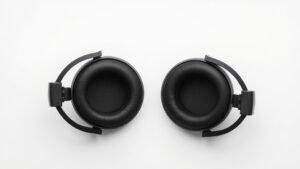
Most listeners experience music as if sounds are stuck to a flat wall between their ears, but spatial audio breaks free from this limitation to create a sphere of sound that surrounds you completely.
Spatial audio represents a fundamental shift from traditional stereo reproduction by positioning individual sounds in three-dimensional space around the listener. Rather than limiting audio to left and right channels, spatial audio systems can place instruments above, behind, and at varying distances from your position.
This guide examines how spatial audio works technically, what equipment supports it properly, and why the processing differs significantly from conventional surround sound approaches you might already know.
Object-Based Audio vs Channel-Based Systems
Traditional surround sound relies on channel-based mixing where audio engineers assign sounds to specific speaker positions like front left, centre, or rear right. The Dolby Atmos implementation in cinema uses this approach with predetermined speaker arrays. Object-based spatial audio works differently by treating each sound element as an independent object with metadata describing its position coordinates in 3D space.
When you play object-based content through compatible equipment, the decoder calculates how each audio object should sound from your listening position. The Sony WH-1000XM5 headphones demonstrate this processing when playing Dolby Atmos content from Apple Music, where the headphones render the spatial positioning through advanced digital signal processing rather than relying on fixed channel assignments.
This object-based approach allows the same spatial audio mix to adapt automatically whether you are listening through headphones, a 5.1 speaker system, or a full Atmos cinema setup. The spatial relationships between sounds remain consistent while the technical rendering adjusts to your playback system capabilities.
Binaural Processing and HRTF Technology
Spatial audio through headphones relies heavily on Head-Related Transfer Function processing to simulate how sounds reach your ears from different positions. HRTF algorithms analyse how your head, ears, and torso naturally filter sounds arriving from various angles and distances. These acoustic shadows and reflections provide the spatial cues your brain uses to locate sounds in real environments.
The Apple AirPods Pro 2 incorporates personalised spatial audio that uses the iPhone front camera to scan your ear shape, creating individualised HRTF profiles. Generic HRTF processing works reasonably well for most listeners, but personalised measurements can significantly improve the accuracy of spatial positioning, particularly for sounds placed directly behind or above the listening position.
Binaural rendering also includes distance modelling through techniques like early reflection simulation and frequency response adjustments that mimic how sounds change as they travel through air. Close sounds maintain full frequency response while distant sounds lose high-frequency content and gain subtle reverb characteristics.
Object-based spatial audio treats each sound as an independent element with precise 3D coordinates rather than limiting audio to predetermined speaker channels.
Hardware Requirements and Compatibility
Proper spatial audio reproduction requires significant processing power to handle real-time object positioning calculations and binaural rendering. The Cambridge Audio Melomania P100 headphones include dedicated spatial audio processing chips that handle these calculations without draining the connected device battery. Many older headphones lack the processing capability for true spatial audio and simply apply basic stereo widening effects instead.
Digital-to-analogue converters also play a crucial role in spatial audio quality. The iFi Audio hip-dac 3 includes spatial audio enhancement features that work alongside its high-resolution DAC section to maintain audio quality during the complex processing required for 3D positioning. Standard smartphone DAC outputs often introduce artifacts during intensive spatial processing that become particularly noticeable in quiet passages or when sounds move rapidly across the spatial field.
Speaker-based spatial audio systems require careful room acoustics and precise positioning to work effectively. The KEF LS50 Meta speakers can produce convincing spatial effects when positioned correctly, but reflective room surfaces and incorrect toe-in angles quickly destroy the spatial imaging that makes the effect convincing.
Spatial Audio Formats and Sources
Dolby Atmos remains the most widely supported spatial audio format across streaming services and physical media. Apple Music, Tidal, and Amazon Music HD all offer extensive Atmos catalogues that work with compatible headphones and speakers. However, the quality varies significantly between releases, with some tracks featuring genuine spatial mixing while others simply apply algorithmic upmixing to existing stereo masters.
Sony 360 Reality Audio uses a different technical approach based on spherical harmonics encoding rather than object-based metadata. The format works particularly well with Sony headphones like the WH-1000XM4, but compatibility with non-Sony equipment remains limited compared to Dolby Atmos widespread adoption.
Binaural recordings represent another spatial audio category that captures spatial information during the recording process rather than adding it during post-production. These recordings work through any stereo playback system but require headphone listening to maintain the spatial effect. Companies like Sennheiser produce dedicated binaural recording equipment for content creators working in this format.
Measuring and Optimising Spatial Audio Performance
Room correction becomes essential for speaker-based spatial audio systems because untreated acoustic problems destroy the precise imaging required for convincing spatial effects. The MiniDSP UMIK-1 measurement microphone paired with room correction software can identify and compensate for frequency response issues that blur spatial positioning.
Headphone measurements for spatial audio focus on different parameters than traditional frequency response testing. Phase coherence between left and right channels, transient response accuracy, and driver matching all affect spatial positioning accuracy more than minor frequency response variations. The Audio-Technica ATH-R70x headphones demonstrate excellent spatial imaging despite a somewhat uneven frequency response because of their exceptional phase coherence and low distortion characteristics.
Latency also becomes critical in spatial audio systems, particularly for interactive applications like gaming or virtual reality. Processing delays above 20 milliseconds can cause noticeable disconnects between visual and spatial audio cues. The SteelSeries Arctis Nova Pro headphones include low-latency wireless transmission specifically designed to maintain spatial audio synchronisation in gaming applications.
Assuming all spatial audio content offers the same quality improvement over stereo. Many streaming services apply automatic upmixing algorithms to stereo tracks rather than using genuine spatial mixes, resulting in artificial-sounding effects that often sound worse than the original stereo version.
Using spatial audio processing with poorly matched headphones or speakers. Spatial audio algorithms assume accurate frequency response and precise driver matching, so equipment with significant left-right imbalances or frequency response problems will produce confused spatial positioning regardless of the processing quality.
Ignoring room acoustics when setting up speaker-based spatial audio systems. Reflective surfaces and standing waves destroy the precise timing and frequency response required for spatial audio to work convincingly, making even expensive equipment sound worse than basic stereo in untreated rooms.
Conclusion
Spatial audio works through sophisticated object-based processing and binaural rendering that places sounds in three-dimensional space around the listener. Success depends on compatible equipment with adequate processing power, properly mastered content, and appropriate acoustic conditions. The technology offers genuine improvements over stereo when implemented correctly, but requires careful attention to the entire signal chain from source to transducers.

FREE DOWNLOAD
Stop Guessing. Start Buying Smart.
The specs that actually matter, demystified.
Headphones, microphones, the spec sheet jargon you can ignore — all in one quick-reference PDF. Free, instant, no fluff.
Send Me the CheatsheetYou'll also receive occasional new guide notifications. Unsubscribe anytime. No spam, ever.