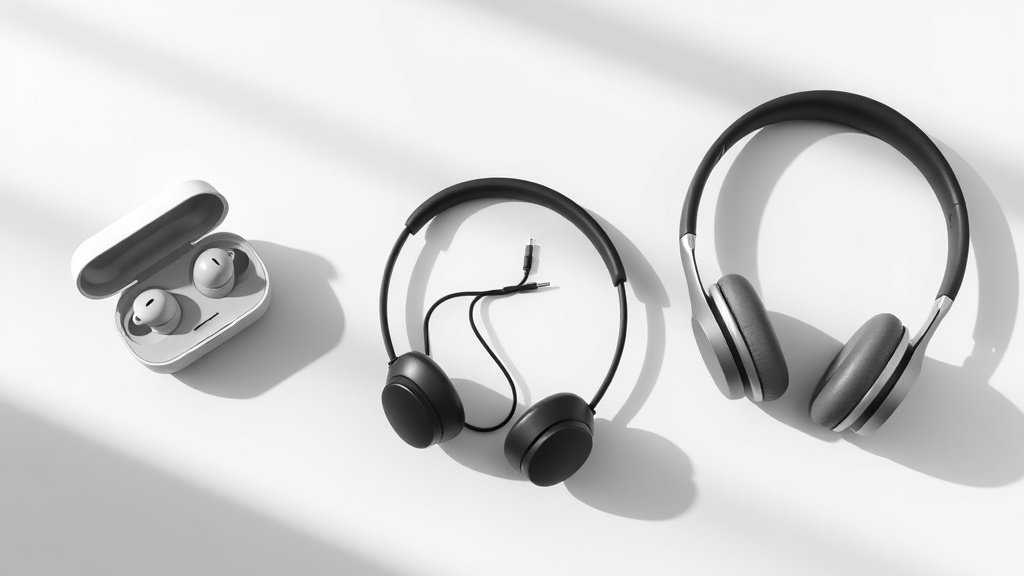
The headphone style you choose determines more about your listening experience than the driver technology inside the cups ever will.
After years of obsessively buying, using and comparing audio gear, the physical design trumps specifications every time. A brilliant driver in the wrong form factor becomes unusable faster than a decent driver in the right design becomes indispensable.
This guide examines how true wireless, neckband, and over-ear styles handle real-world demands like commuting, exercise, long listening sessions, and audio quality priorities. Each style creates specific trade-offs that matter more than frequency response graphs suggest.
True Wireless Earbuds: Maximum Convenience, Maximum Compromise
True wireless earbuds excel at disappearing into your routine until something goes wrong. The Sony WF-1000XM4 and Apple AirPods Pro demonstrate how this style succeeds through seamless pairing and reliable case charging, but both reveal the fundamental weakness: dependency on perfect fit and battery management. Lose the seal in your ear canal and bass response vanishes. Forget to charge the case and you own expensive pocket jewelry.
The physics work against true wireless designs in predictable ways. Small drivers in shallow ear canal positions cannot reproduce low frequencies with the authority that larger, sealed designs achieve. The Sennheiser Momentum True Wireless 3 represents the upper limit of what this format can deliver, yet still cannot match the bass extension of a well-designed over-ear model costing half the price.
True wireless excels for calls, commuting, and casual listening where convenience outweighs audio fidelity. The format fails during extended listening sessions when battery life becomes limiting and ear fatigue from in-canal pressure builds over hours.
Neckband Design: The Forgotten Middle Ground
Neckband headphones solve the most annoying problems of true wireless while avoiding the bulk of over-ear designs. The Sennheiser HD 350BT and Audio-Technica ATH-ANC40BT demonstrate how this style provides longer battery life, better driver positioning, and eliminates the anxiety of dropping expensive earbuds down subway grates.
The connecting cable between earpieces, which seems like a step backwards, actually enables better electronics placement and larger batteries. Where true wireless designs cram everything into tiny housings, neckband models place amplification and processing in the collar unit, improving both sound quality and battery performance. The result often sounds noticeably better than true wireless alternatives at similar prices.
This style works particularly well for active use since the earpieces cannot fall and disappear, but the collar can feel intrusive during certain activities. The format never gained consumer traction despite solving real problems, largely due to perceived technological regression compared to true wireless marketing.
Physical design determines your listening experience more than any driver specification ever will.
Over-Ear Headphones: Physics and Comfort Combined
Over-ear designs like the Sony WH-1000XM5 and Sennheiser HD 660S2 demonstrate why larger drivers in proper acoustic chambers consistently deliver superior sound quality. The physical space around your ears creates a natural sound chamber that smaller designs cannot replicate, regardless of digital processing or driver materials.
The comfort advantage becomes apparent during extended listening sessions. Distributing weight across the headband rather than cramming transducers into ear canals eliminates the pressure points that make in-ear designs uncomfortable after two hours. The padding creates a seal without insertion, reducing fatigue while improving bass response through better acoustic coupling.
Over-ear models handle power differently too. Larger drivers and dedicated amplifier sections in wireless models like the Focal Bathys can reproduce dynamics that would drain true wireless batteries in thirty minutes. The trade-off involves obvious portability limitations and less discrete appearance, but for serious listening the physics favor this approach consistently.
Matching Style to Real Usage Patterns
Your actual listening habits determine which compromises make sense. True wireless works for people who prioritise convenience above audio quality and listen in sessions under two hours. The format excels for phone calls, podcasts, and background music during commuting or exercise where ambient noise makes subtle audio differences irrelevant anyway.
Neckband designs suit users who want wireless convenience without true wireless limitations. The style works well for active use, longer battery life requirements, and situations where losing small earbuds creates genuine problems. The Audio-Technica ATH-ANC40BT costs less than premium true wireless options while delivering comparable noise cancellation and better battery performance.
Over-ear headphones serve listeners who prioritise audio quality and comfort during extended sessions. The style makes sense for home use, office environments, and situations where sound quality justifies the bulk. Models like the Drop Sennheiser HD 6XX demonstrate how this format delivers audiophile performance at reasonable prices impossible in smaller designs.
Battery Life and Practical Considerations
Battery performance varies dramatically between styles in ways that specifications obscure. True wireless cases provide multiple charges, but individual earpieces typically last four to eight hours maximum. The Sony WF-1000XM4 advertises impressive total battery life, but requires returning to the case every few hours, interrupting longer listening sessions.
Neckband models consistently deliver longer single-session battery life since collar placement allows larger cells. The Sennheiser HD 350BT provides genuine all-day battery performance without requiring case returns. Over-ear wireless models like the Sony WH-1000XM5 achieve similar endurance through larger battery compartments in the headband assembly.
Charging behaviour matters more than total capacity for many users. True wireless requires managing two or three separate battery levels simultaneously. Over-ear and neckband designs simplify this to single device charging, reducing the mental overhead of battery management that makes true wireless feel complicated despite marketing claims about simplicity.
Choosing true wireless earbuds primarily for sound quality over convenience. The format optimises for portability and ease of use, not audio fidelity. Over-ear designs consistently deliver better sound quality at equivalent price points due to superior driver placement and acoustic design possibilities.
Assuming neckband headphones represent outdated technology. This style solves genuine problems with true wireless designs including battery life, loss prevention, and often superior sound quality through better electronics placement. The connecting cable enables rather than limits performance in most cases.
Buying over-ear headphones without considering actual usage patterns. The superior sound quality becomes irrelevant if the bulk prevents regular use. Honest assessment of when and where you actually listen determines whether the performance advantages justify the portability limitations.
Conclusion
Each headphone style represents different priority choices rather than technological superiority. True wireless maximises convenience, neckband balances performance with portability, and over-ear prioritises sound quality and comfort. Match the style to your actual listening patterns rather than theoretical preferences for the most satisfying results.

FREE DOWNLOAD
Stop Guessing. Start Buying Smart.
The specs that actually matter, demystified.
Headphones, microphones, the spec sheet jargon you can ignore — all in one quick-reference PDF. Free, instant, no fluff.
Send Me the CheatsheetYou'll also receive occasional new guide notifications. Unsubscribe anytime. No spam, ever.