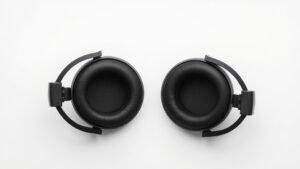
Most headphones die within months of gym use, killed by salt corrosion and mechanical stress that manufacturers never test for.
Years of obsessively buying, using and comparing audio gear taught me that gym environments destroy headphones in ways that laboratory testing never reveals. Sweat carries salt that corrodes drivers and electronics. Constant movement stresses cables and joints. Temperature swings from cold locker rooms to heated workout spaces cause expansion and contraction that loosens connections.
This guide covers the engineering realities behind gym headphone selection: ingress protection ratings, driver materials that resist moisture damage, cable strain relief design, and acoustic tuning that cuts through gym noise. We examine real products that survive these conditions and explain why most consumer headphones fail so quickly in fitness environments.
Understanding IPX Ratings and Sweat Protection
The IPX rating system measures protection against water ingress, but gym conditions create challenges beyond simple water exposure. Human sweat contains salt, urea, and organic acids that corrode metal components and degrade rubber seals over time. An IPX4 rating protects against splashing water but says nothing about chemical resistance or long-term exposure to acidic moisture.
Real-world testing reveals significant differences between products with identical ratings. The Jaybird Vista 2 earbuds carry an IPX6 rating and use conformal coating on internal electronics, providing extra protection against corrosive sweat. The Powerbeats Pro also rate IPX4 but employ nano-coating on critical components. Both survive gym use better than similarly rated products without these additional protections.
Look for headphones that specify sweat resistance rather than just water resistance. This indicates testing with synthetic sweat solutions that simulate the chemical composition of human perspiration. Products like the Jabra Elite Active series undergo specific sweat testing protocols that better predict real-world durability than standard IPX certification alone.
Securing Fit During High-Impact Movement
Movement during exercise creates forces that standard headphone designs cannot handle. Running generates vertical acceleration peaks of three to four times body weight with each footstep. High-intensity interval training involves rapid direction changes that create lateral forces. Jump movements produce sudden acceleration and deceleration that can eject poorly secured headphones.
Ear hook designs like those on the Beats Powerbeats Pro distribute retention force across the outer ear structure rather than relying solely on ear canal fit. This prevents the gradual loosening that occurs with traditional earbuds during extended movement. The Jabra Elite Active 75t uses a different approach with multiple ear tip sizes and wing attachments that lock into the concha bowl of the ear.
Over-ear designs face different challenges in gym environments. The added weight creates momentum during head movement, and sweat accumulation under the earpads becomes problematic. The Audio-Technica ATH-S200BT represents a lighter approach to gym over-ears, but most serious athletes find on-ear or in-ear designs more practical for intense workouts.
Sweat carries salt that corrodes drivers and electronics in ways that laboratory water testing never reveals.
Frequency Response for Motivation and Safety
Gym acoustics create specific challenges for headphone frequency response. Hard surfaces reflect sound, creating reverb that muddles midrange frequencies. HVAC systems produce constant low-frequency noise. Multiple conversations and equipment sounds compete for attention in the midrange. Music for motivation typically emphasises bass and treble frequencies that cut through this acoustic mess.
Many gym-focused headphones boost bass response significantly to maintain impact in noisy environments. The Sony WF-SP800N provides adjustable EQ with presets optimised for different workout types. The bass boost helps maintain rhythmic drive during cardio, while a more balanced setting works better for yoga or stretching where ambient awareness matters more.
Safety considerations also influence frequency response choices. Complete isolation can prevent awareness of equipment sounds, spotting calls, or emergency situations. The Bose Sport Earbuds include a transparency mode that allows controlled ambient sound bleed-through. This feature proves essential in shared gym spaces where situational awareness prevents accidents.
Cable Management and Wireless Reliability
Cable strain relief becomes critical in gym applications where movement stresses connections repeatedly. Traditional headphone cables use basic strain relief boots that fail under the constant flexing of workout movement. Look for reinforced strain relief with multiple transition zones that distribute flex stress over longer cable lengths.
Wireless designs eliminate cable stress but introduce new failure modes. Bluetooth connectivity suffers in crowded gyms where dozens of devices compete for spectrum space. The 2.4GHz band becomes congested, causing dropouts during peak usage hours. Premium wireless headphones like the Sennheiser Momentum True Wireless 3 use advanced antenna design and codec optimisation to maintain stable connections in challenging RF environments.
Battery life considerations multiply in gym settings where charging opportunities are limited. Cold storage in gym bags reduces lithium-ion battery capacity temporarily. Hot car storage during summer months accelerates permanent capacity loss. Choose models with charging cases that provide multiple full charges, and avoid leaving batteries completely discharged for extended periods.
Driver Technology and Moisture Resistance
Dynamic driver construction determines long-term reliability in moisture-rich environments. Traditional paper cone drivers absorb moisture and distort permanently. Polymer cone materials like those used in the Audio-Technica ATH-CKS50TW resist moisture absorption but can become brittle over time with repeated temperature cycling.
Magnetic assemblies also face corrosion challenges from salt-laden sweat. Neodymium magnets resist corrosion better than ferrite alternatives, but the steel pole pieces and voice coil wire remain vulnerable. Quality manufacturers apply protective coatings to these components, but this protection degrades gradually with exposure.
Planar magnetic drivers, while rare in gym-focused products, offer theoretical advantages for moisture resistance due to their sealed construction. However, the added weight and power requirements make them impractical for most fitness applications. Balanced armature drivers in models like the Shure SE215 provide excellent moisture resistance due to their sealed metal housings, though they require careful EQ tuning to provide adequate bass response for workout music.
Choosing headphones based on maximum IPX rating alone without considering actual sweat resistance testing. IPX ratings measure water ingress protection but ignore the corrosive effects of salt and acids in human sweat that cause long-term damage.
Relying on standard ear tips for high-impact activities without additional retention features. Standard ear tips depend solely on ear canal friction and will work loose during intense movement, requiring ear hooks or wing attachments for secure fit.
Storing wireless headphones in hot cars or cold gym bags without considering battery degradation. Extreme temperatures accelerate lithium-ion battery aging and reduce both temporary capacity and long-term lifespan significantly.
Conclusion
Successful gym headphones must survive salt corrosion, mechanical stress, and acoustic challenges that destroy most consumer audio products. Focus on sweat-specific testing certifications, secure retention designs, and frequency response optimised for noisy environments. The right choice balances these engineering constraints with your specific workout requirements and budget limitations.

FREE DOWNLOAD
Stop Guessing. Start Buying Smart.
The specs that actually matter, demystified.
Headphones, microphones, the spec sheet jargon you can ignore — all in one quick-reference PDF. Free, instant, no fluff.
Send Me the CheatsheetYou'll also receive occasional new guide notifications. Unsubscribe anytime. No spam, ever.