A wireless microphone system that works perfectly in rehearsal can fail spectacularly during the actual performance, and the difference usually comes down to three technical factors most people ignore.
Choosing a wireless microphone system requires understanding how radio frequency allocation, transmission power, and digital processing affect real-world performance. The marketing materials focus on range claims and battery life, but these specifications mean nothing without proper frequency coordination and interference management in your specific environment.
This guide covers the technical factors that determine whether a wireless system will work reliably for your application. We will examine frequency band selection, range considerations, antenna placement, and the features that separate professional systems from consumer models.
Understanding Frequency Bands and Licensing
Wireless microphone systems operate in specific frequency bands, and choosing the wrong band can make an otherwise excellent system unusable. The 2.4 GHz band used by many consumer systems shares spectrum with WiFi networks, Bluetooth devices, and other wireless equipment. This creates interference issues in venues with multiple wireless networks or dense RF environments.
Professional systems typically operate in UHF bands between 470-698 MHz, though available frequencies vary by country and local regulations. The Shure ULXD4 and Sennheiser EW-DX systems use these UHF bands because they offer better penetration through walls and around obstacles compared to higher frequency bands. Some regions require licensing for certain frequency ranges, while others designate specific bands for unlicensed wireless microphone use.
The key consideration is frequency coordination within your operating environment. A system that works perfectly in an empty venue may experience dropouts when other wireless devices are active. Professional frequency coordination software like Shure Wireless Workbench helps identify clear channels, but understanding your local RF environment remains essential for reliable operation.
Range Factors Beyond Line of Sight
Manufacturers specify range under ideal conditions with clear line of sight and no interference, but real-world performance depends on multiple factors. Building materials, other wireless devices, and even audience density affect signal propagation. A system rated for 100 metres might struggle at 30 metres in a venue with concrete walls and steel construction.
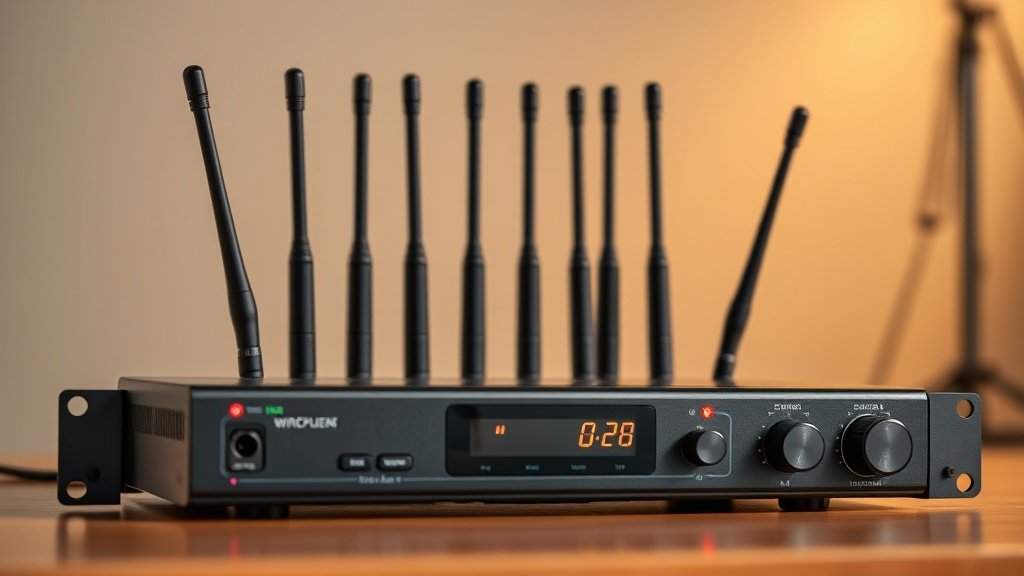
Antenna placement and selection have more impact on usable range than transmitter power alone. The Audio-Technica 5000 Series includes directional antennas that focus signal pickup toward the performance area while rejecting interference from other directions. Antenna diversity systems like those found in the Sony DWX series use multiple antennas to maintain signal quality when the direct path is blocked.
Environmental factors also matter significantly. Temperature and humidity affect signal propagation, while venue acoustics can create multipath interference as radio signals reflect off surfaces. Testing the system in your actual operating environment under realistic conditions provides better range estimates than manufacturer specifications.
Professional wireless systems succeed through proper frequency coordination and antenna management rather than raw transmission power.
Digital Processing and Audio Quality
Modern wireless systems use digital transmission to improve audio quality and reduce interference, but the implementation varies significantly between manufacturers. Companding algorithms compress the audio signal for transmission then expand it at the receiver, and different approaches affect the final audio quality. Some systems introduce audible artifacts during this process, particularly with dynamic sources like vocals or acoustic instruments.
The Lectrosonics DSQD series uses proprietary Digital Hybrid Wireless technology that maintains full frequency response and dynamic range without traditional companding artifacts. Similarly, the Shure Axient Digital systems employ advanced error correction and encryption while preserving audio fidelity. These features matter most in critical applications where audio quality cannot be compromised.
Latency also varies between digital wireless systems. While most modern systems keep delay under 3 milliseconds, this can still cause timing issues when mixing wireless sources with wired microphones or when performers use in-ear monitors. Systems designed for broadcast applications often prioritise low latency over other features.
Battery Management and Power Considerations
Battery life specifications assume ideal conditions with fresh batteries and minimal RF interference. Real-world battery performance depends on transmission power settings, signal strength, and environmental factors. Systems operating at maximum power to overcome interference or extended range requirements consume significantly more battery power than the published specifications suggest.
Rechargeable battery systems like those in the Sennheiser EW-DX and Shure SLX-D series offer convenience and long-term cost savings, but require proper charging infrastructure and spare battery management. Lithium ion batteries perform better in temperature extremes compared to alkaline batteries, but they also require specific charging protocols to maintain capacity over time.
Some professional systems include battery monitoring features that display remaining power levels on both transmitter and receiver. The Lectrosonics SSM and LMa transmitters provide detailed battery status information, allowing sound engineers to plan battery changes before failures occur. This monitoring becomes essential for long events or when access to performers is limited during operation.
System Scalability and Interference Management
Single wireless microphone systems work reliably in most environments, but adding multiple systems requires careful frequency coordination. Each additional wireless channel reduces the available spectrum and increases the potential for interference. Professional systems include scanning and coordination features to identify clear frequencies and avoid conflicts with existing wireless devices.
The Shure ULXD4Q quad receiver allows four wireless channels in a single rack space while maintaining proper frequency spacing. Similarly, the Sennheiser EW-DX systems can network multiple receivers to coordinate frequencies automatically and monitor all channels from a central location. These features become essential when operating more than a few wireless channels simultaneously.
Intermodulation interference occurs when multiple transmitters create spurious frequencies that interfere with other wireless devices. Professional frequency coordination software calculates these interactions and recommends frequency groups that minimise intermodulation products. This planning process becomes critical for large wireless installations with dozens of channels.
Choosing the cheapest system that meets basic range requirements without considering frequency coordination. Multiple wireless devices operating on poorly coordinated frequencies will interfere with each other regardless of individual system quality. Use frequency coordination software or professional consultation for multi-channel installations.
Assuming manufacturer range specifications apply to your specific venue and application. Range depends heavily on building construction, other wireless devices, and antenna placement. Test systems in your actual operating environment under realistic conditions before making final decisions.
Ignoring battery performance factors beyond published battery life specifications. Cold temperatures, high RF interference, and maximum transmission power settings significantly reduce operating time. Plan for 60-70 percent of published battery life in demanding applications and maintain spare batteries or charging systems.
Conclusion
Successful wireless microphone system selection requires matching technical specifications to your specific application requirements. Frequency band compatibility, proper antenna management, and realistic range expectations matter more than maximum specifications or lowest price. Professional systems justify their cost through reliability features and coordination capabilities that become essential as system complexity increases.

FREE DOWNLOAD
Stop Guessing. Start Buying Smart.
The specs that actually matter, demystified.
Headphones, microphones, the spec sheet jargon you can ignore — all in one quick-reference PDF. Free, instant, no fluff.
Send Me the CheatsheetYou'll also receive occasional new guide notifications. Unsubscribe anytime. No spam, ever.