
Finding headphones that stay put when you’re sprinting, survive a sweaty HIIT session, and actually sound good is harder than it looks. Most earbuds are designed for commuters sitting still — the moment you start moving, they rattle around, fall out, or fog up with condensation. The wrong pair becomes a distraction rather than motivation.
This guide cuts through the noise. We’ve looked at fit systems, water-resistance ratings, battery stamina, and real-world comfort to shortlist the six best headphones for running and gym use in 2026. Whether you want full noise cancellation, bone-conduction awareness, or just an honest budget pick that won’t quit halfway through a long run, there’s something here for you.
The picks below cover everything from serious brand flagships to no-fuss budget options. We’ve been straight about every trade-off, so you can match the right pair to your actual training habits rather than a spec sheet.
Best overall: Beats Powerbeats Pro 2


The Powerbeats Pro 2 is the closest thing to a purpose-built workout earbud that money can buy right now. Beats have kept the secure earhook design that made the original legendary, added genuine active noise cancellation, and — remarkably — built in optical heart-rate monitoring so you can track your effort without strapping on a chest band or relying on a wrist sensor. For serious runners and gym regulars, that’s a meaningful upgrade over the competition.
Battery life is a genuine strong suit: up to 10 hours per charge on the buds themselves, stretching to 45 hours total with the charging case. The sweat- and water-resistance holds up in even the messiest sessions. Sound is punchy and forward — typical Beats signature — which works well when you need energy and presence over analytical accuracy.
The honest limitation here is the price. The Powerbeats Pro 2 sits at the premium end of this list, and the case is larger and bulkier than competing compact charging cases. If you’re after pocket-friendly portability, that’s worth knowing. There’s also no multi-device pairing, which matters if you hop between your phone and a gym tablet.
Buy this if: you’re a dedicated runner or gym-goer who wants best-in-class secure fit, ANC, and heart-rate monitoring bundled into one earbud.
Best for long sessions: JBL Endurance Peak 4
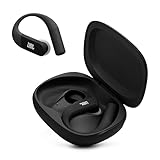
JBL’s Endurance Peak 4 is built around one idea: never running out of battery mid-session. With up to 48 hours of total playback between the buds and case combined, this is comfortably the longest-lasting option in this roundup for people who train hard and charge rarely. The PowerFin earhook design grips reliably during both running and weight training without feeling like it’s clamping your ear.
True wireless noise cancellation is on board, which is a genuine perk in loud gym environments. The IP rating covers both water and dust — a detail that matters if you train outdoors in mixed conditions. Audio quality is solidly in JBL’s house tuning: warm, bass-forward, and lively without being overwhelming.
The real trade-off is size. The Endurance Peak 4 earbuds are notably chunkier than minimalist competitors, and some users with smaller ears find the fit pressures their outer ear over very long runs. The ANC is effective rather than exceptional — it damps gym noise well but won’t rival over-ear headphones for sheer isolation.
Buy this if: you train long and often and can’t be bothered charging your earbuds every other day — the battery stamina here is hard to beat.
Best for situational awareness: SHOKZ OpenMove
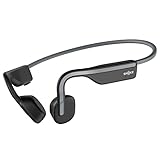
Bone-conduction headphones are a different category entirely. Rather than sealing your ear canal, the SHOKZ OpenMove sits on your cheekbones and transmits sound via vibration, leaving your ears completely open. For road runners and cyclists, this is a safety game-changer — you can hear traffic, shout instructions from a coach, or just stay aware of your surroundings without having to pull an earbud out.
SHOKZ is the established name in bone conduction, and the OpenMove is their accessible entry point. It’s lightweight, IPX5 sweatproof, and comfortable enough to wear for runs of an hour or more without fatigue. The included sticker pack is a nice touch. Battery is solid for the use case at around six hours per charge.
The honest limitation is audio quality: bone conduction simply cannot match in-ear sound, particularly for bass. If you’re after a rich, immersive listening experience, this isn’t it. It’s also not suitable for the gym if you need noise cancellation — an open ear works against you in loud lifting environments.
Buy this if: you run on roads or trails and keeping situational awareness is a non-negotiable safety priority.
Best budget ANC sport earbud: GOLREX Wireless Earbuds

The GOLREX earbuds punch well above what you’d expect at their price point. You get active noise cancellation, over-ear hooks for secure fit, a power-display charging case so you always know your remaining charge at a glance, and a claimed 80 hours of total playtime — all for considerably less than the flagship picks above. For gym-goers on a tighter budget, that’s a compelling package.
Hi-Res stereo audio and clear-call performance via the built-in mic round things out nicely. The earhook design keeps them in place during dynamic workouts, and the overall build quality feels noticeably more solid than the price tag might suggest. If this is your first pair of dedicated sport earbuds, it’s a low-risk starting point.
Where the GOLREX falls short is brand heritage and refinement. The ANC is competent for gym use but noticeably less polished than JBL or Beats. Long-term durability is harder to assess compared to established brands with years of user data behind them. Treat the 80-hour battery claim with mild scepticism — real-world figures with ANC active will be lower.
Buy this if: you want active noise cancellation and a secure fit on a budget and don’t need a brand name on the box.
Best budget earhook earbud: Aptkdoe Wireless Earbuds

The Aptkdoe earbuds offer a solid all-round package for anyone who wants Bluetooth 5.4, IPX7 waterproofing, and ENC noise-cancelling mic performance without spending a lot. The over-ear hook design provides stable fit during runs and gym circuits, and the stereo deep bass tuning gives workouts a satisfying sonic kick. At 75 hours total battery, you’re well covered for a full week of daily sessions between charges.
The ENC mic performance is a practical bonus if you need to take calls mid-run or check in with a training partner. IPX7 waterproofing is the better rating in this bracket — it’s submersion-rated rather than just splash-resistant, which speaks to durability in sweaty, rain-soaked conditions.
The limitation is audio nuance: deep bass is the priority here, which means mids and highs take a back seat. Podcasts and spoken-word content sound less engaging than music. The Aptkdoe brand also has limited independent review history compared with JBL or Beats, so longevity is an open question.
Buy this if: you want IPX7 protection, a secure earhook fit, and bass-heavy sound at the most affordable end of this list.
Best lightweight bone conduction: PSIER Bone Conduction Headphones
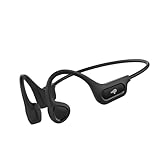
At just 23 grams, the PSIER bone-conduction headphones are barely noticeable once on your head. They use the same open-ear vibration principle as the SHOKZ above, but come in at a lower price point — making them a decent entry point if you’re curious about bone conduction but not ready to commit to the SHOKZ asking price. Bluetooth 6.0 on board should help with connection stability compared to older chipsets.
IPX5 sweatproofing covers typical running and gym use, and the lightweight wraparound frame is comfortable for extended wear. The mic is included for calls, which is handy if you’re juggling a training programme that involves lots of coordination calls. Ten hours of playtime is respectable for the category.
Audio quality carries the same bone-conduction caveat as the SHOKZ: bass is minimal, and overall fidelity is well behind in-ear options. PSIER is also a newer name in this space, and the sound vibration can feel more noticeable at higher volumes compared with SHOKZ’s more refined execution. Treat this as an entry-level bone-conduction option rather than a direct SHOKZ rival.
Buy this if: you want to try bone-conduction headphones for outdoor running on a budget without paying full flagship prices.
How to choose headphones for running and gym
Fit system first. This is the most important factor and the one most people overlook. In-ear buds with earhooks stay put far better than plain stem-style earbuds during dynamic movement. Bone-conduction headphones with a wraparound frame are a completely different secure option. If you’ve ever had an earbud fall out mid-sprint, prioritise fit above everything else.
Water resistance rating matters. IPX4 means splash-resistant — fine for sweaty gym sessions. IPX7 means submersion-rated — better for outdoor running in rain. If you run year-round outdoors in the UK, aim for IPX7 or above. Don’t confuse ‘sweatproof’ marketing language with a meaningful IP rating; check the spec sheet.
ANC versus open ear is a genuine choice. Active noise cancellation helps in gyms with loud music and machinery. But for outdoor running, blocking environmental sound is a safety concern. Open-ear or bone-conduction designs solve this. Think honestly about where you train before defaulting to ANC.
Battery life relative to your sessions. If you train for 45 minutes three times a week, almost anything here covers you. If you run marathons or do back-to-back gym sessions, the gap between a 10-hour bud and a 48-hour total system matters. Factor in how reliably you’ll remember to charge.
Brand heritage and durability. Budget options from newer brands can deliver excellent value, but they often have less independent long-term reliability data. If you’re investing in a pair you want to last two-plus years of heavy use, established brands with a proven track record earn their premium.
Frequently asked questions
Are wireless earbuds or bone-conduction headphones better for running?
It depends on your route. If you run on roads or mixed traffic areas, bone-conduction or open-ear headphones keep you aware of your surroundings and are the safer choice. If you run on treadmills or closed tracks, standard wireless earbuds with ANC give you better sound quality and immersion. Both can be secure and comfortable — the difference is about awareness, not performance.
What IP rating do I need for gym headphones?
For purely indoor gym use, IPX4 (splash-resistant) is sufficient to handle sweat. If you also run outdoors and want one pair for both uses, IPX7 is more reassuring — it’s rated for temporary submersion, which means heavy rain and very sweaty sessions are fully covered. Avoid any pair without a stated IP rating for gym use.
Do earhooks actually make a difference to stability?
Yes, significantly. Earhooks wrap around the outer ear to anchor the bud in place during lateral movement, jumping, and sprinting. Plain in-ear tips rely solely on the seal inside your ear canal, which loosens with sweat and movement. If you’ve had stability problems with standard earbuds, an earhook design almost always solves it.
Is heart-rate monitoring in earbuds accurate?
Optical heart-rate monitoring in earbuds — as seen in the Beats Powerbeats Pro 2 — reads from the ear canal, which is actually a more stable measurement site than the wrist. Early independent data suggests ear-based HRM can be competitive with wrist-based fitness trackers for steady-state cardio, though rapid intensity changes can still lag slightly. For general training zone guidance, it’s genuinely useful.
Can I use gym headphones for everyday listening too?
Absolutely. Most of the picks here are versatile enough for commuting, working at a desk, or casual listening. The main practical differences are that earhook designs look more ‘sporty’ in public, and bone-conduction headphones will attract curious looks. Sound quality on the premium picks like the Powerbeats Pro 2 and JBL Endurance Peak 4 is strong enough for all-day use.
The verdict
Best overall: the Beats Powerbeats Pro 2 — no other earbud here combines secure fit, ANC, heart-rate monitoring, and serious battery in one package.
Best value: the JBL Endurance Peak 4 — a brand you can trust, 48-hour total battery, proper ANC, and a proven earhook fit at a more approachable price than the Beats.
For more, browse all our headphone reviews and roundups.
AudioTechExpert is reader-supported. This article contains affiliate links, and we may earn a commission on qualifying purchases at no extra cost to you.