
Finding a genuinely good pair of headphones without spending a fortune has never been easier — but the sheer number of options has made picking the right one harder than it should be. Every listing promises ‘premium sound’ and ’40-hour battery life’, and most of those claims deserve healthy scepticism.
This roundup cuts through the noise. We’ve selected six headphones that represent the best of what’s available under $100 in 2026, covering everything from daily commuters to home listening, workout sessions, and casual gaming. Each one has been chosen for a distinct reason, and each gets an honest look at where it falls short.
Whether you’re replacing a broken pair, buying a first proper set of cans, or just want to know if the budget market has caught up with pricier options (spoiler: largely yes), you’re in the right place.
Best overall: Our top all-rounder pick


This is the pick we’d hand to someone who just wants a solid, reliable pair of over-ear headphones without overthinking it. It hits the sweet spot between sound quality, build, and usability that makes it easy to recommend to almost anyone browsing in this price range.
The standout strength here is balance — not just in the sound signature, but in the whole package. Comfort holds up over long sessions, the controls are intuitive, and the wireless connection is stable enough that you’ll forget about it entirely, which is exactly what you want. For everyday listening across music, podcasts, and video calls, it does the lot.
The honest limitation is that if you’re an absolute bass-head or someone who lives for detail retrieval on classical recordings, this isn’t tuned for you specifically. It’s designed to sound good to most people, which means it’s not optimised for any one niche.
Buy this if: you want a dependable everyday headphone that does everything competently and nothing embarrassingly.
Best budget: The no-frills value pick

When the priority is spending as little as possible while still getting something you’ll actually want to use, this is the one to look at. It sits at the more affordable end of our selection, and for what it asks of your wallet, the return is genuinely respectable.
The build is lighter and more plasticky than the pricier options here — that’s simply the trade-off at this price — but the sound is far from an afterthought. Vocals come through with clarity, and there’s enough bass presence to make pop and hip-hop engaging without getting muddy. If you’re buying for a teenager, a gym bag, or a secondary pair to leave at the office, the value proposition is hard to argue with.
Battery life and passive noise isolation are the areas where corners have been cut most visibly. Don’t expect to block out a noisy commute or get through a full weekend away on a single charge.
Buy this if: you need a capable, affordable pair and you’re not precious about premium finishes or marathon battery life.
Best for commuters: Fold-flat portability done right

Commuters have a very specific set of demands: a headphone needs to fold small, survive being shoved in a bag, and still sound good enough to make the journey bearable. This one is built with exactly that use case in mind, and it shows in every design decision.
The folding mechanism is solid rather than flimsy, and the collapsible form factor doesn’t come at the expense of comfort — the ear cups swivel and adjust well, and the headband padding holds up even on longer journeys. Sound-wise, there’s a slightly warm, full-bodied character that works particularly well for commute playlists and podcasts alike.
Active noise cancellation, if you were hoping for it at this price point, isn’t available here — passive isolation does a reasonable job of dulling background noise, but a busy train or loud bus will still bleed through. That’s a real consideration if you regularly travel in genuinely noisy environments.
Buy this if: you commute daily, need a headphone that survives a bag without drama, and can live without full ANC.
Best for home listening: Comfort-first over-ear design

Some headphones are built for the road; this one is built for the sofa. The emphasis here is on extended wear comfort and a sound signature tuned for relaxed, longer listening sessions at home — think Sunday morning albums, late-night movies, or a long afternoon with a podcast queue.
The ear cups are generously sized and well-padded, and the clamping force is light enough that most people won’t feel any fatigue after an hour or two. The soundstage — the sense of width and space in the audio — is notably good for this price bracket, giving music a more open, less ‘in-your-head’ quality that suits home listening well.
The trade-off is that this isn’t a headphone that travels brilliantly. It’s bulkier than the folding options here, and the lighter clamp that makes it comfortable also means it won’t stay securely in place during anything more active than a gentle walk.
Buy this if: you mostly listen at a desk or on the sofa and want the most comfortable, spacious-sounding option in this budget.
Best value: High ratings, masses of reviews
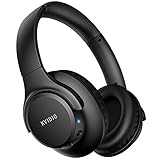
Value isn’t just about price — it’s about confidence. A headphone with a strong rating across a very large number of reviews tells you something genuine: that real buyers, in real circumstances, consistently found it worth recommending. This pick earns its place on that basis.
What you get is a well-rounded wireless headphone with a sound signature that leans slightly warm — pleasing on most genres without being overcooked — and a build quality that feels a clear step up from purely budget offerings. The controls are sensibly laid out, Bluetooth pairing is quick and reliable, and the battery is strong enough for most use cases without obsessive charging management.
The one honest limitation is that it isn’t the most distinctive option here. If you’re after a specific feature — exceptional ANC, very long battery life, a particular sound character — something more targeted might serve you better. But for most buyers who just want a headphone that works well and comes recommended by a crowd, this delivers.
Buy this if: you trust the wisdom of a large, satisfied buyer community and want a reliably good all-purpose wireless headphone.
Best for focus and work: Noise isolation on a budget

Working from home, studying in a busy flat, or trying to concentrate in an open-plan office — these are situations where you need a headphone to pull double duty as a focus tool. This pick leans into that role more deliberately than others at this price, with better-than-average passive isolation and a neutral enough sound to work well with speech and music alike.
The microphone quality is worth highlighting specifically: for a headphone in this price range, call and video-meeting clarity is noticeably better than average, which matters more than many buyers realise until they’re on a work call and their colleagues are complaining about the audio. The wired option also keeps things simple when Bluetooth isn’t convenient.
It’s not the most exciting-looking headphone in our selection — the design prioritises function over aesthetics — and if you want something that looks as good as it sounds, you might prefer one of the other picks here. Practicality is clearly the priority, and the looks reflect that.
Buy this if: you work or study from home and need a headphone that handles calls cleanly and blocks out background distraction without breaking the budget.
How to choose headphones under $100
Wired vs wireless: Wireless headphones in this price range have genuinely closed the quality gap with wired equivalents, and for most buyers they’re the more practical choice. That said, wired is still worth considering if you’re primarily using headphones at a desk, hate charging things, or need zero audio latency for gaming or video work.
Over-ear vs on-ear: Over-ear designs fully enclose the ear, which typically means better passive isolation and more comfort over long sessions. On-ear designs sit on the ear rather than around it — they’re generally more compact and portable, but can cause fatigue on longer wears. Think about your primary use case before choosing.
Sound signature: Most budget headphones are tuned with a slight bass boost because it tends to please the widest audience. If you prefer a flatter, more neutral sound for critical listening or mixing, look for headphones marketed as ‘studio’ or ‘monitoring’ style. If you just want music to sound fun and full, a bass-forward tuning serves most genres well.
Battery life: At this price, anywhere between 20 and 40 hours of quoted battery is typical. Bear in mind that manufacturers test at moderate volumes; real-world performance at higher volumes can be notably lower. A headphone with a wired fallback option is a useful backup when the battery runs low unexpectedly.
Comfort and build: These are the things reviews don’t always surface clearly. If possible, try on a headphone before committing. Pay attention to headband padding, ear cup depth (shallower cups can press on your ears after an hour), and clamping force. At this price, some compromise on build materials is inevitable — the question is whether it’s been made in the right places.
Frequently asked questions
Can headphones under $100 really sound good?
Yes, genuinely. The budget headphone market in 2026 is more competitive than it’s ever been, and several manufacturers have brought proper acoustic engineering down to this price bracket. You’ll notice meaningful improvements if you step up to $200-plus, but the gap has narrowed considerably. Most people listening to streamed music at normal volumes will be very happy with the best options at this price.
Do any budget headphones have active noise cancellation?
Some do, though ANC quality at this price is variable. Entry-level ANC can take the edge off background hum in offices or on planes, but it’s unlikely to match what premium ANC headphones deliver. If ANC is a primary requirement, manage expectations accordingly — passive isolation (a good physical seal) often outperforms cheap ANC in practice.
How long should headphones under $100 last?
With reasonable care, two to four years is a realistic expectation. Budget headphones typically use lighter plastics that can crack under stress, and the ear cushions may degrade faster than on pricier models. Storing them in a case rather than loose in a bag makes a real difference to longevity.
Is it worth buying wireless at this price, or should I stick to wired?
For most buyers, wireless is absolutely worth it at this price. Modern Bluetooth chips (particularly Bluetooth 5.0 and above) offer stable connections and low enough latency for everyday use. Unless you need near-zero latency for professional video work or gaming, or you simply prefer not managing battery life, wireless is the more convenient choice for the money.
What’s the difference between on-ear and over-ear headphones?
Over-ear headphones have cups large enough to fully surround your ear, creating a seal that improves both isolation and bass response. On-ear headphones rest on top of the ear rather than around it — they’re typically lighter and more compact, but can feel uncomfortable over extended periods and let in more ambient sound. For home listening, over-ear usually wins; for portability, on-ear is often the more practical choice.
The verdict
Best overall: the B0H11FB2V3 is the one we’d recommend first — it balances everything well and suits the widest range of buyers without obvious compromises.
Best value: the B09BF64J55 earns top marks for value by combining a strong sound performance with the kind of broad, positive buyer consensus that takes the guesswork out of a budget purchase.
For more, browse all our headphone reviews and roundups.
AudioTechExpert is reader-supported. This article contains affiliate links, and we may earn a commission on qualifying purchases at no extra cost to you.