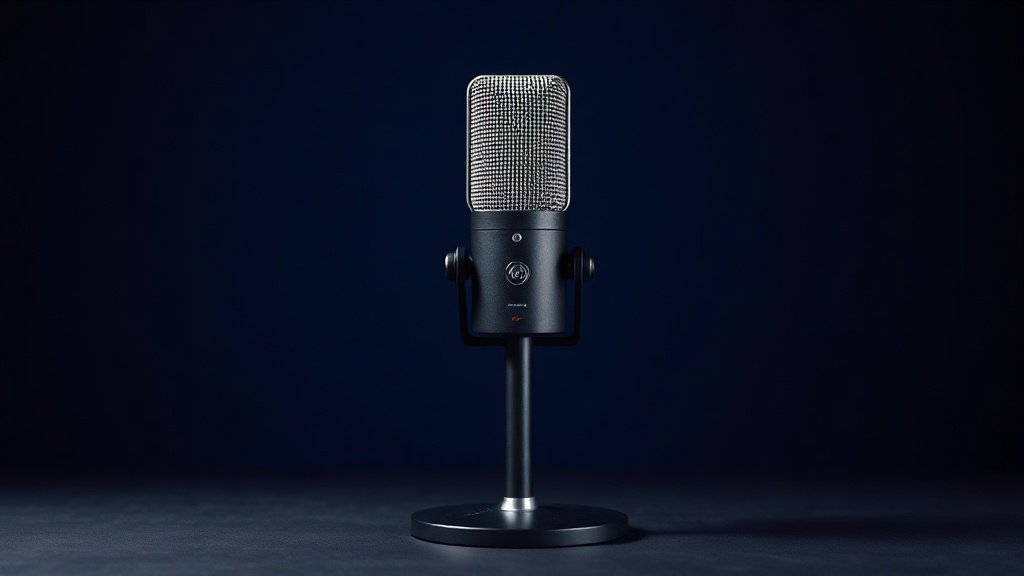
Choosing an XLR microphone in 2026 can feel overwhelming. The market is packed with options that all promise ‘broadcast quality’ and ‘studio-grade sound’, and it is hard to know which ones actually deliver. Whether you are setting up a home studio, launching a podcast, recording vocals, or stepping onto a live stage, the microphone you plug in makes an enormous difference to your results.
This guide cuts through the noise. We have taken a closed list of real, available XLR microphones and ranked the best ones based on what each does well, who it suits, and where its limitations lie. We cover dynamic and condenser options, budget-friendly entry points, and professional-grade workhorses — so there is something here for every kind of audio creator.
A quick note on what ‘XLR’ means if you are new to this: XLR is a three-pin connector standard used in professional audio. It requires an audio interface or mixer to connect to your computer. That extra step gives you better signal quality, lower noise, and more flexibility than a basic USB microphone. If you are ready to level up, you are in the right place.
Best overall: Audio-Technica AT2020
The Audio-Technica AT2020 is a cardioid condenser studio microphone that has become something of a benchmark for home and project studio recording. It is specifically designed for home studio applications, which means it was built with real-world recording environments in mind — not just treated professional booths. If you are building out a bedroom studio or a dedicated recording corner, this is the microphone that makes the most sense as your foundation.
Its cardioid polar pattern means it captures sound from the front and rejects noise from the sides and rear — exactly what you need when recording in a room that is not fully acoustically treated. The condenser capsule design is sensitive and detailed, making it well-suited for vocals, acoustic instruments, voice-over work, and any source where nuance matters.
The one honest limitation here is that, as a condenser, the AT2020 requires phantom power (48V) from your audio interface. It is also more sensitive to room noise than a dynamic microphone, so if your recording space is particularly lively or noisy, you will hear that in the recording. That said, for its position in the market, it remains an outstanding all-rounder.
Buy this if: You are setting up a home or project studio and want a reliable, detailed condenser mic that punches well above entry level.
Best premium: Shure SM7B
The Shure SM7B is one of the most recognised dynamic studio microphones in professional audio. Used by podcasters, broadcasters, streamers, and vocal recording engineers, it has earned a reputation for delivering smooth, warm audio with a broadcast character that flatters voices. The supplied title specifically notes its wide frequency range and smooth warm audio — these are not just marketing words; they describe a microphone that has been used on professional recordings for decades.
It comes with a detachable windscreen, which is immediately useful for close-proximity podcasting and streaming setups where plosive sounds (the ‘p’ and ‘b’ bursts of air) can become a problem. As a dynamic microphone, it does not require phantom power and is naturally more resistant to background noise than most condensers, which makes it forgiving in less-than-perfect recording environments.
The notable limitation is that the SM7B has a lower output level than many microphones. This means you will need a capable audio interface or a dedicated inline preamp booster to drive it properly — underpowered, it can sound quiet and thin. It is also a clear step up in price compared to the other options here, so it is best suited to those ready to commit.
Buy this if: You are a podcaster, broadcaster, or vocalist who wants a professional, broadcast-quality dynamic microphone and already has (or is willing to invest in) a solid audio interface.
Best versatile condenser: RØDE NT1 5th Gen

The RØDE NT1 5th Generation is a large-diaphragm studio condenser microphone that stands out because it offers both XLR and USB outputs — a genuinely useful combination for creators who record both in a fixed studio setup and on the go. The fact that it ships with a shock mount and pop filter is worth noting too; these are accessories that usually cost extra, so the bundle adds real value right out of the box.
Large-diaphragm condensers like the NT1 are favoured for music production and vocal recording because they capture a wide, full sound with good detail. The 5th generation update brings it into the modern era, making it suitable for podcasting, music production, and professional vocal recording alike. Its XLR output keeps it in the professional signal chain when you need it, while the USB output gives you plug-and-play flexibility.
The limitation is that, like any large-diaphragm condenser, it is sensitive — it will pick up room reflections and background noise more readily than a dynamic microphone. You will get the best results from it in a treated space or with acoustic treatment behind you. It also sits at a higher price point than the budget picks here, so factor that into your decision.
Buy this if: You are a musician, vocalist, or serious content creator who wants a premium condenser with the flexibility of both XLR and USB connectivity and a complete accessory kit included.
Best for podcasting: Shure MV7X


The Shure MV7X is a cardioid dynamic microphone built specifically with podcasting, streaming, and vocal recording in mind. Its broadcast-style design is not just aesthetic — it signals a microphone engineered for voice work, and the all-metal construction means it is built to last through daily use at a desk or in a studio. Unlike the MV7 (the USB version), the MV7X is XLR-only, which keeps it focused on those who want to stay in the professional signal chain.
As a dynamic cardioid, it is naturally voice-isolating, which is a significant advantage for podcasters who record in home environments with background noise — air conditioning, traffic, or other domestic sounds. It will reject a lot of that off-axis noise while focusing on whoever is speaking directly into it. The broadcast-style design also means it looks the part in video recordings and live streams.
One limitation to be aware of: the MV7X is XLR-only, so you will need an audio interface or mixer to use it. This is by design — it is aimed at users already working with professional audio equipment — but if you are starting from scratch, budget for the interface alongside the microphone. It also lacks the output sensitivity of some condensers, so it works best when you speak fairly close to the capsule.
Buy this if: You are a podcaster or streamer who wants a dedicated XLR dynamic microphone with a professional broadcast look and excellent voice isolation.
Best live performance mic: Shure SM58

The Shure SM58 is the industry-standard handheld dynamic vocal microphone. It has been used on stages around the world for decades, and its reputation is entirely deserved. The supplied title tells you exactly what it is for: singing, live performance, studio recording, podcasting, and broadcast. That breadth of application reflects a microphone that is genuinely versatile rather than one that compromises on everything.
Its cardioid pattern and built-in spherical wind and pop filter make it exceptionally practical for live use. It is designed to be held in the hand, pointed at a mouth, and moved around — which is a very different use case from a studio microphone on a fixed stand. It is also remarkably robust; the SM58 is famous for surviving drops, rough touring conditions, and years of heavy use without falling apart.
The limitation for studio or podcast use is that the SM58 is optimised for the live environment. In a studio context, a condenser or a more studio-focused dynamic like the SM7B will typically give you a more detailed, polished result. The SM58 is also a handheld design, so it is less suited to a fixed desk setup unless you use a clip and stand adapter.
Buy this if: You are a vocalist or performer who needs a durable, road-tested handheld XLR microphone for live performance, rehearsal, or occasional studio and podcast use.
Best budget pick: MAONO PM500
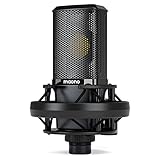
The MAONO PM500 is an XLR condenser microphone featuring a 34mm large diaphragm and a professional cardioid polar pattern. It is positioned as an accessible entry point for podcasters, home studio users, vocalists, voice-over artists, and ASMR creators — a wide audience that reflects its general-purpose character. For those taking their first step into XLR microphones from a USB background, it represents the most affordable option in this roundup.
A 34mm large diaphragm is a meaningful spec to see at this price level. Larger diaphragm capsules generally capture more detail and produce a warmer, more full-bodied sound than smaller capsule microphones — the kind of sound that works well for spoken word, vocal recording, and close-mic applications. ASMR creators in particular benefit from this sensitivity, as the format demands a microphone that captures subtle, close-range sound faithfully.
The honest limitation is that at this price point, the build quality and preamp components will not match what you get from higher-end options like the RØDE NT1 or the AT2020. It is the most affordable pick here, and that does come with trade-offs in terms of long-term durability and absolute sonic quality. That said, for creators on a tight budget who want to enter the XLR world, it is a solid place to start.
Buy this if: You are on a tight budget and want an XLR condenser with a large diaphragm for podcasting, voice-over, or ASMR without spending a lot.
How to choose your XLR microphone
Dynamic vs condenser. This is the most important decision you will make. Dynamic microphones are robust, handle loud sources well, and reject background noise — they suit live performance, podcasting in untreated rooms, and broadcasting. Condenser microphones are more sensitive and detailed, capturing nuance in vocals and instruments — they suit music production, voice-over, and studio environments. The wrong type for your environment will cause frustration regardless of how much you spend.
Your recording environment. If your room is noisy or untreated, a dynamic microphone will serve you better. Condensers pick up everything — including the hum of your computer, traffic outside, and room reverb. If you have acoustic treatment or a quiet space, a condenser will reward you with a more detailed, professional sound.
Your audio interface. An XLR microphone needs an audio interface or mixer. Make sure yours has enough gain for the microphone you choose. The Shure SM7B, for example, needs a lot of gain and may require a dedicated preamp booster with some interfaces. Check compatibility before you buy.
Your use case. A handheld microphone like the Shure SM58 is built for live use and does not suit a fixed desk setup in the same way as a side-address condenser on a boom arm. A broadcast-style microphone like the MV7X is designed to be spoken into at close range. Match the physical design to how you will actually use it.
Bundle value. Some microphones, like the RØDE NT1 5th Gen, include a shock mount and pop filter. Others come as bare microphones. If you are starting from scratch, factor in the total cost of your setup — not just the microphone price.
Frequently asked questions
Do I need phantom power for an XLR microphone?
Only if you choose a condenser microphone. Condenser mics require 48V phantom power, which is supplied by most audio interfaces at the flick of a switch. Dynamic microphones do not need phantom power, though applying it accidentally does not typically damage them.
Can I use an XLR microphone without an audio interface?
Technically yes, with an XLR-to-USB adapter, but the results are rarely satisfying. An audio interface gives you proper preamp gain, phantom power where needed, and much better sound quality. It is worth the investment if you are committing to XLR.
What is the difference between a cardioid and an omnidirectional microphone?
A cardioid microphone picks up sound from the front and rejects sound from the sides and rear — ideal for solo recording. An omnidirectional microphone picks up sound from all directions, which suits multi-person recordings or capturing room ambience but requires a quieter environment.
Is a dynamic or condenser microphone better for podcasting?
It depends on your room. In a treated space, a condenser will sound more detailed and full. In an untreated home environment with background noise, a dynamic microphone will give you a cleaner, more controlled result. Most popular podcasting microphones — including the Shure SM7B and MV7X — are dynamic for exactly this reason.
Do any of these XLR microphones also work over USB?
Yes — the RØDE NT1 5th Generation offers both XLR and USB outputs, giving you the flexibility of either connection. This makes it a particularly versatile choice for creators who work across different setups.
The verdict
For most people, the Audio-Technica AT2020 is the best overall pick — it is reliable, detailed, and purpose-built for home studio use. If you want the best-value option that balances quality with accessibility, the Shure MV7X delivers a focused, broadcast-ready voice performance at a sensible step up from budget territory.
For more, browse all our reviews and roundups.
AudioTechExpert is reader-supported. This article contains affiliate links, and we may earn a commission on qualifying purchases at no extra cost to you.