Getting a great sound from an acoustic guitar is trickier than it looks. Point any old microphone at the soundhole and you will likely end up with a boomy, feedback-prone mess that does no justice to the instrument. The truth is that the microphone or pickup you choose — and where you place it — shapes your tone as much as the guitar itself does.
This guide cuts through the noise. We have worked through the available options and ranked the best microphones and pickups for acoustic guitar, whether you are recording at home, playing live on stage, or somewhere in between. Each pick is chosen for a specific reason, and every one of them gets an honest look at its real-world limitations.
This list is for guitarists at every level: the bedroom strummer who wants a clean recording without a complicated setup, the gigging musician who needs reliable feedback rejection, and the more serious player after a studio-quality acoustic tone. There is something here for each of you.
Best overall: L.R. Baggs Lyric Acoustic Guitar Microphone
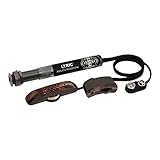
The L.R. Baggs Lyric is a dedicated internal acoustic guitar microphone — a proper microphone, not a piezo transducer — that mounts discreetly inside the body of your instrument. This distinction matters enormously. Because it captures sound as a microphone rather than a contact sensor, the Lyric preserves the woody resonance and natural air that makes an acoustic guitar sound like itself, rather than a compressed, plasticky version of itself.
What sets the Lyric apart from clip-on solutions is that it is designed specifically for the acoustic guitar environment. L.R. Baggs has engineered it to sit inside the guitar where it picks up the full body sound, and that integration gives it an organic, open quality that is hard to match with an external mic in a live setting. It is equally at home in a studio context where you want a natural-sounding foundation track.
The limitation to be clear about: installation requires removing the guitar’s endpin and ideally having a luthier or experienced tech fit it properly. It is not a five-minute job. If you want something you can plug in tonight without touching the guitar’s hardware, look elsewhere on this list.
Buy this if: You are a serious gigging or recording guitarist who wants the most natural internal-mic sound available and does not mind a proper installation.
Best workhorse: Shure SM57
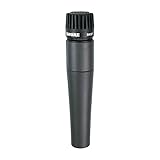

The Shure SM57 is one of the most trusted instrument microphones in the world, and for good reason. It is a wired, cardioid dynamic microphone with an XLR output, and it has been the go-to for engineers recording and amplifying guitars, snare drums, and virtually any acoustic instrument for decades. If it is in a professional recording studio, there is almost certainly an SM57 somewhere in the room.
For acoustic guitar, the SM57 works especially well in studio settings where you can position it carefully — typically aimed at the junction of the neck and body, away from the soundhole — to capture a balanced, detailed tone. It handles high sound pressure levels without complaint, which makes it a sensible choice for players who also work with loud sources. The cardioid polar pattern helps reject off-axis noise from the room.
The honest trade-off: the SM57 is a dynamic microphone, and dynamic mics do not capture the very top-end ‘air’ and delicacy of an acoustic guitar quite as transparently as a good condenser will. In a noisy live room without careful placement, results can be inconsistent. It also requires an XLR interface or mixer — there is no USB option.
Buy this if: You want a battle-hardened, industry-standard instrument mic that will serve you across guitars, amps, and drums for years to come.
Best clip-on condenser: Audio-Technica ATM350GL

The Audio-Technica ATM350GL is a cardioid condenser instrument microphone that comes with a guitar-specific mounting system, designed to clip onto the guitar so you can move freely without wrestling with a mic stand. The ‘GL’ designation refers to this guitar-mount configuration, and it makes the ATM350GL a genuinely practical choice for performers who want condenser-quality sound without being tied to a fixed position on stage.
Condenser microphones are generally more sensitive and more detailed than dynamic mics, and the ATM350GL benefits from that characteristic. It picks up the nuance and shimmer of acoustic strings more openly, which matters whether you are recording a delicate fingerpicking part or playing an intimate live venue. The cardioid pattern keeps feedback manageable when used sensibly, and the mounting system keeps the mic in a consistent position relative to the guitar body.
The limitation: condenser microphones are more susceptible to feedback than dynamics in louder live environments, so if you are playing large stages at high volume, you will need to work carefully with your monitor mix. The ATM350GL also requires phantom power from your mixer or audio interface.
Buy this if: You perform live and want a clip-on condenser that delivers real detail and lets you move freely without sacrificing sound quality.
Best premium system: L.R. Baggs Anthem
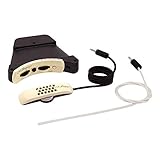
The L.R. Baggs Anthem is a combined pickup and microphone system — not just one or the other. It blends an internal microphone with a pickup element, giving you the natural body resonance of a mic alongside the direct clarity and feedback resistance of a pickup. The result is a sound that feels genuinely acoustic rather than artificially reinforced, which is the central challenge of amplifying an acoustic guitar live.
The Anthem is the choice for the serious performing guitarist who has tried standard undersaddle pickups and found them thin, quacky, or unresponsive. By layering microphone and pickup signals together in a thoughtfully designed system, L.R. Baggs gives you something that sounds like a studio microphone even when you are standing in front of a loud PA. That is a significant engineering achievement, and players who have made the switch tend to describe it as a revelation.
The honest limitation here is cost and complexity — this is a clear step up in investment compared to a standalone pickup or a clip-on mic, and like the Lyric, it requires proper installation inside the guitar. It is not a budget solution, and it is overkill if you only record at home and never play live.
Buy this if: You gig regularly and want the most natural-sounding, stage-ready acoustic system available, and you are ready to invest accordingly.
Best budget active pickup: Rechargeable Soundhole Guitar Pickup
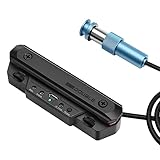
This rechargeable active soundhole pickup slots into your guitar’s soundhole and gives you an immediate, no-fuss way to plug in. The built-in volume control means you have on-guitar level adjustment without reaching for a separate preamp, and the rechargeable design removes the frustration of hunting for batteries before a gig. It is a magnetic coil design, which means it picks up string vibration directly rather than relying on room sound or body resonance.
For beginners and casual players who just want to amplify their acoustic without committing to a permanent installation, this type of pickup is hard to argue against. It fits in minutes, comes out just as easily, and costs a fraction of a dedicated internal system. The volume control is a genuinely useful touch that adds real-world practicality.
The limitation to be honest about: a magnetic soundhole pickup does not sound as natural or full-bodied as an internal microphone system. The tone is more direct and ‘electric’-sounding, which some players dislike. It also works best with steel-string guitars — nylon string instruments will not respond well to a magnetic pickup.
Buy this if: You are a steel-string player on a tight budget who needs a quick, portable way to plug in without any permanent modifications.
Best contact transducer: Piezo Contact Microphone Pickup

This piezo contact microphone transducer is the most versatile option on the list in terms of instrument compatibility — the supplied title specifically mentions guitar, violin, mandolin, ukulele, banjo, cello, kalimba, and harp, which tells you this is designed as a universal acoustic instrument pickup rather than a guitar-specific solution. It attaches to the body of the instrument and picks up vibrations directly through contact, bypassing room noise entirely.
For acoustic guitarists, a contact pickup like this is particularly useful in noisy environments where a microphone would pick up too much ambient sound — think open mic nights, busking, or recording in a room with poor acoustics. The volume control included on the unit gives you a basic level of on-the-fly adjustment. Setup is simple, and the versatility across instrument types is a genuine bonus if you play more than one acoustic instrument.
The trade-off with any contact transducer is that it captures body vibration rather than the sound as the ear hears it, which can produce a tone that sounds more ‘mechanical’ and less open than a properly positioned microphone. It is a practical tool rather than a high-fidelity one, and it is priced accordingly as the most affordable entry point on this list.
Buy this if: You play multiple acoustic instruments and need a single, affordable, easy-to-fit pickup solution that works across all of them.
How to choose your microphone or pickup for acoustic guitar
Live performance vs. studio recording: This is the single biggest factor in your decision. In a studio, you can take your time with mic placement and treat the room, so a high-quality external condenser or dynamic mic can shine. Live on stage, feedback is the enemy, and internal systems or clip-on mics with tight polar patterns are far more practical. The L.R. Baggs Lyric and Anthem are built with live performance firmly in mind, whilst the Shure SM57 is at its best in a controlled studio environment.
Microphone vs. pickup: A microphone — whether external or internal — captures the guitar’s acoustic sound as it resonates through the air and the body. A pickup (magnetic or piezo) captures string or body vibration directly. Microphones tend to sound more natural and ‘acoustic’; pickups are more consistent, more feedback-resistant, and easier to use live. Many professional guitarists use a blend of both, which is exactly what the L.R. Baggs Anthem is designed to offer.
Installation commitment: Some solutions — like the soundhole pickup or the piezo transducer — require no permanent changes to your guitar. Others, like the Lyric and Anthem, require drilling or endpin modification and are best fitted by a professional. Think carefully about whether you want to modify your instrument before choosing.
Your guitar type: Steel-string and nylon-string acoustic guitars respond differently to pickups. Magnetic soundhole pickups only work with steel strings. Piezo and microphone-based systems work with both. If you play a classical or flamenco guitar with nylon strings, eliminate magnetic options immediately.
Budget and context: If you are just starting out or need something for casual use, the more affordable soundhole and contact transducer options on this list do a perfectly respectable job. If acoustic guitar is central to your music — live or in the studio — it is worth investing in a system like the Anthem or Lyric that will genuinely serve the sound of your instrument rather than just amplify it.
Frequently asked questions
What is the difference between a microphone and a pickup for acoustic guitar?
A microphone captures the sound of the guitar as it travels through the air, producing a natural, open tone. A pickup — whether magnetic or piezo — senses physical vibration from the strings or body directly. Microphones generally sound more realistic and ‘acoustic’, but they are more prone to feedback on stage. Pickups are more consistent and feedback-resistant, making them the practical choice for loud live settings.
Do I need phantom power for an acoustic guitar microphone?
It depends on the type. Condenser microphones — like the Audio-Technica ATM350GL — require phantom power, usually supplied by your audio interface or mixing desk. Dynamic microphones like the Shure SM57 do not. Internal systems like the L.R. Baggs Lyric and Anthem have their own active preamps powered by battery. Piezo and magnetic pickups vary — check the specific unit.
Can I use the Shure SM57 for live acoustic guitar performance?
You can, but it requires careful placement and a controlled stage environment. The SM57 is better suited to studio recording or miked-up monitor setups than open-stage live performance. For most gigging guitarists, a clip-on or internal system will be more practical and feedback-resistant.
Will a soundhole pickup damage my guitar?
A removable soundhole pickup — like the rechargeable active option on this list — clips in and out without any drilling or permanent modification, so there is no risk of damage. Internal systems like the L.R. Baggs Lyric and Anthem do require an endpin jack to be fitted, which involves drilling. That work should ideally be carried out by a qualified luthier.
Which option is best if I play multiple acoustic instruments?
The piezo contact transducer pickup in this list is specifically designed for use across a wide range of acoustic instruments, including violin, ukulele, banjo, cello, and more. If you regularly switch between instruments, that versatility makes it the most practical single purchase.
The verdict
For the most natural-sounding internal microphone on the market, the L.R. Baggs Lyric is the clear top overall pick — it sounds genuinely acoustic because it is a genuine microphone, fitted inside the guitar where it belongs. For the player who wants a stage-ready system that blends microphone and pickup in one elegant solution, the L.R. Baggs Anthem is the best-value premium choice, delivering a sound that outperforms its rivals at a similar price point.
For more, browse all our reviews and roundups.
AudioTechExpert is reader-supported. This article contains affiliate links, and we may earn a commission on qualifying purchases at no extra cost to you.