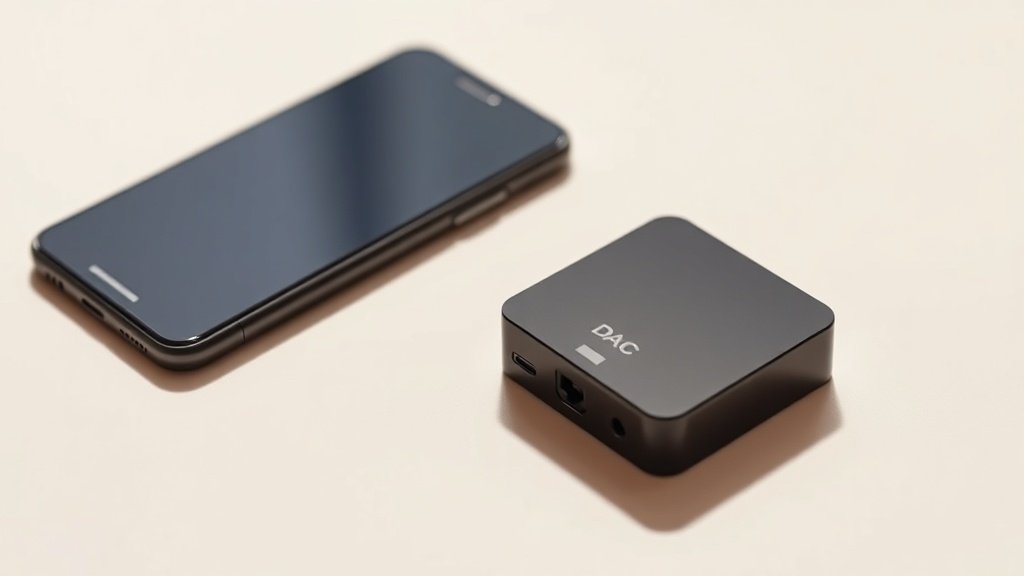
A phone that cannot drive your headphones properly will make even a five-hundred-pound pair of cans sound flat, compressed, and lifeless — and a portable DAC is the single most effective fix, if you choose the right one.
After years of obsessively buying, using and comparing audio gear, the question I hear most often from people stepping up their portable rigs is simple: which DAC should I plug into my phone? The honest answer is that it depends on factors most buyers never check — impedance matching, output voltage, codec support, and the physical format of the connection. Get those right and a forty-pound dongle will transform your commute listening. Get them wrong and you will spend money to hear no difference at all.
This guide walks through every variable that actually matters when choosing a portable headphone DAC for phone use. We will cover how phone output limitations affect sound quality, what the key specifications mean in real listening terms, how to match a DAC to your specific headphones, and what to look for in terms of physical design when portability is the priority. There are no product recommendations here — just the information you need to make a decision that is right for your setup.
Why Phone Audio Output Falls Short
Modern smartphones are engineered around battery life, thinness, and camera performance. The audio circuitry is an afterthought in most cases. The digital-to-analogue converter built into a flagship Android phone or an iPhone is typically a small integrated chip running at low voltage with minimal current delivery. That combination creates two audible problems: insufficient output power for demanding headphones, and measurable noise from the surrounding electronics bleeding into the audio path.
The noise floor issue is particularly worth understanding. A phone motherboard is a dense environment of radio transmitters, processors, and power regulation circuits. All of that generates electromagnetic interference that sits physically adjacent to the DAC chip. A standalone portable DAC moves the conversion and amplification away from that interference and into a dedicated enclosure designed specifically for audio. The result is a lower noise floor, which matters most with sensitive in-ear monitors and high-impedance over-ear headphones.
Output power is the other half of the equation. Many over-ear headphones, particularly planar magnetic designs and high-impedance dynamic drivers, need significantly more voltage swing than a phone can deliver. If your headphone requires more power than the source provides, you will hear a compressed, dynamically flat presentation that has nothing to do with the recording or the headphone itself. A portable DAC with a proper headphone amplifier stage solves this directly.
Understanding the Specifications That Matter
Output power is measured in milliwatts and is almost always given at a specific load impedance — typically 32 ohms. A figure like 100mW at 32 ohms sounds substantial, but the same device might deliver only 15mW at 300 ohms, which is a common impedance for studio-style headphones. Always check the output power spec at the impedance that matches your headphone, not the figure the manufacturer leads with.
Output impedance is a separate and frequently overlooked specification. A DAC with a high output impedance — anything above about two ohms — will interact with the impedance curve of your headphone and change the frequency response in ways the manufacturer of the headphone never intended. This is especially problematic with balanced armature in-ear monitors, which can have wildly variable impedance across the frequency range. As a general rule, aim for an output impedance of one ohm or lower if you use sensitive IEMs.
Signal-to-noise ratio and total harmonic distortion plus noise are the two figures that quantify the cleanliness of the audio path. A SNR of 110dB or above is a reasonable threshold for portable use. THD plus N figures below 0.005 percent are generally inaudible in typical listening conditions. These numbers matter most when using sensitive IEMs that will reveal any floor noise, and less so with inefficient over-ear headphones where the amplifier needs to work harder just to reach listenable volumes.
Codec and Connection Compatibility With Phones
Most portable DACs connect to a phone via USB-C, and the majority of current Android flagships support USB audio out of the box. iOS devices since the removal of the headphone jack also support USB audio over Lightning and, more recently, USB-C on current iPhone hardware. The important thing to verify is that your phone actually outputs a full digital audio signal over USB rather than converting it internally first — most do, but a small number of budget Android devices handle USB audio inconsistently.
Some portable DACs also support Bluetooth with high-resolution codecs such as aptX HD, LDAC, or LC3. If you want the option of wireless connection alongside a wired one, look for a device that clearly states which codecs it supports and, critically, verify that your phone also supports those codecs on the transmitting end. An LDAC-capable DAC paired with a phone that only outputs SBC will sound no better than a basic wireless connection regardless of how good the DAC hardware is.
Output impedance under one ohm is not a luxury specification — it is a basic requirement for anyone using balanced armature in-ear monitors with a portable DAC.
Matching DAC Output Power to Your Headphones
The practical way to approach power matching is to work backwards from your headphone. Sensitive in-ear monitors — anything above 100dB sensitivity at 1mW — need almost no power, but they will expose noise floor issues immediately. For this use case, a low-noise DAC with a very low output impedance is the priority, and raw output power matters less. The iFi Go Bar Kensei, for example, is a dongle-format device with a particularly low noise floor and multiple filter options, making it well suited to sensitive IEMs despite its compact form.
High-impedance over-ear headphones sit at the other end of the scale. Something like a Beyerdynamic DT 990 Pro at 250 ohms or a Sennheiser HD 600 at 300 ohms will not reach adequate listening volumes from a phone alone, and will sound congested and dynamically constrained even at maximum phone volume. For these headphones, you need a portable DAC that can deliver meaningful voltage at high impedance. The Chord Mojo 2 is an example of a portable DAC with enough output power to handle 300-ohm headphones without running out of headroom, though it is larger than a dongle and designed for bag or desk use rather than pocket carry.
Planar magnetic headphones represent the most demanding category. They tend to have moderate impedance — often between 20 and 50 ohms — but low efficiency, meaning they need high current rather than high voltage. Not every portable DAC is optimised for current delivery, so with planars it is worth checking whether a device is noted as being current-mode or high-current capable in its specification sheet. Getting this wrong will result in a sound that lacks weight and bass extension even at high volumes.
Physical Format and Portability Trade-offs
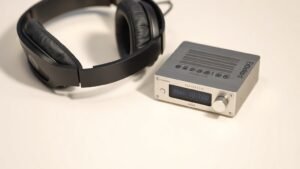
Portable DACs broadly fall into three physical categories: dongle DACs that sit directly on the end of a cable or plug directly into the phone port, compact box DACs that fit in a pocket or bag, and larger desktop-portable hybrid units. Each involves a genuine trade-off between power, features, and convenience.
Dongle DACs such as the Apple USB-C to 3.5mm adapter, the Hidizs S9 Pro Martha, or the FiiO KA13 are the most convenient option for everyday carry. They draw power entirely from the phone, which means they add no extra weight or charging requirement. The trade-off is that they are limited in output power and run warm under sustained load, which can affect the phone battery. They are the right choice for efficient headphones and IEMs used during commuting or travel where simplicity and small size take priority.
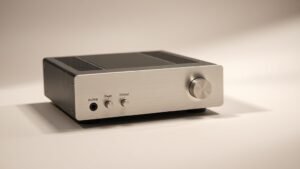
Compact box DACs such as the AudioQuest DragonFly Cobalt or the Questyle M15 sit in a middle ground. They are larger than dongles but still genuinely portable, and they typically offer better output power, lower noise, and more consistent performance with a wider range of headphones. Some in this category include a battery of their own, which removes the phone battery drain issue entirely and allows for higher sustained output. If you regularly use power-hungry headphones on the move, this format is usually the sensible choice.
Balanced Output and Whether It Is Worth the Complexity
Several portable DACs now include a balanced 4.4mm or 2.5mm output alongside the standard 3.5mm single-ended output. Balanced output provides a measurable reduction in crosstalk between channels and, in devices where the amplifier stage is genuinely doubled, a significant increase in output power. The iFi Hip-DAC 3 and the FiiO Q15 both offer 4.4mm balanced outputs with meaningfully higher output figures than their 3.5mm equivalents.
The practical question is whether the headphones you use are available with a balanced cable or have a detachable cable that can be replaced with a balanced version. Many over-ear headphones from Sennheiser, Audeze, and Beyerdynamic support cable swaps, making the jump to balanced relatively straightforward. With fixed-cable headphones or most IEMs with proprietary connectors, the balanced output is simply inaccessible without aftermarket cables. If balanced output is important to your use case, factor in the cost of appropriate cables when budgeting for the DAC itself.
Gain Settings and Why They Are Often Ignored
A gain switch or selectable gain setting is a feature that tends to get skipped over in purchasing decisions but makes a real difference in day-to-day use. Gain controls the amount of amplification applied before the volume control acts on the signal. Running a sensitive IEM on high gain means you will be listening at very low volume positions on the dial, where channel imbalance in the volume potentiometer is most likely to occur, and where small movements produce large volume jumps. Low gain settings give you better control in this scenario.
Conversely, high-impedance headphones benefit from a high gain setting because it allows the amplifier to work in its optimal operating range without the volume knob sitting at the maximum end. Devices such as the Questyle M15 and the iFi Go Bar series include switchable gain, which makes them genuinely versatile across different headphone types. If you own both sensitive IEMs and demanding over-ear headphones and switch between them regularly, a device with at least two gain settings is worth prioritising over one without.
Buying a DAC without checking its output impedance against your in-ear monitors is a common and avoidable mistake. A high output impedance interacts with the variable impedance of balanced armature IEMs and alters the frequency response in ways that can make expensive IEMs sound tonally wrong. Check the specification before purchasing and aim for one ohm or below.
Assuming any USB-C DAC will work identically on every Android phone leads to inconsistent results. USB audio implementation varies between Android manufacturers and even between firmware versions on the same device. If a DAC sounds different or behaves unexpectedly on a new phone, check whether the phone is passing a full USB audio signal or routing it through an internal conversion stage first.
Choosing a portable DAC based on output power figures without checking the reference impedance produces misleading comparisons. A device rated at 200mW at 32 ohms may deliver under 20mW at 300 ohms, which is entirely inadequate for high-impedance over-ear headphones. Always compare output power figures at the impedance that matches your specific headphones.
Conclusion
Choosing a portable headphone DAC for phone use comes down to four things: knowing the impedance and sensitivity of your headphones, understanding the output specifications of the device at those values, verifying connection and codec compatibility with your phone, and deciding which physical format fits how you actually carry and use the gear. Spend time on those four points and the right device becomes straightforward to identify, regardless of how crowded the market appears.
FREE DOWNLOAD
Stop Guessing. Start Buying Smart.
The specs that actually matter, demystified.
Headphones, microphones, the spec sheet jargon you can ignore — all in one quick-reference PDF. Free, instant, no fluff.
Send Me the CheatsheetYou'll also receive occasional new guide notifications. Unsubscribe anytime. No spam, ever.