Upgrading the wrong component first is one of the most common and expensive mistakes in audio, and the signal chain does not care how much you spent on your headphones if the source feeding them is the weak link.
After years of obsessively buying, using and comparing audio gear, I have watched people spend serious money on high-end headphones only to plug them into a laptop headphone socket and wonder why the result does not match the hype. The upgrade question, headphones or source, is not a matter of preference or budget alone. It is a question of where the bottleneck actually lives in your current chain.
This guide walks through how to diagnose your setup honestly, what the source side of the chain actually includes, when headphones genuinely are the limiting factor, and when throwing money at a new pair will do almost nothing because the problem sits upstream. By the end, you will have a clear method for deciding where your next pound should go.
Understanding What the Source Side Actually Means
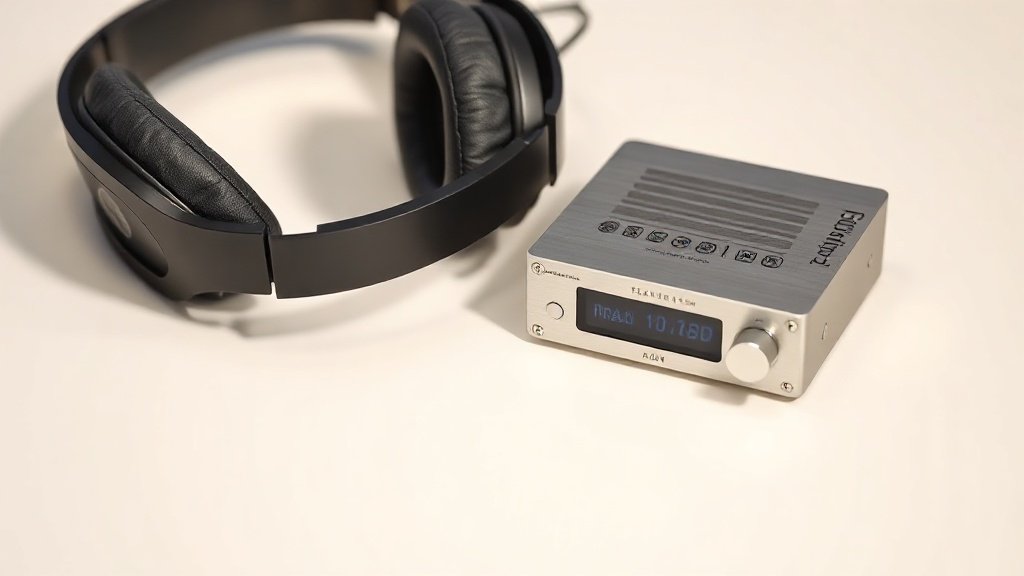
When audio engineers talk about the source, they mean everything upstream of the headphones themselves: the file or stream being played, the software decoding it, the digital-to-analogue converter turning that signal into voltage, and the amplifier stage bringing that voltage to a level the headphone drivers can work with. These are four distinct links, and any one of them can be the ceiling that stops your headphones from performing as designed.
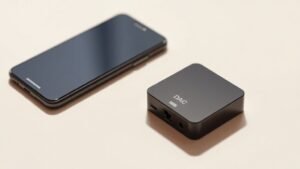
The DAC is particularly misunderstood. Many people assume the DAC built into a laptop or smartphone is adequate because modern chips are technically capable. In terms of raw resolution that is sometimes true, but onboard DACs share a circuit board with processors, fans, and radios that all generate electrical noise. That noise floors signal integrity in a way that no headphone upgrade can fix. A dedicated DAC like the AudioQuest DragonFly Cobalt or the iFi Audio Zen DAC V2 moves the conversion off that noisy board entirely, and the difference in background cleanliness is audible on almost any decent headphone.
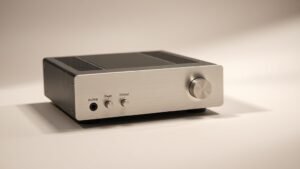
The amplifier question is equally important, and it is where headphone sensitivity and impedance specifications become practically relevant rather than just numbers on a spec sheet. A 300-ohm headphone like the Sennheiser HD 650 will sound thin, rolled off, and dynamically flat out of a low-power output. The same headphone out of a dedicated amp like the Schiit Magni or the Topping A50s sounds like a fundamentally different product, with proper bass extension and dynamic slam. If you own a high-impedance headphone and are driving it from a phone or laptop, the amplifier is almost certainly your bottleneck.
How to Diagnose Where Your Chain Is Failing
The most reliable diagnostic I know does not require any new gear. Borrow or temporarily connect your current headphones to a known-good source, something like a friend’s dedicated DAC and amp setup or a high-quality portable like the Astell and Kern SR35. If your current headphones reveal a meaningful improvement in clarity, detail retrieval, and low-level resolution, you have just confirmed that your source is the bottleneck. The headphones had more to give; the chain was not letting them do it.
If you run that same test and the improvement is marginal or mainly a volume and tonal shift rather than a structural improvement in transparency, your headphones may genuinely be the ceiling. That is useful information too. It tells you that source investment at this stage will deliver diminishing returns until the transducers themselves are better.
There is a second diagnostic that requires nothing but your current setup and a well-recorded track. Listen for specific artefacts: a high-frequency hiss at low volumes, a slightly veiled or congested midrange, a bass that sounds present but undefined, or a stereo image that feels narrow and pasted to the inside of your skull rather than having any sense of depth. Hiss points directly to source noise. Congestion and veil often indicate DAC quality. Narrow imaging can be either, but it responds well to DAC improvement. Undefined bass is frequently an amplifier headroom issue.
A great pair of headphones will expose every flaw in a poor source, but a poor source will never let a great pair of headphones breathe.
When Headphones Are Genuinely the Right First Upgrade
There are real scenarios where the headphones are the correct first investment. If you are running a modern dedicated DAC and amplifier setup, even a modest one like the FiiO E10K or the Audioengine D1, and your headphones are a budget pair sitting below the 100 pound mark, the transducers themselves are almost certainly the limiting factor. Entry-level drivers produce a physically constrained sound with limited extension at frequency extremes and reduced dynamic range. No source upgrade changes that because the limitation is mechanical, not electronic.
Similarly, if your source is already a competent all-in-one unit like the iFi Audio hip-dac 3 or the Chord Mojo 2, and your headphones are something like the Philips SHP9600 or the Beyerdynamic DT 770 Pro, moving to a genuinely resolving headphone such as the Hifiman Sundara, the Sennheiser HD 600, or the Audeze LCD-2 Classic will produce an audible structural improvement. Those sources have enough transparency to reveal what better transducers can do.
The practical rule I apply is this: if your source costs more than your headphones, the headphones are probably where the next pound goes. If your headphones cost more than everything upstream combined, start looking at the source. The ratio is not a hard law, but it reflects the engineering reality that the chain tends to balance when components are matched in capability.
The Role of File Quality and Streaming Resolution
No conversation about source quality is complete without addressing the signal at the very beginning of the chain: the audio file or stream itself. Running a lossless FLAC file or a high-resolution stream through a poor DAC still produces a poor result, but running a heavily compressed 96 kbps stream through an excellent DAC will also disappoint. The source upgrade conversation has to include subscription tier if you use a streaming service.
Spotify at its highest quality setting delivers 320 kbps Ogg Vorbis, which is adequate for most listening. Apple Music and Tidal both offer lossless and hi-res lossless tiers that genuinely benefit from a capable DAC downstream. Tidal in particular pairs well with MQA-capable DACs, though the MQA format has been through significant industry debate and its future is uncertain following the company that created it entering administration. The practical takeaway is to check whether your streaming resolution is actually matched to your playback chain before assuming the DAC is at fault.
If you are listening at CD quality or above and still finding the result unsatisfying, that is good evidence that the DAC and amplifier stage deserve attention. If you are streaming at a compressed lossy tier and feeling underwhelmed, changing the subscription tier costs very little and should be the first test before any hardware investment.
Stacking Upgrades Sensibly Over Time
Most people do not have the budget to overhaul an entire chain at once, and that is entirely reasonable. The question then becomes sequencing: in what order do individual upgrades produce the most cumulative benefit. My experience across dozens of home and studio setups consistently points to the same answer. Fix the source first to a baseline of competence, then invest in transducers, then refine the source further if resolving headphones reveal new weaknesses.
A practical entry point is a combined DAC and amp unit like the FiiO K7 or the Schiit Modi and Magni stack. Either of these moves you off onboard audio for under 200 pounds and represents a genuine engineering baseline from which headphone improvements become meaningful. Once you are at that level, a move to the Sennheiser HD 600 or the Hifiman Edition XS will sound like a transformation rather than a marginal shift, because the source is now capable of showing you what those transducers can actually do.
Beyond that point, further source refinement, moving to something like the RME ADI-2 DAC FS or the Chord Qutest, makes sense only when your headphones are resolving enough to reveal the differences. That is why the Chord Qutest paired with a 50 pound headphone is a waste of engineering, whereas paired with the Audeze LCD-X it becomes a genuinely revealing combination. The ceiling of the chain always sits at the weakest component.
Buying premium headphones to plug directly into a laptop output is the single most common chain-balancing error. High-impedance and planar magnetic headphones in particular are not driven adequately by consumer device outputs, and the result underrepresents what those headphones can do at every frequency extreme.
Assuming a more expensive DAC will fix problems that are actually in the recording or stream is a reliable way to overspend without improving anything. Check your source file quality and streaming tier before attributing dissatisfaction to hardware; a 128 kbps file will sound compressed through any DAC you care to name.
Upgrading both headphones and source simultaneously makes it impossible to identify which change produced which result. Change one component at a time and live with it for at least two weeks of critical listening before introducing a second variable; otherwise the diagnosis is permanently obscured.
Conclusion
The headphones versus source question is not a debate with a universal answer; it is a diagnostic exercise that depends entirely on where the actual bottleneck sits in your specific chain. Establish a competent source baseline first, then invest in transducers that your source can drive and reveal properly, then return to refine the source further as your headphones become more resolving. That sequence wastes the least money and produces the most consistent audible improvement at every stage.
FREE DOWNLOAD
Stop Guessing. Start Buying Smart.
The specs that actually matter, demystified.
Headphones, microphones, the spec sheet jargon you can ignore — all in one quick-reference PDF. Free, instant, no fluff.
Send Me the CheatsheetYou'll also receive occasional new guide notifications. Unsubscribe anytime. No spam, ever.