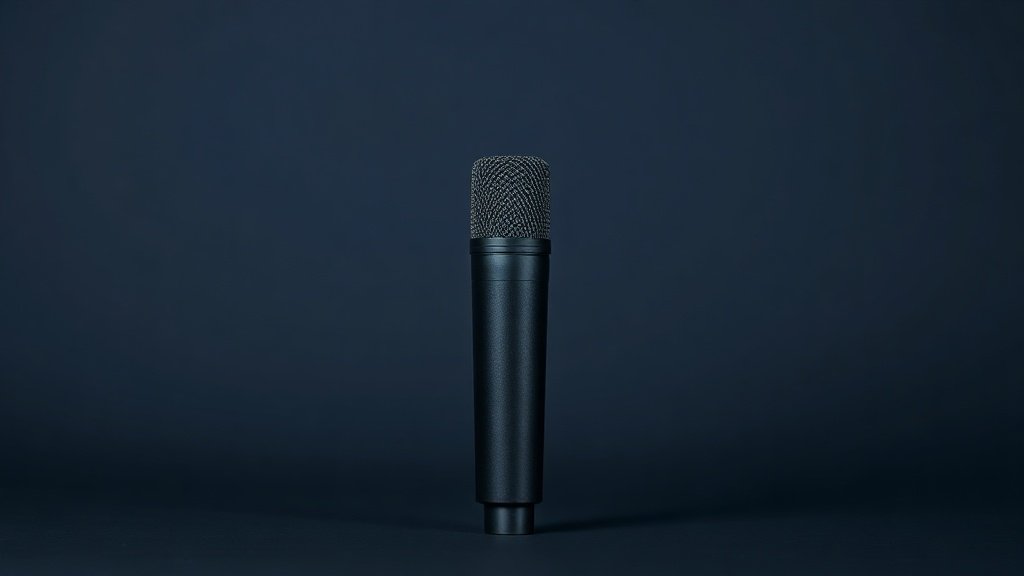
Finding the right dynamic microphone is harder than it looks. The market is flooded with options that all claim to be stage-ready, broadcast-quality, and built to last — but the reality is that different mics suit very different situations. A handheld vocal mic for a touring singer is a completely different tool from a side-address broadcast mic designed to sit on a podcasting desk.
This guide cuts through the noise. We have reviewed the strongest dynamic microphones available right now, covering handheld vocal mics, instrument mics, and broadcast-grade options. Whether you are a live performer, a podcaster, a home recording enthusiast, or a broadcast professional, there is a pick here that fits your workflow.
Every recommendation below is drawn from a closed shortlist of current Amazon-available products, ranked by use case, value, and overall quality. No filler, no padding — just honest assessments with clear trade-offs called out for each.
Best Overall: Shure SM58-LC


The Shure SM58-LC is the industry-standard handheld dynamic vocal microphone, and it has earned that reputation over decades of live use. The engineering is deliberately vocal-first: a cardioid pattern that rejects off-axis spill, a tailored 50 Hz–15 kHz frequency response that rolls off low-end rumble and lifts the upper-mid presence range so voices cut through a mix, a built-in spherical pop filter, and an internal pneumatic shock-mount that tames handling noise. It is also famously close to indestructible.
Its standout strength is versatility and reliability. The SM58-LC version comes without a switch, which professionals tend to prefer on stage because there is no accidental cut-out mid-performance. The cardioid polar pattern focuses on the sound in front of the mic and rejects noise from the sides and rear, which is exactly what you want in a loud venue. The built-in pop filter handles plosives without the need for an external windscreen in most situations.
The honest limitation is that the SM58 is not the most flattering mic for studio vocal work if you want a wide, polished sound — it has a character that is very much tuned for live presence. For studio tracking sessions where transparency is the priority, you might eventually want to look at something with a flatter response. That said, plenty of classic recordings have been made on an SM58 anyway.
Buy this if: you want one mic that does everything reliably, whether you are on stage tonight or recording demos tomorrow.
Best for Broadcast and Podcasting: Electro-Voice RE20-BLACK
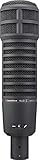
The Electro-Voice RE20-BLACK is a broadcast legend. It is a dynamic cardioid microphone with Variable-D technology and an internal pop filter, designed specifically for podcasting, streaming, voiceover, radio, and studio recording. If you have ever listened to a well-produced podcast and thought the host sounded incredibly rich and present, there is a reasonable chance an RE20 was involved.
What sets the RE20 apart from handheld vocal mics is its design philosophy. It is built to sit on a desk stand or boom arm and capture speech with a full, natural quality. The internal pop filter means you do not need to add an external one cluttering up your setup, and the Variable-D design reduces the proximity effect that makes many mics sound unnaturally boomy when you speak close to them. For broadcast and spoken-word applications, that is a genuinely useful real-world advantage.
The limitation here is straightforward: the RE20-BLACK is a premium-priced piece of kit. It is not the mic you buy as your first step into audio — it is the mic you graduate to when you are serious about the craft and want professional results. It is also a desk-oriented mic rather than a handheld, so it is not a gigging tool.
Buy this if: you are a podcaster, voiceover artist, or broadcaster who wants the mic that professionals reach for when audio quality is non-negotiable.
Best Premium Vocal Mic: Sennheiser Professional E 945

The Sennheiser Professional E 945 is a super-cardioid dynamic vocal microphone sitting at the top of Sennheiser’s live vocal mic range. The super-cardioid polar pattern gives it tighter rejection of off-axis sound compared to a standard cardioid, making it particularly well-suited to loud stage environments where monitor wedges and other instruments are competing for space around the performer.
For serious live vocalists who want more control over their stage sound, the E 945 is a genuine step up. It is built with Sennheiser’s professional-grade construction standards, and the super-cardioid pattern means the mic works hardest at picking up exactly what is directly in front of it. Vocalists who move around on stage and singers who share the stage with loud bands tend to appreciate that extra directional focus.
The limitation is the learning curve that comes with super-cardioid mics: the narrower pickup angle means you need to sing more consistently on-axis to get the best results. If you tend to work the mic loosely or move it around a lot, a standard cardioid might actually suit you better day-to-day.
Buy this if: you are an experienced live vocalist performing in loud environments who wants maximum feedback rejection and tight, focused sound capture.
Best for Podcasting on a Budget: Audio-Technica AT2040

The Audio-Technica AT2040 is a hypercardioid dynamic podcast microphone, and its very name tells you exactly who it is aimed at. Audio-Technica designed this mic specifically for the podcasting workflow — it is not a repurposed live vocal mic, it is built from the ground up for people who record speech in home studios, spare rooms, and treated spaces.
The hypercardioid polar pattern gives the AT2040 even tighter directional focus than a standard cardioid, which is genuinely useful in untreated home recording spaces. A tighter pattern means the mic picks up less of the room reflections, which can make a significant difference to how professional your final recording sounds without requiring acoustic treatment on the walls. For solo podcasters and streamers who want a clean, direct sound without spending broadcast money, this is a strong contender.
The trade-off with a hypercardioid pattern is the same as with other tight-pattern mics: you need to stay reasonably on-axis to get consistent results. If you move around a lot or have multiple people recording at once, a looser cardioid pattern might serve you better. This is very much a focused tool for a focused use case.
Buy this if: you are a podcaster or streamer who records alone and wants a purpose-built dynamic mic that works brilliantly in an untreated home environment.
Best Value Vocal Mic: Sennheiser Professional E 835

The Sennheiser Professional E 835 is a cardioid dynamic vocal microphone that has been a workhorse of live stages and rehearsal rooms for years. It sits in the mid-range of Sennheiser’s 800 series, offering professional construction and a reliable cardioid pattern at a price that does not demand a long-term financial commitment.
For gigging musicians, singers doing regular venue work, or anyone who needs a dependable second or third mic without paying flagship prices, the E 835 makes a compelling case. It is a straightforward tool — plug it in, sing into it, and it does its job without fuss. The cardioid pattern is forgiving enough for performers who are not always perfectly on-axis, which suits live use very well.
The honest limitation is that the E 835 sits in a genuinely competitive segment of the market, and buyers who want to spend a bit more have real options to consider — including the E 935 and E 945 above it in the same range. But for the value it delivers at its price point, the E 835 is hard to fault.
Buy this if: you want a reliable, professionally built Sennheiser live vocal mic without stretching to the top of the range.
Best for Instrument Miking: Sennheiser Professional E 609 Silver

Every other mic on this list is designed primarily for vocals. The Sennheiser Professional E 609 Silver is the exception — it is a super-cardioid instrument microphone, and it is particularly well-regarded for miking guitar amplifiers on stage or in the studio. Its flat side-address design means you can drape the cable over the amp and hang the mic directly against the grille, no stand required in many setups.
The E 609 Silver earns its place in any serious guitarist’s or engineer’s toolkit through sheer practicality. On a busy stage with limited space, the ability to mic a guitar cab without a mic stand in the way is genuinely useful. The super-cardioid pattern keeps it focused on the amp and away from the wash of noise around it, which translates to a cleaner, more defined guitar sound in the final mix.
The limitation is simply that this is a specialist tool. If you are looking for a vocal mic, the E 609 Silver is not the right choice. Its design and character are optimised for instruments, particularly guitar cabs, rather than voice — and buying it for vocal use would be a waste of its specific strengths.
Buy this if: you are a guitarist, live sound engineer, or studio engineer who needs a rugged, practical instrument mic designed to hang in front of a guitar cab.
How to choose a dynamic microphone
Polar pattern matters more than people realise. A cardioid pattern picks up sound from the front and rejects it from the sides and rear — great for general vocal use. Super-cardioid and hypercardioid patterns are even more directional, which helps in loud environments or untreated rooms, but they require more careful mic technique to stay on-axis. Think about where you will be using the mic before deciding which pattern suits you.
Consider the application first. A handheld dynamic mic for live performance, a side-address mic for broadcast, and an instrument mic for a guitar cab are all ‘dynamic microphones’ but they are very different tools. Start by asking what you actually need the mic to do, rather than just looking for the highest-rated option on a list.
Build quality and reliability count on stage. Dynamic mics are generally more robust than condensers, but there is still a meaningful difference between a well-built professional mic and a budget one. If the mic is going to be packed into a bag and used at gigs every week, the quality of the housing, the connector, and the internal capsule suspension all matter for long-term durability.
XLR connectivity is the professional standard. All of the mics on this list use XLR connections, which means you will need an audio interface or a mixing desk with phantom power capability — though dynamic mics do not require phantom power themselves. If you are brand new to recording, budget for an interface alongside your microphone purchase.
You probably do not need to spend flagship money to get great results. Dynamic microphones are a mature category. The gap between a mid-range and a top-end dynamic is smaller than in many other audio categories. Buy the mic that fits your specific use case and workflow, not just the most expensive one you can afford.
Frequently asked questions
What is a dynamic microphone and how does it differ from a condenser?
A dynamic microphone uses a moving-coil mechanism to convert sound into an electrical signal. It does not require phantom power, is generally more robust, and handles high sound pressure levels well — making it ideal for live performance and loud instruments. Condensers tend to be more sensitive and detailed, but they are also more fragile and pick up more room noise, which is why dynamic mics dominate live stages while condensers are popular in treated studios.
Do I need a preamp or audio interface to use these mics?
Yes. All the mics on this list use XLR connections and require a preamp to boost the signal to a usable level. A budget USB audio interface with a built-in preamp is the simplest and most affordable solution for home recording. For live use, a mixing desk handles this job. Dynamic mics do not need phantom power, but XLR connectivity is still required.
Which dynamic microphone is best for home podcasting?
The Audio-Technica AT2040 is the most purpose-built option for podcasting on this list. Its hypercardioid pattern helps reject room noise in untreated spaces. If you have a bigger budget and want broadcast-grade results, the Electro-Voice RE20-BLACK is the professional standard for spoken-word recording.
Is the Shure SM58-LC good for studio recording as well as live use?
Yes, absolutely. The SM58-LC is primarily associated with live performance, but it works well for home recording, demo tracking, and podcasting too. It is one of the most versatile dynamic vocal mics ever made. If you want a single mic that covers almost every situation, the SM58-LC is hard to argue against.
What does ‘super-cardioid’ mean in practice?
A super-cardioid polar pattern is tighter and more directional than a standard cardioid. It rejects more off-axis sound, which is useful in noisy live environments or rooms with poor acoustics. The trade-off is that you need to sing or speak more consistently on-axis to the capsule — it is less forgiving of movement than a standard cardioid pattern.
The verdict
The Shure SM58-LC is our top overall pick — it is versatile, indestructible, and trusted on stages worldwide for good reason. For the best value in a professional dynamic vocal mic, the Sennheiser Professional E 835 delivers reliable performance at a price that makes it accessible to gigging musicians and home recordists alike.
For more, browse all our reviews and roundups.
AudioTechExpert is reader-supported. This article contains affiliate links, and we may earn a commission on qualifying purchases at no extra cost to you.