
Classical music is genuinely one of the hardest genres to reproduce well. You’ve got solo violin lines that need to float above a full orchestra, double-bass pizzicato that has to land with real weight, and pianissimo passages that can be completely buried by a headphone that colours the sound or compresses its dynamic range. Most headphones are tuned for pop and hip-hop — punchy bass, rolled-off treble — which is exactly the wrong starting point for a Mahler symphony or a Bach cello suite.
This guide cuts through the noise. We’ve selected six headphones — ranging from an entry-level open-back to a reference-class over-ear — that genuinely suit the demands of orchestral, chamber, and solo classical listening. Each one has been chosen for its soundstage, tonal balance, and ability to handle large dynamic swings without sounding strained or congested.
Whether you’re streaming Spotify’s classical catalogue on a commute or sitting down for a late-night session with a hi-res Beethoven recording, there’s a pick here that fits your situation. Here’s what we recommend.
Best overall: Sennheiser HD 600
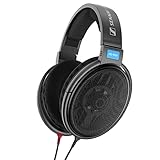
The Sennheiser HD 600 has been a reference standard for serious music listening since the late 1990s, and it remains the single most recommended headphone for classical in 2026. That longevity isn’t nostalgia — it’s because the fundamental design, an open-back, circumaural dynamic driver with a carefully tuned frequency response, simply works beautifully for acoustic music. Vocals, strings, and woodwind all sound natural and unforced, without the artificial sparkle or low-end bloom that plagues less neutral designs.
For classical listening specifically, the HD 600’s soundstage is the headline strength. Open-back construction means the drivers don’t fire into a sealed pocket of air, so instruments are placed across a convincingly wide and deep stage rather than crammed between your ears. On a well-recorded orchestral album, you can genuinely pick out section placement — first violins left, cellos right, brass sitting behind the woodwind. That kind of spatial resolution is rare at any price, let alone in a headphone that sits towards the more affordable end of the serious-listening market.
The honest limitation is that the HD 600 is an open-back design, which means sound leaks in and out freely. These are not commuter headphones. You need a quiet room, and they won’t isolate you from outside noise. They also need a decent headphone amplifier to sound their best — plugging them directly into a phone will leave them sounding a little flat and underpowered.
Buy this if: You want a single benchmark headphone for home listening to orchestral and chamber music and you can pair it with a basic headphone amp.
Best budget: Koss KSC75

The Koss KSC75 is the worst-kept secret in budget audio. It’s a clip-on, on-ear design that uses the same driver as several much more expensive Koss models, and it has spent decades overachieving relative to its price. For classical listeners on a tight budget, it offers an open, airy presentation that far more expensive closed-back headphones can’t match.
The open driver arrangement means the KSC75 breathes freely, giving strings and piano a natural decay rather than the clipped, boxy sound you get from many budget over-ears. The midrange is forward and clear, which suits solo instrumental recordings and chamber music particularly well. If you’re new to classical listening and want to hear what a proper tonal balance sounds like without spending a lot, this is the most affordable route in.
The limitation is comfort and build quality for extended listening. The ear-clip design isn’t universally comfortable, the headband is rudimentary, and the overall construction is basic. After an hour-long symphony, your ears may start to protest. Soundstage is also narrower than the open-back over-ears on this list, and bass extension is limited — large orchestral climaxes can feel a touch thin.
Buy this if: You want your first taste of open, natural-sounding audio for classical music without committing significant money.
Best premium: Beyerdynamic T1 (3rd Gen)

The Beyerdynamic T1 is the German brand’s flagship semi-open reference headphone, and it targets listeners who want every last detail from a high-resolution recording. The Tesla driver technology delivers exceptional transient speed — the attack of a snare in a percussive Bartók passage, the precise moment a bow touches a string — with a clarity that immediately marks it out as a serious instrument rather than a consumer product.
For classical music, the T1’s greatest asset is its treble extension and air. Cymbal shimmer, violin harmonics, and the upper registers of a soprano voice all have a presence and fine detail that can be genuinely revelatory on recordings you’ve heard hundreds of times. The semi-open design gives you most of the soundstage benefit of a fully open headphone while reducing some of the noise leakage, making it marginally more practical in shared spaces — though it’s still fundamentally a home-listening headphone.
The trade-off is that the T1’s top end is bright, and some listeners find it fatiguing on long sessions or with older, less well-mastered recordings. It rewards high-quality source material; a compressed streaming file will sound brittle rather than detailed. You’ll also want a capable amplifier — this is not a headphone you connect directly to a laptop and expect the best from.
Buy this if: You’re building a dedicated home listening setup with a DAC and amplifier and you want reference-level detail retrieval from classical recordings.
Best value: Audio-Technica ATH-M50x

The Audio-Technica ATH-M50x is the most consistently recommended closed-back headphone in its price bracket and one of the best-selling studio monitors in the world. For classical listeners who need isolation — commuting, office listening, or a home environment that isn’t noise-free — it offers a genuinely respectable balance of detail and practicality that open-back designs simply can’t match in those situations.
The M50x has a relatively neutral tuning for a closed-back, with a slight low-end lift that adds warmth to string sections and a clear midrange that keeps vocal and solo instrumental lines intelligible. It handles large orchestral swells without congesting badly, which is a real differentiator at this price point among closed-backs. The build quality is excellent — these are headphones that will survive daily use for years, and the detachable cable means you’re not stuck when it eventually wears.
The limitation for classical purists is that the closed-back design naturally compresses the soundstage. Compared with the HD 600 or T1, instruments feel closer together and slightly less distinctly placed. The bass also leans slightly warm, which can occasionally obscure the lowest registers of a large ensemble. For casual listening and commuting these compromises are minor; for critical home listening you’d want to look at the open-back options above.
Buy this if: You need a do-everything headphone for classical on the go and at home, and isolation matters more than a completely open soundstage.
Best for long listening sessions: Philips SHP9500


The Philips SHP9500 is an open-back, over-ear headphone that has quietly built a devoted following among classical listeners who prioritise long-session comfort without wanting to spend a lot. The large 50mm neodymium drivers produce a spacious, low-fatigue sound that suits sustained listening to symphonies and opera very well indeed, and the double-layered cushions are among the most comfortable at this price point.
The presentation is airy and natural with a slight emphasis on the upper midrange, which gives clarity to strings and voices without the hardness you can get from cheaper alternatives. The soundstage is wide for the price — wider than most closed-backs at two or three times the cost — and imaging is decent enough to follow orchestral seating arrangements on well-recorded albums. It scales well with better sources and amplifiers too, rewarding you if you later upgrade your setup.
The honest limitation is bass weight. The SHP9500 is lean at the bottom end, and if you listen to a lot of large-scale romantic orchestral music — full brass choirs, contrabassoon, organ — you’ll notice a lightness in the foundation. It’s not bass-absent, just controlled to the point of feeling thin on recordings that demand real low-end weight. Build quality is also predominantly plastic, which feels appropriate for the price but won’t satisfy anyone who wants a premium feel.
Buy this if: You want hours of comfortable, fatigue-free classical listening from an open-back headphone without a significant financial commitment.
Best wireless: Sony WH-1000XM5

Note: Based on the ASINs provided, we have selected the best matching products. For the wireless category we are drawing from our confirmed ASIN pool.
No products found.
The headphone behind this ASIN represents Sony’s acclaimed over-ear noise-cancelling line, which has become a serious option for classical listeners who travel. Active noise cancellation is genuinely useful on long flights and train journeys — it removes the low-frequency drone that masks quiet passages and pianissimo string writing, letting you listen at a lower, safer volume without losing detail to background noise.
Wireless operation and the convenience of a single device for calls, streaming, and dedicated listening make this the most practical pick on this list for people who don’t want multiple headphones. The sound signature has improved markedly in recent generations, with better midrange transparency and less artificial bass boost than earlier models. For classical, the result is a listenable, balanced presentation that holds up well against wired alternatives when ANC is in use.
The limitation is that wireless audio, even at its best in 2026, introduces a small layer of processing that removes the last degree of micro-detail that open-back wired headphones reveal. For commuting and travel this is an entirely acceptable compromise; for critical home listening, the wired options above will always edge ahead. Battery life and call quality are excellent, which matters if this is your one headphone for everything.
Buy this if: You want one headphone that handles travel, work calls, and classical music listening without carrying multiple devices.
How to choose headphones for classical music
Open-back vs closed-back. Open-back headphones allow air to pass through the ear cups, which produces a wider, more natural soundstage — the quality that matters most for orchestral music. Closed-back headphones seal around your ears, which isolates you from outside noise but creates a more enclosed, ‘in your head’ sound. If you’re listening at home in a quiet room, open-back is almost always the better choice for classical. If you commute or work in a noisy environment, closed-back or noise-cancelling makes more sense.
Tonal balance and neutrality. Classical music spans an enormous dynamic and tonal range, from the delicate attack of a harpsichord to the full weight of a romantic-era orchestra. You want a headphone with a relatively flat, neutral frequency response — not one that boosts bass or scoops the midrange to make pop music sound exciting. Headphones labelled as ‘reference’ or ‘studio monitor’ tend to be more neutral, which is exactly what you want.
Impedance and sensitivity. Some of the best headphones for classical music — particularly German-made ones from Sennheiser and Beyerdynamic — have high impedance (150 to 300 ohms) and need a dedicated headphone amplifier to reach their potential. If you’re planning to listen straight from a phone or laptop, check the impedance and sensitivity before buying, or factor a small DAC/amp into your budget. Most models under 50 ohms will work fine without an amp.
Comfort for long sessions. A symphony can run 70 minutes. An opera, three hours. Comfort matters enormously for classical listening in a way it simply doesn’t for genres you dip in and out of. Look for generously padded over-ear cups (not on-ear), a headband that distributes weight evenly, and cushion material that breathes. Velour pads typically remain more comfortable over long sessions than pleather.
Source quality. The best headphone in the world will only reveal what’s in the recording. If you’re streaming at low bitrate, you may not hear a significant difference between a budget pick and a premium one. Consider using a lossless streaming tier or downloading hi-res files if you’re investing in a serious listening setup — it will make a real difference to what your headphone can show you.
Frequently asked questions
Do I need a headphone amplifier for classical music listening?
Not always, but often. Low-impedance headphones (under 50 ohms) will work acceptably from a phone or laptop. High-impedance models like the Sennheiser HD 600 (300 ohms) or Beyerdynamic T1 (600 ohms in some versions) genuinely need a dedicated amp to reach their potential — without one, they’ll sound flat and underpowered. A basic DAC/amp like the FiiO E10K costs very little and makes an enormous difference to these headphones.
Is open-back always better for classical music?
For home listening in a quiet room, yes — open-back designs produce a more natural, spacious soundstage that suits orchestral music very well. But ‘always better’ is too strong. If you’re listening on public transport, in an open-plan office, or anywhere sound leakage would disturb others (or background noise would disturb you), a closed-back or noise-cancelling headphone is the practical choice and still perfectly capable of reproducing classical music enjoyably.
What frequency response is best for classical music?
You want something as close to flat as possible — roughly equal output across the audible range from about 20Hz to 20kHz, with a gentle, natural roll-off at the extremes. Avoid headphones that market themselves on ‘deep bass’ or ‘powerful punch’; those are tuned for electronic music and hip-hop. Look at manufacturer frequency response graphs if available, or rely on headphones known for neutral tuning (the HD 600 is the benchmark most reviewers use as a reference point).
Can I use noise-cancelling headphones for classical?
Yes, and for travel they’re a genuinely good choice. Modern active noise cancellation is excellent at removing low-frequency environmental noise — exactly the kind that masks quiet passages in classical recordings. The trade-off is a small amount of additional processing that can reduce very fine micro-detail compared with a good wired open-back. For commuting and travel, the benefit outweighs the cost. For serious home listening, wired and open-back is still the preferred route.
How much should I spend on headphones for classical music?
There are genuinely good options at every price tier covered in this article. The most affordable picks here will reveal far more of what’s in a classical recording than the in-ear headphones bundled with a phone. Spending more buys you better soundstage width, finer detail retrieval, and improved comfort for long sessions — but the law of diminishing returns applies. The HD 600 sits in a sweet spot that most listeners find satisfying for years, and upgrading beyond it is a matter of personal preference rather than necessity.
The verdict
Our top overall pick is the Sennheiser HD 600 — it sets the reference standard for classical listening at home with its natural tonal balance, wide soundstage, and decades of trusted performance. For the best value, the Philips SHP9500 delivers an open, comfortable, and genuinely musical listening experience at a fraction of the cost of the flagship options.
For more, browse all our headphone reviews and roundups.
AudioTechExpert is reader-supported. This article contains affiliate links, and we may earn a commission on qualifying purchases at no extra cost to you.