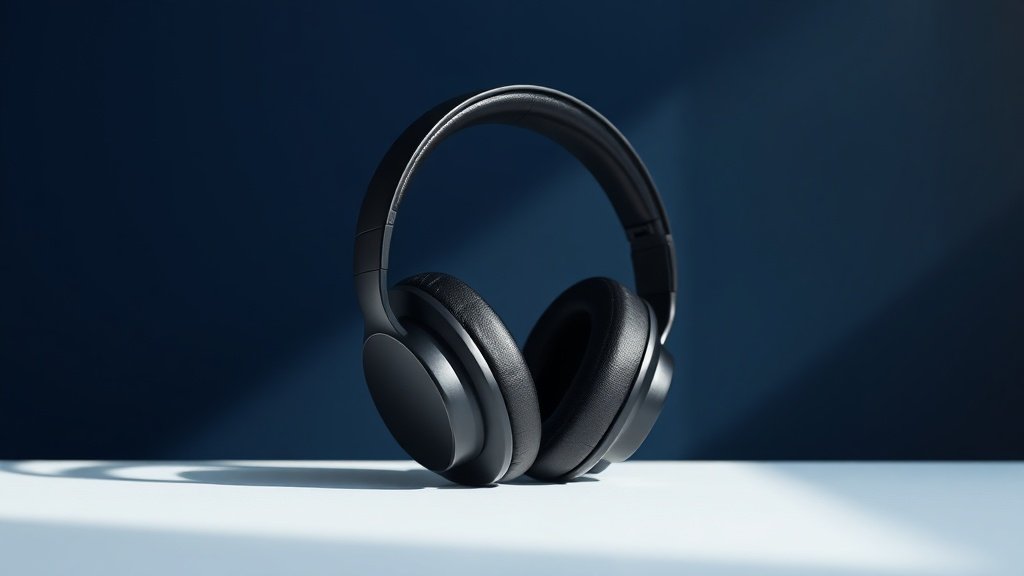
Video editing is as much about listening as it is about looking. Whether you’re colour-grading a wedding film or cutting a documentary, the headphones you reach for will shape every decision you make about dialogue clarity, ambient noise, and music mix. A pair that flatters the sound will leave you guessing; a pair that tells the truth will make your edits hold up on every speaker your audience owns.
This guide focuses on wired, over-ear studio headphones — the type professionals actually use for monitoring and editing work. We’ve ranked six picks from the supplied field, covering open-back models for critical listening sessions at your desk and closed-back models for noisier environments. There’s a pick here whether you’re editing on a tight budget or spending seriously on your monitoring chain.
Every product below is available on Amazon right now. Prices, ratings, and availability change, so we let the live listings speak for themselves — just look for the ‘Buy’ links beneath each entry.
Best overall: beyerdynamic DT 990 Pro X

The beyerdynamic DT 990 Pro X is beyerdynamic’s modern take on a studio classic, built specifically for mixing, editing, and critical listening in professional recording environments. It’s an open-back, over-ear design made in Germany — a detail that speaks to serious build quality and consistent manufacturing standards. At 48 ohm impedance, it’s more forgiving of typical desktop interfaces and laptop headphone outputs than higher-impedance siblings, which means you can get proper volume and drive without needing a dedicated headphone amplifier.
For video editors, the open-back design is the headline feature. Open-back headphones bleed some sound in and out, but they reward you with a wider, more natural soundstage that helps you place dialogue, foley, and music in the stereo field with greater precision. The DT 990 Pro X is designed to be analytical rather than flattering — it won’t add warmth or excitement that isn’t really there, which is exactly what editing work demands.
The one genuine limitation is the open-back form factor itself: if you’re editing in a busy office, shared studio, or anywhere with background noise, sound leakage can be disruptive to colleagues and distracting to you. This is strictly a ‘quiet room’ tool.
Buy this if: you edit in a quiet space and want a modern, made-in-Germany open-back monitor with friendly impedance for everyday interfaces.
Best premium open-back: Sennheiser HD 660S2
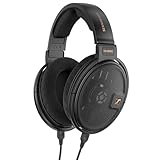

The Sennheiser HD 660S2 sits at the top of the price range represented here, and it earns that position with a specification sheet that emphasises deep bass extension and refined acoustic performance — two qualities that matter enormously when you’re judging whether a music bed is overwhelming a voiceover or whether low-frequency room tone is creeping into your edit.
As an open-back, over-ear audiophile headphone, the HD 660S2 is aimed squarely at critical and analytical listening. The emphasis on bass extension compared to earlier HD 6-series models means editors working on content with significant low-end — film scores, action sequences, music videos — get a more complete picture of what’s happening below the midrange. Sennheiser’s house sound is famously neutral and honest, so what you hear is what your audience will hear.
The honest trade-off: this is a premium investment, and like all open-back designs, it’s unsuitable for noisy environments. It also pairs best with a quality headphone amplifier or audio interface to realise its full potential.
Buy this if: you’re a professional editor who wants the most revealing open-back listening experience in this roundup and has the desk setup to match.
Best for all-day editing sessions: Sennheiser HD 490 PRO

The Sennheiser HD 490 PRO is a professional open-back headphone built with studio and content-creation workflows in mind. Sennheiser positions this model firmly in the professional monitoring category, which tells you the tuning prioritises accuracy and fatigue-free listening over any kind of consumer-oriented enhancement.
For video editors who spend long days in headphones — cutting through hours of footage, reviewing revisions, and checking audio sync — comfort and sonic honesty over extended periods matter as much as raw fidelity. The HD 490 PRO’s open-back design ensures your ears breathe, reducing the ‘closed-in’ fatigue that can set in after hours of closed-back use. The result is a headphone that remains a reliable reference tool from your first clip to your final export.
The limitation, as with any open-back model, is that it cannot be used effectively anywhere with significant ambient noise, and the sound will be audible to anyone nearby — not ideal for shared edit suites or recording booths running simultaneously.
Buy this if: you spend long days editing and need an open-back professional monitor that prioritises listening stamina and studio-grade accuracy.
Best closed-back for focused editing: beyerdynamic DT 770 PRO

The beyerdynamic DT 770 PRO is the closed-back counterpart to the open-back DT 990 models and is one of the most trusted studio monitoring headphones in professional use. Its closed-back design provides passive isolation from outside noise, making it the right tool when you’re editing in a noisier environment — a shared office, a coffee shop, or a home studio where household noise intrudes.
At 80 ohm impedance and with a 3-metre straight cable, the DT 770 PRO is built for desk use and professional workflows. It’s a wired, over-ear headphone with beyerdynamic’s black velour ear pads included in this limited-edition black finish. The closed design also means no sound leakage, which is important if you work near others who would rather not hear your audio.
The trade-off with closed-back monitoring is a slightly more confined soundstage compared to an open-back design — it’s harder to perceive width in a stereo mix. That’s a real consideration for music-heavy projects, though for dialogue-focused editing and sync work the DT 770 PRO remains an excellent and honest monitor.
Buy this if: you edit in a noisy or shared environment and need a closed-back professional monitor that won’t disturb those around you.
Best value: Audio-Technica ATH-M50x

The Audio-Technica ATH-M50x is one of the most critically acclaimed studio monitoring headphones ever made, and it appears on professional editing and mixing desks around the world. It’s a closed-back, over-ear design with a detachable cable — a thoughtful feature that extends the working life of the headphone considerably, since cables are the first thing to fail on a well-used pair.
For video editors, the ATH-M50x delivers a reliable, professional-grade monitoring experience at a price well below the premium open-back models in this roundup. Its closed-back isolation makes it versatile: you can use it at home, in a studio, or in a shared space without disturbing colleagues. The detachable cable means you can swap to a shorter cable for portable use or a longer one for desktop editing without replacing the whole headphone.
The honest limitation is that the ATH-M50x, like most closed-back headphones, has a slightly narrowed soundstage that can make precise stereo placement harder than on the best open-back options here. Still, for editors who want a genuinely professional result without reaching the top of the budget range, this is hard to beat.
Buy this if: you want a critically acclaimed, versatile closed-back monitor with a detachable cable and strong reputation at a clear step below premium pricing.
Best budget: Sennheiser HD 560S
No products found.
The Sennheiser HD 560S is an open-back, over-ear wired headphone tuned for a neutral, natural sound — qualities Sennheiser describes as suitable for music, gaming, and content creation. For video editors on a tighter budget, that neutral tuning is the key selling point: you’re getting honest audio reproduction rather than a consumer-boosted sound that could mislead your editing decisions.
The HD 560S sits at the most accessible end of the price range here, making it the natural recommendation for editors who are just building out their home studio or who need a capable second pair without a significant outlay. Its open-back design gives it the wide, natural soundstage characteristic of the Sennheiser house sound, which benefits spatial audio checks and music mix decisions.
The limitation is that as the entry-level pick in a professional lineup, the HD 560S won’t match the refined acoustic performance of the HD 660S2 or the precision engineering of the beyerdynamic DT 990 Pro X. It’s also an open-back design, so it comes with all the usual caveats about noise leakage and environment suitability.
Buy this if: you’re building your first edit suite on a budget and want a genuinely neutral open-back headphone from a trusted brand without the premium price tag.
How to choose your video editing headphones
Open-back vs closed-back: Open-back headphones allow air to pass through the ear cups, creating a wider, more natural soundstage that’s ideal for critical listening and precise audio placement. Closed-back headphones seal around your ears, providing noise isolation and preventing sound leakage — better for noisy environments but with a slightly more enclosed sound. For most video editors working at a dedicated desk in a quiet room, open-back is the professional preference. If you edit on the move or in shared spaces, closed-back is more practical.
Impedance and your interface: Impedance (measured in ohms) tells you how much power a headphone needs to reach proper listening volume. Lower-impedance headphones (such as 48 or 80 ohm models) work well from a laptop or basic audio interface. Higher-impedance headphones may need a dedicated headphone amplifier to perform at their best. Check what output device you’re using before choosing.
Cable type: For desk editing, a longer straight or coiled cable is comfortable and practical. A detachable cable is a worthwhile feature if you plan to use the headphones portably as well, since cables wear out before the drivers do. All the picks in this roundup are wired — wireless headphones introduce latency that’s unsuitable for precise audio-to-picture sync work.
Build quality and comfort: Long editing sessions demand physically comfortable headphones. Look for well-padded ear cups and headbands, and consider that velour ear pads tend to breathe better than leather or pleather over extended wear. The headphones in this roundup from beyerdynamic and Sennheiser are known for their robust build and long-term wearability.
Honest sound vs flattering sound: Studio monitor headphones are tuned to reveal problems in your audio, not to make everything sound pleasant. This can feel harsh at first if you’re used to consumer headphones, but it’s exactly the quality you need to make sound decisions in your edit. Any of the picks here will give you a more accurate picture of your audio than a typical consumer pair.
Frequently asked questions
Do I need open-back headphones for video editing?
Open-back headphones are the professional preference for critical listening and mix work because they produce a wider, more natural soundstage. However, if you edit in a noisy or shared environment, a closed-back model like the beyerdynamic DT 770 PRO or the Audio-Technica ATH-M50x is more practical and will still give you an accurate, professional-grade sound.
Can I use consumer headphones for video editing?
You can, but consumer headphones are usually tuned to make music sound exciting rather than accurate — boosted bass, emphasised treble, and a general ‘fun’ sound signature. That flattering tuning will mislead your editing decisions. A studio monitor headphone like the ones in this guide tells you what’s actually in your audio, which is what you need to ensure your work translates well on all playback systems.
Do I need a headphone amplifier for these picks?
Lower-impedance picks like the beyerdynamic DT 990 Pro X (48 ohm) and the beyerdynamic DT 770 PRO (80 ohm) will perform well from a standard audio interface or even a laptop. Higher-impedance models, particularly the Sennheiser HD 660S2, will benefit from a dedicated headphone amplifier or a quality audio interface to reach their full potential. If you’re running directly from a laptop, start with a lower-impedance option.
Are wireless headphones suitable for video editing?
Generally no. Wireless headphones introduce audio latency — a delay between what you see on screen and what you hear — which makes precise audio-to-picture sync work unreliable. All the picks in this roundup are wired for this reason.
How long should a good pair of editing headphones last?
With proper care, the headphones in this roundup should last many years. beyerdynamic and Sennheiser both offer replacement ear pads and cables for their professional lines, which extends the useful life considerably. Choosing a model with a detachable cable — such as the Audio-Technica ATH-M50x — means the most vulnerable component can be replaced without retiring the whole headphone.
The verdict
Best overall: The beyerdynamic DT 990 Pro X is our top pick — a made-in-Germany open-back studio monitor with accessible impedance, designed specifically for mixing and editing work.
Best value: The Audio-Technica ATH-M50x delivers critically acclaimed, professional-grade closed-back monitoring with a detachable cable at a price well below the premium tier — the smartest spend for most editors building out their setup.
For more, browse all our reviews and roundups.
AudioTechExpert is reader-supported. This article contains affiliate links, and we may earn a commission on qualifying purchases at no extra cost to you.