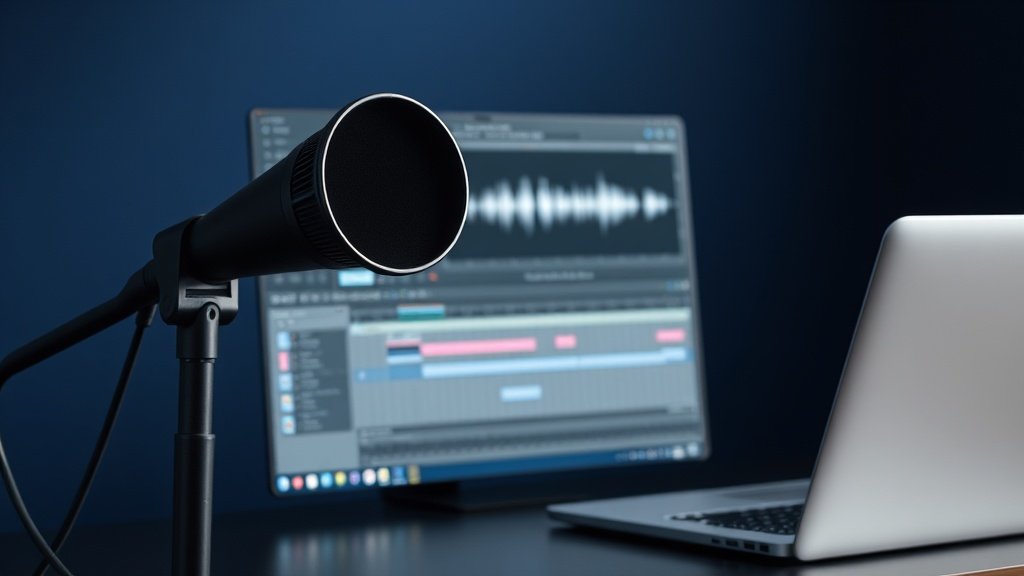
Digital modeling promises to transform any microphone into a Neumann U47 or AKG C12, but the physics of capsule design and acoustic behaviour cannot be entirely replaced by post-processing algorithms.
After years of obsessively buying, using and comparing audio gear, I have tested dozens of modeling plugins that promise vintage microphone characteristics through digital processing. These plugins analyse the frequency response, harmonic distortion, and dynamic behaviour of classic microphones, then apply corrective filtering and saturation to approximate those sonic qualities on modern microphones.
This guide examines how microphone modeling technology works, which aspects succeed convincingly, where the limitations become apparent, and how to evaluate whether these tools serve your recording needs better than investing in actual vintage or reissue microphones.
How Microphone Modeling Technology Functions
Microphone modeling plugins work by analysing the transfer function between a source microphone and target microphone through impulse response measurements and frequency analysis. Companies like Slate Digital and Antares Audio record identical sources through multiple microphones simultaneously, then create digital filters that transform the source signal toward the target response. The VMS system from Slate Digital records through their ML-1 large diaphragm condenser, then applies modeling to emulate microphones like the Neumann U67 or Sony C37A.
The processing involves multiple stages including frequency response correction, harmonic generation to simulate tube circuits or transformer saturation, and dynamic response modeling for compression and transient behaviour. Universal Audio Townsend Labs Sphere L22 takes this approach further by using dual-capsule recording and their modeling engine to recreate polar pattern behaviour and proximity effect characteristics of different microphone designs.
However, these systems cannot address fundamental physical limitations. A small diaphragm condenser cannot be processed to replicate the low frequency response and transient behaviour of a large diaphragm design, because the acoustic coupling and mechanical resonances differ fundamentally. Similarly, the self-noise floor of the source microphone establishes a limit that processing cannot improve.
Where Modeling Succeeds Most Convincingly
Frequency response modeling produces the most convincing results, particularly for well-behaved sources recorded in controlled environments. The characteristic presence boost of a Neumann U87 or the smooth midrange of an AKG C414 can be approximated effectively through careful equalisation curves. These tonal adjustments work well on vocals, acoustic instruments, and other sources where the frequency balance provides the primary sonic signature.
Harmonic saturation modeling also delivers convincing results for microphones known for specific distortion characteristics. Tube microphone emulations can add pleasant second and third harmonic content that approximates the warmth associated with classics like the Neumann U47 or AKG C12. The modeling becomes less obvious when used subtly rather than as an extreme effect.
Proximity effect simulation works reasonably well because it primarily involves low frequency boost curves that change based on input level analysis. The modeling software detects close-miked sources and applies appropriate bass response to match how vintage large diaphragm microphones behave when used intimately for vocals or instruments.
The capsule, polar pattern, and acoustic design establish fundamental characteristics that digital processing cannot completely overcome or replicate.
The Physical Limitations That Processing Cannot Address
Microphone modeling cannot change the fundamental acoustic behaviour established by capsule size, diaphragm material, and mechanical construction. A small diaphragm condenser microphone has inherently different off-axis response, transient capture, and low frequency extension compared to large diaphragm designs. Processing the Shure SM57 through modeling software cannot replicate how a Coles 4038 ribbon microphone responds to room acoustics and reflected sound.
Self-noise performance represents another hard limit for modeling technology. Budget condenser microphones often exhibit 18-22 dBA self-noise, while premium designs like the Neumann U87Ai achieve 7 dBA equivalent noise. No amount of digital processing can reduce the noise floor established by the source microphone electronics and capsule design. This becomes critical for quiet sources and distant miking applications where every decibel of signal-to-noise ratio matters.
Polar pattern behaviour involves complex acoustic interactions that modeling approximates rather than replicates precisely. The rear rejection characteristics, side null positioning, and frequency-dependent directional behaviour result from physical capsule construction and internal acoustic design. Software processing cannot recreate how a genuine cardioid capsule responds to sound arriving from different angles across the frequency spectrum.
Practical Testing Results and Real-World Performance
Direct comparison testing reveals where modeling succeeds and where gaps remain apparent. Recording identical vocal performances through a Slate Digital ML-1 with U87 modeling versus an actual Neumann U87Ai shows convincing similarity for frequency balance and general character. The differences become more apparent during critical listening for spatial information, transient response, and subtle harmonic content.
The modeling performs best on sources that suit the characteristics of the source microphone. Using the ML-1 large diaphragm condenser as the foundation works well for vocals and acoustic instruments, but attempting to model dynamic microphone characteristics or ribbon microphone behaviour produces less convincing results. The physical mismatch between source and target becomes audible during detailed analysis.
Context sensitivity also affects the results significantly. Modeling works more convincingly on isolated tracks within a full mix compared to exposed solo performances where every nuance receives scrutiny. The processing integrates well during mixing and mastering stages, particularly when combined with other vintage-style processing like tube preamp or compressor modeling.
Cost Analysis and Investment Considerations
Microphone modeling systems require significant upfront investment despite avoiding individual vintage microphone costs. The Slate Digital VMS complete system costs approximately £400 annually for subscription access, while Universal Audio Townsend Labs Sphere L22 requires about £1,500 plus the cost of Apollo interface compatibility. These expenses accumulate over time compared to purchasing individual microphones outright.
Authentic vintage microphones or quality reissues often provide better long-term value for professional applications. A Warm Audio WA-87 delivers genuine large diaphragm performance for £300, while the Golden Age Premier GA-87 offers similar characteristics for £400. These microphones retain resale value and provide consistent performance without subscription dependencies or software compatibility concerns.
However, modeling systems offer access to multiple microphone characters through single hardware purchases, which benefits project studios requiring versatility without extensive microphone collections. The convenience factor becomes valuable for remote recording situations or mobile setups where carrying multiple physical microphones creates logistical challenges.
Expecting modeling to completely replace premium microphones leads to disappointment. Modeling works best as enhancement rather than replacement, providing tonal variation while acknowledging the fundamental characteristics established by the source microphone design.
Using inappropriate source microphones for modeling targets creates obvious mismatches. Attempting to model large diaphragm characteristics through small diaphragm sources, or ribbon microphone behaviour through condenser microphones, produces unconvincing results that highlight rather than hide the processing.
Relying on modeling without understanding actual microphone characteristics prevents proper evaluation. Experience with genuine vintage microphones or quality reissues provides the reference necessary to judge whether modeling achieves convincing approximation or merely applies generic processing effects.
Conclusion
Microphone modeling plugins provide useful tonal shaping and can approximate certain characteristics of classic microphones, but they cannot overcome fundamental physical limitations of capsule design and acoustic behaviour. These tools work best as creative processing rather than direct replacements for quality microphones, offering convenience and variety while acknowledging their technical boundaries.
FREE DOWNLOAD
Stop Guessing. Start Buying Smart.
The specs that actually matter, demystified.
Headphones, microphones, the spec sheet jargon you can ignore — all in one quick-reference PDF. Free, instant, no fluff.
Send Me the CheatsheetYou'll also receive occasional new guide notifications. Unsubscribe anytime. No spam, ever.