Your phone has a DAC, your laptop has a DAC, even your smart TV has a DAC, yet most people have never heard the term before shopping for better headphones.
A digital-to-analogue converter does exactly what the name suggests: it transforms the ones and zeros of digital audio files into the analogue electrical signals that drive your headphones. Without this conversion, you would hear nothing but silence from any digital source. The quality of this conversion process directly affects what reaches your ears.
This guide explains when the DAC built into your existing devices falls short, which headphones benefit most from external DACs, and how to choose one that actually improves your listening experience rather than just adding expense to your setup.
How DACs Work in Your Audio Chain
Every time you play music from a digital source, a DAC converts the digital audio stream into analogue voltage that moves your headphone drivers. Your smartphone DAC might handle this conversion adequately for efficient earbuds, but it often struggles with demanding full-size headphones. The conversion process involves reading digital samples at specific rates, typically 44.1kHz for CD quality or higher rates for hi-res files, then reconstructing the smooth analogue waveform.
The DAC chip itself represents just one part of the conversion process. The supporting circuitry, power supply design, and analogue output stage all influence the final sound quality. Budget implementations often compromise these supporting elements to save cost, leading to audible differences when compared to dedicated units. Clock accuracy becomes critical here because timing errors during conversion create distortion that manifests as harshness or digital glare.
Modern DAC chips like those from ESS Sabre or AKM offer impressive specifications on paper, but implementation matters more than chip selection. The Cambridge Audio DacMagic 200M demonstrates this principle by delivering clean, detailed sound through careful engineering of the entire signal path, not just premium components.
When Built-in DACs Fall Short
Laptop and smartphone DACs prioritise power efficiency over sound quality, often producing audible noise floors and limited dynamic range. These compromises become obvious when driving high-impedance headphones like the Beyerdynamic DT 770 Pro 250-ohm, which need both clean signal conversion and adequate amplification. The internal DAC might technically drive these headphones to reasonable volume levels, but the sound lacks impact and detail retrieval.
Electrical interference inside computers creates another challenge for internal DACs. Hard drives, graphics cards, and wireless modules generate electromagnetic noise that contaminates the sensitive analogue signals after conversion. This interference often appears as background hiss, clicking sounds during disk access, or high-pitched whines that follow processor activity. USB ports on laptops commonly carry this contamination to external devices unless proper isolation exists.
Gaming laptops represent particularly hostile environments for internal audio, with powerful graphics cards and cooling systems creating significant electrical noise. Users often notice this interference most clearly during quiet musical passages or when using sensitive headphones like the Audio-Technica ATH-R70x, which reveal system noise that less resolving headphones might mask.
The DAC chip matters far less than the engineering of the complete conversion and amplification chain.
Which Headphones Benefit Most from External DACs
High-impedance headphones above 150 ohms typically show the clearest improvement with dedicated DACs, though the reasons extend beyond simple power requirements. Models like the Sennheiser HD 600 or Beyerdynamic DT 880 need clean voltage delivery to achieve proper driver control, something that laptop outputs rarely provide adequately. These headphones also reveal the quality differences between conversion implementations more readily than efficient designs.
Planar magnetic headphones like the HiFiMAN Sundara or Audeze LCD-2 demand both current delivery and clean signal conversion to perform optimally. Their low impedance misleads some users into thinking any source will suffice, but these drivers need substantial current to achieve proper transient response and bass extension. The combination of external DAC and capable amplifier addresses both signal quality and power delivery simultaneously.
Sensitive in-ear monitors present a different challenge where noise floor becomes the primary concern rather than power output. Models like the Campfire Audio Andromeda can reveal hiss and electrical noise from marginal sources that remain inaudible through less sensitive designs. A quality DAC with low noise floor becomes essential for these applications, even though power requirements stay minimal.
Choosing the Right DAC for Your Setup
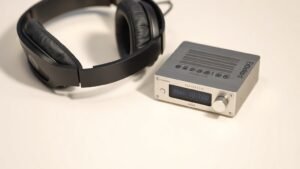
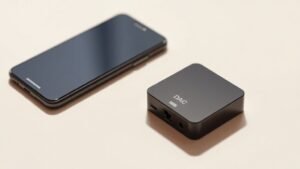
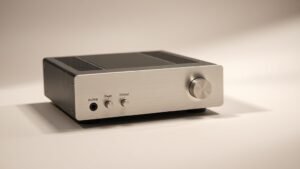
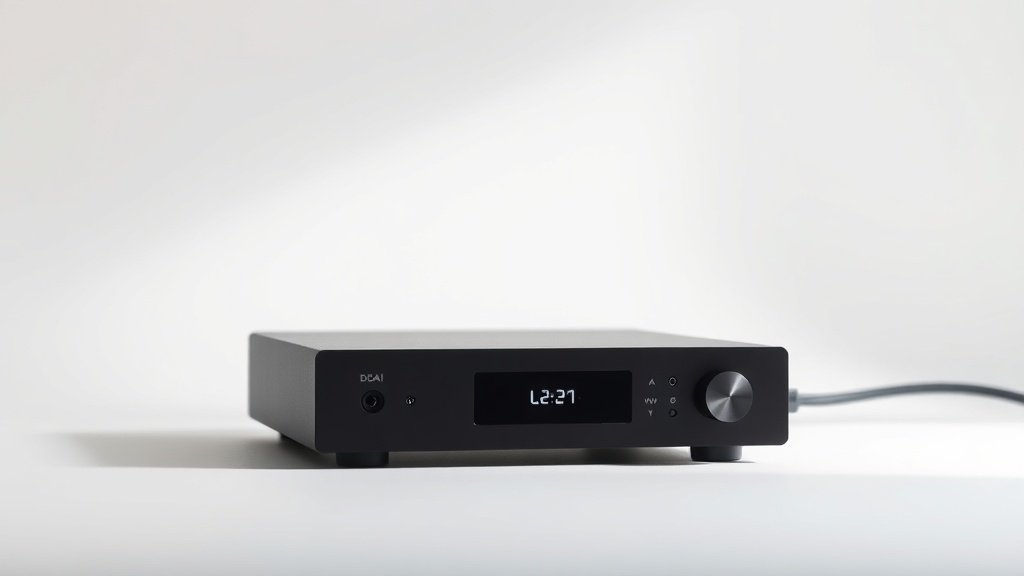
USB DACs offer the simplest upgrade path for most users, connecting directly to computers while bypassing internal audio circuits entirely. Units like the Schiit Modi or FiiO E10K provide clean conversion at reasonable prices, though they still require capable amplification for demanding headphones. These entry-level options typically improve clarity and reduce noise compared to laptop outputs without requiring significant technical knowledge to implement.
Combined DAC and amplifier units like the iFi Zen DAC or AudioQuest DragonFly series address both conversion and amplification in single packages. These solutions work particularly well for users who want simplicity and desktop space efficiency. The integration can also provide better impedance matching between conversion and amplification stages, though separate components often allow more upgrade flexibility later.
Measurement specifications help guide DAC selection, but listening remains important because not all distortion types measure equally objectionable. Total harmonic distortion figures below 0.1 percent typically indicate competent designs, while signal-to-noise ratios above 100dB suggest adequate noise performance for most applications. However, these numbers only tell part of the story, and personal preference for tonal character varies significantly between listeners.
Common Implementation Mistakes
Many users expect dramatic sound transformations from DAC upgrades and feel disappointed when changes prove subtle rather than revolutionary. The conversion stage rarely represents the weakest link in budget audio chains, particularly when amplification remains inadequate for the chosen headphones. Focus on addressing the most limiting factor first, which often means amplification rather than conversion for difficult-to-drive headphones.
Buying expensive DACs for easy-to-drive headphones provides minimal benefit. Efficient designs like most closed-back headphones and in-ear monitors work well with modest DAC implementations. Save the investment for more demanding transducers that can actually utilise the improved performance.
Assuming higher sample rates always sound better leads to unnecessary complexity and expense. Most music exists as 44.1kHz recordings, and upsampling rarely provides audible benefits while consuming more bandwidth and processing power. Focus on implementation quality rather than maximum supported sample rates.
Ignoring impedance matching between DACs and amplifiers creates performance compromises. Check output impedance specifications and ensure compatibility with your amplifier input requirements. Mismatched impedances can cause frequency response irregularities and reduced dynamic range even with quality components.
Conclusion
External DACs provide genuine improvements when system limitations prevent your headphones from performing optimally, but the benefits depend entirely on your specific equipment combination. Focus on addressing the weakest link in your audio chain first, whether that means conversion, amplification, or simply choosing more suitable headphones for your existing source components.
FREE DOWNLOAD
Stop Guessing. Start Buying Smart.
The specs that actually matter, demystified.
Headphones, microphones, the spec sheet jargon you can ignore — all in one quick-reference PDF. Free, instant, no fluff.
Send Me the CheatsheetYou'll also receive occasional new guide notifications. Unsubscribe anytime. No spam, ever.