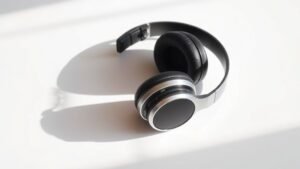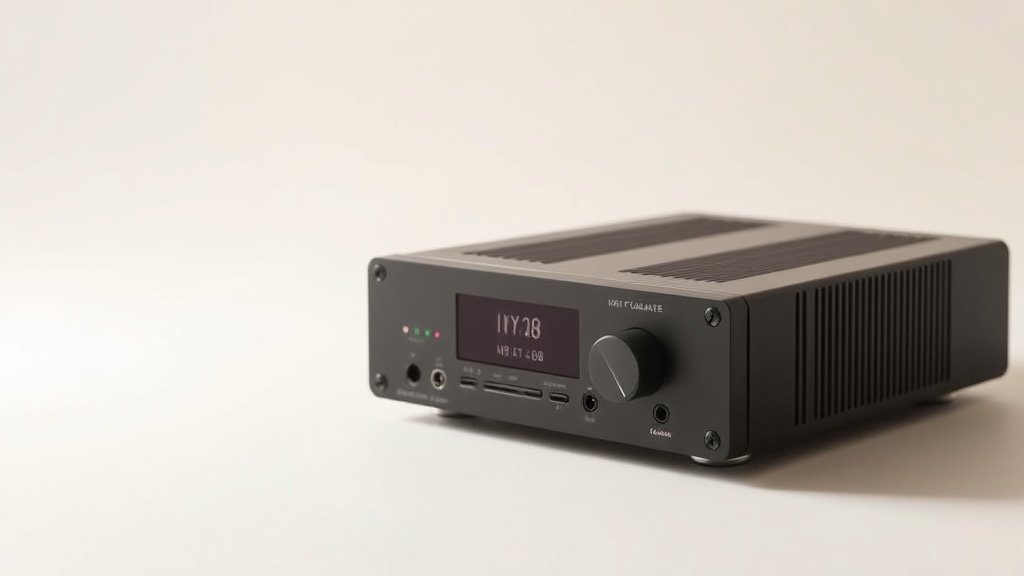
Hi-Res Audio certification appears on everything from £50 earbuds to £5000 DACs, yet most listeners struggle to identify the difference in blind tests conducted under controlled conditions.
Hi-Res Audio refers to digital recordings that exceed CD quality specifications of 16-bit depth and 44.1kHz sampling rate. The standard covers formats from 24-bit/48kHz up to 32-bit/768kHz, promising superior dynamic range and frequency response that reveals musical details lost in standard resolution files.
This guide examines what Hi-Res Audio delivers in practice, which playback equipment actually matters for reproduction, and how to test whether your ears can detect the improvements that specification sheets promise.
Understanding Hi-Res Audio Technical Specifications
The Japan Audio Society and Consumer Electronics Association define Hi-Res Audio as any format capable of reproducing frequencies above 20kHz and dynamic range exceeding standard CD specifications. Common Hi-Res formats include 24-bit/96kHz FLAC files, 24-bit/192kHz WAV recordings, and DSD formats used for SACD mastering. The higher bit depth theoretically provides 144dB of dynamic range compared to the 96dB available from 16-bit CD audio.
Extended sampling rates capture frequencies up to half the sampling frequency, meaning 96kHz files can contain information up to 48kHz. Standard human hearing typically extends to 20kHz, but proponents argue that ultrasonic content affects the perception of audible frequencies through harmonic interaction and phase relationships.
The practical benefits depend heavily on the original recording and mastering process. A 24-bit/192kHz file created from a 16-bit/44.1kHz master offers no genuine resolution advantage, despite the larger file size and Hi-Res certification. True Hi-Res recordings require capture and processing at high resolution throughout the entire signal chain.
Essential Playback Equipment for Hi-Res Audio
Reproducing Hi-Res Audio requires a complete signal chain capable of handling extended frequency response and dynamic range. The Chord Hugo 2 DAC supports formats up to 32-bit/768kHz and DSD256, providing the processing capability needed for the highest resolution files. Budget options like the AudioQuest DragonFly Cobalt handle 24-bit/96kHz files with surprisingly capable performance for portable use.
Headphone amplification becomes critical with Hi-Res playback because the extended dynamic range can expose noise floors and distortion that remain hidden with compressed audio. The Sennheiser HD800S headphones reveal spatial information and micro-details in Hi-Res recordings that closed-back designs often mask. Studio monitors like the Genelec 8030C provide the frequency extension and low distortion needed to hear genuine differences between resolutions.
Source files matter more than expensive DACs for most listeners. Qobuz and Tidal offer genuine Hi-Res streaming with files mastered at high resolution, while many downloads simply upsample standard recordings. The mastering quality determines whether Hi-Res specifications translate into audible improvements over well-recorded CD-quality files.
Hi-Res Audio specifications mean nothing if the original recording lacks the dynamic range and frequency content to benefit from extended resolution.
Testing Hi-Res Audio Differences in Practice
Controlled listening tests reveal that Hi-Res Audio benefits vary dramatically based on musical content and playback conditions. Classical recordings with wide dynamic range and complex harmonic content show the clearest improvements when comparing 24-bit/96kHz files to CD-quality versions. Jazz recordings captured with minimal processing often benefit from the extended headroom that higher bit depths provide during quiet passages.
Electronic music and heavily compressed pop recordings rarely show meaningful improvements from Hi-Res formats because the original dynamic range already fits comfortably within CD specifications. The loudness war has compressed most commercial recordings to dynamic ranges well below what 16-bit audio can handle, making higher bit depths irrelevant for playback quality.
Blind testing methodology proves crucial for honest assessment. Level-matched comparisons using ABX switching eliminate the volume differences and confirmation bias that often influence casual listening. The foobar2000 ABX plugin provides reliable testing tools, though most listeners require extended listening sessions with familiar recordings to identify consistent differences between formats.
Real-World Hi-Res Audio Performance
Professional recording environments demonstrate where Hi-Res Audio provides genuine advantages. Studio monitoring through Focal Trio6 Be speakers reveals differences in spatial information and decay characteristics when comparing high-resolution masters to CD-quality downsamples. The extended frequency response captures room acoustics and instrument harmonics that contribute to the sense of musical space.
Home listening presents different challenges because room acoustics and background noise often mask the subtle improvements that Hi-Res Audio can provide. Open-back headphones like the Beyerdynamic DT 1990 Pro offer better resolution for detecting format differences than closed designs, but require quiet listening environments to realise their potential.
Streaming quality varies significantly between services claiming Hi-Res delivery. Qobuz provides genuine 24-bit files for many albums, while some competitors upsample CD masters and apply the Hi-Res label. Direct purchases from labels like Linn Records or 2L guarantee authentic high-resolution recordings captured and mastered at extended specifications throughout the production process.
Equipment Matching for Hi-Res Audio Systems
Building an effective Hi-Res Audio system requires careful component matching rather than simply purchasing the highest specification DAC available. The RME ADI-2 DAC FS provides excellent measured performance and practical features like parametric EQ that often improve sound quality more than format upgrades alone.
Headphone impedance and sensitivity affect Hi-Res playback quality because the extended dynamic range can expose amplifier noise with efficient designs. The Focal Utopia headphones require clean amplification to avoid distortion during dynamic peaks, while the Audeze LCD-X provides more forgiving load characteristics with similar resolution capability.
System synergy matters more than individual component specifications. A well-matched system playing 16-bit/44.1kHz files often outperforms poorly integrated Hi-Res setups with specification mismatches. Proper gain staging and impedance matching eliminate the noise and distortion that can overwhelm the subtle improvements Hi-Res formats provide.
Assuming all Hi-Res Audio files sound better than CD quality automatically. Many Hi-Res downloads are upsampled from CD masters and provide no genuine quality improvement despite larger file sizes. Research the recording and mastering history before paying premium prices for high-resolution formats.
Comparing different masterings and calling it a Hi-Res Audio test. Album remasters often change EQ, compression, and dynamics regardless of resolution, making format comparisons meaningless. Use the same master in different resolutions or compare releases with identical processing to test format differences accurately.
Ignoring room acoustics and background noise when evaluating Hi-Res playback. Noisy environments and poor acoustics mask the subtle improvements Hi-Res formats can provide, making expensive format upgrades pointless. Address listening environment issues before investing in high-resolution audio equipment and files.
Conclusion
Hi-Res Audio provides measurable technical advantages over CD quality, but audible improvements depend on recording quality, playback equipment, and listening conditions. Focus on well-recorded source material and properly matched equipment rather than chasing specification numbers that may not translate into better musical experiences.
FREE DOWNLOAD
Stop Guessing. Start Buying Smart.
The specs that actually matter, demystified.
Headphones, microphones, the spec sheet jargon you can ignore — all in one quick-reference PDF. Free, instant, no fluff.
Send Me the CheatsheetYou'll also receive occasional new guide notifications. Unsubscribe anytime. No spam, ever.