Most people think noise cancellation is just one technology, but the difference between active and passive approaches determines whether you get silence or just muffled sound.
Active and passive noise cancellation tackle unwanted sound through completely different mechanisms. Active systems use microphones and processing to generate opposing sound waves, whilst passive isolation relies on physical materials to block sound transmission. Understanding these fundamental differences helps you choose the right approach for your listening environment and budget.
This guide explains how each technology actually works, where they excel, and why many premium headphones combine both methods. I will cover the technical principles, real-world performance differences, and practical considerations that matter when you need genuine quiet.
How Active Noise Cancellation Works
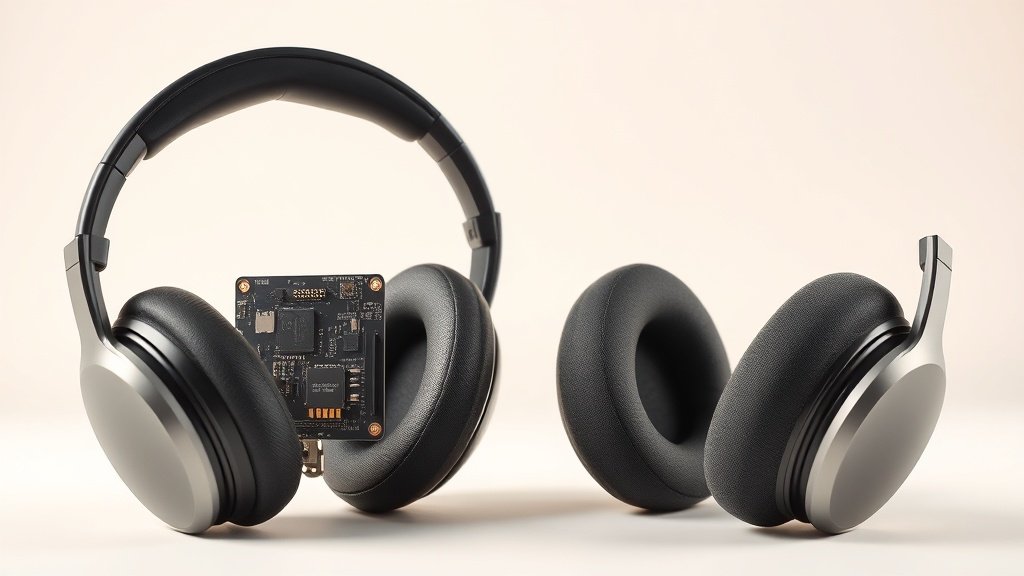
Active noise cancellation employs microphones positioned on the outside of each ear cup to detect ambient sound. An internal processor analyses these incoming sound waves and generates an identical but inverted signal through the headphone drivers. When the original sound wave meets its inverted counterpart, they cancel each other out through destructive interference.
The Sony WH-1000XM5 demonstrates this approach effectively, using dual noise sensor technology with feedback and feedforward microphones. The feedback mic sits inside the ear cup near your ear, whilst the feedforward mic faces outward. This dual arrangement captures both external noise and any sound that leaks past the passive seal, creating more complete cancellation across a wider frequency range.
Bose QuietComfort 45 headphones use a similar but refined approach, processing ambient sound through proprietary algorithms that adapt to different noise environments. The system works particularly well against consistent, low-frequency sounds like aircraft engines, air conditioning, or traffic rumble. However, active cancellation struggles with sudden, irregular sounds because the processing cannot predict and counter unpredictable audio events quickly enough.
How Passive Noise Isolation Functions
Passive noise isolation works through physical barriers that prevent sound waves from reaching your ears. Dense foam padding, closed-back ear cup designs, and tight headband clamping force all contribute to blocking external noise. The materials absorb some sound energy whilst reflecting the remainder back toward the source.
The Audio-Technica ATH-M50x exemplifies effective passive isolation through thick synthetic leather ear pads and a fully enclosed back design. The dense padding creates an acoustic seal around your ears, whilst the closed construction prevents sound from entering through the driver housing. This approach works across all frequencies but proves most effective against mid and high-frequency content like voices, keyboard clicks, and environmental chatter.
Beyerdynamic DT 770 Pro headphones achieve excellent passive isolation through substantial velour padding and robust construction. The thick ear cushions compress around your ears to form a barrier, whilst the solid plastic housings prevent sound transmission. Passive isolation requires no power, introduces no electronic artifacts, and works immediately when you put the headphones on.
Active cancellation excels at steady drone whilst passive isolation handles sharp, sudden sounds that electronics cannot predict.
Frequency Response and Effectiveness Differences
Active noise cancellation works best below 1kHz, with peak effectiveness between 50Hz and 500Hz. The physical limitations of the system mean higher frequencies pass through largely unaffected. Low-frequency sound waves are longer and more predictable, giving the processing system time to generate accurate inverse signals. This makes active cancellation ideal for blocking engine noise, HVAC systems, and traffic rumble.
Passive isolation provides more consistent attenuation across the frequency spectrum but requires substantial physical mass and tight sealing to block low frequencies effectively. Mid and high frequencies attenuate more easily through physical barriers, making passive designs excellent for cutting through office chatter, keyboard noise, and environmental sounds above 1kHz. The combination explains why most premium noise cancelling headphones use both approaches simultaneously.
The Sennheiser Momentum 4 Wireless demonstrates this hybrid approach, combining active processing for low-end control with substantial passive construction for mid and high-frequency isolation. The result provides more complete sound isolation than either technology achieves alone, though at increased weight, complexity, and cost compared to single-approach designs.
Power Requirements and Battery Considerations
Active noise cancellation demands continuous power to operate the microphones, processing circuits, and inverse signal generation. Most active headphones provide 20 to 40 hours of playback with noise cancelling enabled, though this reduces significantly when streaming high-quality audio simultaneously. The Sony WH-1000XM5 delivers approximately 30 hours with ANC active, whilst the Bose QuietComfort 45 manages around 24 hours under similar conditions.
Battery depletion disables active cancellation entirely, leaving you with whatever passive isolation the physical design provides. Some models like the Audio-Technica ATH-ANC900BT can operate in wired mode when the battery dies, but noise cancellation remains unavailable until recharged. This dependency makes active headphones less reliable for extended travel or situations where charging opportunities are limited.
Passive isolation headphones require no power and work indefinitely. Models like the Shure SRH440 or Audio-Technica ATH-M40x provide consistent noise blocking regardless of battery status. This reliability proves valuable for professional applications where power management adds unwanted complexity, though the trade-off involves accepting less effective low-frequency isolation compared to active systems.
Sound Quality and Audio Fidelity Impact
Active noise cancellation can introduce subtle artifacts into your audio signal. The processing required to generate inverse signals sometimes creates low-level hiss, slight frequency response alterations, or pressure sensations that some listeners find uncomfortable. Higher-end implementations minimise these issues, but the electronic processing always adds some level of signal modification.
The Apple AirPods Max addresses many active cancellation artifacts through computational audio processing and custom driver design. However, even sophisticated implementations cannot completely eliminate the electronic signature of active processing. Audiophile listeners often prefer passive designs for critical listening applications where signal purity takes priority over noise reduction.
Passive isolation maintains pure signal reproduction since no electronic processing occurs between the source and your ears. Studio headphones like the Shure SRH840 or Audio-Technica ATH-M70x prioritise accurate audio reproduction whilst providing substantial noise isolation through physical design alone. Professional mixing and mastering applications typically favour passive designs to avoid any electronic coloration of the monitoring signal.
Assuming active cancellation works equally well against all types of noise. Active systems excel at steady, predictable sounds but cannot effectively cancel sudden or irregular noise like voices, door slams, or keyboard clicks. Use passive isolation for these situations.
Expecting passive headphones to block low-frequency rumble effectively. Physical barriers struggle against long wavelength sounds unless they provide substantial mass and perfect sealing. Choose active cancellation for aircraft, traffic, or HVAC noise control.
Forgetting that active cancellation stops working when the battery dies. Always check battery levels before important listening sessions and carry charging cables for extended use. Consider passive backup headphones for critical applications where power management creates reliability concerns.
Conclusion
Active noise cancellation uses electronic processing to counter low-frequency drone, whilst passive isolation relies on physical barriers for broader spectrum noise blocking. Most premium headphones combine both approaches because each technology handles different frequency ranges and noise types effectively. Choose based on your primary noise sources, power management preferences, and whether audio purity or maximum isolation takes priority.

FREE DOWNLOAD
Stop Guessing. Start Buying Smart.
The specs that actually matter, demystified.
Headphones, microphones, the spec sheet jargon you can ignore — all in one quick-reference PDF. Free, instant, no fluff.
Send Me the CheatsheetYou'll also receive occasional new guide notifications. Unsubscribe anytime. No spam, ever.