More drivers in headphones does not automatically mean better sound, and the engineering challenges often outweigh the theoretical benefits.
Multi-driver headphones divide audio frequencies between separate drivers whilst single-driver designs handle the entire frequency spectrum through one driver per side. Each approach creates distinct engineering challenges that directly affect what you hear during critical listening sessions.
This guide examines the technical differences between multi-driver and single-driver over-ear headphones, covering frequency response characteristics, phase coherence, crossover design impact, and practical considerations for studio monitoring and audiophile listening applications.
How Multi-Driver Systems Work
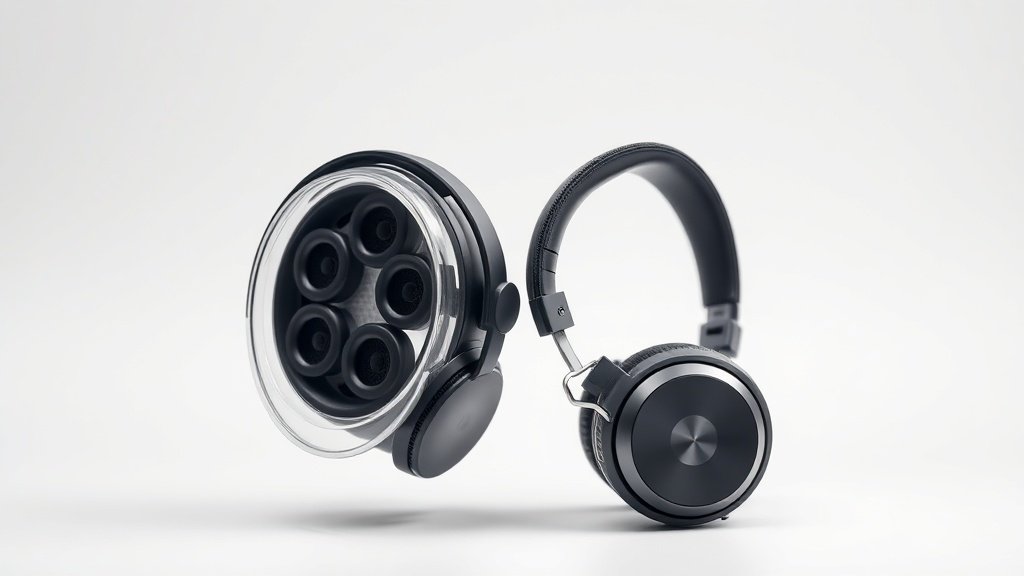
Multi-driver headphones typically use dedicated drivers for different frequency ranges, similar to loudspeaker designs. The Fostex TH909 employs separate drivers for bass and midrange frequencies, whilst the Audeze LCD-MX4 uses multiple planar magnetic elements to handle different portions of the frequency spectrum. These systems require electronic or acoustic crossovers to blend the outputs seamlessly.
The theoretical advantage lies in optimising each driver for its specific frequency range. Bass drivers can be larger with more excursion capability, whilst treble drivers remain smaller for better transient response. However, this division creates timing issues between drivers positioned at different distances from your ear, requiring precise phase alignment to maintain coherent sound imaging.
Crossover networks add another layer of complexity. Active crossovers in the amplification chain offer more precise control but increase system cost and complexity. Passive crossovers built into the headphone itself are simpler but introduce phase shifts and potential frequency response irregularities that affect the final sound signature.
Single-Driver Design Philosophy
Single-driver headphones like the Sennheiser HD800S or Beyerdynamic DT1990 Pro use one driver per side to reproduce the entire frequency spectrum. This approach eliminates crossover-related phase issues and maintains consistent time alignment across all frequencies, often resulting in more coherent soundstage presentation and imaging accuracy.
The challenge with single-driver designs lies in optimising one transducer for such a wide frequency range. Compromises become necessary between bass extension and midrange clarity, or between treble detail and overall sensitivity. Advanced driver materials and sophisticated acoustic chamber designs help mitigate these limitations, but physics still imposes fundamental constraints.
Single drivers also avoid the acoustic interference patterns that can occur when multiple drivers operate in overlapping frequency ranges. The absence of crossover components means fewer opportunities for resonances, phase shifts, or frequency response irregularities that might colour the sound during critical listening applications.
Phase coherence between multiple drivers positioned at different distances becomes the limiting factor in multi-driver headphone performance.
Frequency Response Characteristics
Multi-driver systems can achieve extended frequency response more easily than single-driver designs. The HiFiMAN Susvara uses multiple planar elements to reach both deep bass extension and crisp treble response that would be difficult to achieve with a single driver. Each driver operates in its optimal frequency range without the mechanical compromises required in full-range designs.
However, frequency response smoothness often suffers in multi-driver implementations. Crossover points frequently show irregularities where one driver hands off to another, creating peaks, dips, or phase rotation that affects tonal balance. Single-driver headphones like the Audio-Technica ATH-R70x typically exhibit smoother frequency response curves with fewer discontinuities, even if absolute extension at frequency extremes may be more limited.
The measurement approach also matters when evaluating these differences. Standard frequency response measurements may not reveal phase issues or temporal smearing that affects perceived sound quality during actual listening sessions, particularly with complex musical material containing multiple simultaneous frequency components.
Practical Considerations for Different Applications
Studio monitoring applications often favour single-driver designs for their phase coherence and predictable behaviour across the frequency spectrum. Engineers mixing on headphones like the Focal Clear Professional rely on consistent imaging and timing accuracy that multi-driver systems can compromise through crossover-induced phase shifts.
Audiophile listening may tolerate the phase irregularities of multi-driver designs in exchange for extended frequency response and potentially higher maximum output levels. The increased complexity can be worthwhile when the listening environment and source material do not demand the surgical precision required for professional monitoring applications.
Power requirements also differ significantly between these approaches. Multi-driver systems often present complex impedance curves that vary dramatically with frequency, making amplifier selection more critical. Single-driver headphones typically offer more predictable impedance characteristics that work well with a broader range of amplification equipment.
Cost and Reliability Factors
Manufacturing complexity directly affects both cost and long-term reliability in multi-driver designs. Additional components mean more potential failure points and higher production costs. Crossover networks require precision matching between channels to maintain stereo imaging accuracy, increasing manufacturing tolerances and quality control requirements.
Single-driver headphones eliminate many of these complications through design simplicity. Fewer components mean fewer opportunities for failure and more consistent channel matching during production. This reliability advantage often translates to better value proposition for professional users who depend on consistent performance over extended periods.
Replacement part availability also favours single-driver designs. When repairs become necessary, sourcing individual drivers or crossover components for multi-driver systems can be challenging and expensive compared to the straightforward driver replacement possible with single-driver headphones.
Assuming more drivers automatically means better sound quality. Driver count alone does not determine headphone performance, and phase coherence often matters more than frequency extension for accurate audio reproduction. Evaluate complete system performance rather than component count.
Ignoring impedance curve complexity in multi-driver headphones. Multiple drivers create impedance variations that can interact poorly with certain amplifiers, causing frequency response irregularities. Check impedance measurements across the frequency range when selecting amplification equipment.
Overlooking crossover design quality in multi-driver systems. Poorly implemented crossovers create more problems than they solve, introducing phase shifts and frequency response errors. Research crossover implementation and measurement data rather than focusing solely on driver specifications.
Conclusion
Single-driver headphones typically provide better phase coherence and simpler system behaviour, whilst multi-driver designs can achieve wider frequency response at the cost of increased complexity. Your choice depends on whether you prioritise accuracy and predictability or maximum frequency extension and output capability for your specific listening applications.

FREE DOWNLOAD
Stop Guessing. Start Buying Smart.
The specs that actually matter, demystified.
Headphones, microphones, the spec sheet jargon you can ignore — all in one quick-reference PDF. Free, instant, no fluff.
Send Me the CheatsheetYou'll also receive occasional new guide notifications. Unsubscribe anytime. No spam, ever.