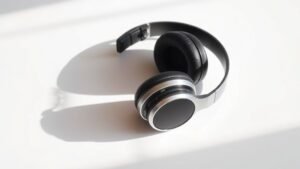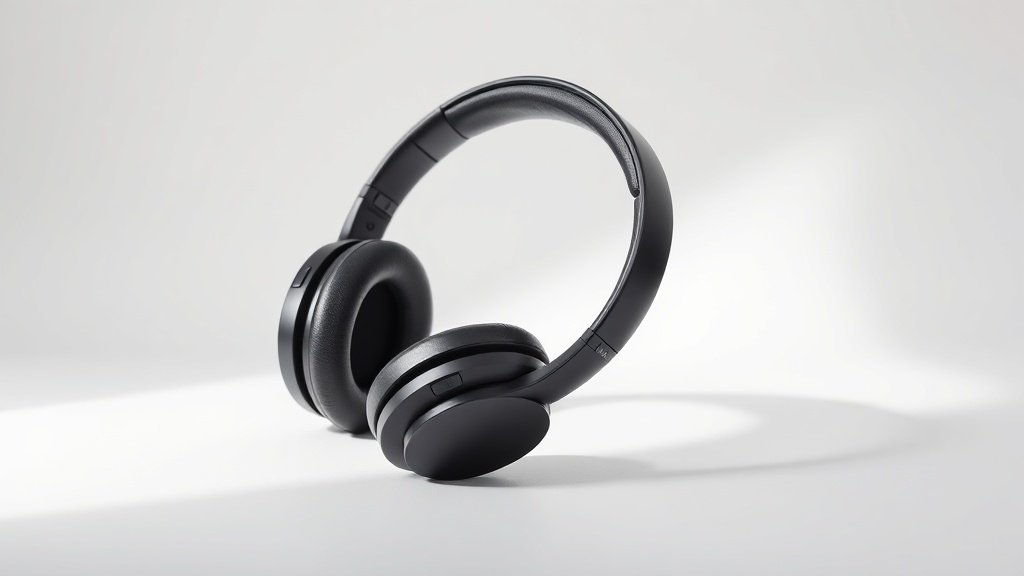
That annoying mismatch between lip movement and speech in wireless headphones happens because Bluetooth audio processing takes time—sometimes enough to make dialogue feel dubbed.
Wireless headphone latency creates a noticeable delay between what happens on screen and what you hear. This timing offset ranges from barely perceptible to seriously distracting, depending on the Bluetooth codec and processing chain involved. After years of obsessively buying, using and comparing audio gear, I have learned that even 40 milliseconds of delay makes dialogue feel disconnected from the picture.
This guide examines why wireless headphones introduce latency, which Bluetooth codecs perform better for sync-critical applications, and practical methods for reducing audio-video timing problems. We will cover codec specifications, device compatibility factors, and compensation techniques that actually work in real-world listening situations.
How Bluetooth Audio Processing Creates Delay
Bluetooth audio transmission requires multiple processing steps that each add timing delays. The source device encodes audio into compressed packets, transmits them wirelessly, then the headphones decode and convert the signal back to analogue audio. This encode-transmit-decode cycle typically adds 150 to 300 milliseconds of latency with standard SBC codec processing.
The encoding stage alone introduces significant delay because Bluetooth codecs analyse audio in blocks rather than streaming it continuously. SBC codec processing adds roughly 50 to 80 milliseconds just for compression analysis. Then wireless transmission adds another 20 to 40 milliseconds depending on signal strength and interference. Finally, the headphone DAC and amplifier stages contribute an additional 10 to 30 milliseconds of conversion delay.
Buffering requirements make the problem worse because both devices maintain audio queues to prevent dropouts. Source devices buffer outgoing audio to smooth transmission, while headphones buffer incoming packets to maintain consistent playback. These buffers can easily add another 100 milliseconds of delay when the system prioritises reliability over timing accuracy.
Codec Performance and Latency Specifications
Different Bluetooth codecs exhibit dramatically different latency characteristics. Standard SBC codec typically produces 200 to 300 milliseconds of delay, making it unsuitable for video watching without compensation. The Sony WH-1000XM5 and Bose QuietComfort 45 both rely primarily on SBC when connected to most devices, explaining why users frequently report sync problems with these otherwise excellent headphones.
aptX and aptX HD codecs reduce latency to approximately 150 to 180 milliseconds, which remains noticeable but less jarring for casual video viewing. However, aptX Low Latency specifically targets this problem by achieving delays under 40 milliseconds. The Sennheiser Momentum 4 Wireless supports aptX Low Latency when paired with compatible sources, delivering sync performance that rivals wired connections for most content types.
AAC codec performance varies significantly between Apple and Android implementations. Apple devices with AAC typically achieve 150 to 200 milliseconds of latency, while Android AAC processing can exceed 250 milliseconds depending on the manufacturer. This explains why AirPods Pro work reasonably well with Apple devices but exhibit more noticeable sync issues when connected to non-Apple sources that default to SBC codec processing.
Even premium wireless headphones introduce enough delay to make dialogue feel disconnected from lip movement without proper codec support.
Device Compatibility and Codec Selection
Successful low-latency wireless audio requires both source device and headphones to support the same advanced codec. Many smartphones and tablets lack aptX Low Latency support, forcing connections to fall back on higher-latency alternatives. Android devices from Samsung, Google, and OnePlus typically support standard aptX but not the Low Latency variant, limiting sync performance even with capable headphones.
Gaming devices present particular challenges because most consoles prioritise audio quality over latency for their Bluetooth implementations. The PlayStation 5 supports only SBC codec for wireless headphones, creating substantial sync delays that make gaming with Bluetooth audio frustrating. Dedicated gaming headphones like the SteelSeries Arctis 7P use proprietary 2.4GHz wireless protocols instead of Bluetooth to achieve the sub-20 millisecond latency that competitive gaming demands.
Computer compatibility depends heavily on the Bluetooth adapter and driver implementation. Intel AX series wireless modules in modern laptops generally support aptX and aptX HD codecs, while older Bluetooth 4.x adapters may only handle SBC reliably. USB Bluetooth dongles like the Creative BT-W3 specifically target low-latency applications by supporting aptX Low Latency codec with compatible headphones.
Latency Compensation Techniques
Software compensation can correct sync problems when hardware solutions are not available. Video players like VLC Media Player and PotPlayer include audio delay adjustment controls that let users manually offset timing by specific millisecond amounts. Setting a negative audio delay of 200 to 250 milliseconds typically compensates for standard SBC codec latency, though the exact amount requires individual adjustment based on your specific device combination.
Some media applications automatically detect and compensate for Bluetooth latency. Netflix and YouTube apps on recent smartphones include dynamic delay compensation that attempts to measure actual latency and adjust audio timing accordingly. However, these automatic systems work inconsistently across different headphone models and often require manual fine-tuning to achieve proper sync.
Hardware solutions provide more reliable latency reduction for critical applications. Bluetooth transmitters like the Avantree Oasis support aptX Low Latency codec and include manual delay adjustment controls. These devices connect to any audio source via optical or analogue inputs, then transmit low-latency audio to compatible wireless headphones while bypassing the limitations of built-in Bluetooth implementations.
Choosing Headphones for Sync-Critical Applications
Video editing and content creation require wireless headphones with demonstrably low latency specifications. The Audio-Technica ATH-M50xBT2 supports both aptX and AAC codecs with measured latency under 150 milliseconds when properly paired. For professional applications, the Beyerdynamic Amiron Wireless includes aptX HD support and typically achieves sync performance suitable for casual video editing work.
Gaming applications demand even stricter latency requirements that most Bluetooth headphones cannot meet. Wireless gaming headsets like the Corsair Virtuoso RGB Wireless use dedicated 2.4GHz protocols instead of Bluetooth to achieve the sub-40 millisecond response times that competitive gaming requires. The HyperX Cloud Flight series delivers similar low-latency performance through proprietary wireless technology rather than relying on Bluetooth codec limitations.
Assuming all Bluetooth codecs produce similar latency results. SBC codec can introduce over 250 milliseconds of delay while aptX Low Latency achieves under 40 milliseconds. Check codec compatibility between your source device and headphones before expecting good sync performance.
Relying on automatic latency compensation without verification. Software delay correction works inconsistently across different applications and device combinations. Manual delay adjustment using actual measured timing provides more reliable sync correction than automatic systems.
Expecting gaming-level latency from standard Bluetooth headphones. Even premium wireless headphones with aptX Low Latency cannot match the sub-20 millisecond response times that dedicated gaming wireless protocols achieve. Choose the right wireless technology for your specific latency requirements.
Conclusion
Wireless headphone latency depends primarily on Bluetooth codec support and device compatibility rather than headphone price or quality. aptX Low Latency codec provides the best sync performance for video applications, while gaming requires dedicated wireless protocols that bypass Bluetooth entirely. Manual delay compensation works when hardware solutions are not available, but proper codec matching delivers more consistent results.
FREE DOWNLOAD
Stop Guessing. Start Buying Smart.
The specs that actually matter, demystified.
Headphones, microphones, the spec sheet jargon you can ignore — all in one quick-reference PDF. Free, instant, no fluff.
Send Me the CheatsheetYou'll also receive occasional new guide notifications. Unsubscribe anytime. No spam, ever.