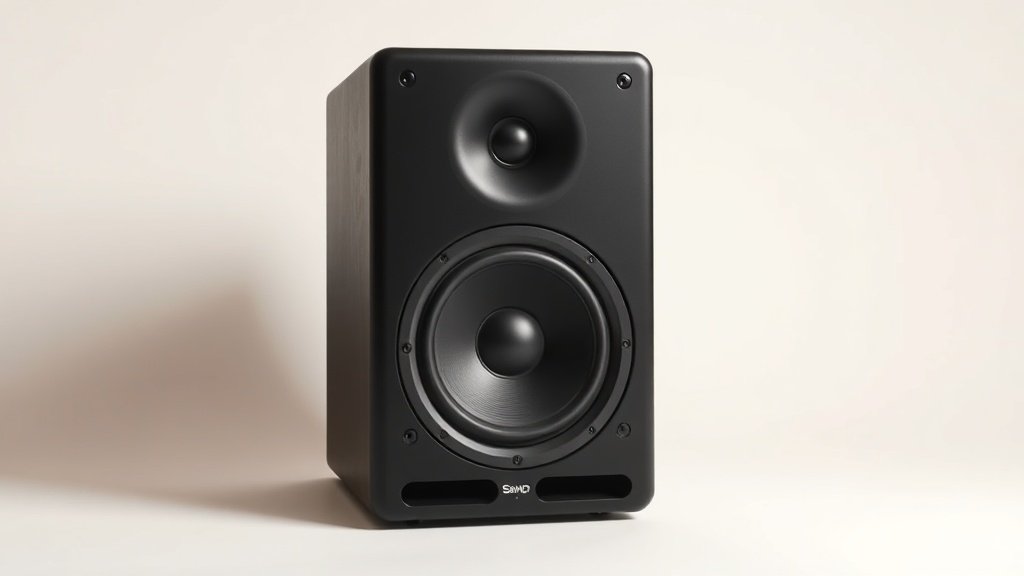
Choose reference monitors and your mixes might sound clinical, choose coloured speakers and your mixes might not translate—yet both approaches serve essential purposes in different contexts.
After years of obsessively buying, using and comparing audio gear, I have learned that the reference versus coloured sound debate misses the fundamental point. Both approaches solve different problems, and understanding when to use each determines whether your studio setup helps or hinders your work.
This guide examines the practical differences between reference accuracy and musical colouration, explains when each approach serves your needs better, and covers the real-world compromises that shape how professional engineers choose their monitoring chains.
What Reference Sound Actually Means
Reference monitoring aims to reproduce audio signals without adding emphasis, attenuation, or distortion that masks mixing decisions. The Yamaha NS-10M became legendary not because it sounded pleasant, but because its consistent midrange response revealed problems that would emerge on consumer systems. When I mix through reference monitors like the Genelec 8030C or Neumann KH120A, I hear exactly what the recording contains rather than what the speakers think it should sound like.
True reference monitoring requires flat frequency response across the audible spectrum, low distortion at all listening levels, and controlled dispersion characteristics that minimise room interaction. The ATC SCM25A Pro delivers this transparency through its hand-matched drivers and precise crossover design, revealing every detail without editorial comment. Reference accuracy means that problems in your mix become immediately obvious rather than masked by flattering speaker colouration.
However, reference monitoring demands proper acoustic treatment and careful positioning to deliver its benefits. Untreated rooms and poor placement can make even the most accurate monitors sound harsh and fatiguing, leading many engineers to mistake accurate monitoring for poor sound quality.
Understanding Musical Colouration
Coloured speakers and headphones deliberately shape frequency response to enhance musical enjoyment or compensate for typical listening environments. The Auratone 5C Super Sound Cube, famous for its single full-range driver, provides a heavily coloured midrange-focused perspective that simulates car stereos and portable radios. Many engineers use these specifically because their colouration reveals how mixes will sound on consumer systems.
High-end hi-fi speakers like the KEF LS50 Meta or Focal Sopra series apply subtle colouration that enhances musical engagement without sacrificing detail retrieval. These speakers might emphasise the presence region slightly to add excitement, or provide gentle bass extension that makes music feel more substantial. The colouration serves musical communication rather than analytical precision.
Headphone manufacturers apply similar philosophies through different tuning approaches. The Audio-Technica ATH-M50x provides a slight V-shaped response that makes most music sound exciting, while the Sennheiser HD650 offers a warm midrange emphasis that flatters vocals and acoustic instruments. Both approaches use colouration intentionally to serve specific listening goals.
Reference monitoring reveals what your recording actually contains, while coloured playback reveals how your audience will experience it.
When Reference Monitoring Serves You Better
Critical mixing and mastering work requires reference accuracy to make informed decisions about balance, dynamics, and spectral content. When I master albums, the Focal Twin6 Be monitors provide the neutrality needed to hear subtle compression artifacts, frequency masking, and stereo imaging issues that would disappear behind musical colouration. Reference monitoring prevents you from compensating for speaker characteristics rather than addressing actual mix problems.
Recording and production workflows benefit from reference accuracy during tracking sessions, where microphone choice, preamp settings, and performer positioning create the foundation for everything that follows. The PMC twotwo.6 monitors help engineers hear exactly what each microphone captures without the speakers adding their own interpretation to the sound.
Professional translation checking requires reference monitoring as your baseline before testing mixes on various coloured systems. You need to understand what your mix actually sounds like before you can evaluate how different playback systems will interpret it. This approach prevents the circular problem of mixing on coloured monitors and then wondering why your work sounds different everywhere else.
When Coloured Sound Makes More Sense
Music listening for pleasure often benefits from thoughtful colouration that enhances emotional connection without destroying musical information. The Harbeth P3ESR applies gentle warmth and midrange richness that makes acoustic music more involving, while the JBL L100 Classic provides controlled excitement that suits rock and electronic genres. These speakers prioritise musical communication over analytical precision.
Consumer perspective checking requires deliberately coloured monitoring that represents how most people actually hear music. Many hit records sound mediocre on reference monitors but come alive through the modest bass boost and presence emphasis of typical consumer speakers. The Avantone MixCube provides this perspective through its deliberately limited bandwidth and coloured response.
Long-term listening comfort often improves with subtle colouration that reduces fatigue while maintaining detail retrieval. The Spendor Classic 100 speakers apply gentle warmth and controlled treble response that allows extended listening sessions without the ear fatigue that can accompany brutally accurate monitoring. This colouration serves practical workflow needs rather than purely analytical requirements.
Practical Integration Strategies
Professional mixing environments typically combine both approaches through multiple monitor systems that serve different evaluation needs. My setup includes Genelec 8351B reference monitors for critical decision-making, Yamaha NS-10M nearfields for midrange focus, and Auratone mixcubes for consumer simulation. Each system provides different information about how the mix will translate across various playback scenarios.
Budget-conscious approaches can achieve similar benefits through careful speaker selection and strategic use of reference headphones. The Sennheiser HD650 headphones provide relatively neutral monitoring for detailed work, while small bookshelf speakers like the KEF Q150 offer insight into how music will sound in typical domestic environments. This combination covers most practical monitoring needs without requiring multiple expensive systems.
Room treatment considerations affect both reference and coloured monitoring, but in different ways. Reference systems demand extensive acoustic control to deliver their intended accuracy, while coloured systems can often work effectively in less-than-perfect rooms because their deliberate response shaping compensates for some acoustic problems. However, both approaches benefit from basic treatment that controls obvious reflections and standing wave issues.
Assuming expensive monitors automatically provide reference accuracy. Many high-end speakers apply subtle colouration for musical appeal rather than analytical precision. Check frequency response measurements and professional reviews to understand what any monitor actually delivers rather than assuming price indicates neutrality.
Mixing exclusively on coloured systems without reference checking. Speakers that make everything sound good prevent you from hearing problems that will emerge on other systems. Use coloured monitors for perspective checking rather than primary mixing decisions, or accept that your mixes will reflect your monitor colouration.
Dismissing coloured monitoring as inferior or unprofessional. Deliberate colouration serves important functions in music production workflows, from consumer simulation to long-term listening comfort. The key lies in understanding what each system contributes rather than pursuing accuracy for its own sake.
Conclusion
Reference accuracy and musical colouration both serve essential functions in audio production and reproduction. Choose reference monitoring when you need to hear exactly what your recordings contain, and choose coloured systems when you need to understand how audiences will experience your work. The most effective approach combines both perspectives through multiple monitoring systems or strategic switching between reference and coloured playback chains.

FREE DOWNLOAD
Stop Guessing. Start Buying Smart.
The specs that actually matter, demystified.
Headphones, microphones, the spec sheet jargon you can ignore — all in one quick-reference PDF. Free, instant, no fluff.
Send Me the CheatsheetYou'll also receive occasional new guide notifications. Unsubscribe anytime. No spam, ever.