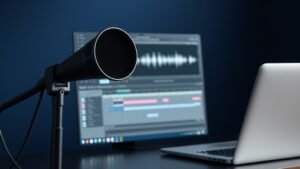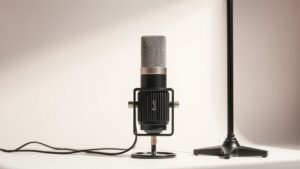
Move a microphone six inches closer to a vocal source and the fundamental character of that recording changes more dramatically than switching between microphone models costing thousands apart.
Microphone pickup distance controls far more than simple volume levels. The space between capsule and source determines bass response through proximity effect, balances direct sound against room acoustics, affects noise floor perception, and fundamentally shapes the sonic character that listeners hear. Understanding these relationships allows engineers to craft recordings with intention rather than accident.
This guide examines how distance affects different microphone types and polar patterns, demonstrates practical techniques for various recording scenarios, and shows you how to use pickup distance as a creative tool rather than just a technical consideration.
Understanding Proximity Effect and Bass Response
Proximity effect occurs when directional microphones get close to sound sources, causing low-frequency buildup that can add warmth or create muddiness depending on context. This phenomenon affects cardioid, supercardioid, and figure-8 polar patterns but leaves omnidirectional microphones largely unaffected. The Shure SM58 demonstrates this clearly – place it within two inches of a vocal source and bass frequencies below 200Hz receive significant boost, creating the intimate radio voice effect that broadcasters favour.
Dynamic microphones like the Electro-Voice RE20 incorporate internal shock mounting and variable-D technology specifically to minimise unwanted proximity effect while retaining beneficial low-end enhancement. Ribbon microphones such as the Royer R-121 exhibit pronounced proximity effect that many engineers exploit for adding weight to guitar cabinets and brass instruments. The key lies in recognising when this bass buildup serves the music versus when it masks clarity.
Large diaphragm condensers including the Neumann U87 show more subtle proximity effect compared to dynamics, but the change remains audible when moving from twelve inches to three inches. This distance-dependent bass response means that microphone choice and placement distance work together as a system rather than independent variables.
Balancing Direct Sound Against Room Acoustics
Every recording captures two distinct elements – the direct sound from the source and the reflected sound from the surrounding space. Pickup distance determines the ratio between these components, fundamentally changing how listeners perceive the recording environment. Close placement emphasises direct sound and minimises room influence, while increased distance incorporates more ambient information.
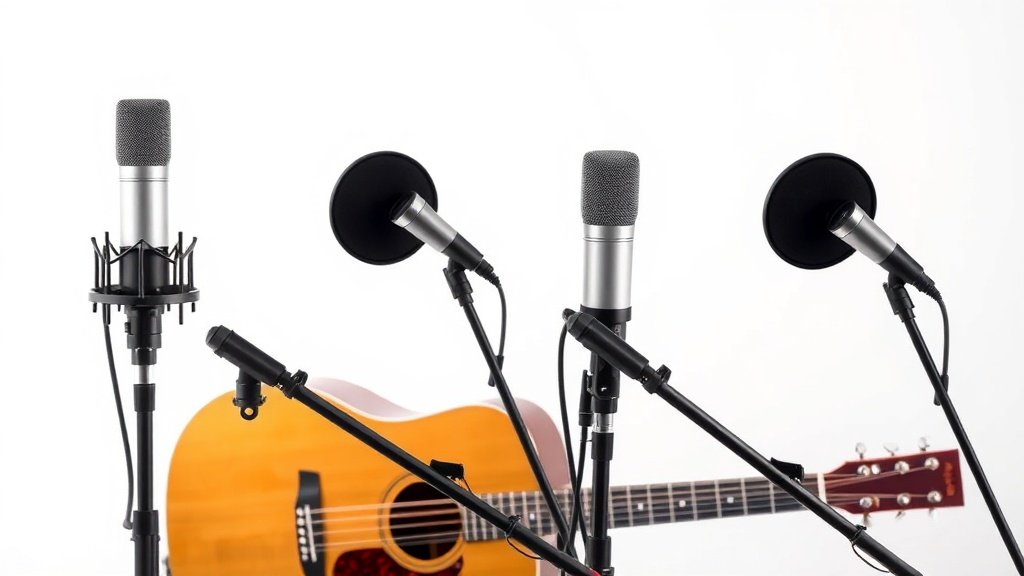
Recording acoustic guitar with a small diaphragm condenser like the Audio-Technica AT4041 placed six inches away captures primarily the instrument with minimal room sound. Moving that same microphone to three feet incorporates ceiling reflections, wall boundaries, and the natural reverberation that makes acoustic spaces feel alive. Neither approach is inherently superior – the choice depends on whether the room enhances or detracts from the musical intention.
Poor room acoustics demand close placement to avoid capturing unwanted reflections and resonances. Excellent acoustic spaces benefit from increased pickup distance that showcases the natural ambience. The AKG C414 provides multiple polar patterns that help balance this relationship – cardioid mode for rejecting rear reflections when close-miking, omnidirectional mode for capturing natural room sound when space allows.
Proximity effect occurs predictably with directional microphones, creating bass buildup that can enhance intimacy or destroy clarity depending on source material and musical context.
Signal-to-Noise Considerations and Preamp Gain
Increased pickup distance requires higher preamp gain to achieve proper recording levels, which amplifies both signal and noise floor proportionally. This relationship becomes critical when working with quiet sources or in electrically noisy environments. A ribbon microphone like the Coles 4038 positioned four feet from a classical guitar demands significant gain increases that may expose preamp noise or electrical interference from computer fans and air conditioning systems.
Modern low-noise preamps including those found in the RME Babyface Pro FS interface provide sufficient clean gain for most distance applications, but older or budget equipment may struggle. The solution involves finding the optimal balance between pickup distance and gain requirements – close enough to maintain good signal-to-noise ratio, far enough to achieve the desired tonal and spatial characteristics.
Active microphones such as the AKG C12VR include internal electronics that provide higher output levels, reducing the preamp gain needed for distant placement. This advantage becomes particularly valuable when recording quiet sources in large acoustic spaces where room sound contributes positively to the overall character.
Practical Applications for Different Source Types
Vocal recording benefits from close placement between four to eight inches to achieve intimacy and control sibilance, though backing vocals often sound more natural at twelve to eighteen inches where individual voices blend smoothly. The Neumann TLM 103 excels in close vocal applications where its presence peak enhances clarity without harshness. Drum overheads require greater distance – typically three to five feet – to capture the complete kit balance and natural cymbal decay.
Electric guitar cabinets respond well to varied distances on the same source. Place a Shure SM57 directly against the grille cloth for aggressive attack and minimal room sound, while positioning a Royer R-121 ribbon two feet back captures more speaker cabinet resonance and natural compression. Blending these perspectives provides dimensional guitar sounds that sit well in dense mixes.
Acoustic instruments like piano and strings often benefit from multiple microphones at different distances. Close placement captures articulation and detail, while distant placement provides warmth and natural reverb. The Schoeps CMC6 with MK4 capsule works excellently for distant placement applications where accuracy matters more than character colouration.
Creative Distance Techniques and Multi-Microphone Approaches
Using multiple microphones at varied distances on single sources opens creative possibilities beyond simple close-miking approaches. The classic Glyn Johns drum technique places overhead microphones equidistant from the snare drum, creating natural compression and space that artificial reverb cannot replicate. This approach depends entirely on careful distance measurement and phase relationships between microphones.
Ambient microphone placement in recording spaces adds dimension without requiring artificial processing. Room microphones positioned eight to fifteen feet from acoustic sources capture natural reverberation that blends seamlessly with close-miked signals. The AEA R88 stereo ribbon microphone excels in ambient applications where smooth frequency response and figure-8 polar pattern reject unwanted reflections from floor and ceiling surfaces.
Distance can compensate for frequency response irregularities in both microphones and sources. Bright-sounding acoustic guitars benefit from increased microphone distance that reduces high-frequency prominence while adding natural warmth. Conversely, dull sources may require close placement that emphasises presence frequencies and minimises room influence that could further reduce clarity.
Assuming proximity effect always creates problems that need correction. Many sources benefit from the bass enhancement that close placement provides, particularly male vocals and acoustic instruments that need additional weight and presence in busy mixes.
Using identical distances for all sources regardless of their acoustic properties. Different instruments and voices require individual distance optimisation based on their frequency content, dynamic range, and role within the musical arrangement rather than following universal placement rules.
Ignoring phase relationships when using multiple microphones at different distances. Distance variations create time delays that cause phase cancellation and comb filtering effects, requiring careful listening and measurement to maintain frequency response integrity across the combined signal.
Conclusion
Microphone pickup distance serves as one of the most powerful tools for shaping recording character, controlling everything from bass response and spatial perspective to noise floor and creative ambience. Master these distance relationships and your recordings will demonstrate the intentional sonic choices that separate professional work from accidental results.

FREE DOWNLOAD
Stop Guessing. Start Buying Smart.
The specs that actually matter, demystified.
Headphones, microphones, the spec sheet jargon you can ignore — all in one quick-reference PDF. Free, instant, no fluff.
Send Me the CheatsheetYou'll also receive occasional new guide notifications. Unsubscribe anytime. No spam, ever.